1 April 2029 is no joke: it’s time to get ready for mandatory e-invoicing
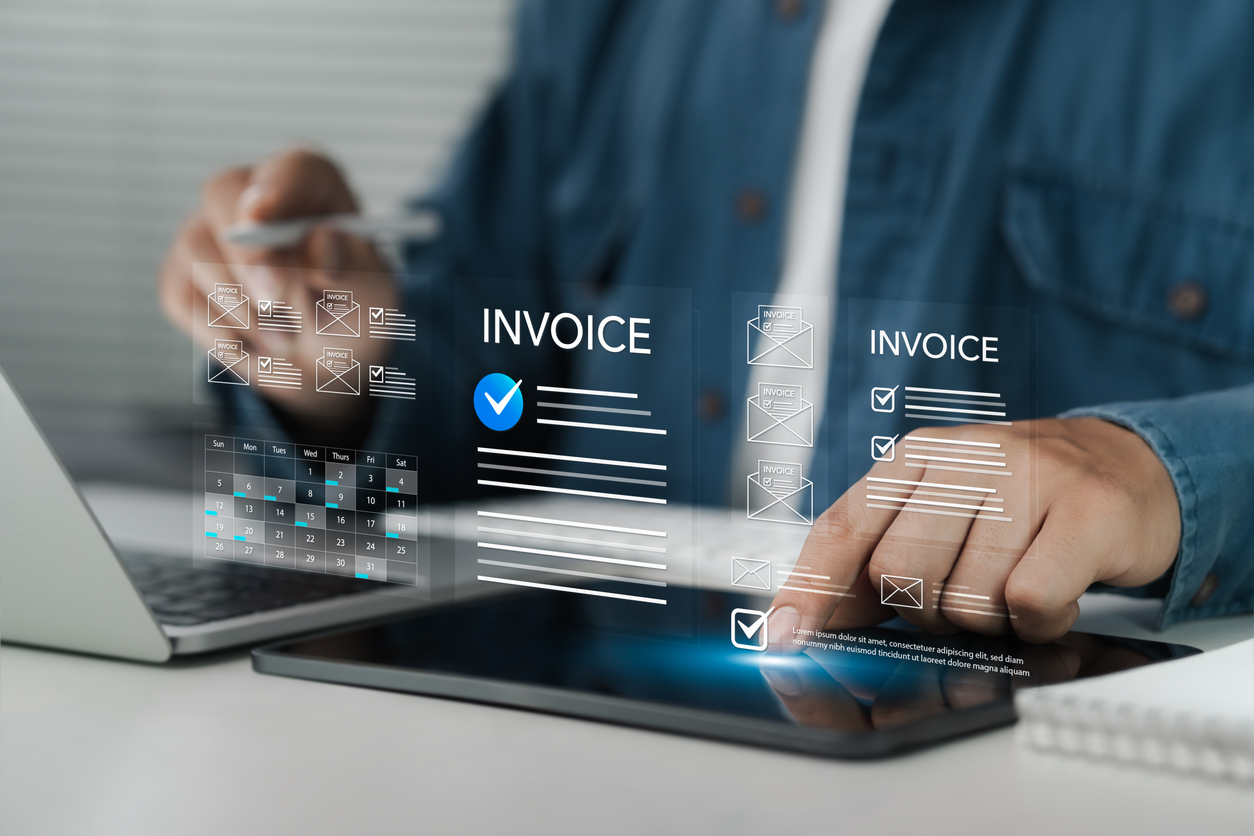
It’s no April Fools for VAT-registered businesses - it’s time to mark 1 April 2029 in your calendar. That is the date the UK government has confirmed for e-invoicing to become mandatory for VAT-registered businesses. Not optional, nor negotiable. If you issue VAT invoices to other businesses or to the public sector, this change is coming for you. It also applies to receiving them, so you need to be ready at both ends. The businesses that start early will be the ones who make the switch smoothly, the ones who wait will scramble.
E-invoicing is not simply emailing a PDF to a customer, printing an invoice or scanning one into a system. The new requirement is about exchanging invoice information as structured data, shared as a data file that is ingested electronically, moving directly between financial systems without any human input. It’s a genuinely different way of working for many businesses, which will impact how invoices are raised, sent, received and reconciled.
There is also a structural point business owners should understand. Rather than routing invoices through a single central government platform, invoices will pass between a business's own software provider and its trading partner.
The government has confirmed that Peppol, the established international e-invoicing network, will be the core framework, so invoices will travel through certified Peppol Access Points, which most businesses will reach through their own software provider. That makes your choice of IT software, and your provider's readiness, central to your own compliance.
Existing UK rules on VAT invoices, which already allow electronic invoices provided they are authentic, intact and legible, are generally good guidance points until we see the full technical standards.
The government recently published its implementation roadmap which confirms that a public consultation on the proposed standards will run in Spring 2027, and that the final requirements will follow between October 2027 and April 2028, giving at least 12 months to prepare. The primary legislation is expected to become law in Spring 2027.
For business owners, the practical question is simple: will your current IT and invoicing systems, and your current provider, be ready in time? Three actions I would recommend taking now, include:
1: Talk to your IT provider
Speak to whoever supplies your accounting or invoicing software and ask directly whether they support e-invoicing, or have firm plans to, including certification as a Peppol Access Point or a partnership with one. You will need a provider that is, or works with, a certified Access Point, so this is not something to assume will simply be switched on for you when the time comes. If your provider cannot give you a clear answer, treat that as a prompt to look further, not a reason to put off the conversation.
2: Get your data and processes in shape
Because invoice information will need to be shared as a data file rather than a document, it is worth mapping out where your invoice data currently lives and how cleanly it moves between your systems and those of your customers and suppliers. You will also need a business identifier so that you can be found on the network, and the government will confirm which identifiers will be accepted between October 2027 and April 2028.
Businesses with well-structured, accurate data will have a far easier path to compliance than those still relying on manual entry and paper-based workarounds, so it’s important to treat this as a data and process exercise as much as a software one.
3: Don't wait for the deadline to start looking into it
With 1 April 2029 still some way off, and detailed technical standards yet to be published, it is tempting to file this as ‘something to do later’. I would strongly encourage business owners to look into it now rather than waiting for the scramble. Nothing needs implementing yet, but researching providers and understanding your own processes can start straight away.
Some ERP systems already handle electronic invoicing and are well placed to connect to the Peppol network once the standards are confirmed, for example HansaWorld's Standard ERP. Finding out early whether your existing system already has this capability, or whether you will need to plan and budget for a change, gives you far more control over the timeline than being forced into a rushed decision as 2029 approaches.
E-invoicing is coming, and for VAT-registered businesses it will not be optional. The businesses that treat this as a strategic priority now, rather than a compliance headache to deal with later, are the ones that will make the switch with the least disruption. It starts with a conversation: ask your provider where they stand, get your own data in order, and give yourself the time to get it right.
None of this will happen overnight, but it does need to start well ahead of the deadline, while there is still time to test, adjust and fix what doesn't work the first time round. Businesses that act will find this a smooth transition, one they can work into business as usual, on their own terms and their own timeline. Those that don't will find it a scramble, potentially with rushed decisions, higher costs and far less room to get it right.
Paul Timms is Director at IT System Integrators Ltd. For more information visit: itsystemintegrators.co.uk