5 Best IT Asset Tracking and Management Software

Most IT teams don't lose control of their assets all at once. It happens gradually: one untracked laptop, one expired license, one offboarded employee whose device never came back. IT Asset Tracking and Management Software exists to close that gap before it turns into a compliance problem or a budget leak. After reviewing dozens of platforms across lifecycle management, license tracking, and distributed device control, this guide covers the five tools worth your time right now.
The research approach for this ranking
Public information drove every decision here. Each platform was assessed using user reviews, feature documentation, case studies, and data pulled from software review directories and official websites. Only platforms with a documented track record in IT asset management made the cut.
→ See the full research breakdown
- Workwize - Best for global IT asset lifecycle management
- SuperOps - Best for managed service providers and mid-market IT operations teams
- Anunta - Best for enterprise digital workspace and IT asset management
- Virima - Best for enterprise IT asset management and service dependency mapping
- Teqtivity - Best for IT asset management for mid-market and enterprise organizations
Why IT Asset Tracking And Management Software Matters
Running an IT environment without the right tracking tool is a bit like managing a warehouse without a barcode scanner. You know things are moving, but you're never quite sure where anything is.
The real cost shows up during audits. Outdated or incomplete asset inventories expose software license compliance gaps fast, and the penalties for over-licensing or under-licensing can add up quickly.
Distributed and remote environments make this harder. Devices spread across offices, home setups, and co-working spaces are genuinely difficult to track without purpose-built tooling.
The right platform changes those outcomes. It tightens your asset inventory accuracy rate, improves software license utilization, and cuts the time it takes to detect unauthorized assets from weeks down to hours.
Top 5 IT Asset Tracking And Management Software Breakdown and Comparison
Note: All data in this table is sourced from review platforms and the official websites of the listed companies.
1. Workwize - Best for Global IT Asset Lifecycle Management
What Does Workwize Do?
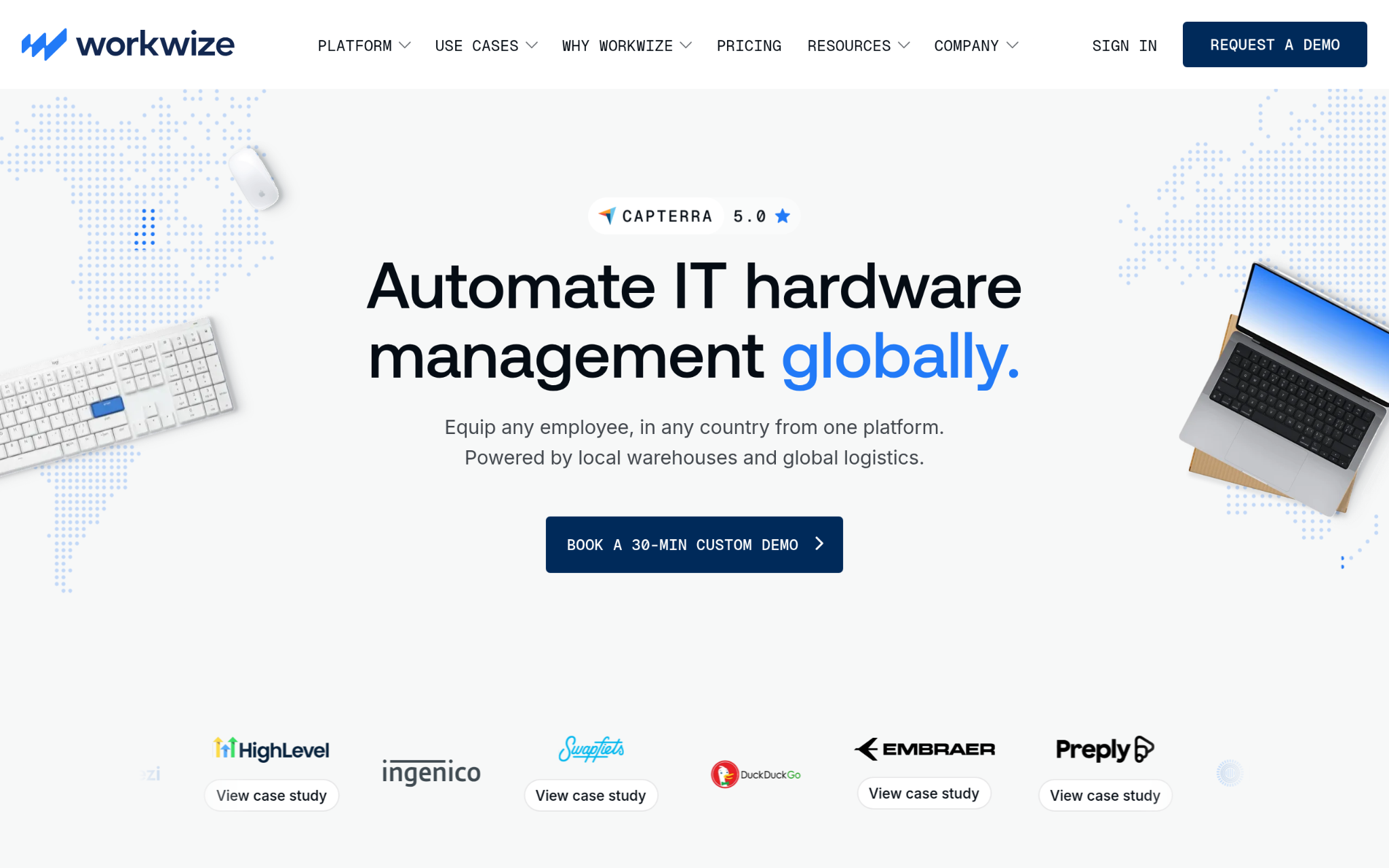
Workwize runs the full hardware lifecycle from a single platform. Procurement, deployment, tracking, retrieval, and disposal all happen inside one system, across 120 countries, with local warehouses supporting the physical side of the operation. The platform connects with 80+ HRIS, MDM, and identity tools to trigger automated setup and removal workflows without manual coordination. For IT teams managing distributed workforces, that kind of end-to-end visibility is genuinely rare.
Why Does Workwize Stand Out for IT Asset Tracking And Management Software?
Workwize solves the challenge of managing hardware across global, distributed teams without losing device visibility or burning out IT staff on manual handoffs. Their platform reportedly helps IT teams recover up to 98% of devices when employees leave, which says a lot about the actual control they deliver at scale (not just what the dashboard shows).
Summary of Real User Reviews:
Teams highlight the reduction in manual work as the biggest win, especially around setup and removal cycles. Recognition as a LinkedIn Top Startup and a Deloitte Fast 50 Dutch tech company adds credibility to what users describe day-to-day. That combination of customer feedback and external validation is hard to ignore.
2. SuperOps - Best for Managed Service Providers and Mid-Market IT Operations Teams
What Does SuperOps Do?
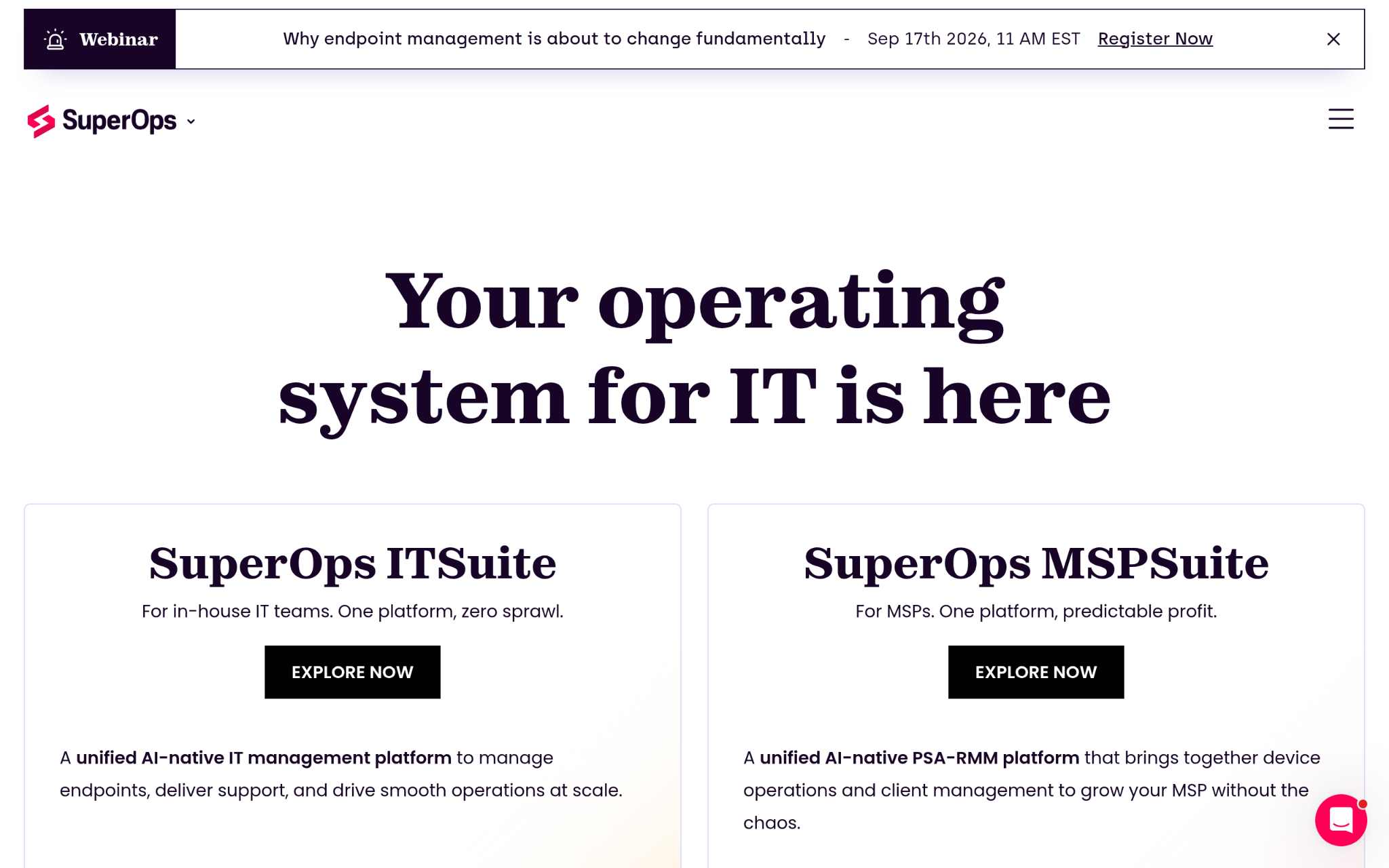
SuperOps brings together ITAM, helpdesk, MDM, patch management, RMM, and PSA capabilities into a single AI-native platform. It's built for two distinct audiences: in-house IT teams using ITSuite, and managed service providers using MSPSuite. Their Monica AI handles routine IT operations autonomously, cutting down on the repetitive ticket-and-respond cycles that eat up IT time. For MSPs managing multiple client environments, the unified data architecture removes the constant context-switching between tools (which is where most operational errors actually happen).
Why Does SuperOps Stand Out for IT Asset Tracking And Management Software?
SuperOps tackles the fragmentation problem directly: asset data, helpdesk tickets, and device management often live in completely separate systems and never quite sync up. Because the platform was built AI-native from the start, asset tracking isn't bolted on as an afterthought. It sits inside a shared data layer alongside every other IT function.
Summary of Real User Reviews:
SuperOps earned 17 G2 badges in a single cycle and landed in the High Performer quadrant, which lines up with what users describe: a platform that's noticeably faster to work with than older alternatives. Channel Program named them a Category Leader in RMM for Q1 2025. Users in the MSP space particularly appreciate how much the tool consolidates without sacrificing depth.
3. Anunta - Best for Enterprise Digital Workspace and IT Asset Management
What Does Anunta Do?
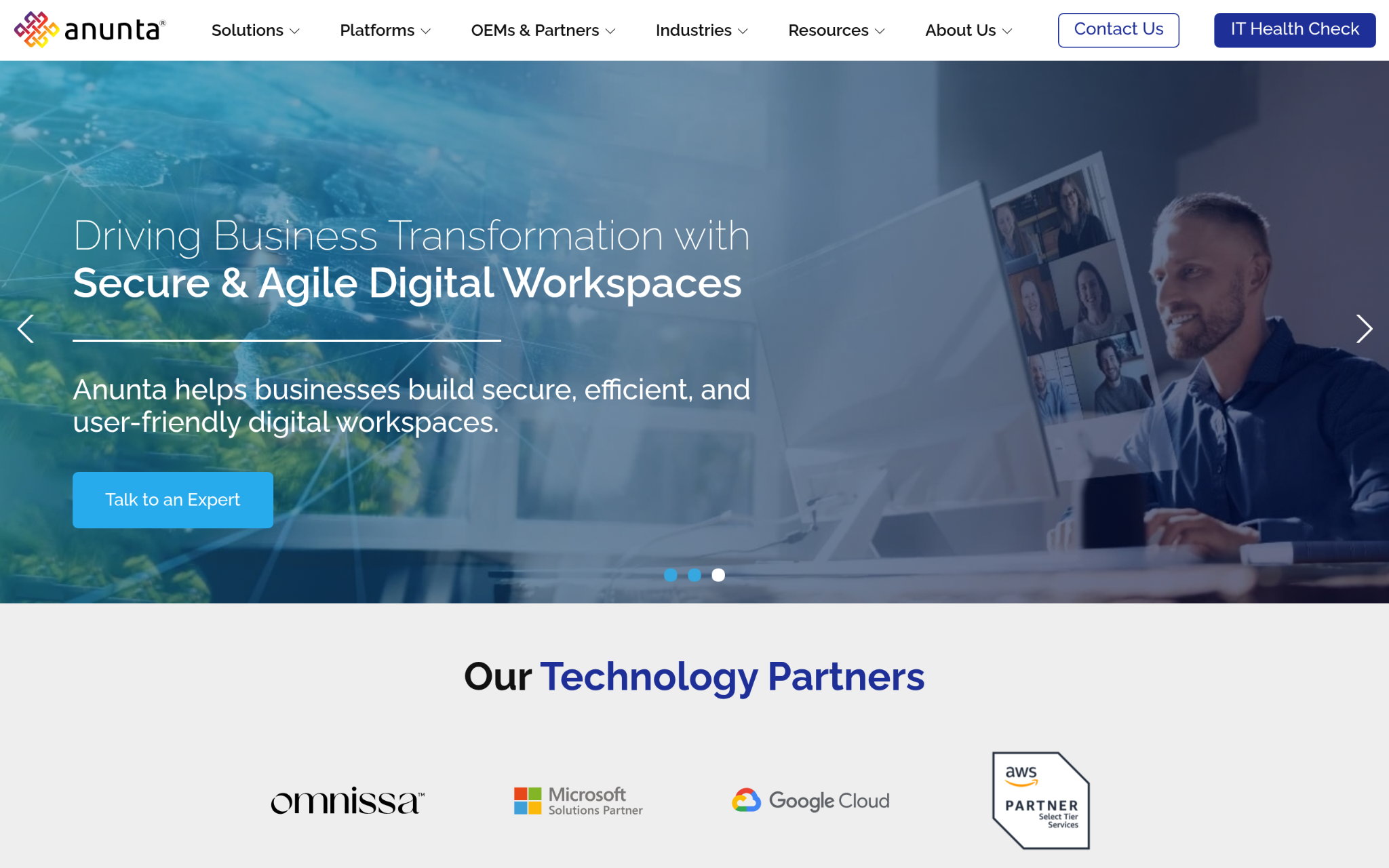
Anunta focuses on desktop-as-a-service, managed endpoint services, and workspace platforms at enterprise scale. Their products include DesktopReady, CloudOptimal, and EuVantage, which cover VDI migration, modern desktop management, mobile device management, and cloud asset tracking across private, public, and hybrid environments. They've migrated over 1 million remote desktop users, which gives them a level of operational experience that most DaaS providers can't match. Gartner has recognized them in the Magic Quadrant for DaaS for four consecutive years.
Why Does Anunta Stand Out for IT Asset Tracking And Management Software?
Anunta handles the specific challenge of managing endpoint assets across complex enterprise environments where desktops, virtual machines, and cloud workloads all need to be tracked consistently. Their patented AI platforms and partnerships with major technology vendors make managing large device fleets more predictable and less labor-intensive.
Summary of Real User Reviews:
Case studies across banking, healthcare, aerospace, and retail show a consistent pattern: cost savings, high reliability, and migrations with no service interruption. Their MSP 501 Top 100 ranking adds to that picture. Enterprise clients trust Anunta because the scale of past deployments mirrors their own, and not every vendor can say they've handled a million endpoints.
4. Virima - Best for Enterprise IT Asset Management and Service Dependency Mapping
What Does Virima Do?
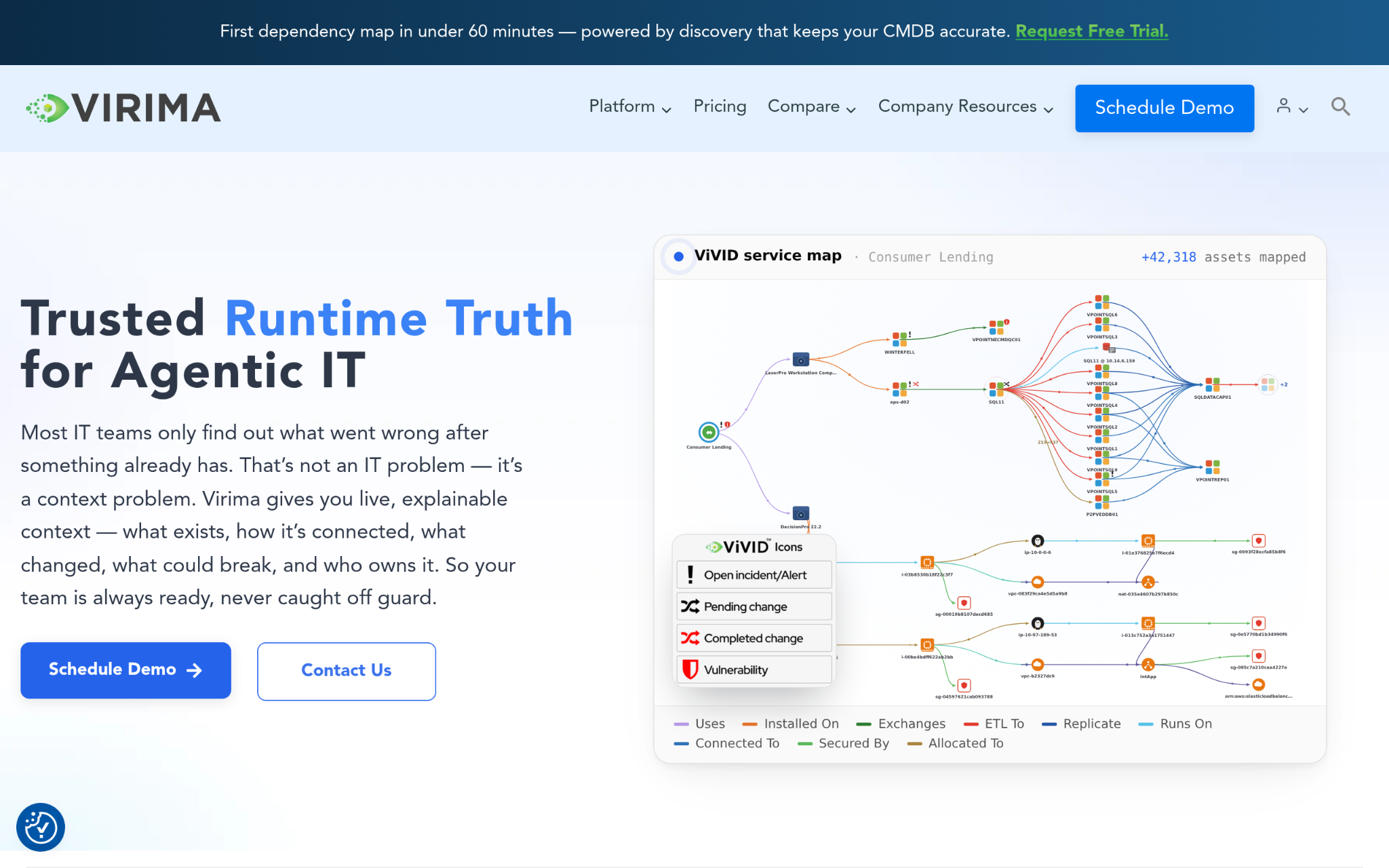
Virima is built around automated IT discovery and CMDB management, with a proprietary Visual Impact Display called ViVID that maps service dependencies in real time. The platform connects with ServiceNow, Jira Service Management, Ivanti, AWS, and Azure, covering the discovery and governance side of IT asset management in depth. Their subscription pricing doesn't charge per device, so a growing discovery footprint won't trigger budget conversations mid-year. They claim to deliver a first dependency map in under 60 minutes, which is a bold claim, but one that customer evidence backs up reasonably well.
Why Does Virima Stand Out for IT Asset Tracking And Management Software?
Virima directly addresses shadow IT and undocumented service relationships, where assets exist in the environment but nobody has mapped what depends on them. Their zero-duplicate attribute authority approach keeps the CMDB clean over time instead of letting it drift into unreliable territory.
Summary of Real User Reviews:
Customers in healthcare and banking, including The Bancorp, are among Virima's reference accounts, which points to real trust in regulated, high-stakes environments. SOC 2 Type 2 and ISO/IEC 27001:2022 certifications back that up. The ServiceNow integration gets called out repeatedly in reviews as particularly well-executed.
5. Teqtivity - Best for IT Asset Management for Mid-Market and Enterprise Organizations
What Does Teqtivity Do?
Teqtivity tracks technology assets from procurement through to disposal, covering lifecycle management, inventory management, setup and removal workflows, dashboards, and compliance tools in one platform. Pricing is user-based rather than device-based, so organizations managing large hardware inventories don't face higher costs as their device count grows. They also put active effort into incorporating customer feedback directly into feature development, which means the platform tends to evolve toward actual problems rather than theoretical roadmaps.
Why Does Teqtivity Stand Out for IT Asset Tracking And Management Software?
Teqtivity solves the cost-predictability problem that comes with device-count pricing, where IT teams hesitate to track everything because each new asset added increases the bill. Their customization depth means organizations with non-standard workflows can configure the platform without needing an expensive professional services engagement.
Summary of Real User Reviews:
Users consistently highlight the platform's flexibility and the responsiveness of the support team as standout qualities. The user-based pricing model gets specific praise from IT managers who oversee large fleets but run lean teams. That kind of pricing structure is rare in this space, and users notice it.
Research Methodology and Selection Process
Building a list of reliable IT asset tracking and management platforms requires more than a quick Google search. The process behind this ranking pulled from multiple source types and applied consistent filters at each stage.
Initial Data Collection
The starting point was a broad sweep of directories, software review platforms, and vendor case study libraries focused on IT asset management. Listings were gathered without filtering by size or market position, so niche specialists and enterprise-grade platforms both entered the pool. Official product pages, published customer stories, and category pages on review sites all contributed to the initial longlist.
Shortlisting Phase
Once a longlist existed, options without verified real-world deployment history were removed first. Review patterns were then analyzed for consistency, looking at whether positive feedback appeared across multiple independent platforms rather than clustering in one place. Platforms where review data was too thin to draw conclusions were also excluded at this stage, keeping the focus on options with enough public evidence to evaluate fairly.
Verification of Claims
Every major claim pulled from a vendor's website was cross-checked against what actual users reported. Where a company stated strong asset recovery rates, automated lifecycle workflows, or specific capabilities, the review record was checked to see whether customers described the same experience. Gaps between marketing claims and user reports were noted, and platforms where those gaps were wide didn't make the final cut.
Authority and Industry Contribution Layer
Beyond reviews, additional signals were factored in: industry awards, recognition in analyst reports, appearances in trade publications, and evidence of original research in the IT asset management field. These signals don't override user reports, but they add context, showing which companies are active contributors to the space rather than passive vendors.
IT Asset Tracking And Management Software-Specific Evidence
The final filter looked at how each platform addressed IT asset management as a distinct discipline. This meant checking for dedicated feature sets around asset lifecycle tracking, license management, discovery, and disposal workflows, not just general IT operations capabilities. Verified reviews from IT managers and systems administrators, along with case studies showing measurable outcomes, were the strongest evidence at this stage.
How to Choose the Right IT Asset Tracking And Management Software
The right platform depends on your environment, your team size, and what problems you're actually trying to solve. Here are the factors worth weighing before you commit.
- Industry/Domain Experience: Look for platforms that have real deployment history in environments similar to yours, whether that's distributed global teams, managed service operations, or regulated enterprise settings.
- Features and Service Offerings: Check whether the platform covers the full asset lifecycle or just part of it. Discovery, tracking, lifecycle management, and disposal should all be accounted for.
- Pricing Structure: Device-based pricing can get expensive fast. User-based or flat subscription models tend to be more predictable as your asset count grows (not always cheaper upfront, but worth it long-term).
- Results Measurement: Ask how the platform helps you track asset inventory accuracy rate, software license utilization, and time to detect unauthorized assets. If those metrics aren't visible, the tool isn't giving you enough.
- Industry Knowledge and Compliance: Platforms built with ISO 19770, SOC 2, GDPR, or NIST frameworks in mind will save you significant audit preparation time versus adding compliance after the fact.
Bottom Line
Every platform on this list solves a real piece of the IT asset management puzzle. Workwize leads for global lifecycle operations, SuperOps fits MSPs and unified IT teams, Anunta handles enterprise-scale endpoint environments, Virima stands out at discovery and dependency mapping, and Teqtivity wins on pricing flexibility. As distributed workforces keep growing, the demand for platforms that track assets across locations and automate lifecycle workflows will only increase.