6 Best Digital Transformation Consultants for Universities

Universities pour billions into campus tech, yet 61 percent remain in the “evolving” stage of digital maturity, even as 88 percent call technology their primary engine of innovation. You’ve felt that gap: students demand mobile-first services, faculty want data on tap, and trustees insist on ROI while legacy systems slow everything down.
The pandemic amplified the pressure, pushing online learning, cyber resilience, and AI into board-level priorities. So who can help you move faster without breaking the institution? Enter expert partners. In this guide, we rank the six consultancies leading higher-ed transformation—so you can choose the right ally and get moving.
Our evaluation methodology
Before we pick winners, you deserve to know how we ran the race. We began with a long-list of more than 20 consulting firms cited in analyst reports, university RFP notices, and higher-ed IT forums, and then trimmed it fast.
First, we applied clear pass–fail gates. Each firm had to show at least three verified university projects since 2023, a public case study with measurable results, and service capacity for U.S. campuses. Pure software vendors, and K-12 specialists were out, which left 12 serious contenders.
Next came the scorecard. We weighted nine criteria on a 100-point scale, giving top weight to what matters most to a provost or CIO:
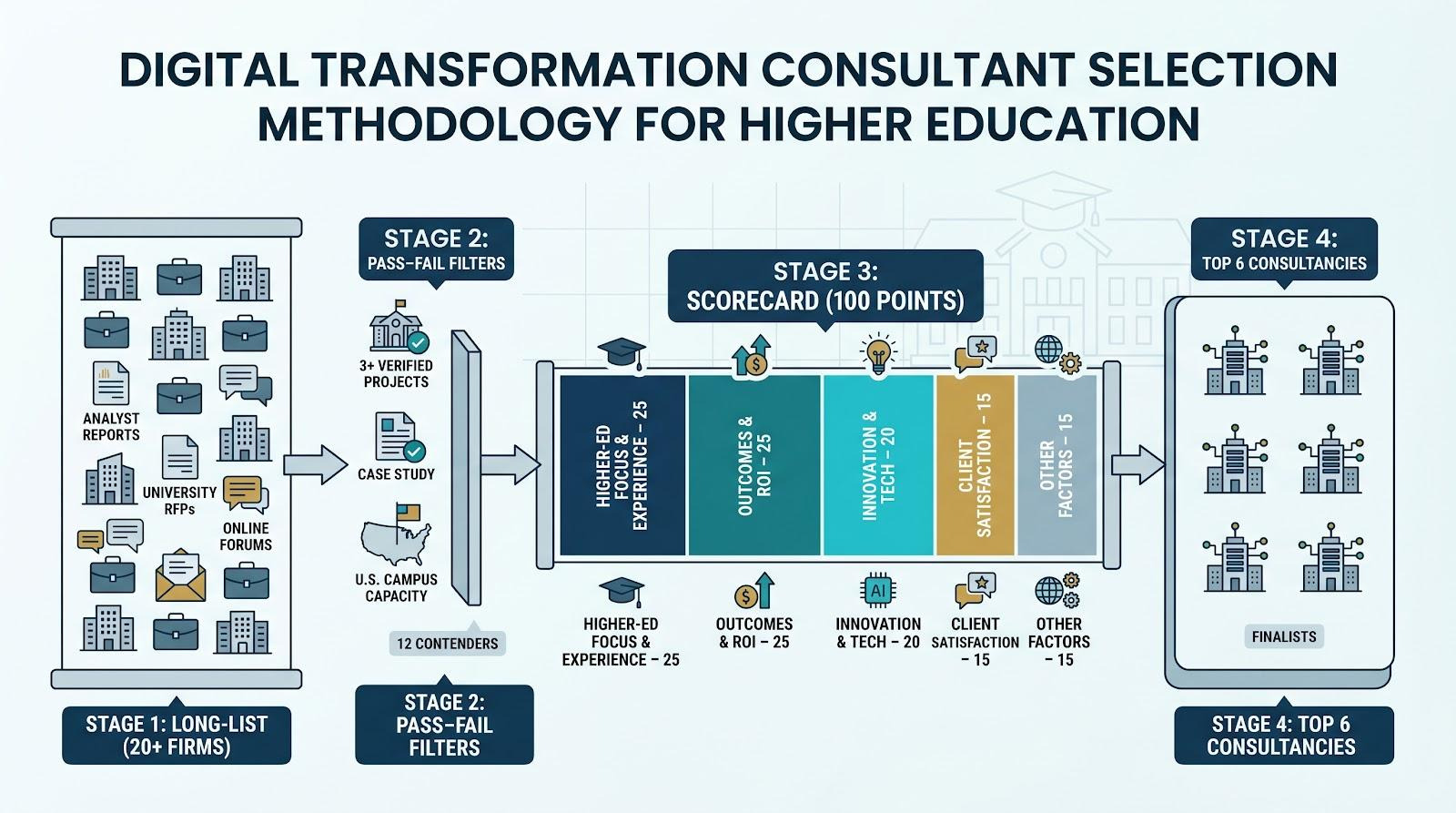
- Higher-ed focus and experience – 25 points
- Documented outcomes and ROI – 25 points
- Innovation and tech leadership – 20 points
- Client satisfaction and references – 15 points
- Everything else (pricing flexibility, geographic reach, thought leadership) – 15 points
We reviewed project documentation, partner certifications, and independent client feedback. When data was missing, we called references or scanned EDUCAUSE threads for unfiltered input. Each firm’s final score reflects both hard metrics and real-world reputation.
The six consultancies that made the cut pair deep campus know-how with tangible gains, such as higher enrollment, faster service times, cleaner data, and improved student satisfaction. Up next, we show how they stack up and why one of them could be the right ally for your digital journey.
1. Monstarlab: your agile AI and digital co-creator
Monstarlab acts like a startup partner, not a traditional systems integrator. Founded in Tokyo and now active in 12 countries, the firm drops small cross-functional squads onto campus to co-design solutions with faculty, students, and staff, starting with narrow but high-value pilots, an approach its recent guide to AI applications in higher education says builds trust and momentum before wider rollout. The approach is fast, iterative, and relentlessly user-centric.
Monstarlab AI applications in higher education blog screenshot
One recent example is the University of Massachusetts Adult Skills Assessment Program (ASAP). Working with Monstarlab, UMass launched personalized assessment technology for adult learners that adapts to culture, language, and device preferences, creating a simpler user experience.
Monstarlab tops our list because it injects creative energy where universities often stall. You get global R&D muscle, plus local consultants who speak higher-ed. The firm does not manage large ERP overhauls, so pair it with a systems partner for back-end work, let it own the digital front door, and watch student satisfaction rise.
2. Deloitte, the enterprise partner with higher-ed depth
Deloitte pairs scale with subject-matter expertise. Its higher-education practice has supported more than 500 institutions, drawing on ex-CIOs, data scientists, and change-management leaders who understand campus politics as well as cloud architecture.
Complex, end-to-end transformation is the firm’s hallmark. At the University of Hull, Deloitte replaced a fragmented recruitment stack with a single Salesforce-based OneCRM that delivered personalized outreach and improved inquiry-to-application conversion within the first admissions cycle.
Beyond recruitment, Deloitte teams lead multi-year ERP modernizations, data-governance programs, and cyber-resilience initiatives for state systems and Ivy League campuses. Clients also tap accelerators such as Student Connect, which speeds CRM rollouts by embedding pre-built student-lifecycle journeys.
You’ll invest more for this breadth, and governance can feel corporate. If your mandate spans dozens of legacy systems, many stakeholders, and a tight timeline, Deloitte offers a blend of strategic insight, vendor relationships, and manpower that few rivals match.
3. Accenture, the tech powerhouse for cloud, AI, and speed
If your roadmap reads like a Silicon Valley product plan, Accenture is the accelerator. The firm blends deep engineering with higher-ed savvy, fielding certified cloud architects, data scientists, and AI specialists who have delivered complex solutions worldwide.
At Queensland University of Technology, Accenture unified student data across dozens of systems, embedded an AI chatbot for real-time support, and reduced inquiry response times by ten percent in the first term. Closer to home, Penn State relied on Accenture to move HR and payroll to Workday without missing a single payday.
What sets Accenture apart is repeatable technical muscle:
- Rapid cloud migration scripts that move petabytes safely
- Pre-trained predictive models for retention, enrollment, and finance
- Digital adoption dashboards that show who is, and isn’t, using new tools
The pace can feel brisk, and rates match Fortune 500 consulting. For universities chasing modern capabilities on firm deadlines, Accenture delivers enterprise-grade execution without the ivory-tower lag.
4. Huron, process gurus who speak registrar to CFO
Huron focuses on the plumbing of campus operations. Its consultants include former registrars, bursars, and finance chiefs, people who can trace every twist in a degree audit or grants workflow. That insider fluency shines when projects hit the messy middle.
At Brandeis University, Huron guided a Workday Student migration that unified data, launched 24/7 self-service for registration and financial aid, and cut advising wait times by 15 percent in the first semester. A second project at Gallaudet University paired process redesign with change coaching, boosting student-service satisfaction scores by eight points in one year.
Beyond marquee ERPs, Huron excels at root-and-branch process work. Teams run discovery workshops with department staff, strip out manual steps, then pair new workflows with change playbooks so adoption sticks.
You won’t get a flashy mobile app. If the job is to fix core processes, prove ROI, and keep faculty on board, Huron brings methodical precision and genuine higher-ed empathy.
5. EAB, the data-driven partner for enrollment and student success
EAB lives at the intersection of recruitment funnels and advising pathways. Born as a research collective, the firm now blends benchmarking data, consulting, and its own Navigate and Starfish platforms to lift enrollment and keep students on track.
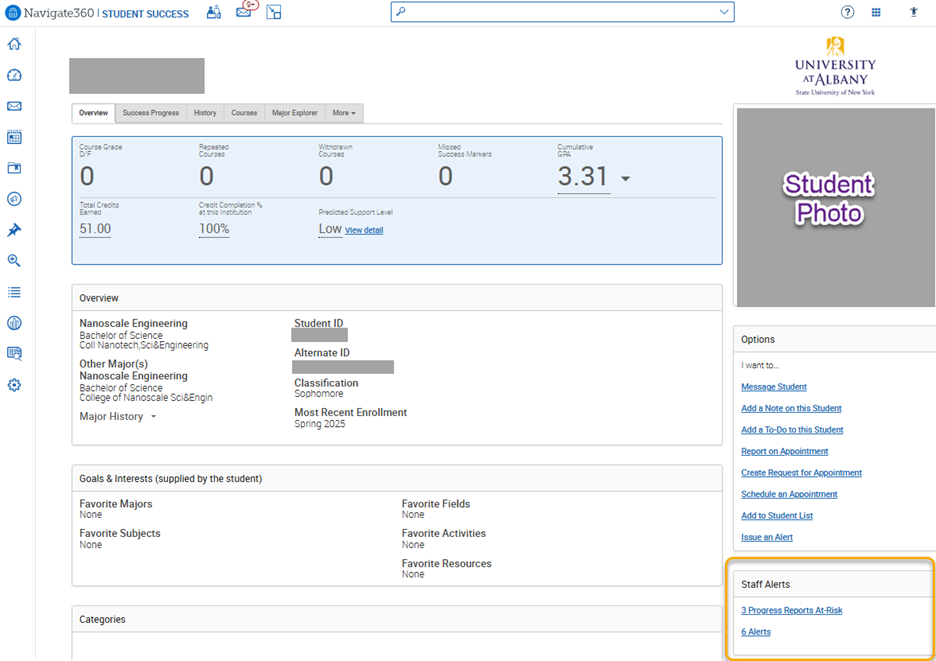
EAB Navigate student success platform dashboard
At Lawrence Technological University, EAB’s enrollment team rewired marketing, financial-aid packaging, and program mix, driving a 42 percent surge in freshman applications in one cycle. Navigate users routinely report double-digit jumps in early-alert interventions that translate into higher term-to-term persistence.
What makes EAB different is its library of best-practice playbooks drawn from 1,700 partner institutions. Consultants arrive with peer benchmarks—how your inquiry response time, yield rate, or advising caseload compares—which helps leaders focus on the two or three moves most likely to shift outcomes.
The approach works best when you adopt EAB’s software stack. If you are wedded to another CRM or advising tool, integration slows momentum. For campuses chasing quick enrollment gains, EAB’s blend of insight, technology, and coaching delivers measurable progress.
6. Higher Digital, the boutique catalyst for quick momentum
Higher Digital proves that a small specialist team can deliver rapid results. Founded by former university CIOs, the firm focuses on higher-ed strategy, governance, and execution coaching.
A recent example shows the pace: a midsize private university faced a backlog of more than 60 IT projects. Higher Digital completed an assessment, aligned cabinet priorities, and launched a new governance model in six weeks. Within the next quarter, the top five initiatives moved forward and resource conflicts dropped by 30 percent.
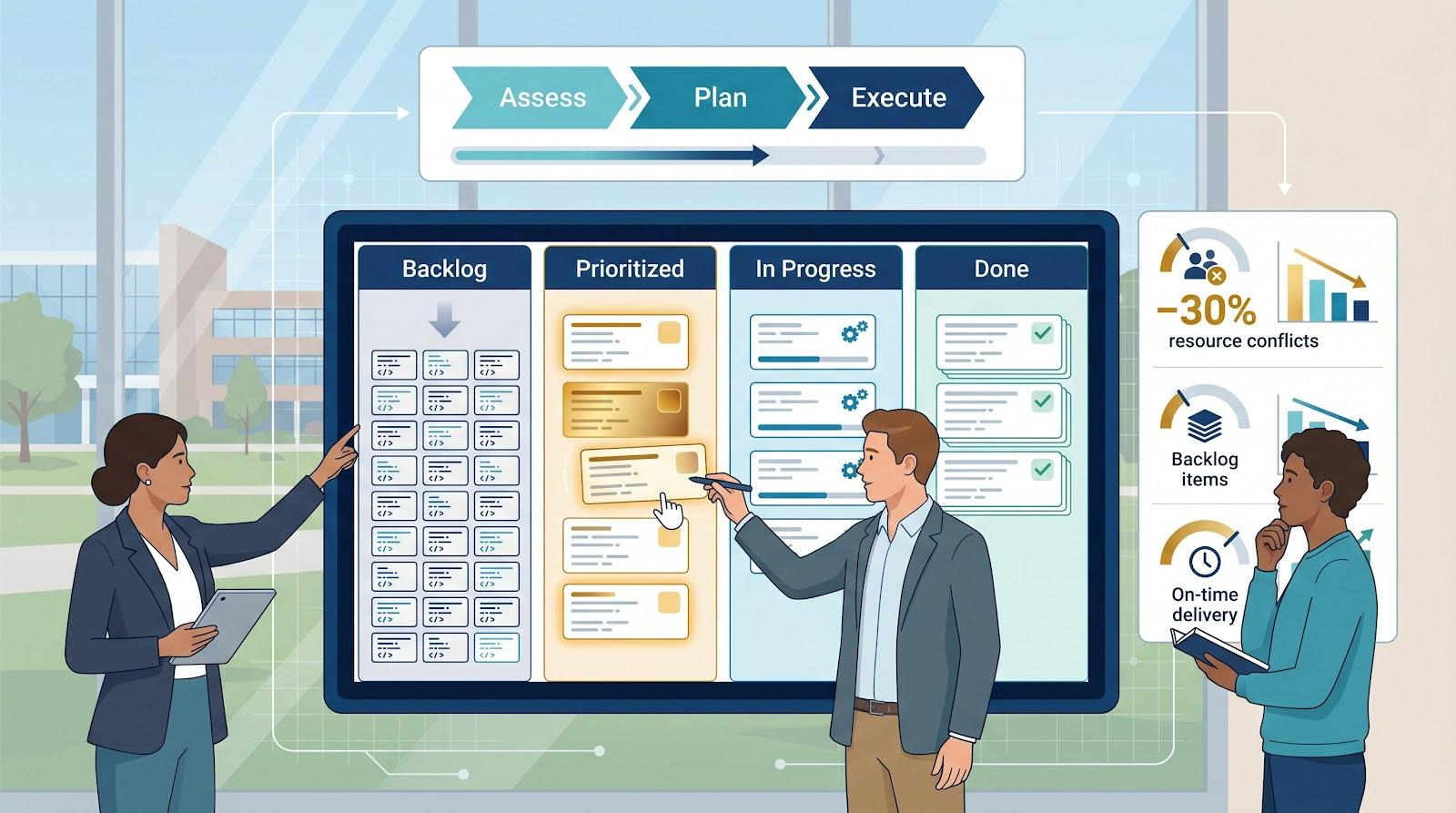
The method follows three steps—assess, plan, execute—with strong attention to culture and accountability. Consultants embed with campus teams, teach portfolio-management skills, and leave behind dashboards that track progress long after they exit.
Because the firm is lean, it doesn’t staff large development teams. You’ll still need an implementation partner for a major ERP rollout. If your biggest hurdle is alignment, decision speed, or rescuing stalled projects, Higher Digital offers credible, hands-on guidance to get things moving again.
Comparison at a glance
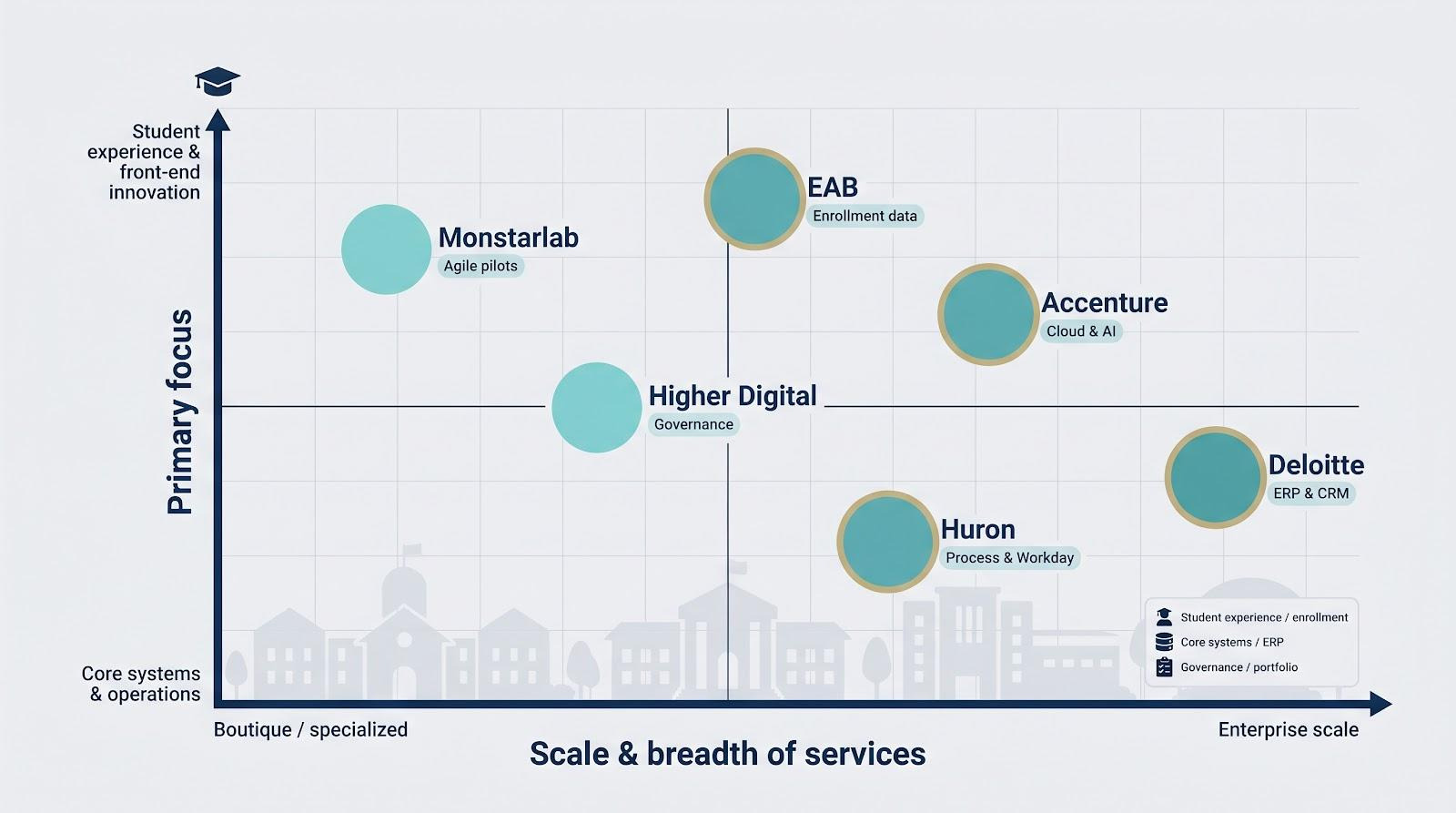
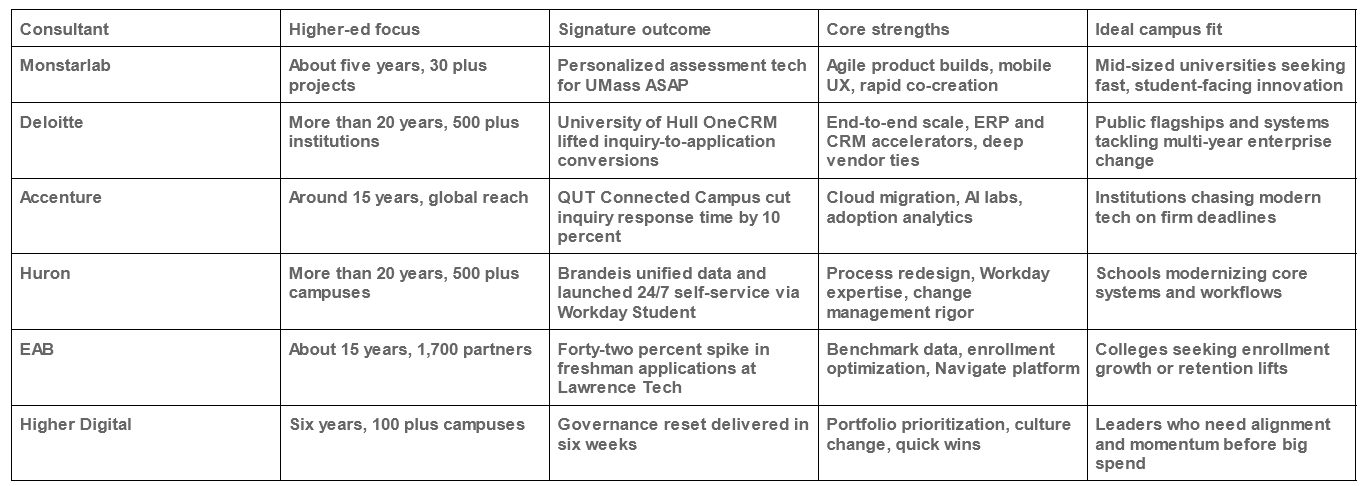
Education Technology Product Development for Universities
Ranking firms by reputation is one lens; another is asking what each actually builds. Education technology product development is the discipline of designing, prototyping, and shipping campus-facing software—mobile apps, self-service portals, adaptive learning tools—rather than simply configuring an off-the-shelf platform. For provosts who want a differentiated student experience, that build-versus-buy distinction matters.
Monstarlab is the clearest product-development specialist on this list. Its work on the University of Massachusetts Adult Skills Assessment Program (ASAP) is a textbook example: rather than installing a packaged assessment tool, the firm co-designed personalized assessment technology with faculty and learners, tuning it to culture, language, and device preferences. That agile, pilot-first method—small squads, narrow scope, fast iteration—is how genuine edtech products get to campus quickly without a multi-year ERP commitment.
The larger firms approach product work differently. Accenture brings engineering depth to custom builds, having embedded an AI chatbot into Queensland University of Technology’s unified student environment for real-time support. Deloitte, meanwhile, layers reusable assets such as its Student Connect accelerator on top of platforms like Salesforce, blending product thinking with enterprise integration.
If a bespoke student-facing tool is your priority, weight your shortlist toward partners with proven design-and-build muscle. Pair a product-led specialist with a systems integrator when the new tool must plug into legacy back-end systems—exactly the front-door-plus-back-end pairing recommended for Monstarlab.
Higher Education Enrollment Platform Development
Few transformation goals carry more board-level weight than enrollment, and the platforms behind the funnel are where data, marketing, and financial-aid strategy converge. Enrollment platform development covers the CRM, predictive models, and outreach automation that turn anonymous inquiries into enrolled, retained students—and the firms here take distinct routes to building it.
EAB is the dedicated enrollment-platform partner on this list. Its Navigate platform, backed by benchmarking data from 1,700 partner institutions, pairs software with consulting so leaders can act on peer comparisons rather than guesswork. At Lawrence Technological University, EAB’s enrollment team rewired marketing, financial-aid packaging, and program mix to drive a 42 percent surge in freshman applications in a single cycle—evidence that platform plus playbook beats either alone.
Deloitte takes an enterprise-CRM path. At the University of Hull it replaced a fragmented recruitment stack with a single Salesforce-based OneCRM, delivering personalized outreach and a measurable lift in inquiry-to-application conversion within the first admissions cycle. Accenture contributes pre-trained predictive models for enrollment and retention, useful when you need forecasting baked directly into the platform.
The right choice hinges on your existing stack. EAB’s blend of insight, technology, and coaching shines when you adopt its software, while Deloitte fits campuses committed to Salesforce or a broader ERP modernization. Either way, insist on documented conversion or yield gains at a comparable institution before you commit.
Student Engagement Platform Developers for Universities
Enrollment gets students in the door; engagement keeps them progressing to graduation. Student engagement platform development spans advising and early-alert systems, 24/7 self-service portals, mobile support, and the analytics that flag a struggling student before they disappear. Several firms on this list build exactly these systems, each emphasizing a different layer of the engagement stack.
EAB anchors the advising-and-success side. Its Navigate and Starfish platforms surface early-alert interventions that translate into higher term-to-term persistence, giving advisors a shared view of who needs outreach and when. That data-driven coaching model is purpose-built to lift retention, not just recruitment.
Huron strengthens engagement through operations. At Brandeis University its Workday Student migration launched 24/7 self-service for registration and financial aid and cut advising wait times by 15 percent in a single semester—fewer friction points means students stay engaged with the institution rather than fighting its systems. Accenture adds conversational engagement, having embedded an AI chatbot at Queensland University of Technology to answer questions in real time, while Monstarlab’s student-facing pilots show how a polished digital front door raises everyday satisfaction.
When evaluating engagement-platform partners, define the moment of engagement you most want to improve—advising, self-service, or real-time support—and choose the firm whose proven outcomes map to it. As with every category here, demand a comparable case study with measurable persistence or satisfaction gains before signing.
How to choose the right digital transformation consultant
Picking a partner can feel like speed dating with slide decks. Let’s simplify the decision.
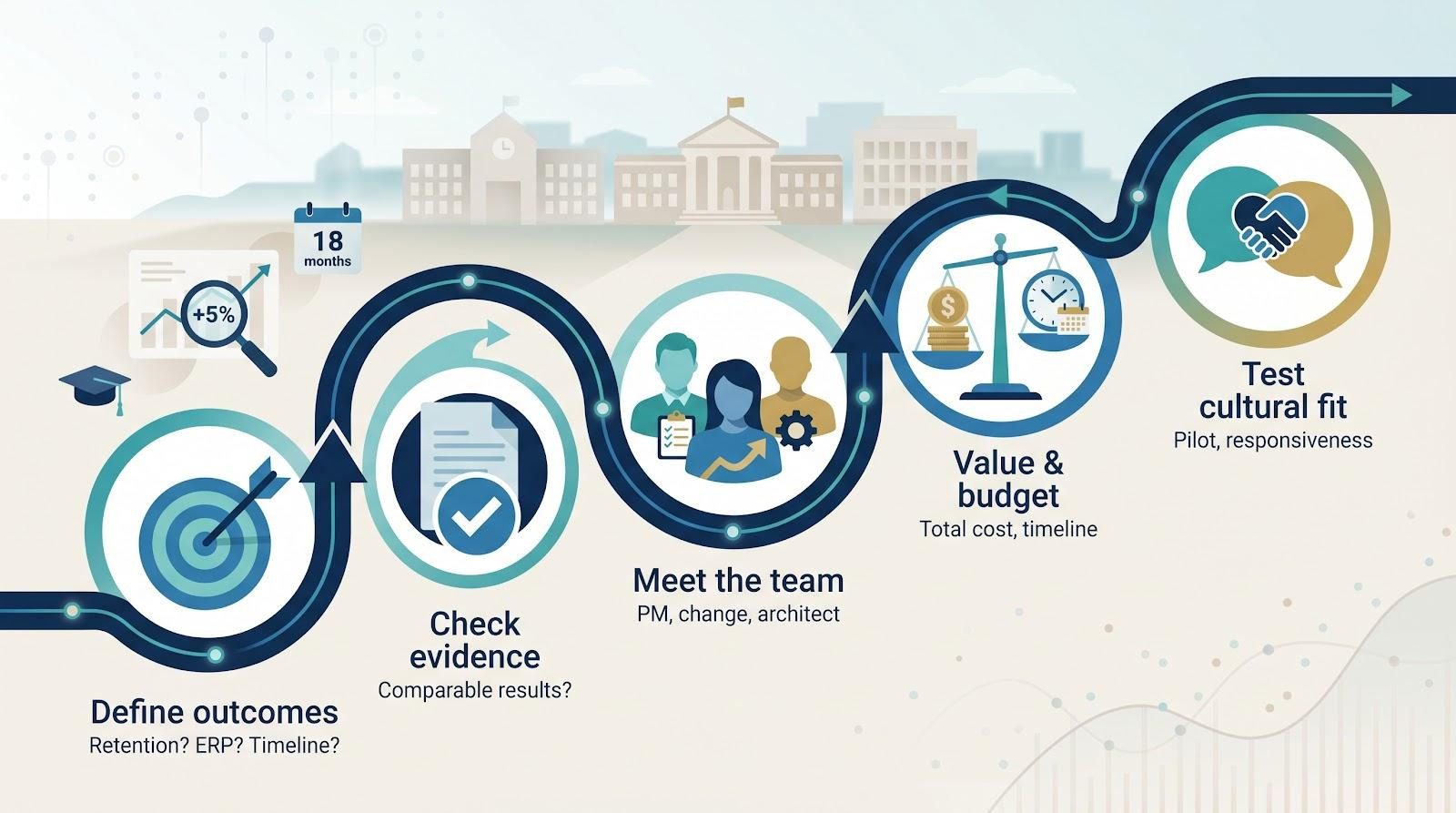
Start with outcomes. Map the two or three results you must deliver—perhaps a five percent retention lift or a cloud ERP in 18 months. Any firm on your shortlist should show proof of achieving that outcome at a comparable institution. When Deloitte built a Salesforce-based OneCRM for the University of Hull, leaders documented a clear jump in inquiry-to-application conversion. Ask every vendor for similar evidence, not glossy promises.
Next, inspect the team on the ground. Meet the proposed project manager, the change-management lead, and the technical architect. You want professionals who can translate between faculty committees and developers without missing a beat. If a firm avoids these introductions, keep shopping.
Budget matters, but judge value, not just rate cards. A boutique like Higher Digital bills less per day than a Big Four, yet its rapid governance sprints can shorten the timeline and lower total spend. Run scenario budgets so trustees see the full picture, including internal staffing and post-go-live support.
Finally, gauge cultural fit. Do consultants listen, adapt, and respect shared governance, or do they steamroll? A quick pilot—such as a four-week discovery phase—reveals working style with limited risk. Use that trial to test responsiveness, clarity of deliverables, and how well they coach your team rather than own every task.
Follow these steps and you’ll land a partner who boosts capability, not headaches.
FAQs: quick-answer corner
What counts as digital transformation in higher ed?
Think campus-wide reinvention, not a single software swap. It layers technology, data, and new ways of working to improve student outcomes, streamline operations, and spark innovation—all together.
Why hire a consultant when we already have an IT team?
Bandwidth and experience. Campus IT shops juggle daily support with limited project time. Consultants bring proven playbooks, vendor clout, and change-management muscle so you avoid common missteps and meet ambitious timelines.
How long does a typical project take?
A focused initiative, such as a CRM rollout, usually lasts six to 12 months. A full cloud ERP often spans 18 to 24 months. A complete transformation roadmap may phase over three to five years, with quick wins in each stage.
What does success look like?
Tie results to numbers the cabinet tracks: higher yield, lower service wait times, cleaner audit findings, or a measurable rise in student satisfaction. Set baselines before kickoff and review progress every quarter.
Is bigger always better when choosing a firm?
Not always. Large firms excel at multi-year, multi-system overhauls. Boutique specialists shine when alignment, speed, or niche expertise matter most. Match partner strengths to your priority outcomes, not to brand size.
Conclusion
Digital transformation in higher education is complex, but the right consulting partner turns vision into measurable wins. Define the outcomes that matter most, vet teams for proven success, and weigh cultural fit alongside budget. With clear criteria and a focused shortlist, you’ll select a consultancy that accelerates progress for students, staff, and the institution as a whole.
.jpg)