8 Checks Before Staff Walk Into a Brand-New Workplace
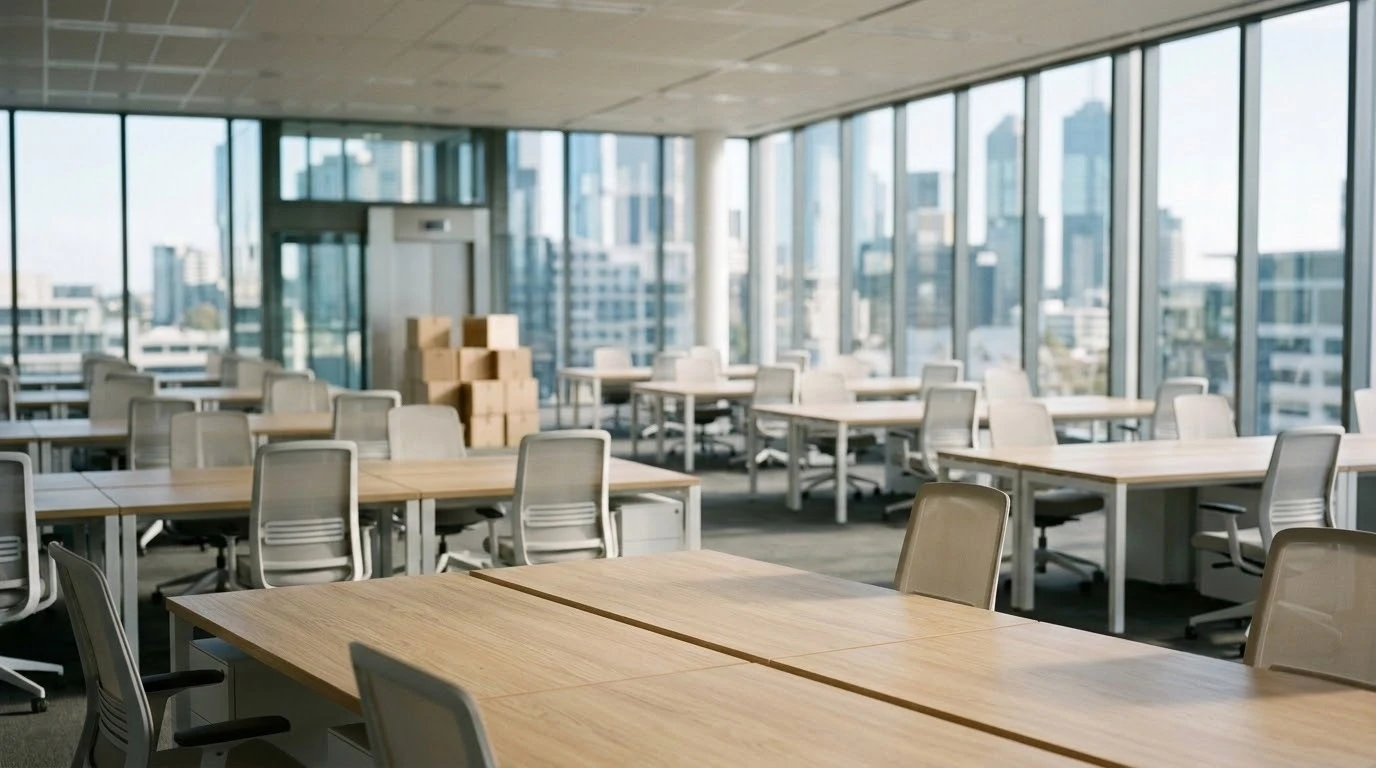
A workplace can look finished from the lift lobby and still be a week away from being usable. Paint is dry. Desks are in. Then the first person tries to log in, and the bathrooms have no soap.
It is preferable to delay a move by two days than to spend a month apologising for a site that was never ready.
Confirm occupancy paperwork
Do not move people in until you have the occupancy permit or occupation certificate from the building surveyor or certifier.
Inspections during the build only check minimum code at set stages. They are not a green light for daily work.
Get these on file first:
- Occupancy permit or occupation certificate
- Electrical and plumbing compliance documents
- Fire system commissioning records
Keep copies in a shared folder more than one person can open. The week you need them, the project manager is usually on another site.
Under WHS laws, you still hold duties to workers and visitors, even when the base building belongs to someone else.
Fund the finishing work
The number you signed off at the design stage usually covers demolition, site works, structure and a finished shell. It does not automatically cover data cabling, lockers, window film, working appliances or after-hours access for the last trades.
In Melbourne, a 2026 knockdown rebuild cost is commonly quoted from about $400,000 to over $1.5 million for a standard to high-end home. Commercial work is quoted on its own terms.
Hold a 10 to 15 per cent contingency for the messy end of the job. Temporary rooms, extra bins and a failed first clean eat that buffer quickly.
If the budget is already tight, cut a feature. Do not cut the handover.
Walk the defect list
Practical completion is a contract date, not a compliment. Walk every room with a snag list in your hand.
Look for the usual leftovers:
- Sticky doors and poorly latched hardware
- Chipped joinery and paint on switches
- Silicone gaps in wet areas
- Cracked tiles or unfinished corners
Photograph it. Date it. Send it in writing.
Do this before the furniture truck arrives. Once workstations sit on unfinished floors, you will move them twice.
Warranty periods in most states run from practical completion, not from the week you finally feel settled. Once you take possession, your leverage drops. An independent pre-occupancy inspection is cheap compared with arguing later over water in a wall.
Test the safety systems
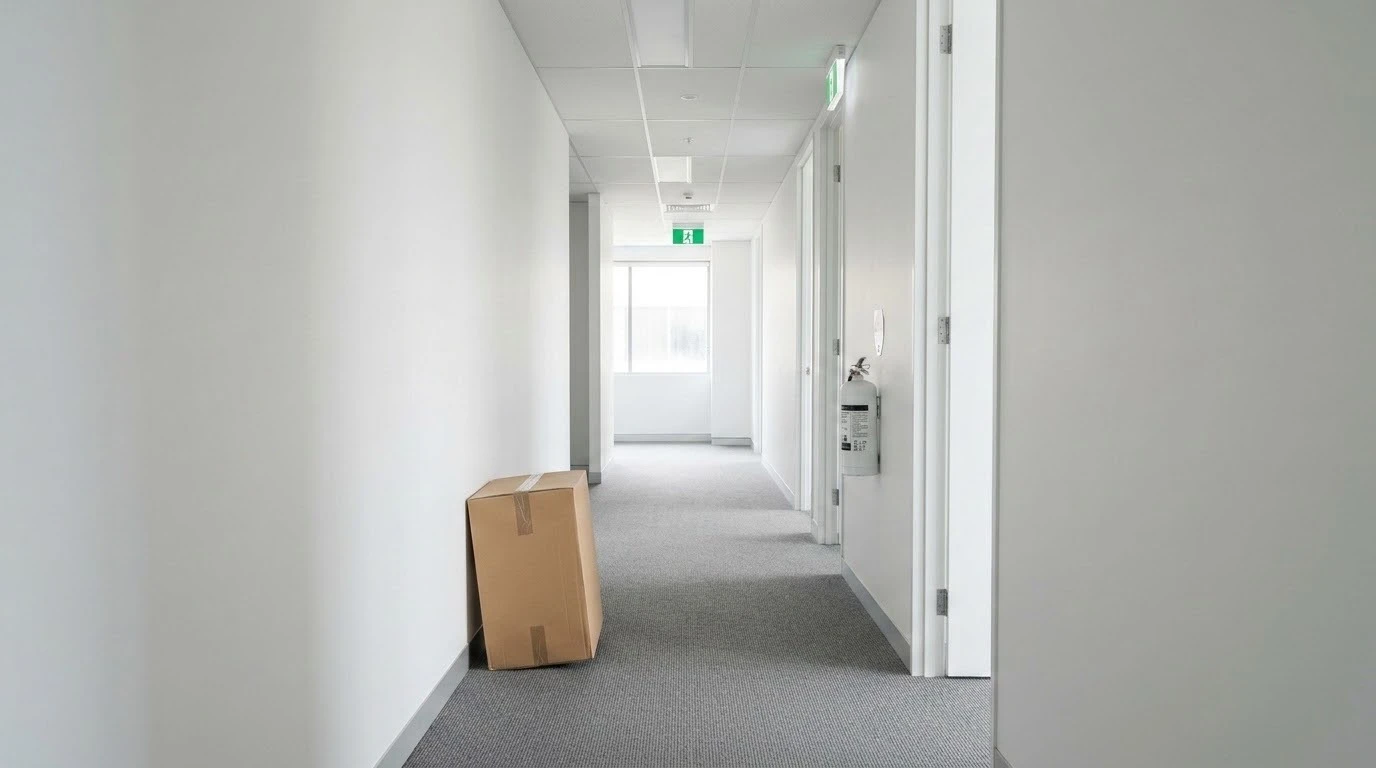
This one is short because it should already be done. Check it anyway.
Confirm:
- The fire indicator panel is clear
- Extinguishers are mounted
- Exit lights work
- Paths out are not blocked by cartons
- Wardens are named
- The evacuation diagram matches the real layout
- The first aid kit contains more than a logo
Emergency lighting should have a test record. If nobody can produce one, treat it as a defect.
Prove services actually work
Turn things on. Do not take “it’s connected” as the answer.
Check:
- Air handling in more than one room
- Hot water and the boiling water unit
- Dishwasher and other kitchen appliances
- Door hardware and alarms
- NBN or fibre handoff
- Wi-Fi in the far meeting room
Supposedly ready sites often have boardrooms with power but no data. Or the air was never balanced, and the north side is unpleasant by 11am.
Run the taps. Flush the toilets. Time how long hot water takes.
While you are there, label the distribution board and the isolation points. The first fault will happen after 5pm.
Check amenities and access
Bathrooms need soap, paper, bins and a sanitary unit that is booked, not promised.
The kitchen needs a fridge that is actually cold, a sink that drains, and enough crockery that people are not eating from takeaway lids on day one.
If staff or visitors use mobility aids, walk from the street to the desk. Door pressure, ramps and the accessible toilet are often almost right, which is still wrong. AS 1428 and the Access to Premises Standards apply to the space you are about to occupy, not the version in the render.
Clean before move-in
Construction dust is not ordinary dust. Plaster fines sit in window tracks, cable trays and return air.
Do builders clean before furniture. Do a detail clean after.
For a thorough clean after a fit-out, professional office clean Melbourne services are designed as a specialized two-stage job, going far beyond the capabilities of a weekly clean with a vacuum and a spray bottle. Weekly cleaning will not lift grout haze, sticker residue on glass, or dust off the tops of cupboards.
Write the scope down:
- High dusting
- Interior glass
- Kitchens and bathrooms
- Vacuum inside joinery
- A wipe of desks once they are placed
Do not unpack into a room that still smells like solvent. If the cleaner and the furniture truck are booked for the same morning, the floor usually loses.
Set up week one
Have the boring things ready before anyone asks.
- Keys, fobs and alarm codes
- Printer defaults and meeting room names
- Waste and recycling
- Parking rules
- One named person on site for the first three days
Show people the exits and amenities before you show them the coffee machine. They will still ask about the coffee machine first.
Start the ongoing clean from day one. Waiting until you “settle in” is how the microwave becomes a shared problem.
You will still find issues in week two. That is normal. None of these checks should be a surprise at 8.30 on Monday.