AI Translation Is Becoming a Business Decision, Not a Language Problem: An Expert Conversation
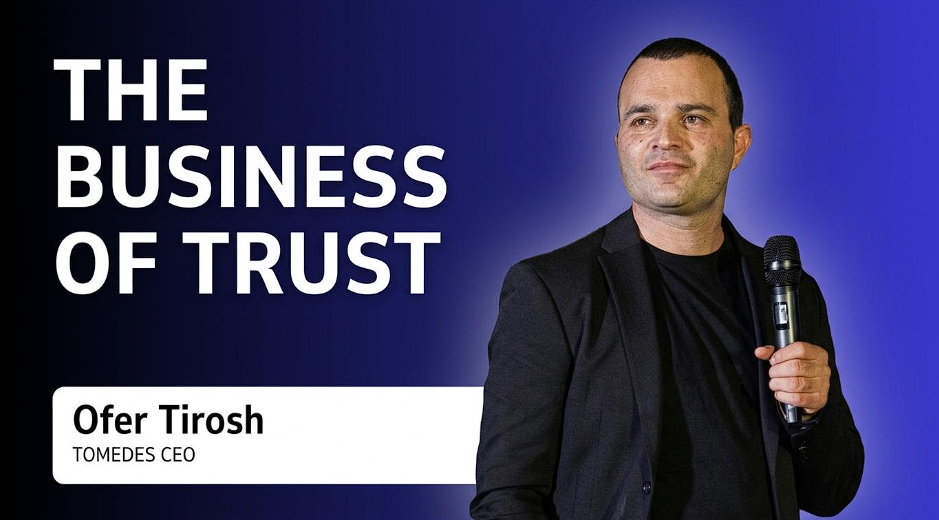
Every company that sells, ships, or supports customers across borders eventually runs into the same quiet assumption: that translation is a language problem, solved once decent software exists. Ofer Tirosh does not think that is true anymore.
As Chief Executive Officer at Tomedes, a professional translation company that has been building language technology since 2007, Tirosh has spent the last couple of years watching the client conversation shift. The questions he gets asked are not about vocabulary or grammar. They are about liability, revenue, and who signs off before a translated document goes out the door.
We sat down with him to talk about why he thinks most businesses are still asking AI translation the wrong question.
You have framed AI translation as a business decision rather than a language problem. What changed?
The technology got good enough that the argument moved. A few years ago, the question was whether AI could produce readable text in another language. It can, easily. Now the real question is whose desk the risk sits on when it gets something wrong. That is not a linguistics question. That is a decision about budget, process, and accountability when a mistranslated clause reaches a client or a regulator. Once you frame it that way, translation stops being a task you hand to whoever happens to be bilingual on the team, and it becomes something finance, legal, and operations all have a stake in.
What is the biggest myth business leaders still believe about AI translation?
That picking the single best AI model solves the problem. It does not, because there is no best model, only a model that performs best on this sentence, in this context, today. Ask several AI systems to translate the same paragraph and you will often get different answers, sometimes only in tone, sometimes in a way that changes what a clause actually commits you to. Our team ran exactly that test on a batch of complex multilingual legal contracts. One model mishandled honorifics in Asian-language documents in roughly one case out of eight. Another invented dates when rendering Romance languages. A third missed the formal register required for German corporate filings. Same source text, three different ways of getting it wrong, and none of them obvious unless someone already reads the target language well enough to catch it. Businesses keep shopping for the model that never fails. That model does not exist, and the search for it wastes time that would be better spent building a process that catches the failure instead. There is a useful breakdown of how to choose an AI translation tool that goes into what actually separates these options if you want the longer version.
Why do you think so many companies still default to a single AI model despite knowing the risk?
Momentum, mostly. A team adopts a model, wires it into a workflow, and unwinding that later looks like a project rather than a fix. Nimdzi's research on the build-or-buy question in language technology makes a related point about custom-built platforms: teams consistently underestimate what it costs to keep a system production-ready once it is live, so they stick with whatever is already plugged in rather than reopening the decision. The same inertia shows up around model selection. Nobody wants to be the person who tells finance that the tool the company already paid to integrate is not good enough.
Isn't the point just more automation? Why complicate a translation workflow with extra process?
More automation is the wrong goal if it simply moves the mistake earlier in the pipeline. Speed does not fix accuracy, and the market has very little patience for the difference. CSA Research's global buyer survey found that a majority of online shoppers will not buy from a company at all unless the experience is in their own language, and a meaningful share of them say they will avoid a site permanently rather than push through a translation that does not read right. Automation that ships those mistakes faster is automating the wrong thing. The value was never in translating faster. It is in translating in a way nobody has to go back and check.
So what does a mediocre translation actually cost a business, beyond the obvious embarrassment?
More than most leadership teams price in. Unbabel's Global Multilingual CX Report found that companies translating well enough to genuinely communicate with international customers are more than twice as likely to see revenue and profit grow than companies that do not bother. The other side of that is documented too: CSA Research puts the share of shoppers who abandon a purchase over language at a majority, even in markets where a translated version technically exists but is not trusted. Having an output is not the win. Having the right output is. Most translation budgets are still built around the first one.
How should a business actually evaluate an AI translation option, when most of the marketing sounds the same?
Ignore the adjectives. Every vendor says accurate and every vendor says fast. Ask what happens when the AI gets it wrong instead of whether it is usually right. Does the workflow surface it when different models disagree, or does it just hand you one confident answer and let you find out later? Is there a route to a human reviewer built into the process, or is that a separate phone call and a separate invoice? Can it handle the actual documents you need translated, contracts, manuals, whatever they are, without wrecking the formatting you will have to fix by hand afterward? Evaluate the failure mode, not the pitch.
What role does human review still play if AI is doing most of the work?
A bigger one than people assume. We route anything with real consequences, contracts, medical content, regulatory filings, to human reviewers working to ISO 18587, the industry standard for post-editing machine-translated content, so nothing that reaches a client is guesswork on either side of the process. AI has changed how much of the first pass gets handled without a person, not whether a person needs to be in the loop at all for anything that carries liability. The businesses getting this right are not choosing between AI and human review. They are deciding, deliberately, which content needs which.
Where do you see this heading over the next two or three years?
Translation governance starting to look like a smaller version of what happened with data security. Right now, most companies do not have a clear answer for who owns translation risk, the same way most companies did not have a clear answer for who owned data risk fifteen years ago. That changes once the first few expensive mistakes become public enough to make a board ask the question directly. I expect procurement and legal to get involved in AI translation decisions a lot earlier than they do today, and I expect fewer of those decisions to be made purely on the marketing page of whichever tool a team found first.
Final word for a founder reading this who has been treating translation as a solved problem?
It was never solved. It got automated, which is a different thing. Automated and correct are not the same claim, and the gap between them is exactly where the expensive mistakes live. Ask who is accountable for that gap in your business today. If the honest answer is nobody, that is the actual problem, and it has very little to do with language.

.jpg)