AI Video Generation in 2026: A Small-Business Marketing Playbook
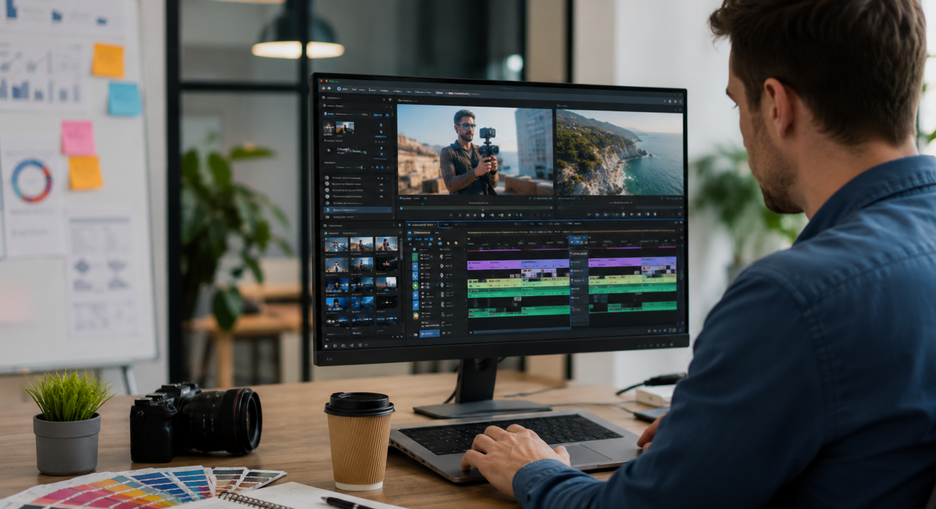
For most of the past decade, video was the marketing channel small businesses knew they needed but quietly avoided. The demand was never in question. In Wyzowl's 2025 State of Video Marketing report, 89% of businesses said they use video as a marketing tool, 95% of marketers called it an important part of their strategy, and 93% reported a positive return on investment from it. The obstacle was never desire. It was production. A single 30-second promo could mean hiring a videographer, paying an editor, and waiting two weeks for one deliverable. For an owner already juggling sales, support, and payroll, that math rarely added up, so video stayed on the someday list.
That barrier is finally coming down. AI video generation has moved from novelty to a practical, everyday tool — and the businesses adapting fastest are not the enterprises with the deepest budgets. They are the small teams who, for the first time, can produce video at the pace today's social platforms reward.
Why the economics suddenly work
The real shift is less about creativity than about cost structure. Traditional video carried a high fixed cost per asset: crew, equipment, location, and editing time cost roughly the same whether you needed one clip or ten. That made experimentation expensive, so most small businesses shot a handful of "safe" videos each year and hoped they performed.
AI generation inverts that model. Once you're set up, the cost of producing one more clip falls close to zero — and that single change rewrites the strategy. Instead of staking a quarter's budget on one polished ad, a business can generate a dozen variations of an idea, publish them across channels, and let real engagement data decide the winner. In a media environment dominated by short-form video — TikTok, Instagram Reels, YouTube Shorts — the ability to test cheaply and often isn't a nice-to-have. It's the entire game.
Where AI video earns its keep
Not every use case is equal. The highest-return applications for a small business tend to be the repetitive, high-volume tasks that were never worth a production budget before:
Social ads and product teasers. Short, punchy clips for paid and organic social are the natural starting point. You can spin up several different hooks for the same offer and quickly see which opening earns attention in the first three seconds — the only part of a feed video most people actually watch.
Bringing existing photos to life. Most businesses already own a library of product shots and brand photography that sits unused. Modern tools can animate those stills — adding camera motion, gentle movement, and atmosphere — so a flat catalog image becomes a scroll-stopping clip. If you already have a strong product photo, an image-to-video tool is often the fastest route from an asset you already own to content you can post the same afternoon. Invideo agent helps teams repurpose existing product shots, brand visuals, and creative assets by turning images into videos, helping them create more engaging content without starting every project from scratch.
Localized and seasonal variations. The same core concept can be re-rendered for different regions, audiences, languages, or holidays without booking another shoot. For a business running promotions across multiple markets, that turns a logistical headache into a few minutes of work.
Founder and team storytelling. For service businesses, consultants, and personal brands, a steady stream of short videos builds familiarity and trust over time — and consistency is exactly what manual production tends to kill after the first burst of enthusiasm.
Choosing a tool: why "multi-model" matters
The AI video field is moving fast, and no single model is best at everything. Some excel at realistic human motion, others at stylized or cinematic shots, and others at fast, inexpensive drafts you can iterate on before committing real budget. Among the engines you'll come across are Google's Veo, Kling, and Seedance, each with distinct strengths, output styles, and pricing.
For a small team, the smart move is rarely to commit to a single model. It's to work through a platform that brings several together, so you can match the model to the task — a cheap draft model while you're still testing a concept, a premium one once the idea has proven itself. Multi-model platforms such as the AI video generator Swayclip take this route, putting leading text-to-video and image-to-video engines behind one interface and a single shared credit balance, which removes the friction of paying for and learning several separate subscriptions. The underlying models remain the same well-known engines you'd find elsewhere; the value is in not having to bet everything on just one of them.
A simple starting workflow
If you're trying AI video for the first time, resist the urge to chase one perfect hero film. Start small and build a loop you can repeat every week:
1. Write a tight brief. Describe the subject, setting, motion, and aspect ratio in one clear prompt — for example, "a slow push-in on a coffee cup on a sunlit cafe table, steam rising, warm tones, vertical 9:16." The more specific you are, the more usable the first result.
2. Draft cheap, then upgrade. Generate first passes on a low-cost model to find a direction. Only move to a premium model once a concept is clearly worth polishing.
3. Generate variations, not one-offs. Produce three to five versions of every concept. This is the leverage traditional production never offered you, so use it deliberately rather than settling for the first acceptable take.
4. Publish and measure. Let platform analytics, not boardroom opinion, choose the winners. Then make more of whatever earns watch time and shares.
What to watch out for
AI video is powerful, but it isn't a hands-off button. Three things deserve ongoing attention:
Rights and brand assets. Only animate images you own or have properly licensed, and be cautious with recognizable faces, logos, and trademarks. The legal responsibility for whatever you publish stays with you, not the tool.
Realism limits. Today's models are excellent for short clips and concept shots, but they still struggle with long multi-scene continuity and precise on-screen text. Treat them as a short-form engine, not a replacement for a full edit suite.
Brand consistency. Because generation is so cheap, it's easy to flood your channels with off-brand clips. A light one-page guideline covering colors, tone, and pacing keeps higher volume from quietly diluting your identity.
The bottom line
Video used to be a budget line that rewarded whoever could spend the most. AI generation is quietly erasing that advantage. The technology won't write your strategy or understand your customer for you — those still belong to you. But it does remove the production bottleneck that kept small businesses watching from the sidelines while larger competitors shipped polished campaigns. In 2026, the competitive question is no longer whether you can afford to make video. It's whether you're willing to test, measure, and iterate faster than the bigger, slower players who still book a crew for every single shoot. For most small businesses, that's the most level the marketing playing field has looked in a very long time.