Are Britain’s start-up builders giving up on Britain?
There is a growing contradiction at the heart of British entrepreneurship. Ask founders about their businesses, and you hear confidence, even defiance. Ask them about Britain, and the mood may just darken.
This is the defining paradox: a generation that believes deeply in what it is building, but no longer fully believes in where it is building it.
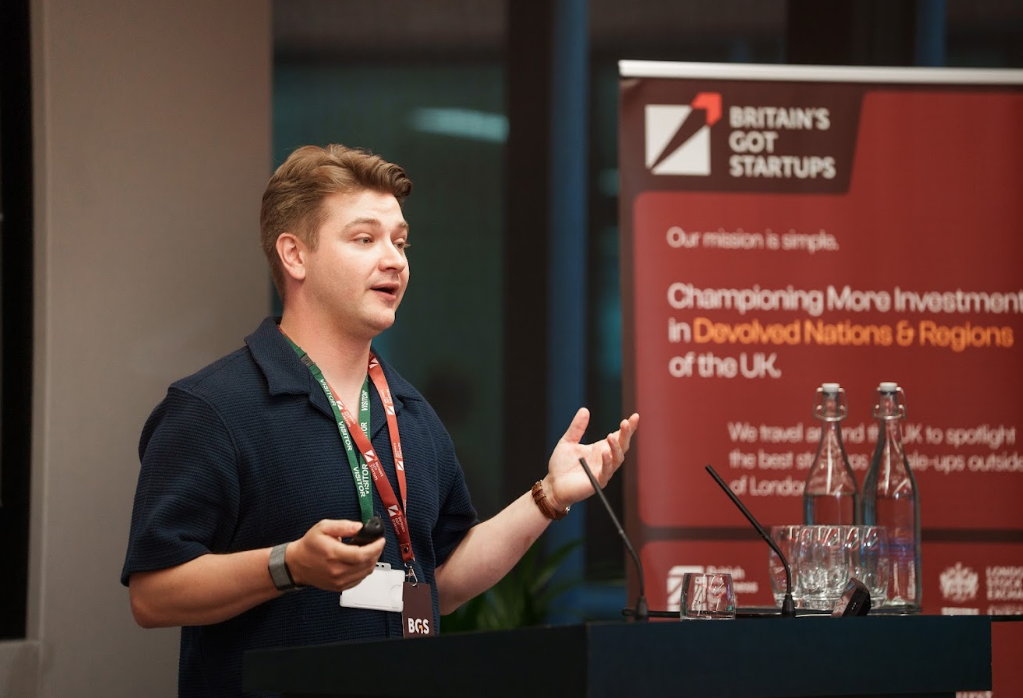
Entrepreneurs should feel inspired and encouraged, not limited by restricted environments and uncertainty. This is one of the fundamental reasons for creating Britain’s Got Startups.
Britain’s Got Startups was founded to address the funding disparity between London and other UK regions. Although 53% of Britain’s high-growth businesses are outside London, they receive only 39% of investment. BGS aims to close this gap by directly connecting regional talent with capital.
The data is stark. YouGov research shows 71% of British entrepreneurs are optimistic about their own company’s prospects. Meanwhile, the wider business environment has seen five consecutive quarters of negative confidence, with manufacturing sentiment at its lowest since 2020. Higher interest rates, rising taxes after the Autumn 2024 Budget, and persistent regulatory complexity have created a landscape in which founders feel they must succeed despite, not because of, it.
That distinction matters. When the country becomes an obstacle rather than a platform, founders change how—and where—they grow.
Most of Britain’s fastest-growing companies are not in London.
Britain’s tech economy is no longer a London story. Around two-thirds of UK tech firms—roughly 54,000 of 83,000—are now based outside the M25, according to the Tony Blair Institute.
Cities like Manchester, Bristol, Leeds and Edinburgh have built deep, sector-diverse ecosystems spanning fintech, advanced manufacturing and life sciences. Founders are choosing them deliberately—drawn by cost, talent and quality of life—because London no longer has a monopoly on advantage.
But capital hasn’t followed.
With this in mind, it’s understandable that BGS’ first National Showcase was launched in Bristol, with the intention of bringing together selected ventures in technology, engineering, and sustainable industries with investors seeking regional opportunities from the south west and south east.
Regional scaleups make up 53% of high-growth businesses but receive just 39% of equity investment. This mismatch is a structural failure: growth happens nationally, but funding remains concentrated. Despite rhetoric about backing the best opportunities, geography still carries an unjustified discount.
A policy environment that hasn’t kept pace
Founder frustration isn’t abstract—it’s policy-driven.
The Office for Budget Responsibility has shown that the rise in employer National Insurance contributions directly increases hiring costs. For scaleups with tight cash flow, that bites hard.
At the same time, sustained high interest rates continue to restrict access to affordable growth capital, squeezing companies that have outgrown early-stage funding but are not yet able to access institutional equity.
The result is a reversal in mindset. Founders no longer ask what Britain offers—they calculate what it costs. That shift should worry policymakers more than it appears to.
In the past three years, Britain’s Got Startups has received over 500 applications from founders across the UK, raising between £100,000 and £20,000,000. With the program travelling throughout Scotland, Wales, and England to support and observe innovative startup pitches, it’s clear that the demand for institutional equity is on the rise.
So what comes next?
British entrepreneurial resilience remains undeniable. The 71% of founders optimistic about their businesses represent real economic momentum, and the case for backing them is strong.
Across the country, scaleups are proving that high-growth companies can be built anywhere—with global ambition from day one.
That energy is evident in rooms where founders continue to pitch, build, and scale despite the system around them. On 3 June this year, startups in AI, Tech, STEM, Fintech, and Healthtech pitched for up to £17 million in investment at Britain’s Got Startups’ final, demonstrating what happens when ambition meets capital.
But these moments must become the norm, not the exception.
Britain’s Got Startups remain steadfast in their dedication to elevate local founders and encourage investors to look beyond London for opportunities by breaking down barriers and nurturing innovative ideas from entrepreneurs across the UK.
Britain has the founders and the ideas. What it lacks is an investment system and policy environment aligned with where growth actually happens. The choice is simple: support that momentum or watch it move elsewhere.