Building a Sustainable SEO Strategy for Surrey Businesses

The strongest search strategies are built around evidence. A business first decides which services and customers matter, then uses search data to understand how those customers look for help. In Surrey, this matters because competition, geography and local buying behaviour can change the value of one search compared with another. A disciplined SEO process turns those differences into practical priorities instead of relying on guesswork.
Treat SEO as Part of the Growth Plan
A useful mistake to avoid with growth planning is optimising for the easiest metric rather than the most meaningful one. More clicks, more impressions or a higher ranking can look positive, but they should be interpreted in context. Ask whether the change attracted the right audience, whether those visitors engaged with the right page and whether the business received better opportunities. That sequence keeps optimisation connected to commercial value.
Focus on Searches That Match Profitable Work
Over time, profitable search themes should become part of a broader feedback loop. Search data shows what people want, landing pages show what information they need, and lead outcomes show which demand is commercially useful. Feed those lessons back into service pages, offers, staffing and future campaign priorities. The best search strategies improve because the business learns from every stage of the customer journey.
Organic search also benefits from maintenance. A page that performed well a year ago may contain outdated information, weak calls to action or internal links that no longer reflect the site structure. Reviewing established pages can be more productive than publishing new content simply to increase volume. Quality and relevance should determine what stays, what is improved and what is consolidated.
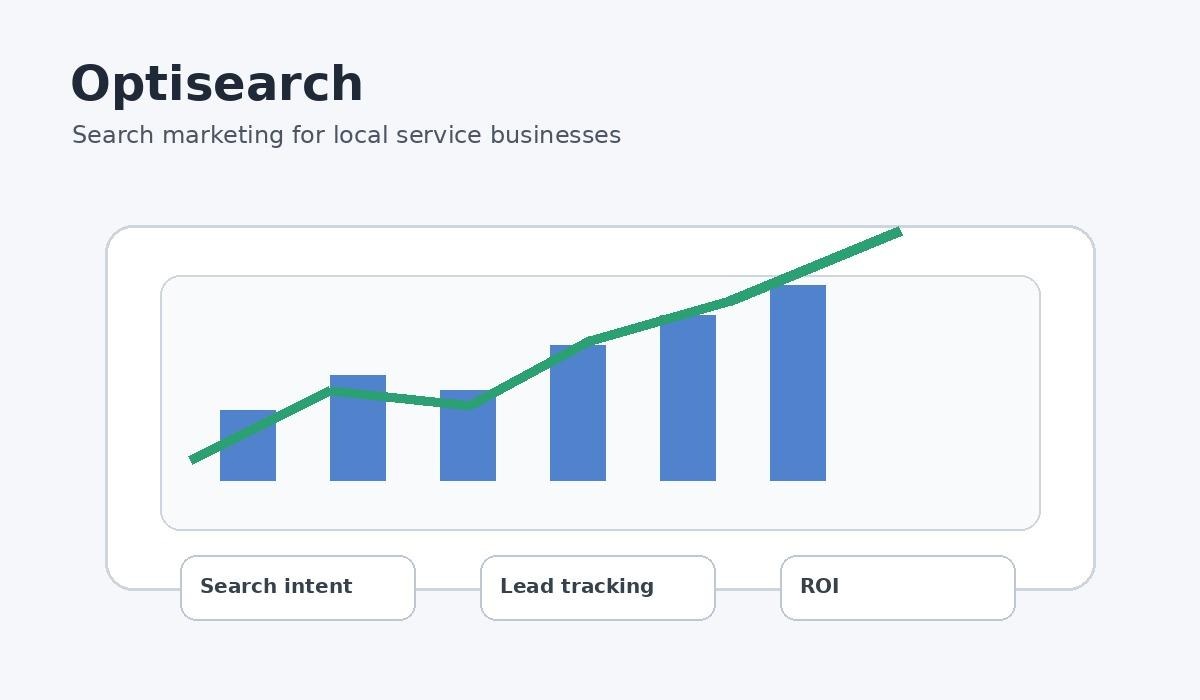
Image Source: Optisearch.co.uk (client website)
Give Local Pages a Genuine Purpose
Good search marketing is often less about finding one clever tactic and more about removing friction. With purposeful local pages, look for anything that makes the customer work harder than necessary: unclear wording, irrelevant traffic, missing proof, slow pages, weak tracking or a confusing next step. Fix the most important problem first. Once the customer journey is easier to understand, later optimisation becomes more reliable because the data is cleaner.
Make Important Pages Easy to Understand
Customer language should guide decisions about clear page architecture. Teams often describe services using internal terms that real customers rarely type into search. Calls, enquiries, sales conversations and site-search data can reveal the words people actually use. Bringing that language back into campaigns and pages usually improves clarity. The goal is not to force keywords into every sentence, but to make the content sound like the problem the customer is trying to solve.
Improve Technical Health Before It Becomes a Problem
A useful mistake to avoid with technical prevention is optimising for the easiest metric rather than the most meaningful one. More clicks, more impressions or a higher ranking can look positive, but they should be interpreted in context. Ask whether the change attracted the right audience, whether those visitors engaged with the right page and whether the business received better opportunities. That sequence keeps optimisation connected to commercial value.
For SEO, this discipline is particularly valuable because changes can take time to show their full effect. Pages should be improved with a clear purpose, then given enough time to collect meaningful evidence. Technical fixes, stronger service content, better internal linking and useful local information can reinforce one another when they are planned as a system rather than as isolated tasks.
Use Content to Reduce Customer Uncertainty
Over time, content and customer uncertainty should become part of a broader feedback loop. Search data shows what people want, landing pages show what information they need, and lead outcomes show which demand is commercially useful. Feed those lessons back into service pages, offers, staffing and future campaign priorities. The best search strategies improve because the business learns from every stage of the customer journey.
Keep Local Profiles Accurate
Good search marketing is often less about finding one clever tactic and more about removing friction. With local profile accuracy, look for anything that makes the customer work harder than necessary: unclear wording, irrelevant traffic, missing proof, slow pages, weak tracking or a confusing next step. Fix the most important problem first. Once the customer journey is easier to understand, later optimisation becomes more reliable because the data is cleaner.
Build Authority Through Relevance
Customer language should guide decisions about relevant authority. Teams often describe services using internal terms that real customers rarely type into search. Calls, enquiries, sales conversations and site-search data can reveal the words people actually use. Bringing that language back into campaigns and pages usually improves clarity. The goal is not to force keywords into every sentence, but to make the content sound like the problem the customer is trying to solve.
Organic search also benefits from maintenance. A page that performed well a year ago may contain outdated information, weak calls to action or internal links that no longer reflect the site structure. Reviewing established pages can be more productive than publishing new content simply to increase volume. Quality and relevance should determine what stays, what is improved and what is consolidated.
Turn Search Data Into Better Business Decisions
A useful mistake to avoid with search data decisions is optimising for the easiest metric rather than the most meaningful one. More clicks, more impressions or a higher ranking can look positive, but they should be interpreted in context. Ask whether the change attracted the right audience, whether those visitors engaged with the right page and whether the business received better opportunities. That sequence keeps optimisation connected to commercial value.
Connect SEO With Sales and Operations
Over time, sales and operations alignment should become part of a broader feedback loop. Search data shows what people want, landing pages show what information they need, and lead outcomes show which demand is commercially useful. Feed those lessons back into service pages, offers, staffing and future campaign priorities. The best search strategies improve because the business learns from every stage of the customer journey.
Set Clear Standards for External Support
Good search marketing is often less about finding one clever tactic and more about removing friction. With external support standards, look for anything that makes the customer work harder than necessary: unclear wording, irrelevant traffic, missing proof, slow pages, weak tracking or a confusing next step. Fix the most important problem first. Once the customer journey is easier to understand, later optimisation becomes more reliable because the data is cleaner.
For SEO, this discipline is particularly valuable because changes can take time to show their full effect. Pages should be improved with a clear purpose, then given enough time to collect meaningful evidence. Technical fixes, stronger service content, better internal linking and useful local information can reinforce one another when they are planned as a system rather than as isolated tasks.
Review What Changed Before Choosing the Next Move
Customer language should guide decisions about evidence-based iteration. Teams often describe services using internal terms that real customers rarely type into search. Calls, enquiries, sales conversations and site-search data can reveal the words people actually use. Bringing that language back into campaigns and pages usually improves clarity. The goal is not to force keywords into every sentence, but to make the content sound like the problem the customer is trying to solve.
Choosing External Support
For teams researching specialist help, Optisearch and SEO services Surrey are useful phrases to investigate when comparing providers. The final choice should still depend on fit: the agency should understand the service area, explain how leads will be tracked, show how landing pages and campaigns connect, and report in language that makes commercial sense to the client.
Final Thoughts
A search campaign should become more understandable over time, not more complicated. The team should know which searches matter, which pages convert, which locations are valuable and which leads become real customers. That visibility makes future decisions calmer and more accountable, whether the next step is to refine, expand or pause a particular part of the strategy.