Commercial Bulkhead Planning for Marinas, Resorts, and Residential Complexes
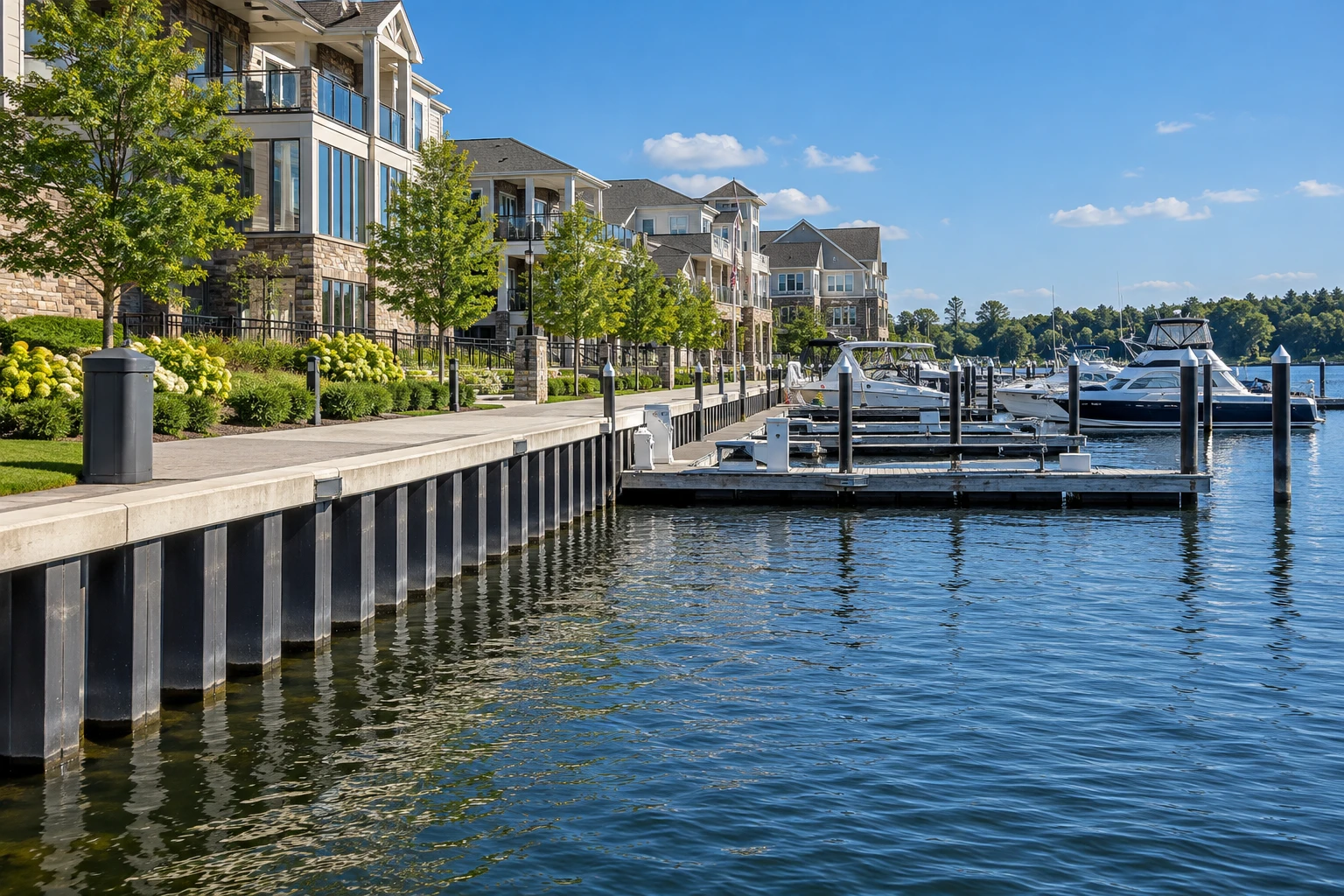
Commercial bulkheads have to be planned around more than shoreline appearance. Shore Protect Team serves marinas, resorts, and residential complexes in addition to private homes, and the service page identifies concrete as a strong choice for commercial properties in demanding Gulf Coast conditions.
The company's commercial marine construction services capabilities include bulkheads, seawalls, docks, piers, piling, retaining walls, and repair. A commercial shoreline can therefore involve several structures that need to function together while construction access and operations remain practical.
The first difference from a typical residential discussion is scale and use. Commercial properties may have longer shorelines, more people, larger waterfront structures, or operational requirements that make access and durability especially important.
The service page does not prescribe concrete for every commercial bulkhead. It says reinforced concrete is the best choice for commercial properties on the Gulf Coast and areas with hurricanes, where exceptional durability is a leading concern.
Other materials remain part of the service. Vinyl is described as suitable for residential and commercial properties, while riprap and gabions can address erosion, waves, drainage, and flexible shoreline stabilization.
The commercial bulkhead options should therefore be reviewed against the actual commercial site: water body, wave load, soil, wall length, maintenance plan, construction access, and the structures connected to the waterfront.
Commercial scale changes how length and access are viewed
A longer shoreline directly increases material quantity and scope. On a commercial property, that can also increase the importance of staging, consistent foundation conditions, and maintaining practical access to different sections of the work.
Difficult terrain or limited equipment access can increase labor costs by 20-40 percent according to the FAQ, so access planning is particularly important before a large scope is priced.
Durability can outweigh the lowest starting price
Wood has the lowest listed starting price among the main vertical wall materials, but concrete is positioned for maximum durability in demanding Gulf Coast and hurricane-zone conditions. Vinyl provides a lower-maintenance alternative across many water bodies.
A commercial owner should compare the materials according to the site's exposure and management priorities rather than the starting price alone.
- Marinas - Commercial waterfront use where durability, access, and adjacent dock or piling work may matter.
- Resorts - Shoreline protection that may need to coexist with guest-facing waterfront areas.
- Residential complexes - Longer shared shorelines and property-management maintenance priorities.
- Gulf Coast exposure - A condition where reinforced concrete is strongly positioned by the service page.
- Low-maintenance objectives - A reason vinyl may enter the comparison.
- Active erosion - A reason riprap or gabion systems may be evaluated.
Commercial proposals should separate wall cost from site cost
Material price per foot is only one line in a commercial scope. Soil can change pile depth, wall height and soil type can change anchor quantity, drainage may be required behind the wall, and access can increase labor.
A detailed proposal should show whether these items are included instead of presenting one blended per-foot figure with no explanation.
- Define the operational use of the waterfront and the structures that share it.
- Measure the complete shoreline length and identify separate exposure zones.
- Review soil, water level, wave load, and erosion conditions.
- Choose materials that fit both structural demand and maintenance goals.
- Plan access and staging before finalizing labor assumptions.
- Include drainage, anchors, piles, and repair or demolition work in the same scope where applicable.
Commercial work benefits from a system-level decision
A marina or resort may have several waterfront systems that interact with the bulkhead. Even when the wall is the only structure being replaced, access routes, piles, docks, and operational areas can affect the construction plan.
The strongest commercial proposal explains how the bulkhead protects the shoreline while fitting the site's exposure, foundation, maintenance, and access requirements. That creates a project definition that can be compared across bids without relying on material price alone.
Operational continuity can affect commercial staging
Marinas, resorts, and residential complexes may continue using portions of the waterfront while construction occurs. The service page does not prescribe a staging plan, so the contractor should identify how access to the work area will interact with the property's normal use when that issue is relevant.
This can influence the order in which shoreline sections are addressed and where materials are staged. It does not change the structural requirements of the bulkhead, but it can change how the work is organized and how labor is allocated across a longer commercial shoreline.
For managers comparing proposals, a clear staging assumption is useful because one contractor may have priced uninterrupted access to the whole shoreline while another assumes phased work. Those are different construction plans even if the finished bulkhead material and footage are identical.
Shared ownership makes documentation more important
Residential complexes and managed commercial properties may have several people involved in budgeting, maintenance, and future repair. A written record of material, footage, foundation assumptions, anchors, drainage, and completed repair work gives future managers a clearer basis for inspection and capital planning.
Commercial estimates should define operational boundaries
If only part of a marina or resort shoreline is included, the proposal should identify that limit clearly. This prevents the price from being compared with another bid that covers a longer wall or includes adjacent repair. Precise scope boundaries are especially important on large properties where several shoreline structures may be present.
.jpg)