Common mistakes when buying buggy in Oman
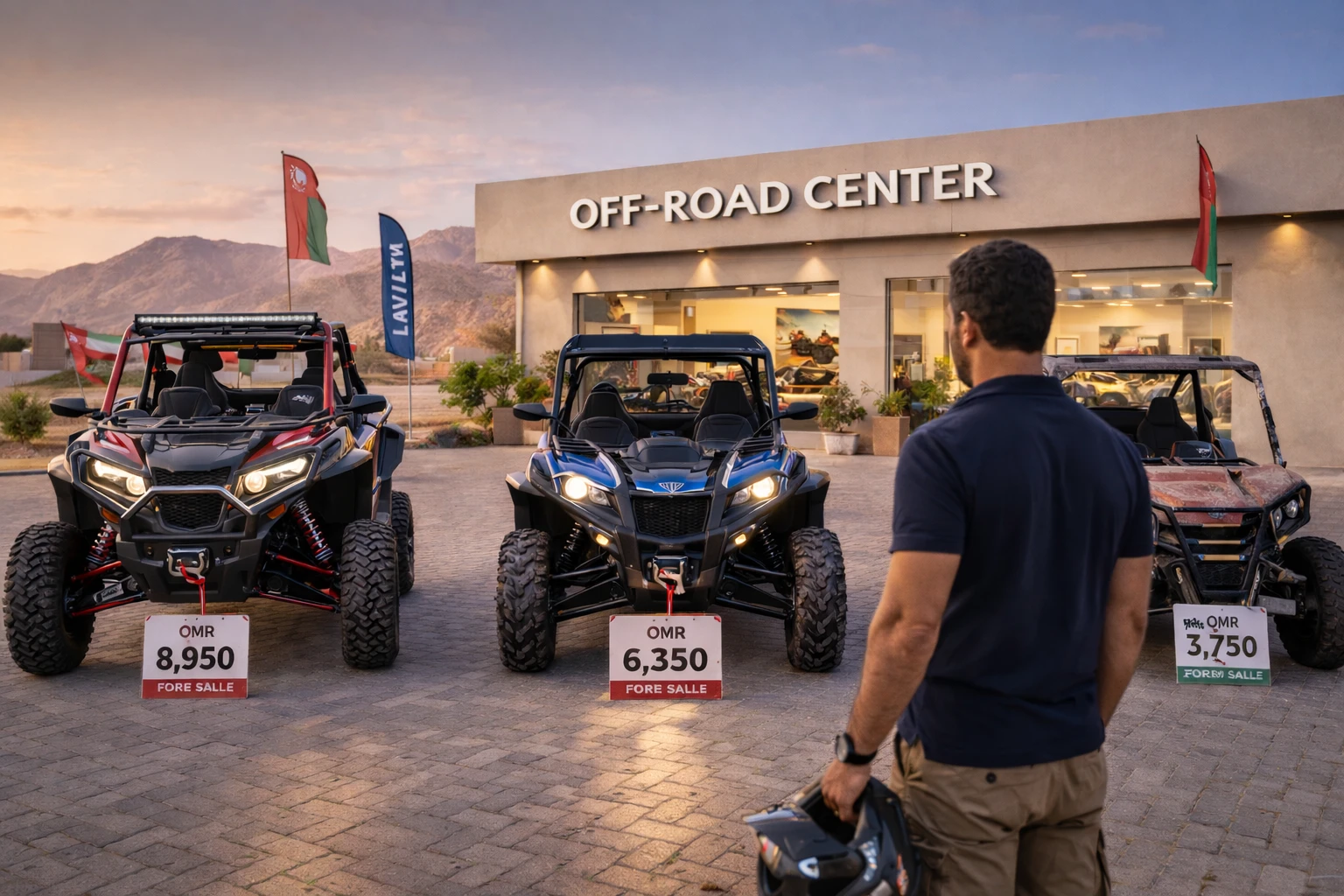
A buggy in Oman is one of those “heart over logic” purchases. You don’t need it for work, but you do need it for sunset runs in Sharqiyah, rocky climbs above Quriyat, and showing visiting friends what dunes actually feel like. Because it’s not something you buy every year, it’s very easy to miscalculate specs, overpay, or fall for “too good to be true” offers.
That’s why buying buggy in Oman deserves a bit of planning. Below are the most common mistakes first-time buyers make, plus some practical tips to help you avoid turning your dream buggy into a very expensive yard ornament.
1. Going straight for a “monster” buggy
First mistake: confusing “fun” with “maximum horsepower”. A lot of first-timers think, “If I’m going to buy a buggy, I’ll do it properly” and jump straight into 1000 cc turbo monsters designed for experienced drivers or tour companies.
On Instagram it looks cool. In real life, it often means:
- You’re scared to really use half the power.
- Fuel disappears so fast you start calculating how much are buggy cars in petrol alone.
- Parts and tires are big-money items every time something breaks.
For most new drivers in Oman, a mid-range naturally aspirated buggy (600–800 cc) is more than enough for Bidiya, dune routes near Ibra or wadi trails around Muscat. You get excitement, but the buggy doesn’t constantly try to rearrange your spine.
Rule of thumb: start with a machine you can control with one hand on the wheel and a smile, not two hands and a silent prayer.
2. Choosing the wrong buggy for your purpose
Not all buggies for sale in Oman want the same lifestyle. Some are desert rockets, and some are work mules.
Typical mismatch examples:
Too sporty for your reality: Long-travel suspension, minimal luggage space, razor-sharp steering – perfect for fast dune runs and jumps; terrible if your real use is slow family rides near Yiti or hauling camping gear.
Too heavy and bulky: Big 4-seater with roll cage, roof, racks, cooler mounts… fantastic for tour operators; overkill if it’s just you and a friend doing quick evening loops near Muscat. Heavy buggies sink more easily in soft sand and need more power – which you pay for twice, in price and in fuel.
Think in simple scenarios:
- Lots of passengers + long day trips: heavier, practical buggy makes sense.
- Mostly 1–2 people, short aggressive rides: lighter, sportier buggy is smarter.
Don’t choose a model just because “everyone in Sharqiyah has this one.” They might be running tours 6 days a week; you’re doing Fridays only.
3. Ignoring heat and cooling
Omani summer is brutal even for people, never mind engines. A huge mistake when you buy buggy online or from a showroom is treating cooling as a footnote.
What to look at:
- Liquid cooling systems are preferred over air-cooled setups. They are more complex, yet more efficient in the heat.
- Radiator size and placement – is it getting clean air, or is it buried behind plastics?
- Fan operation – does it kick in quickly, and is it loud and healthy, not struggling?
- Coolant condition – old, rusty fluid in the tank is a bad sign.
If a buggy overheats after a short soft-sand climb near Bidiya in March, imagine what it will do in June at 2 p.m. on a public holiday. A slightly lower-spec engine with strong cooling is better than a high-spec engine that boils every time you leave the parking lot.
4. Buying second-hand from random people and shady chats
Used buggies can be a great way to save money. But buying from “my cousin’s friend in a WhatsApp group” with no paperwork is an express route to tears.
Risky signs:
- Seller refuses any kind of ID or registration documentation “because it’s imported”.
- No service history, “my friend serviced it” and no invoices.
- Refuses a pre-purchase inspection at a neutral workshop.
- Wants full cash upfront and promises to “send the papers later”.
You might not get scammed on ownership, but you have a high chance of buying a buggy that spent five years as a rental on full throttle in Sharqiyah and now looks clean only because someone washed the sand out of the seats.
If you’re going second-hand, stick to known dealers, owners who can show registration and maintenance receipts, public platforms where a seller at least has some traceable history when you buy a buggy.
5. Forgetting about service, spare parts and location
It’s easy to fall in love with a buggy that’s rare in Oman. It feels “special”. Then something breaks, and you discover the nearest official service centre is in another country.
Questions to ask before paying:
- Who will service this buggy in Muscat / Sohar / Salalah?
- Are spare parts stocked in Oman, or ordered every time from abroad?
- How long does it normally take for common parts (belts, CV joints, arms, radiators) to arrive?
If the only answer is, “We’ll figure it out, inshallah,” that’s not a plan. It’s a warning.
A slightly more common model with a solid local service centre will save more money over five years than a rare “bargain” that spends months waiting for parts.
6. Not asking for a test drive
Buying a buggy without driving it is like proposing after one WhatsApp chat.
Even if the seller won’t let you hit the dunes, at least:
- Start it from cold (not already warmed up).
- Drive it around the parking lot – check steering, brakes, throttle response.
- Drive slowly over a speed bump to feel suspension knocks or strange noises.
For used machines, this is non-negotiable. For new models in a showroom, try at least to sit properly, adjust the seat and wheel, and imagine 2–3 hours in that position. If you’re wondering how much are buggy cars but don’t know how it feels in the driver’s seat, you’re skipping a key step.
7. Buying something too old “because it’s cheap”
Everyone loves a bargain. But with buggies, there’s a rough “age curve”.
As a very general guideline:
- Up to 3–4 years old: fine, if serviced properly.
- 5–7 years old: needs careful inspection, but can be good value.
- 8+ years old: only if price is low and you’re ready to treat it as a project.
A very old buggy with unknown history, even if it appears among “great buggies for sale in Oman”, can hide tired engines, cracked frames from jumps, worn suspension, and electronics that act up in heat.
If your mechanic says “no” and your heart says “yes”, listen to the mechanic. Your heart doesn’t have to rebuild the gearbox.
How to spot a good-value buggy in Oman
Here’s a quick “filter” to apply whether you buy buggy online or in a physical showroom:
- The model fits your use (family/camping vs sport/dunes vs work).
- Power is enough, but not ridiculous for your skill level.
- You can name at least one service centre in Oman that knows this model.
- Parts are realistically available in the country.
- Price makes sense compared to similar buggies for sale in Oman, not compared to some random offer abroad.
- Condition (for used): clean welds, no strange frame repairs, smooth steering, no scary noises from the drivetrain, and the seller lets you inspect it properly.
If all of that checks out, and your budget still covers basic gear (helmet, goggles, gloves, boots), you’re not just buying a buggy—you’re buying weekends that work.
Why Sharmax Motors Oman is a smart place to start
If you want to minimise the “roulette” factor, Sharmax Motors Oman is one of the better places in Muscat to shop for new buggies. Their lineup is built specifically for GCC conditions: sand, rocks and heat, not European forests.
What you get:
- Clear specs and prices – the website and showroom show realistic how much are buggy cars for different engine sizes and trims, so you can compare models instead of guessing.
- Local service and parts – Sharmax has its own service centre and stocks common components, which means less waiting and fewer surprise shipping bills.
- 3-year warranty on all vehicles for the peace of mind for buggy owners
- Buggies sized for real riders – not only top-end monsters, but also mid-range and more accessible models that make sense as a first buggy in Oman.
Even if you don’t end up buying a Sharmax, visiting their showroom gives you a solid reference point for what a new, desert-ready buggy with normal atv / buggy vehicle price and proper support looks like. After that, it’s much easier to see when someone else is trying to sell you an under-maintained headache with a fresh wash.
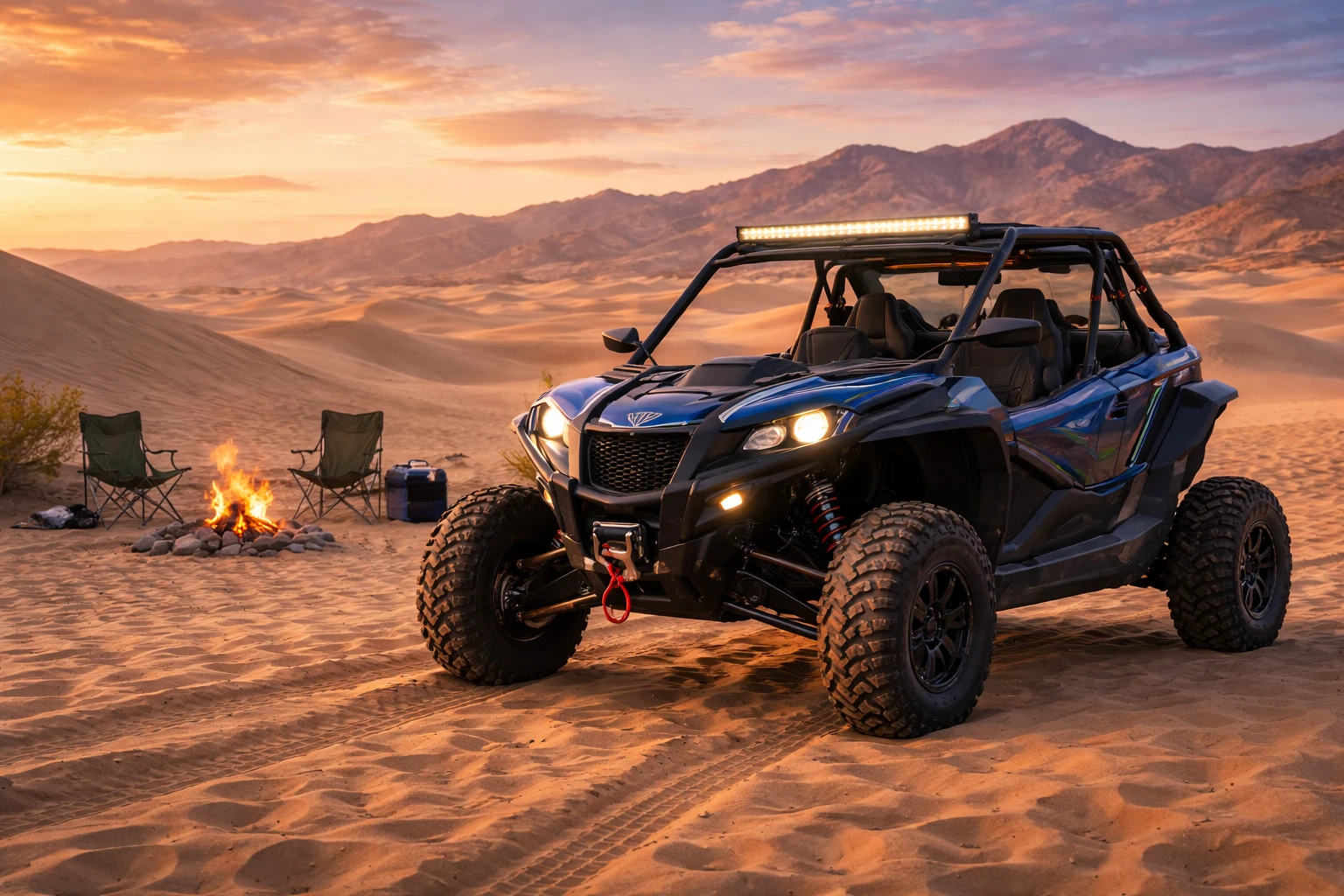
Final thoughts: Buying a buggy in Oman is easier when you know what to avoid
A buggy is not something you buy every season, which is exactly why the chance of making a mistake is high. The trick is to slow down, be honest about how and where you’ll actually drive, and treat every “amazing deal” with calm curiosity.
If you avoid the traps above, buying a buggy in Oman stops being a gamble and becomes what it should be: a calculated, enjoyable decision that turns into many evenings of sand, laughter, and the sound of an engine echoing off the dunes—without the sound of your bank account crying in the background.