Early Childhood Development Foundations and Key Influences
.jpg)
The first five years of life build brain architecture and foundational skills that shape later learning, health, and productivity. Early childhood development includes what happens from birth to age five, how to support growth at home, what quality looks like in early education, and how leaders can design systems that help families thrive.
These insights serve global founders, HR leaders, investors, and policy influencers who design family benefits or operate child-focused products. Examples draw primarily from the UK and Europe, with callouts for Australia and New Zealand where relevant.
Early Childhood Development Builds Brain Architecture Through Relationships And Experience

Early childhood development is the process through which brain architecture and foundational skills emerge from genetics interacting with experience. In the first years, children form over one million neural connections every second, according to Harvard's Center on the Developing Child. These connections strengthen through repeated, responsive interactions with caregivers.
Serve-and-return interactions, where adults respond back-and-forth to a child's signals, literally shape neural circuits. Warm, predictable back-and-forth builds language, attention, and social-emotional skills while wiring emotion and stress systems. Because the brain has sensitive periods and is most plastic early on, later remediation is possible but harder and more expensive.
Toxic Stress And Resilience
Toxic stress occurs when a child's stress systems stay activated for long periods without supportive relationships to buffer them. Examples include chronic neglect, exposure to violence, or extreme poverty without stable caregiving. Consistent adult relationships, predictable routines, and access to health supports build resilience and reduce harm.
Development From Birth To Five Progresses Across Interconnected Domains And Milestones
Development is holistic, with language, motor, cognitive, and social-emotional domains influencing one another during daily routines and play. Milestones are guides, not diagnoses. Variation is expected, and concerns belong with clinicians using standardized tools.
Cognitive And Language Examples
- Infants track faces, respond to voices, and explore cause-and-effect toys
- Toddlers solve simple problems such as fitting shapes into matching spaces
- Preschoolers show flexible thinking in pretend play and simple rule changes
- Language progresses from coos to babble to single words, then simple sentences by around age three
Motor And Social-Emotional Examples
- Gross motor skills progress from rolling to sitting, crawling, walking, and eventually running and jumping
- Fine motor skills build through grasping, stacking, scribbling, and using simple tools such as spoons
- Secure attachment shows when children seek comfort from familiar adults and calm more easily in their presence
- Turn-taking, sharing, and labeling feelings emerge with adult modeling and coaching
Five Controllable Pillars Of Nurturing Care Drive Long-Term Outcomes
The Nurturing Care Framework from WHO, UNICEF, and the World Bank identifies five interrelated components that predict outcomes: good health, adequate nutrition, security and safety, responsive caregiving, and opportunities for early learning. Together, these inputs improve cognition, health, and behavior for children and caregivers.
Health, Nutrition, And Safety
Stay current with immunizations, attend well-child visits, and prioritize consistent sleep. Offer iron-rich foods like meat, legumes, and fortified cereals, paired with fruits or vegetables. Create predictable routines for mornings, meals, and bedtime, and childproof high-risk zones such as stairs, kitchens, and driveways.
Responsive Caregiving And Early Learning
Use serve-and-return by noticing cues, responding, naming what you see, and keeping the back-and-forth going. Narrate daily routines to turn them into language-rich interactions. Prefer play-based, child-led exploration over worksheets, and offer open-ended materials like blocks, containers, and crayons.
Everyday Home Interactions Powerfully Shape Language, Self-Regulation, And Attachment
Conversational turns build language, attention, and self-regulation more effectively than any product or program. The American Academy of Pediatrics literacy-promotion policy, updated in 2024, confirms that shared reading from birth strengthens relationships and later learning. Background TV displaces caregiver talk even when children seem not to watch.
The Five-Step Serve-And-Return Routine
- Notice the child's cue and move to their level.
- Return the serve by responding warmly with words, sounds, or gestures.
- Name what you see or what the child seems interested in to add vocabulary.
- Pause and wait so the child can respond again.
- Keep the back-and-forth going for several turns, then end on a positive note.
Shared Reading Habits
Keep affordable board books in easy-to-reach spots such as a high-chair basket and beside the bed. Make reading interactive by pointing, asking simple questions, and letting the child turn pages. Repetition builds familiarity, comprehension, and confidence.
Daily Movement, Sleep, And Screen Habits Combine Into A 24-Hour Health Recipe
Physical activity, adequate sleep, and limited screen time form the daily foundation for healthy development. WHO recommends at least 180 minutes of physical activity daily for three to four-year-olds, with at least 60 minutes of energetic play. Sedentary screen time should stay under one hour, and no screen time is recommended for infants.
For families whose children are steady on their feet and keen to move, adding short bursts of wheeled play can increase moderate-intensity activity during walks to the park, nursery drop-offs, or quiet cul-de-sacs close to home, giving children repeated practice with balance, coordination, steering, and stopping skills before introducing a kids scooter as a simple, age-appropriate option.
Guidance By Age
- Infants need daily floor-based active play and no screen time
- Children aged one to two benefit from several short bursts of active play and very limited screens
- Children aged three to four need at least 180 minutes of activity, including energetic play
- For ages two to five, the American Academy of Pediatrics suggests about one hour daily of high-quality content, ideally co-viewed with an adult
Practical Implementation
Build movement into transitions with hallway walks, stair practice, music-and-movement bursts, and daily outdoor play on varied surfaces. Set consistent wake times and simple wind-down routines. Avoid screens during meals and within an hour of bedtime.
Nutrition And Environmental Safety Quietly Multiply Or Erode Developmental Gains
Correcting iron deficiency supports attention and cognition. There is no known safe level of lead exposure, and even low blood lead levels link to reduced IQ and behavioral difficulties. UNICEF estimates that nearly 17 million babies under one live in areas where air pollution exceeds WHO limits by sixfold.
Actionable Steps
Offer iron-rich foods paired with vitamin C sources to support absorption. Ask landlords about pre-1978 paint, wet-wipe windowsills regularly, and run extract fans during cooking. Monitor air quality alerts, and on poor-air days keep windows closed during traffic peaks.
Playful Movement Is The Primary Engine Of Early Motor And Executive Skill
Physically active play builds coordination, core strength, and balance while training executive functions such as planning, focus, and self-control. Provide open-ended toys, uneven but safe outdoor surfaces, and supervised challenges like low climbs. Set up simple obstacle paths with cushions and stepping stones, and use chase games or freeze-dance to keep sessions playful.
Fine Motor Development
Rotate simple stations such as playdough, transfer games with tongs, threading activities, and chunky crayons. Rotation maintains interest while targeting different grips and hand muscles.
Kids Scooter Play Can Add Fun, Moderate-Intensity Movement When Children Are Ready
When a child walks steadily and can follow simple safety rules, supervised wheeled play can build daily moderate-intensity movement and balance. A child-friendly scooter offers one accessible option for families adding this type of activity. Begin with short sessions on flat, traffic-free paths and prioritize safety fundamentals.
Starting Strong And Safe
Use a helmet on every ride, choose sturdy shoes, and maintain close adult supervision near driveways or crossings. Practice mounting, dismounting, and simple braking before attempting turns, and choose three-wheel models first for younger children. Encourage children to switch stance legs and end each session on a small success to build confidence.
High-Quality Early Education Relies On Warm Relationships And Play-Based Learning
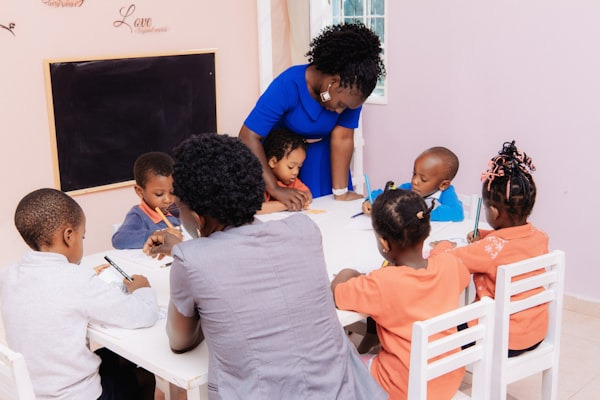
Quality settings feature warm, extended interactions, daily outdoor play, inclusive supports, and play-based curricula aligned to local frameworks. England's Early Years Foundation Stage sets the statutory framework for learning and care from birth to five. Australia's Early Years Learning Framework and New Zealand's Te Whāriki similarly emphasize responsive, play-based pedagogy, meaning teaching approaches grounded in guided play.
Visit Checklist
- Observe serve-and-return interactions with adults at children's level
- Look for small-group activities, rich outdoor provision, and varied materials
- Ask about inclusion supports and how transitions between rooms or to school are scaffolded
- Review documentation that connects daily activities to learning outcomes
Tai Tapu Kindergarten Illustrates How Quality Indicators Look In A Real Setting
Translating abstract quality indicators into real visits makes assessment concrete. Applying the checklist above, families in Aotearoa New Zealand can book a visit, meet teaching teams, observe interactions across the day, and ask about curriculum, ratios, and transition-to-school supports in small-group times, whole-group gatherings, and everyday routines at Melodies Preschool’s tai tapu kindergarten to see how these principles look in practice.
Preparing For Your Visit
Develop six to eight questions linked to observed practice. Request to see outdoor areas, small-group activities, and examples of learning documentation. Ask how families participate in planning and how concerns are communicated.
Screening And Surveillance Catch Developmental Concerns When Support Has Most Impact
The American Academy of Pediatrics recommends standardized developmental screening at 9, 18, and 30 months, plus autism-specific screening at 18 and 24 months. In the UK, families can expect a two to two-and-a-half-year health review through health visiting services. Validated tools administered by clinicians outperform informal checklists.
What Families Can Do
Add recommended screening windows to your calendar and treat them as non-negotiable appointments. Bring notes from childcare to visits and share concrete examples of vocabulary, play skills, and behavior. If concerns persist, request follow-up or specialist referral, because early supports can shift developmental trajectories.
Early Childhood Investment Delivers Strong, Measurable Economic Returns For Society
Investment in early childhood generates measurable returns. Re-analysis of the Perry Preschool program estimates social returns of roughly seven to ten percent annually for high-quality preschool targeted to disadvantaged children. Comprehensive birth-to-five models show around thirteen percent annual return when accounting for reduced crime, better health, and higher parental earnings.
Workforce Participation
In the UK, the Office for Budget Responsibility scored recent childcare expansion as the largest policy lever to increase labour market participation. Bottlenecks include funding rates, staff retention, and maintaining quality during scaling. For operators, prioritize workforce quality and pedagogical fidelity over cost-cutting.
Employer Support For Caregivers Strengthens Retention, Focus, And Productivity
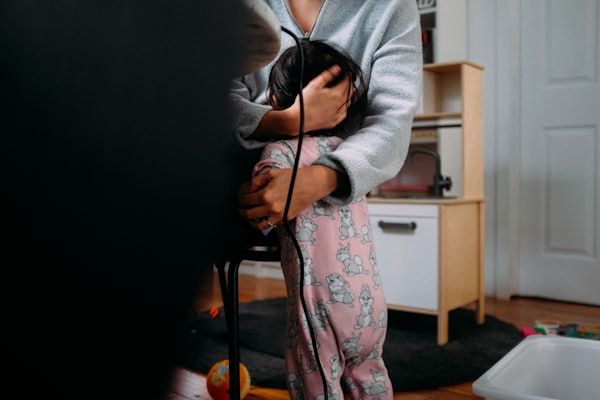
Small, targeted shifts can deliver outsized impact on retention and engagement. Audit schedules for predictability and publish family-leave guidance in plain language. Add backup care options and train managers on how to use flexible arrangements fairly.
90-Day Implementation
- Days 0-30: Fix scheduling, publish leave guidance, and add backup care options
- Days 31-60: Launch caregiver groups, negotiate nursery discounts, and upgrade lactation spaces
- Days 61-90: Pilot flexible shifts, track retention and engagement, and report return on investment to leadership
Products Built On Development Science Amplify Co-Play And Protect Young Children
Design for co-play so adults are invited into the experience, and insert prompts that require back-and-forth talk. Reward dialogue and shared problem-solving over solitary completion, and offer offline missions that celebrate real-world task completion. Use milestones as opt-in guides with notes on normal variability, not promises of accelerated learning.
Privacy And Responsibility
Build privacy-by-design aligned with the Children's Online Privacy Protection Act and the UK Age-Appropriate Design Code. Minimize data collection and avoid precise location tracking for under-fives. Provide clear, accessible explanations for parents about how data is used and stored.