How Energy-Efficient Motors Cut Industrial Costs
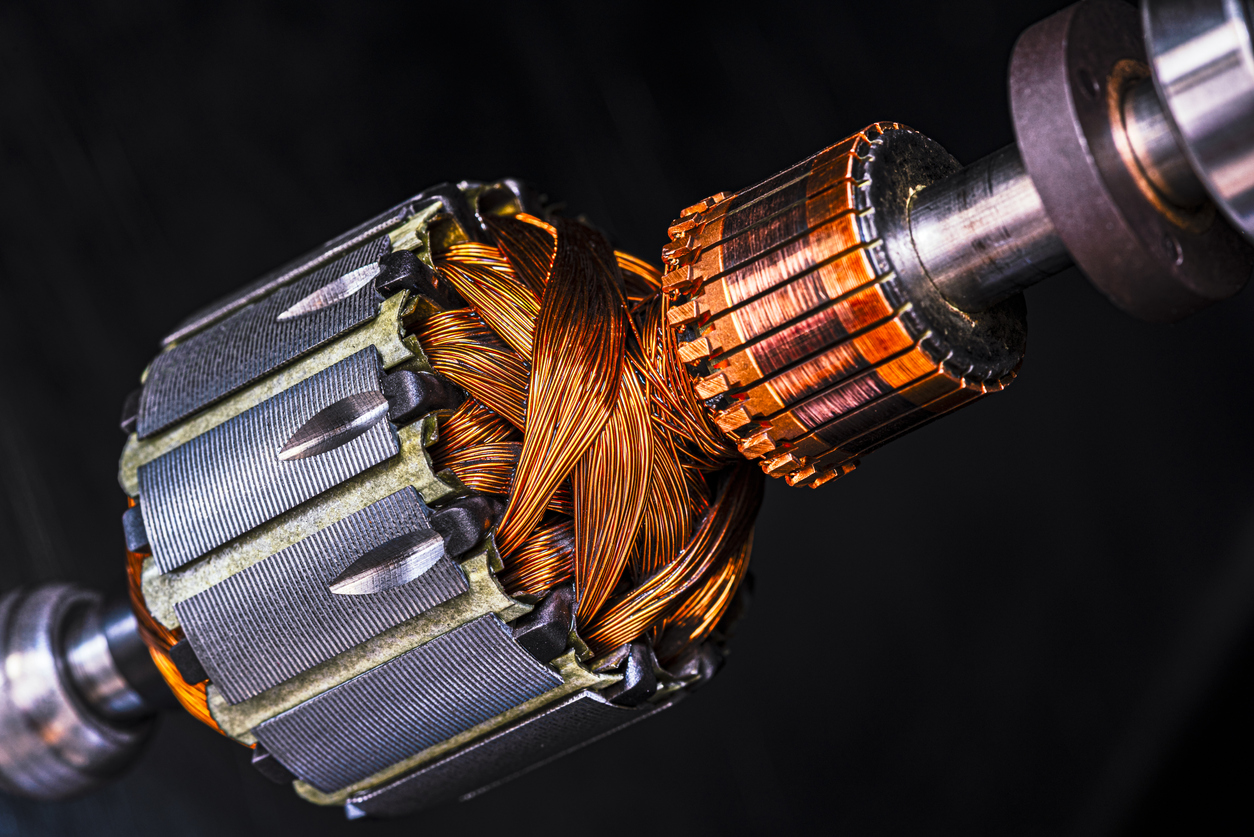
Key Takeaways
- Electric motors are responsible for roughly 40% of global electricity consumption, making motor efficiency one of the highest-leverage decisions in any industrial operation.
- IE3 motors operate at efficiency levels between 90–95%, while IE4 super premium motors exceed 95%, both of which represent major improvements over older standard-efficiency units.
- Pairing a high-efficiency motor with a variable frequency drive (VFD) often delivers the greatest energy savings, in some cases cutting consumption by 30–40% for the same output.
- The return on investment for upgrading motors is faster than most plant managers expect, and the savings extend beyond the electricity bill to include reduced maintenance costs and longer equipment life.
- Selecting the right motor for a specific application matters just as much as the efficiency rating itself. Oversizing and undersizing both cost money in different ways.
- Distributors that specialize in industrial rotating equipment can help match the right motor to the right job, a step that's easy to skip and expensive to get wrong.
If you've ever looked at an industrial electricity bill and wondered where all that power is actually going, the answer is probably running right in front of you. Motors. Electric motors consume around 45–50% of global electricity, and in most manufacturing and process facilities, they're running continuously, driving pumps, fans, compressors, conveyors, and everything in between.
That's a lot of energy. And a meaningful portion of it, in older or improperly selected equipment, is being wasted.
The Real Cost of Running an Inefficient Motor
Most plant managers don't think about motor efficiency until something breaks. But the operating cost of a motor over its lifetime almost always dwarfs the purchase price. A motor that runs 8,000 hours a year at even modest load levels will consume far more in electricity than it ever cost to buy. So a difference of just a few efficiency percentage points adds up fast.
Switching from a standard IE1 motor to a super premium IE4 unit reduces total losses by more than 45%. A 37 kW IE4 motor can save over €1,000 per year compared to an IE1 motor, assuming approximately 4,000 operating hours.
That figure is for one motor. Facilities running dozens or hundreds of motors start doing the math quickly.
There's also the heat problem. An inefficient motor doesn't just waste electricity; it converts the wasted energy into heat. A more efficient motor generates less heat, which means lower stress on bearings and a lower likelihood of failure. Less heat means fewer breakdowns, longer component life, and reduced unplanned downtime. For continuous-process industries like water treatment, asphalt production, or food and beverage manufacturing, that last point isn't a minor footnote.
Understanding IE Efficiency Classes
Not all motors are rated equally. The International Electrotechnical Commission established IE efficiency classes ranging from IE1 (standard efficiency) to IE4 (super premium efficiency). Each step up represents fewer energy losses during operation.
IE3 premium efficiency motors offer significant energy savings over IE2 models without the highest upfront costs, while IE4 motors further reduce energy consumption and operational costs. IE3 has become the global regulatory baseline in many jurisdictions. From July 2021, the European Union's Ecodesign Regulation required three-phase motors with rated power from 0.75 to 1,000 kW to meet at least IE3 efficiency level.
The US has its own equivalent standards through NEMA Premium efficiency ratings, which align broadly with IE3.
So what's the practical difference in day-to-day operations?
IE3 motors are ideal for industries where energy costs are a concern but initial budget constraints are tighter, while IE4 motors are better suited for applications where the highest long-term efficiency is prioritized. For equipment that runs 24/7, the calculation often favors the higher-efficiency unit even at a steeper initial price. The return on investment when upgrading from IE3 to IE4 can drop below two years with continuous operation.
That's a compelling number for procurement teams trying to justify capital expenditures.
Why Motor Selection Is More Than Picking a Rating
Here's where a lot of well-intentioned efficiency upgrades go sideways.
Buying a high-efficiency motor is one thing. Matching it correctly to the application is another. An oversized motor running at partial load can actually perform less efficiently than a properly sized standard motor. Undersized motors overheat, fail prematurely, and drive up maintenance costs. The efficiency class on the nameplate only tells part of the story.
For applications like industrial pumps, asphalt plant equipment, or wastewater treatment systems, the selection process involves understanding load profiles, duty cycles, ambient conditions, and how the motor interacts with the driven equipment. AMED US, a Miami-based industrial equipment distributor serving clients across the US, Latin America, and the Caribbean, works through exactly this kind of application-specific selection for plant engineers and procurement managers who need the right equipment the first time. Their team carries motors from manufacturers including Baldor, WEG, ABB, and Hyundai Electric, which collectively cover a wide range of efficiency classes and industrial duty ratings.
Getting the selection right before the motor ships is far cheaper than correcting a bad match after installation.
The VFD Multiplier
If high-efficiency motors are a smart move on their own, pairing them with variable frequency drives is where the real savings often appear.
VFDs regulate the frequency and voltage supplied to a motor, allowing it to operate at speeds tailored to specific load requirements. By precisely controlling motor speed and torque, VFDs reduce excess energy use, operational costs, and environmental impact.
The physics here work strongly in the operator's favor. As per Affinity Laws, a motor running at 80% of full speed requires only 51.2% of the electricity of a motor running at full speed. Pump and fan applications see this effect most dramatically, since the power demand drops as a cube of the speed reduction.
A VFD can reduce energy consumption by as much as 30–40% for the same work output.
But energy savings aren't the only reason to consider VFDs alongside efficient motors. Soft starts and controlled acceleration reduce mechanical stress on shafts, bearings, and gears, protecting critical components and significantly extending equipment lifetime. Smoother operation also helps minimize unplanned downtime and lowers maintenance costs.
Where existing pump and fan motors are still serviceable, replacing the entire system is not always the only efficiency route to consider. VFD retrofits for energy savings can add variable-speed control to suitable existing equipment, allowing motor output to respond more closely to actual demand rather than operating continuously at full speed. This can make targeted retrofitting a practical part of a wider facility energy-efficiency programme.
For facilities running around the clock, that combination of energy savings and reduced wear is hard to argue against.
Where Energy-Efficient Motors Make the Biggest Difference
Not every application has the same payback window. For motors running only a few hundred hours per year on intermittent duty, upgrading to IE4 may not pencil out quickly. But for the applications below, the case is generally strong.
Pump-driven systems. Centrifugal pumps, gear pumps, and multistage pumps in water treatment, chemical processing, and industrial fluid transfer run continuously in most facilities. Even small efficiency gains across a pump skid translate to meaningful savings annually.
Asphalt and heavy process equipment. Asphalt plants run pump-and-motor systems under sustained load in demanding thermal environments. The combination of heat, continuous operation, and high power demand makes motor selection especially consequential. Industrial electric motors for asphalt and rotating equipment applications from reputable manufacturers are designed to handle these conditions while maintaining efficiency ratings under real operating stress, not just lab conditions.
Wastewater and water treatment. Municipalities and industrial operators running aerators, mixers, and lift station pumps face years of continuous operation. The energy costs in these facilities are among the highest in local government and utility budgets.
Manufacturing and general industry. Conveyors, compressors, and HVAC systems in plants running two or three shifts accumulate operating hours fast. The efficiency of each motor in that system either compounds into savings or into waste.
The Hidden Efficiency Loss: Poor Maintenance
Even a premium-efficiency motor loses its advantage if it isn't maintained properly. Misalignment between a motor and the driven equipment introduces mechanical losses that no IE rating can offset. Worn bearings increase friction and heat. Contaminated windings reduce insulation life and increase resistive losses.
Preventive maintenance schedules, vibration monitoring, and periodic insulation resistance testing are what keep a high-efficiency motor actually operating at high efficiency. This is one reason why working with a distributor that also provides motor services, rather than just selling equipment, can matter more than it might seem at first.
Efficiency is a system property, not just a nameplate number.
Making the Case Internally
Many plant engineers understand the efficiency case but struggle to get capital approved for upgrades. A few practical angles tend to resonate with finance teams.
First, frame upgrades as operating expense reductions rather than capital purchases where possible. The energy savings from replacing aging motors often exceed the annualized cost of the new equipment within two to three years. Second, tie the upgrade to reliability goals. Downtime calculations are often more persuasive than energy cost projections in facilities where production stoppages are expensive. Third, prioritize the highest-runtime motors first. A systematic audit of which motors in a facility run the most hours will quickly identify where the payback period is shortest.
The goal isn't to replace every motor at once. It's to make the right replacements at the right time, starting where the math is most compelling.
FAQ
What does IE3 mean for electric motors?
IE3 stands for Premium Efficiency, a classification established by the International Electrotechnical Commission. IE3 motors are more efficient than IE2 motors and are often mandated by regulations in various countries. They're ideal for continuous or near-continuous operations that benefit from substantial energy savings.
How much energy can a high-efficiency motor save?
Savings depend on motor size, operating hours, and what's being replaced. Switching from an IE1 to an IE4 motor reduces total energy losses by more than 45%, and a 37 kW IE4 motor can save over €1,000 per year at approximately 4,000 operating hours. Larger motors and longer runtimes produce proportionally greater savings.
What is a variable frequency drive and why does it matter for motor efficiency?
A variable frequency drive regulates the frequency and voltage supplied to a motor, allowing it to run at speeds matched to actual load requirements rather than continuously at full speed. VFDs can reduce energy consumption by 30–40% for the same work output, and they also reduce mechanical wear on the motor and connected equipment.
How do I know if my current motors are inefficient?
Older motors manufactured before modern IE standards were introduced are very likely operating below current efficiency benchmarks. If your facility has motors that are 10–15 years old or older and running continuously, an energy audit will usually identify where the highest-impact replacements are. High operating temperatures, frequent bearing replacements, and rising electricity bills are practical signs.
Does motor size affect efficiency ratings?
Yes. Motor efficiency generally improves as motor size increases, though the percentage gains shrink at higher power ratings. The sweet spot for efficiency gains is generally between 7.5 kW and 75 kW. Selecting the right motor size for the actual load is as important as the efficiency class when calculating real-world performance.
What industries benefit most from energy-efficient motor upgrades?
Any industry where motors run continuously or near-continuously will see the strongest return. This includes water and wastewater treatment, asphalt production, chemical processing, food and beverage manufacturing, HVAC systems in commercial buildings, and general industrial applications with high annual operating hours.
Should I upgrade all motors at once or prioritize?
Prioritize by runtime. Motors running the most hours per year deliver the fastest payback on efficiency upgrades. Starting with your highest-runtime pump motors, compressors, and fans will generate savings that can fund subsequent replacements over time, making the upgrade program largely self-financing.