Exclusive: Mansi Rana on the Future of SEO, AI and Digital Growth
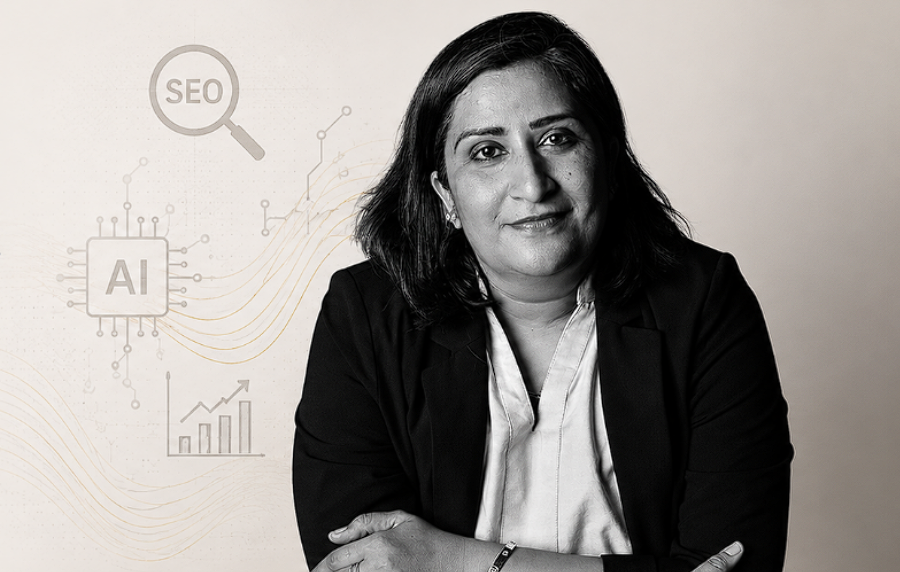
Mansi Rana is a digital consultant, growth strategist, and TEDx speaker. She has over 24 years of experience in sales and digital marketing. She founded EZ Rankings in 2010 with a team of two, growing it into a 175-specialist agency serving 16,000+ brands across 28+ countries.
She also runs Mansi Rana Digital, a boutique consulting firm for founders and CMOs. It focuses on growth strategy, digital audits, and AI automation.
We recently spoke with Mansi to learn what is changing in sales and digital marketing today. We also discussed how brands can stay visible as AI reshapes search. Here's what she had to say.
Hi Mansi! With EZ Rankings already running, what made you start Mansi Rana Digital, and how do you keep the two apart?
EZ Rankings is the execution arm — 175+ specialists delivering SEO, GEO, paid media and AI automation at scale for 16,000+ brands. It runs on process: defined teams, defined roles, scheduled R&D and audit cycles every week.
Mansi Rana Digital exists because premium and luxury brands don't fail on execution — they fail on positioning. The message that sells a ₹600 product cannot sell a ₹60,000 one. Different buyer, different objection, different proof. That gap needed founder-level attention, not a service line.
So I keep it deliberately small: a handful of clients a month, working directly with founders and CMOs on positioning, audits, and sequencing — deciding what to fix first rather than fixing everything at once.
Keeping them apart isn't hard because they solve different problems. EZ Rankings answers "who executes this at scale?" Mansi Rana Digital answers "is this the right thing to execute?" One is a system; the other is a judgment call. When a consulting client needs delivery muscle, I say so openly and let them choose their own team — the strategy isn't a funnel into the agency.
People keep asking if SEO still matters. What's the honest answer, and what should they be investing in instead?
SEO isn't dead, and the question itself is the problem. Most people reduced SEO to rankings, so when rankings stopped being the only route to a customer, they assumed the discipline died with them. It didn't. SEO was always about organic visibility — earning attention without paying for every impression — and that job hasn't gone anywhere.
What's changed is where visibility lives. It used to be ten blue links. Now it's AI assistants, forums, review sites, user-generated content, marketplaces, and everything in between. The surface expanded; the objective is identical.
So the honest answer isn't "invest in something else instead." It's that single-channel thinking is what actually died. Brands used to run SEO for a year, then try paid, then try social — one lever at a time, waiting for each to prove itself. That sequence is too slow now, because a buyer's journey crosses four or five surfaces before they ever reach your site.
What works is stacking. CRO plus performance marketing plus AI SEO. Or performance plus influencer plus shopping ads plus AI SEO plus earned press. The exact combination depends on the category and the price point — but the principle holds: multiple elements, moving together, reinforcing each other.
And underneath all of it sits content. Not volume — the right formats, built to carry your message across every surface where the decision actually happens.
How does a brand actually get "cited" by tools like ChatGPT or Gemini instead of just ranked on Google?
It comes down to how clearly these systems can understand who you are — and whether other credible sources agree.
Google ranks pages. AI tools assemble answers. To do that, they need information that's structured, consistent, and verifiable across multiple sources. So the work shifts from optimising for clicks to optimising for understanding.
Three things matter most in practice.
Consistency. Your category, your claims, your specifics — pricing tiers, service scope, locations, founding facts — should read the same everywhere they appear. When your own site says one thing and directories, profiles, and listings say another, the system has conflicting inputs and no reason to trust either.
Third-party corroboration. This is the part most brands miss. AI answers frequently cite the pages about you rather than your own website — comparison articles, review platforms, industry roundups, forum threads, publications. If your brand doesn't exist in those places, you're absent from the source pool the model draws on, no matter how good your site is. Earned presence has become an optimisation channel.
Answer-shaped content. Not keyword-shaped. Write the way a buyer asks: what does this cost, who is it for, how does it compare, what happens if it doesn't work. Content built to answer a real question is content that can be lifted into an answer.
The uncomfortable truth is that you don't control the citation. You control the inputs. Build the foundation properly — clear facts, corroborated across credible sources, in formats that answer real questions — and you give these platforms a reason to reach for you instead of a competitor.
Where does AI automation genuinely save time for marketing and sales teams, and where is it just hype?
It earns its keep on repetitive, high-volume work — qualifying prospects, answering the same twenty customer questions, sending follow-ups on time, pulling reporting into one place. These eat hours every week and don't need a human's judgment every single time.
The hype starts when people automate a process that was never working. Automation makes a good process faster. It doesn't fix a broken one. If your lead qualification is wrong, automating it just means you disqualify the right people at ten times the speed.
So before any AI build, I map what's actually happening in the funnel first — where leads come from, where they stall, what the team does manually and why. Half the time that exercise alone fixes the problem and the automation becomes a smaller build than anyone expected.
Automate a flawed process and you don't fail better. You just fail faster.
What's a clear sign that a business is invisible in AI-powered search, even if it ranks fine on Google?
Go and check. Open ChatGPT or Perplexity, ask it to recommend brands in your category, and see whether you come up. Then ask it directly about your company and read what it says. Founders are genuinely surprised how often the answer is nothing, or something wrong, while they're sitting on page one of Google.
That's the loud sign. The quieter ones show up before you ever run the test.
Your basic facts don't match across the web — different service descriptions, outdated locations, an old positioning line still living on a directory page nobody's looked at in three years. Your About page says you're passionate about excellence instead of saying what you do and who you do it for. Your content sells rather than answers, so there's nothing in it a model can lift into a response.
None of that hurts your Google rankings much. Google has enough signals to figure you out anyway. AI tools are working with less, and they're being asked to make a recommendation, not return a list — so gaps that Google tolerates, they simply route around.
Should brands still invest in traditional SEO, or start shifting budget toward GEO?
Protect the SEO budget. Fund GEO from growth, not by cutting.
SEO still brings people to your site and that traffic still converts today, this quarter, on a spreadsheet you can show your board. GEO influences whether you get recommended when someone asks a question instead of typing a search. Both matter. But one of them is paying salaries right now, and you don't defund it for something you're still learning to measure.
In practice I tell clients to keep the SEO spend intact and carve out a smaller slice — a fifth of the budget, roughly — for GEO. Enough to build real presence, small enough that it doesn't need to justify itself monthly.
The reason to do it now rather than next year is competitive, not technical. Right now most of your category hasn't started. Being one of the few credible, well-documented brands in a space makes you easy for these systems to reach for. That window closes as everyone else catches up, and the brands that waited will be trying to build authority in a crowded field instead of an empty one.
What's one shift in digital marketing you didn't expect to happen this fast?
How fast people stopped clicking.
I expected the move from scanning search results to just asking a tool for the answer to take years — long enough to watch it, test into it, adjust. It didn't. It started showing up in how people discover categories and shortlist brands well before I thought it would, and it caught a lot of experienced marketers out. Me included.
What it changed for me is how I treat early signals. I used to wait for a trend to prove itself before recommending spend against it — which felt like discipline. Now I think it was just slow. By the time something is obviously real, the advantage has already gone to whoever moved on the weak signal.
That's an uncomfortable way to work. You'll be wrong sometimes. But being wrong on a small bet costs less than being right two years late.
Closing Thoughts
Talking to Mansi, one thing stood out: she doesn't treat AI as a trend. She treats it as a shift in how buyers find things and decide.
That shows up in the practical advice. Don't defund what's already working — but don't wait for the new thing to prove itself either, because by then the advantage has gone to whoever moved early. Don't automate a process you haven't fixed, or you'll just fail faster. And before you take anyone's word on any of this, go and ask ChatGPT about your own brand and see what comes back.
Whether you're running a small business or leading marketing at a growing brand, the takeaway is the same. Visibility isn't only about ranking anymore. It's about being clear and consistent enough that both people and AI systems understand what you do — and trust you enough to recommend you.
You can find more of her work at mansirana.com and ezrankings.com.
.jpeg)
.jpg)
.jpeg)