Food Safety Training for Businesses: A Guide to Getting It Right
.jpg)
Australian food businesses now operate in a regulatory landscape that demands more than good intentions. An estimated 4.67 million foodborne illness cases a year, roughly 47,900 hospitalisations, and economic costs near $3 billion have pushed regulators to tighten expectations.
Standard 3.2.2A, incorporated into Safe Food Australia in early 2023 and enforced from 8 December 2023, turns those expectations into specific duties. This guide helps you convert those legal requirements into a lean operating model that protects customers without creating administrative drag.
Who Needs This Guide and What Changed
If you handle unpackaged, ready-to-eat high-risk food, you now need formal training, supervision, and proof of safe practices.

Food safety training for businesses is no longer optional or informal. If you operate a restaurant, café, catering company, mobile vendor, or food retail outlet that handles unpackaged, ready-to-eat, potentially hazardous food, these requirements apply to you. Founders, owners, and operations leaders who need an audit-ready system will find practical frameworks here.
Standard 3.2.2A introduced three compliance tools: a certified Food Safety Supervisor, mandatory food-handler training, and simple evidence records for specific activities. The standard is outcomes-based, so regulators expect competent people, effective controls, and records that show how you manage risk. This is a shift from vague expectations to explicit requirements with measurable compliance lines.
Understanding the Legal Framework
Knowing how Standards 3.2.2, 3.2.2A, and 3.2.3 fit together keeps you from over- or under-building your food safety system.

Clarity on definitions prevents costly misunderstandings during inspections. Standard 3.2.2A sits alongside 3.2.2 (Food Safety Practices) and 3.2.3 (Food Premises and Equipment), adding explicit tools for higher-risk activities. Under this framework, Category 1 and Category 2 businesses must appoint a certified Food Safety Supervisor with a certificate obtained within the past five years.
Essential Definitions
- Food handler: Anyone who handles food or surfaces likely to contact food, including front-of-house staff plating dishes, baristas handling milk, and delivery personnel placing food.
- Potentially hazardous food (PHF): Foods requiring temperature control to minimise pathogen growth or toxin formation, such as meats, dairy, and cooked rice.
- Prescribed activities: Handling unpackaged, ready-to-eat PHF through receiving, storing, processing, displaying, transporting, cooling, or reheating.
- Authorised officer: Your local council Environmental Health Officer who inspects and enforces the Food Standards Code.
Standard 3.2.2 sets required practices such as staff skills, knowledge, and contamination control. Standard 3.2.2A requires a certified supervisor, structured training, and evidence of controls for prescribed activities. Standard 3.2.3 covers the physical environment. Training is now explicit for handlers dealing with unpackaged ready-to-eat PHF, and evidence for Category 1 activities has shifted from optional to mandatory.
Determining Your Business Category
Your category decides which tools you must implement, so invest time up front to classify your business correctly.
Your classification drives your compliance obligations, so get this right before spending on training. Category 1 businesses handle or process high-risk, unpackaged ready-to-eat PHF as part of core service and must implement all three compliance tools: Food Safety Supervisor, handler training, and evidence records. Category 2 businesses handle smaller amounts of such food and require a Food Safety Supervisor and handler training, but generally not evidence records.
Category 1 Examples
Restaurants and cafés preparing hot meals, assembling sandwiches with PHF, and batch-cooking with cooling or reheating steps fall into Category 1. On-site and off-site caterers handling receiving, hot-holding, cold-holding, transport, and service of PHF also qualify. If you cool cooked PHF for later service or reheat PHF for hot-holding, you are almost certainly Category 1.
Category 2 Examples
Supermarkets or delis slicing ready-to-eat meats and cheeses to order typically qualify as Category 2. Coffee bars handling milk and ready-to-eat pastries without complex processing steps also fit here. The key distinction is minimal handling versus full processing.
Quick Self-Assessment
Ask yourself five questions: Do we assemble or process unpackaged ready-to-eat PHF on-site? Do we cool cooked PHF for later service? Do we reheat PHF for hot-holding? Do we transport PHF between locations for service? Do we display unpackaged ready-to-eat PHF for extended periods? If you answer yes to any question, treat your operation as Category 1.
Borderline businesses should err on the side of caution. Central production kitchens that supply multiple outlets, seasonal venues such as festival stalls, and mixed operations with both low-risk and high-risk food are usually safer to treat as Category 1. When in doubt, ask your council for written advice and file it with your evidence records.
Building Your Operating Model
A simple, three-part operating model makes it easier to embed legal requirements into daily routines instead of one-off compliance exercises.
A practical operating model converts legal language into three manageable workstreams. Build your system around People (train), Supervisors (appoint and cover), and Evidence (prove controls). Assign ownership for each workstream with weekly check-ins and clear accountability to prevent drift.
Workstream 1: Train People
Provide baseline food-handler training before staff handle high-risk food and refresh when roles change or processes update. Training must cover safe handling and temperature control, contamination and allergen management, cleaning and sanitising, and personal hygiene including fitness to work.
Use a mix of recognised courses and site-specific inductions. Follow formal training with practical assessments such as observed handwashing, thermometer use, and allergen checks at service. Keep short job aids at workstations so casuals and new starters can follow the same steps without relying on memory.
Workstream 2: Appoint FSS Coverage
Appoint a certified Food Safety Supervisor with a certificate obtained within the last five years who is reasonably available to supervise prescribed activities across trading hours. Nominate at least one deputy per site to cover absences and prevent gaps during illness, leave, or unexpected surges.
Map your trading hours and production peaks against Food Safety Supervisor availability. If you run split shifts, late-night trade, or off-site catering, check that at least one certified person is always present when high-risk food is handled. Document this coverage in a simple roster or matrix and keep it with your evidence pack.
Workstream 3: Prove Controls
For Category 1 operations, keep simple records for prescribed activities and retain them for at least three months. Alternatively, be prepared to demonstrate compliance to an authorised officer on request, but records provide the faster route during inspections.
Design your forms so they are quick to complete and hard to complete incorrectly. Use checklists and tick boxes for routine tasks such as opening temperature checks, then add a notes section for issues and corrective actions. Test each form with staff on a busy shift to confirm it takes less than a minute to complete.
NSW-Specific Requirements
NSW applies the national standards plus extra rules on certification, content, and supervision, so interstate operators must adjust their approach when trading there.
NSW venues that want to avoid gaps in supervision should treat renewals as a standing compliance task rather than a last-minute scramble. If your NSW Food Safety Supervisor certificate is approaching its five-year expiry, a trusted provider such as the Australian Institute of Accreditation can help you quickly complete your NSW Food Safety Supervision Recertification within the 90-day window so your venue stays compliant.
NSW operators face additional obligations that go beyond the national baseline. NSW Food Safety Supervisor certificates are valid for five years, and approved registered training organisations (RTOs) must issue certificates within 10 working days. Training for NSW Food Safety Supervisors includes state key focus areas: allergen management, cleaning and sanitising, safe egg handling, and Food Act offences.
Critical NSW Rules
Keep a copy of the Food Safety Supervisor certificate on the premises. When an NSW certification expires, you have 30 days to ensure the person completes recertification or appoint another eligible staff member. NSW-approved recertification is typically available up to 90 days after expiry. One person cannot be the Food Safety Supervisor for more than one premises simultaneously.
Build a simple renewal process so certificates never lapse unnoticed. Record expiry dates in your HR or rostering system, set reminders at six months and three months before expiry, and assign one manager per site to confirm recertification is booked. Update your evidence pack as soon as the new certificate is issued.
NSW Evidence Pack
Maintain a current Food Safety Supervisor certificate, training records for handlers, allergen procedures, and any NSW-specific standard operating procedures (SOPs) such as safe egg handling. Keep change logs when supervisors rotate or when certificates are reissued after recertification.
Selecting Training Units and Providers
Choosing the right units and providers up front prevents wasted spend on training that inspectors later reject.
Choosing recognised training prevents rejected certificates during inspections. For hospitality handlers, units SITXFSA005 (Use hygienic practices for food safety) and SITXFSA006 (Participate in safe food handling practices) are widely recognised. Choose providers approved for your state, and if operating in NSW, ensure the Food Safety Supervisor program meets state content and issuance requirements.
Provider Due Diligence
- Verify state approval status, especially NSW Food Safety Supervisor program approval.
- Confirm delivery mode, languages offered, and accessibility support.
- Check evidence exports, learner management, and identity verification processes.
- Lock in issuance timelines, reissue policies, and helpdesk response times.
Temperature Control That Works
Tight control of time and temperature removes most of the risk from potentially hazardous food with relatively little extra effort.
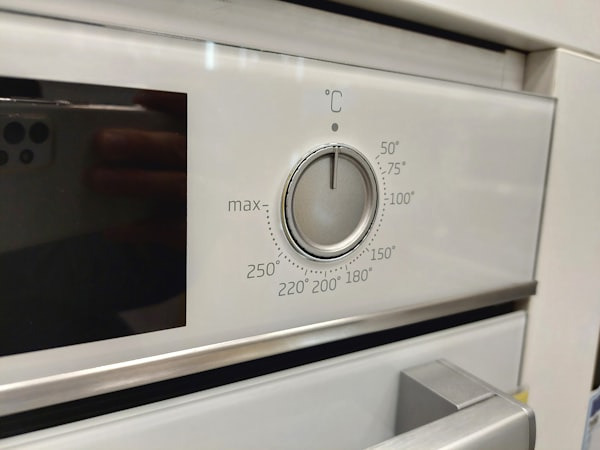
Safe temperatures and proper timing prevent most foodborne illness incidents. Safe temperatures are 5°C or colder and 60°C or hotter. Check with thermometers accurate to plus or minus 1°C. Use the 2-hour/4-hour rule for ready-to-eat PHF kept outside refrigeration: under 2 hours, return to refrigeration or use; 2 to 4 hours, use immediately; over 4 hours, discard.
Cooling must follow the 60 to 21°C within 2 hours, then 21 to 5°C within 4 hours rule. Reheating for hot-holding should be rapid to at least 60°C. Use shallow pans, small portions, ice-bath agitation, or blast chilling to achieve targets. Avoid reheating in bain-maries; use a stove, microwave, or combination oven instead.
Make thermometer use and calibration part of daily routines. Store probe thermometers at key stations, sanitise the probe between checks, and log calibration against ice water or boiling water at least monthly. If a thermometer is out by more than 1°C, tag it out of service and replace or recalibrate before use.
Evidence That Passes Inspections
Inspectors care less about how pretty your paperwork looks and more about whether it clearly shows control and corrective actions.
Category 1 operators need records that demonstrate control, not just activity. Maintain logs for receiving temperatures, hot and cold holding checks, rapid cooling records, reheating checks, cleaning schedules, and thermometer calibration. Make corrective actions explicit on every log: note what failed, what you did, who verified, and when you re-checked.
Retain at least three months of records on site and prepare a 30-day evidence pack for surprise inspections. Include recent critical logs, current Food Safety Supervisor certificates, pest reports, and calibration records. Place the pack in a clearly labelled folder or digital folder and refresh it weekly.
Decide early whether you will use paper, digital systems, or a hybrid approach. Digital logs can simplify trend analysis and remote oversight, but they fail inspections if staff forget to complete them or if devices are locked away. Whatever method you choose, train staff on where to find forms, when to complete them, and who checks them.
Common Mistakes and Quick Fixes
Most failures come from inconsistent execution rather than obscure technical rules, so focus your energy on behaviour and follow-through.
Most compliance failures are organisational rather than technical. Assuming experienced staff already know proper procedures leads to drift. Baseline everyone with a short, recognised course and on-the-job verification. Use spot checks to catch slippage on handwashing, probe use, and allergen steps.
Records without corrective actions fail inspections. Train staff to always document what was done to fix a breach and when it was re-checked. Supervisors should review logs daily and sign off on closures. Depending on one Food Safety Supervisor stretched across sites creates coverage gaps. Train deputies at each premises and schedule Food Safety Supervisor cover during all prescribed activities, including prep and close.
Your 30/60/90-Day Execution Plan
A staged plan lets you achieve compliance quickly without overwhelming sites, while still building habits that last.
A structured rollout delivers visible wins while building sustainable compliance. In days 0 to 30, classify sites, choose an approved provider, deliver baseline training to all handlers, appoint primary and deputy Food Safety Supervisors per site, and start temperature, cleaning, and calibration logs.
In days 31 to 60, calibrate probes, run an internal check using your council's inspector checklist, and close gaps within one week. Translate key standard operating procedures and post them at stations. Coach staff on the quality of corrective actions rather than just the volume of completed forms.
In days 61 to 90, run an audit-style drill, review key performance indicators (KPIs), and correct systemic issues such as repeat temperature breaches or missed checks. Set a quarterly refresher cadence for high-risk tasks and enter five-year Food Safety Supervisor renewal dates into your HR system with automated reminders.
Making Compliance Routine
When training, supervision, and evidence become part of how you run shifts, inspections become a confirmation of good practice rather than a disruption.
A lean training and supervision model protects your customers and your brand while meeting 3.2.2A obligations. Focus on three pillars: trained people, on-shift Food Safety Supervisor coverage, and simple evidence. Then iterate with KPIs that track training coverage, temperature breaches per transaction, and corrective action closure rates.
Audit your current training and Food Safety Supervisor coverage this week. Schedule any urgent recertifications and close baseline gaps. Share the 30/60/90 plan with site leaders and set calendar reminders for Food Safety Supervisor renewals. The goal is a system that sustains itself through routine rather than periodic panic.
Build food safety into onboarding, performance reviews, and daily briefings so it is not treated as a one-off project. When staff see that safe practices are recognised, rewarded, and reinforced, compliance stops feeling like extra work and starts feeling like the normal way of doing business.