From Account Manager to MD, 20 Years Later
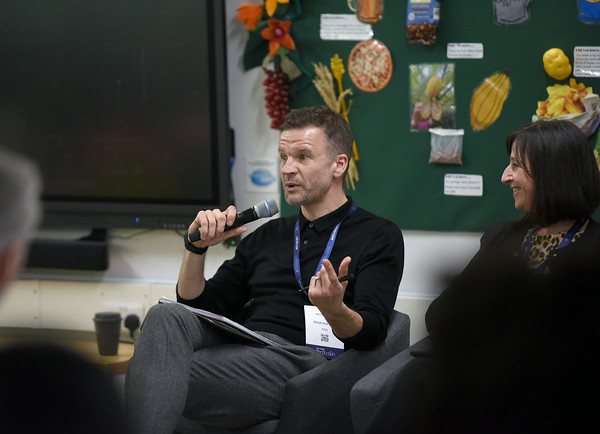
Moving from Glasgow to Manchester and rising quickly at TRO
Long tenures have become increasingly rare in a culture where career progression is often associated with frequent moves and fresh titles. Job hopping is commonly encouraged as the fastest route to growth, which makes sustained commitment to one organisation feel unusual. That is precisely why a 20 year journey within the same company stands out, reflecting depth and evolution earned over time rather than gathered in fragments. Andrew Orr went from Account Manager to Managing Director at TRO, a monumental achievement!
In 2006, Andrew moved from Glasgow to Manchester, having previously worked at a marketing agency when experiential was not yet a dominant force in the industry. His move to TRO placed him within a business that was already operating as a full-service agency, delivering end-to-end campaigns and working on major accounts.
Early recognition shaped the trajectory that followed. Within his first year at TRO, Andrew was named employee of the year, an acknowledgement that reinforced the value placed on merit and effort. Progression came quickly thereafter, driven by hard work and visible contribution rather than tenure alone. Working on significant campaign accounts for well-known brands gave him exposure to scale early in his career, while the pace of advancement reflected both his commitment and the organisation’s willingness to reward performance.
Relocating to a new city was a decisive step, and the environment he entered accelerated his development. Manchester offered a platform, yet it was the structure and ambition of TRO that provided the runway.
The culture and leadership that shaped his early career
Recognition for Andrew became a powerful motivator that created loyalty and ambition. The culture at the time was energised by clear vision and strong leadership, creating an atmosphere where people were pushed to deliver at a high level while also being supported when challenges emerged.
The leader he worked under set a tone that was demanding without being detached. Expectations were high, yet there was space to grow and to learn. Constructive redirection was part of the process, as was listening, and that balance influenced Andrew’s understanding of what effective leadership looks like in practice. Being pushed hard while knowing someone had your back leaves a lasting impression, particularly early in a career.
TRO’s legacy also became part of that learning curve. The business carried history and reputation, and Andrew developed respect for what had been built before him. Over time, that respect evolved into responsibility, since preserving legacy requires active stewardship rather than passive admiration. The company’s strong retention record sits within that history, which he recognises as both an asset and a challenge, given that longevity demands continued relevance.
Shifting from hands-on management to business vision
As Andrew’s career progressed, his focus began to widen. While he remains capable of micro leadership, he recognises that his strengths lie in macro thinking and business vision. The shift from account management into broader strategic oversight required a different lens, one that connects daily operations with long-term direction.
He is often approached for advice on pitching and selling, particularly where narrative clarity and proposition need refinement. Beyond that, colleagues seek his perspective on resetting and evolving the business at a deeper level. Central to his thinking is the idea of a north star, an overarching ambition that should inform decisions across departments rather than sit in isolation at the top of a slide deck. Connecting that vision to practical execution requires careful alignment, and much of his role involves removing barriers so teams can operate with coherence.
Lessons along the way have shaped that approach. There were times when he spent too long analysing a problem without taking decisive action, only to learn that momentum often depends on timely action. Trusting instinct has become increasingly important, as has recognising when a decision should be taken personally and when it should be handed to someone better placed to own it. Although comfortable asking for help himself, he has observed that others, particularly in senior roles, sometimes hesitate to do so, which has informed how he supports his leadership team.
Why long-term growth matters more than quick wins
Across the industry, Andrew sees a persistent belief in rapid ascent. The narrative of overnight success is appealing, yet his experience suggests that meaningful progression requires patience and sustained effort. The world of experiential and marketing is complex, and advancement tends to reward grit and determination over short bursts of visibility.
He advises those entering the industry to engage early where possible, while remaining realistic about the pace of development. Once a foothold is secured, hard work combined with awareness of the wider business context can accelerate progress, particularly when supported by experienced mentors. Exposure to different agency environments can also compress learning, since an external perspective broadens understanding of structure and delivery.
On the subject of job hopping, Andrew takes a measured stance. Moving between organisations can introduce diversity in thinking and exposure to varied environments, which may strengthen perspective. At the same time, leaving too quickly can limit the depth of skill and client knowledge, while placing strain on businesses that invest heavily in development. Both dynamics exist and his preference leans towards individuals who balance varied experience with meaningful commitment.
Two decades after relocating from Glasgow, Andrew’s journey from Account Manager to Managing Director reflects steady evolution rather than dramatic reinvention. Recognition motivated him early, strong leadership shaped his standards, and an expanding view of business has defined his later years. Respecting TRO’s legacy while continually assessing where it needs to go next remains central to his role, anchoring ambition in experience rather than assumption.
.png)

.png)