From Paperwork to Profit: Digitizing the Construction Submittal Process

Construction submittals may not be the most exciting part of a project, but they can make or break your schedule, budget, and client trust. One missed update, delayed approval, or wrong product document can slow down the entire job.
That’s why more contractors and project teams are moving away from manual processes and investing in digital construction submittal management.
Modern construction submittals software helps teams stay organized, speed up approvals, reduce costly errors, and keep commercial flooring projects moving without constant back-and-forth. In today’s fast-paced construction industry, improving the construction submittal process is no longer optional; it’s a smarter way to protect profits and deliver projects on time.
Why Construction Submittals Carry So Much Weight Today
Paper forms. Email chains. Color-coded spreadsheets that three different people maintain separately. Sound familiar? The traditional approach to submittals creates friction at every turn, and when one document slips through the cracks, the whole project schedule pays the price.
Where Manual Workflows Break Down
Here's the core problem: manual tracking depends on people remembering things. That's fragile. Work gets duplicated, version history disappears, and review deadlines are missed because nothing holds the process together except individual effort and hope.
What That Actually Costs You
Submittal delays don’t just push back paperwork; they ripple into procurement, installation schedules, labor costs, and contract terms. What starts as a two-day approval gap can quickly compound into weeks of lost time, budget overruns, and serious financial exposure for commercial construction teams.
This is exactly why digitizing the construction submittal process has stopped being optional. More contractors, architects, and flooring professionals are turning to construction submittals software from Spec-ID to streamline document management, reduce approval bottlenecks, improve project coordination, and eliminate the costly inefficiencies that manual systems simply can’t prevent.
What You Actually Gain by Going Digital
The shift to digital changes more than your filing system. It changes how your team operates.
Fewer Errors From the Start
Digital platforms catch missing information before a submittal ever leaves the contractor's desk. That built-in validation layer alone cuts down the back-and-forth dramatically, which means fewer headaches for everyone involved.
Collaboration That Doesn't Require a Fax Machine
Geographically dispersed teams can review and approve submittals at the same time, without waiting for physical packets to travel between offices. Everything gets logged automatically, which creates the kind of clean audit trail that compliance reviews demand. Here's a stat worth sitting with: industry data consistently shows that first-submission rejection rates hit 35% across commercial and institutional construction. That's more than one in three submittals rejected on the first pass. A better system isn't a luxury; it's damage control.
Features That Separate Strong Platforms From Weak Ones
Good digital submittal management isn't about picking whatever has the most features. It's about finding the right capabilities working together in a way that actually fits construction workflows.
One Place for Everything
Cloud-based document control means all submittals, revisions, and approvals live in a single, searchable location. No more digging through email attachments or stumbling across three different versions of the same spec sheet. Field teams get access from any device, anywhere, which matters when your crew isn't sitting at a desk.
Automation and Integration That Actually Saves Time
Automated submittal logs remove the manual entry burden and cut human error significantly. When the platform connects with BIM, project management tools, or ERP systems, information flows cleanly across your project without anyone copying and pasting data between systems.
Choosing the Right Construction Submittals Software
Platform selection genuinely changes firm performance, not just efficiency scores on a dashboard. Teams that invest in purpose-built tools like construction submittals software from Spec-ID get workflows built specifically around specification management, which is where a lot of rejections actually originate. The result? Fewer rejected submittals, faster approvals, and smoother project delivery overall.
Traditional vs. Digital vs. Next-Gen: A Real Comparison
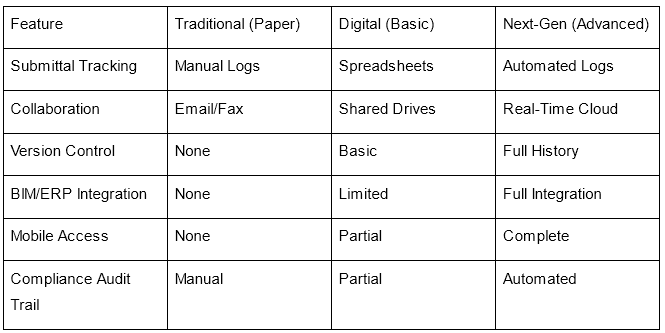
What to Actually Look For
Prioritize mobile access, automated tracking, and integration with your existing toolset. And honestly? Don't underestimate the ease of use. If your team finds the software frustrating, they'll revert to spreadsheets within a month, no matter how powerful the platform is.
Making the Switch: A Practical Approach
Transitioning from paper to digital doesn't require a complete organizational overhaul overnight. A structured rollout keeps things manageable.
Start by Mapping What You Already Have
Before touching any new software, document how submittals currently flow through your team. Where do delays cluster? Who touches each document? Which approval steps consistently drag? That clarity makes implementation far smoother.
Don't Skip Onboarding
Training tends to be an afterthought, and that's usually where digital transitions fall apart. Teams that receive hands-on onboarding and clear documentation adopt new tools faster and push back less. Getting project managers bought in early tends to bring everyone else along naturally.
Turning Efficiency Into Financial Returns
Organized submittals aren’t just operationally satisfying; they’re profitable. Every rejected or delayed submittal creates extra admin work, slows approvals, disrupts project timelines, and increases the risk of costly rework.
Multiply those setbacks across dozens of submittals on a single project, and the financial impact becomes impossible to ignore. That’s why more contractors and project teams are investing in better construction submittal management systems to improve accuracy, speed up approvals, and keep projects moving without unnecessary delays.
Measure Your Approval Cycles
Digital platforms give you visibility into how long every submittal takes from submission to sign-off. That data helps project managers catch bottlenecks early, before they become budget problems.
Cut Rework at the Source
Analytics built into modern platforms let you identify recurring rejection reasons and fix them upstream. That kind of proactive improvement compounds over time, and the cost savings are real.
Where the Industry Is Heading
AI is rapidly changing how construction teams manage submittals and project documentation. AI-powered review tools can now identify specification mismatches, missing details, and document errors before a human reviewer even opens the file, helping teams reduce delays and improve accuracy.
At the same time, technologies like blockchain are gaining attention for improving document security, version tracking, and chain-of-custody verification. Digital twins are also opening new possibilities by connecting submittal data directly to building models, making material verification, compliance tracking, and project coordination more reliable and easier to audit throughout the construction process.
Sustaining the Gains Long-Term
Great tools don't sustain themselves. You need structure around them.
Build in Accountability
Establish regular backup protocols, assign clear document ownership, and create feedback loops where teams can flag process gaps. The system should improve over time, not calcify around whatever habits your team formed during onboarding.
Common Questions About Going Digital
1. Can smaller firms actually afford this?
Yes, cloud-based platforms typically offer scalable pricing. Reduced rework and faster approvals often offset the cost within the first few months.
2. Are these platforms secure and compliant?
Reputable solutions include role-based access, encryption, and automated audit trails, meeting common regulatory requirements while protecting sensitive project data.
3. How fast can teams get started with construction submittals software from Spec-ID?
When making the switch to construction submittals software from Spec-ID, most teams onboard within a few weeks. Structured training and pre-built workflows accelerate adoption, even for teams with limited prior experience using digital tools.
4. Do you need full system integration from day one?
Not at all. Many teams start with standalone submittal software and integrate with broader systems later. Starting simple reduces overwhelm and builds confidence before expanding.
5. Can digital platforms handle complex, multi-phase projects?
Absolutely. Purpose-built platforms support multiple submittal packages, parallel review tracks, and phased workflows without creating version conflicts or confusion.
6. What kind of support comes with the software?
Most vendors offer onboarding resources, documentation, and ongoing training. Responsive customer support matters just as much as feature quality; factor that into your evaluation.
The Bottom Line
Paper-based submittals aren't just inefficient, they're a quiet drain on your firm's profitability, one missed deadline at a time. Teams that take construction document management seriously, invest in the right platform, and train their people properly gain a compounding advantage that shows up in project margins and client satisfaction alike. The gap between paperwork and profit is real. The good news? It's also entirely closeable.