Hotel Room Controls: A Business Case for a Phased Upgrade
Sponsored by SOUKA
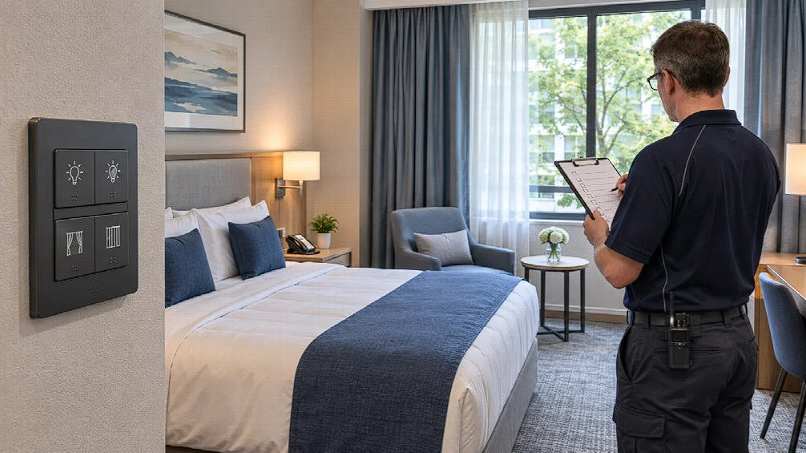
A hotel room controls project can look straightforward in a demonstration. A wall panel changes the lights, the curtains move and a screen displays a welcome message. The harder purchasing decision is whether the hotel can introduce those functions while continuing to sell rooms, support guests and maintain the building.
A phased upgrade offers a way to answer that question before committing the whole property. Its value comes from resolving uncertainty in a small, representative installation. The pilot should establish what the controls must do, what existing equipment can remain and what staff will need to operate the result. A demonstration alone cannot settle those points.
Start with the operating problem
Write down the problem that makes the investment worth considering. It might be inconsistent lighting controls between room types, repeated calls about how a panel works or difficulty coordinating room-status information. Treat each as a problem to investigate, rather than assuming a new controller will automatically solve it.
Give the proposed improvement a practical acceptance condition. If guests find the lighting confusing, ask someone unfamiliar with the room to use the controls. If the concern is maintenance, ask the engineering team to identify the equipment and settings needed for a replacement. These checks reveal more than adding another function to the specification.
At this stage, a SOUKA smart room control solution can be considered as a discussion framework for controllers, panels, sensors and the required room functions. The purchased configuration still needs to match the property's wiring, equipment interfaces and operating policy. A product category is a starting point for the brief, not a completed design.
Define what a room state actually means
Terms such as occupied, vacant, checked in and ready for cleaning can refer to different conditions. A booking status does not prove that someone is physically present. A sensor reading does not tell housekeeping whether the room has been released for service. An integration becomes difficult when several teams use the same label for different decisions.
For every proposed automation, identify its input, the action it may trigger and the person responsible for approving that behaviour. Include delays, manual overrides and exceptions. A guest who is resting quietly should not encounter an unexpected lighting change because the project team failed to discuss that scenario.
Heating, ventilation and other building services require review by the relevant designer and operator. Confirm the interface and the permitted control sequence for the installed equipment. Do not treat a successful command in a showroom as evidence that the same settings are suitable throughout an occupied hotel.
Choose pilot rooms that expose the differences
A single renovated room may hide the conditions that make a wider rollout expensive. Before selecting the pilot, compare room layouts, existing wiring, equipment types and refurbishment history. Include representative differences that could affect installation or everyday use.
Record the work needed to make each pilot room operational. That includes access arrangements, installation time, configuration, testing and the work required to return the room to sale. A controller's purchase price tells the owner little about these dependencies.
Agree how a room will be restored if the trial configuration is unsuitable. Keep the previous settings and installation information identifiable. The purpose is to make the next decision informed and reversible, while avoiding an unfinished trial becoming the permanent operating arrangement.
Compare the complete installed scope
Ask suppliers to separate equipment, installation, software, integration, commissioning and support in their quotations. Identify licence assumptions and any services that require an ongoing payment. Compare exclusions as carefully as included functions.
Room availability also belongs in the business case. A lower equipment quote may involve more cabling work or longer access to rooms. Conversely, retaining existing infrastructure can reduce disruption only if its condition and compatibility have been checked. These are property-specific questions, not reasons to promise a standard saving.
For energy-related proposals, define a measurement plan before quoting a payback period. The comparison needs to account for factors such as room use, operating schedules and conditions during the trial. A supplier's general claim or a change in one bill cannot establish what the controls saved at this hotel.
Keep integration responsibilities visible
Guest television, room control and property-management systems can exchange information, but they perform different jobs. Ask which events will cross each interface, which system supplies the information and what happens if the connection is unavailable. Include those responsibilities in the agreed scope.
An integrated IPTV and GRMS solution is relevant when the hotel wants coordinated guest-room services. Review the exact television platform, control equipment and available interfaces before ordering. An integration label does not confirm compatibility with every existing system.
Have the hotel and integrator demonstrate the required events with fictitious guest details. Check the intended room behaviour after an event, after a restart and when an interface is unavailable. Give the operating team a clear route for reporting faults without requiring staff to decide which supplier is responsible first.
Make the pilot result a purchasing decision
Collect feedback from the people who use and support the room: guests or representative testers, housekeeping, front office and engineering. Separate usability problems from installation defects and configuration choices. A technically working panel may still require a clearer label or a different location.
Then review the evidence against the original brief. Which operating problems were resolved? Which changes are still needed? Can staff follow the agreed instructions, and does the final quotation include the work discovered during the trial?
Approve the next phase only when those answers support it. Keep an agreed room configuration and a record of the differences that remain. Hotel room controls become a more defensible investment when each phase turns uncertainty into a specific decision about scope, disruption and ongoing operation.