How Chat Smith supports AI-powered content creation

Creating digital content often involves several connected stages. An idea may need to be researched, developed into an outline, turned into a draft, refined for a particular audience and supported by suitable visuals. When each stage requires a different tool, moving between platforms can interrupt the creative process and make it harder to maintain a consistent direction.
Chat Smith is a multi-model AI assistant that brings together access to advanced AI models, including GPT-6 Astra, Gemini and Claude, within one conversational platform. It helps users explore ideas, organize information, write and refine content, and generate images without having to switch repeatedly between separate tools.
Rather than expecting AI to produce a finished result from a single prompt, users can treat it as part of an iterative workflow in which each response can be reviewed, adjusted and developed further.
Developing an idea through conversation
The first version of an idea is often incomplete. A creator may have a broad topic but still need to determine the audience, format or most relevant angle.
With Chat Smith, users can begin by describing what they want to communicate and then explore possible topics, outlines and alternative approaches through an ongoing conversation. They can introduce more context, change priorities or request a different direction as the idea develops.
For example, a general concept for an article about sustainable travel could be narrowed into a practical guide for first-time international travelers. The user could then compare several outlines, adjust the emphasis and test different introductions before selecting the most suitable direction.
This process reduces the pressure to create a perfect prompt at the beginning. Instead, the initial response becomes a starting point that can be questioned, revised and expanded.
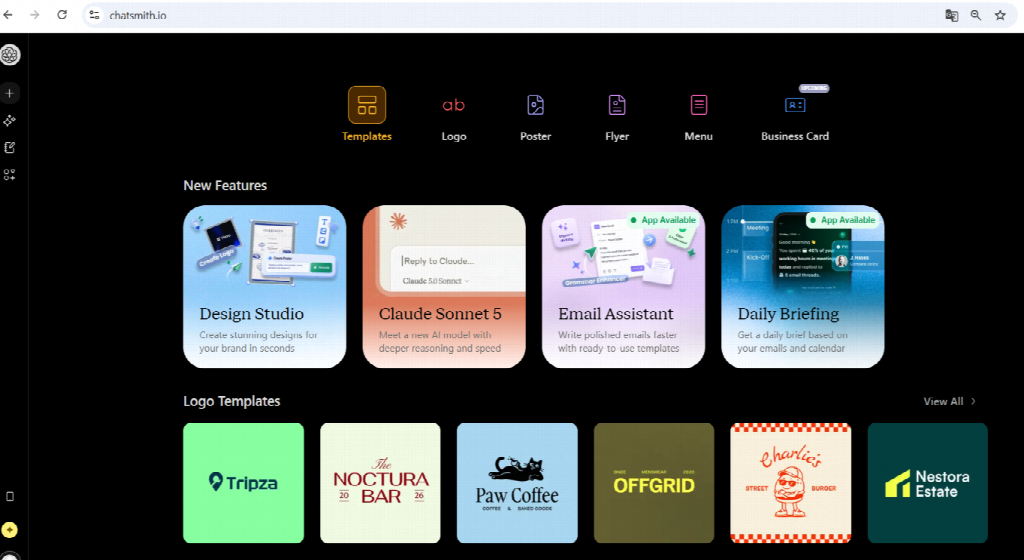
Writing and refining content with AI Chat
Once the direction has been established, the next step is turning it into a usable copy.
Chat Smith’s AI Chat gives creators a conversational way to develop drafts, improve messaging and adapt content for different audiences. Users can provide background information, describe the intended reader, specify a tone and request revisions without restarting the process each time.
A content marketer might begin with an outline and ask for a first draft. After reviewing the result, they could request a stronger introduction, simplify technical language, shorten selected sections or adjust the tone for another audience.
The same process can support blog articles, website copy, emails, social media posts, product descriptions and other marketing materials. Content does not need to be finalized after one response. Users can progressively shape the output according to the purpose of the project.
Organizing research before drafting
Research is another important part of content development. Before writing an article or planning a campaign, creators may need to understand a topic, compare perspectives or organize information collected from several sources.
AI can help break a broad subject into research questions, group notes by theme and identify areas that may require further investigation. These findings can then inform the outline and later revisions.
However, AI-generated summaries should not be treated as verified sources. Important facts, quotations and statistics still need to be checked against reliable references before publication. AI can support the organization of research, while factual verification and editorial decisions remain the responsibility of the creator.
Turning written ideas into visuals
Digital content often requires visuals that reinforce the written message. Developing those visuals may involve another round of brainstorming, references and revisions.
Chat Smith’s AI Image Generator extends the workflow from writing to visual creation. Users can describe an image in natural language and define elements such as the subject, visual style, composition, color palette, mood and intended format.
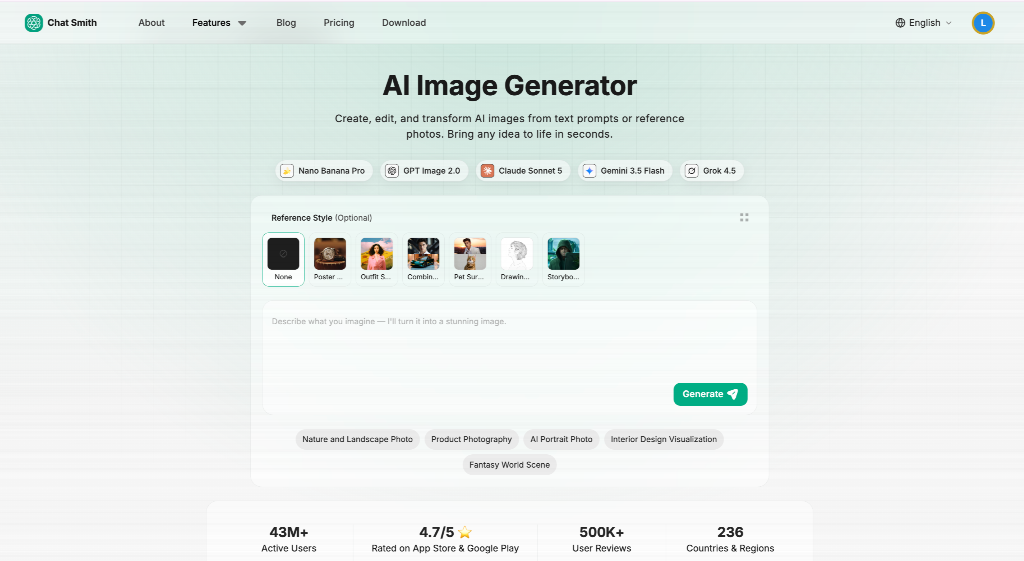
After developing an article about sustainable travel, for example, a creator could generate several visual directions based on the same theme. One version might use documentary-style photography, while another could take the form of a minimalist editorial illustration.
Exploring several options can help creators decide which direction best supports the content before investing additional time in production or design.
Keeping content and visuals aligned
Written content and accompanying visuals do not always communicate the same message. An informative article may be paired with an image that appears overly promotional or unrelated to the subject.
Developing both elements around the same central idea can make alignment easier. Once the message, audience and tone have been defined, those details can guide both the writing and the visual prompt. If the messaging changes during revision, the image direction can be adjusted accordingly.
AI does not replace professional design or editorial judgment. It offers a faster way to explore and compare possibilities before committing more resources to production.
Creating a more connected workflow
The value of combining these capabilities lies in how the different stages inform one another. Research may change the original angle, editing may reveal missing information, and a visual concept may suggest a clearer way to communicate the message.
By bringing multiple AI models, conversational assistance and image generation into one environment, Chat Smith allows users to move between ideation, research, writing, revision and visual creation while maintaining the context of the project.
AI-generated material should still be treated as a working output rather than an automatically finished product. Human review remains essential for accuracy, originality, brand consistency and overall quality. Used in this way, Chat Smith can make experimentation and iteration a more practical part of everyday content creation.