How Hay Tarps Reduce Feed Losses and Improve Farm Storage
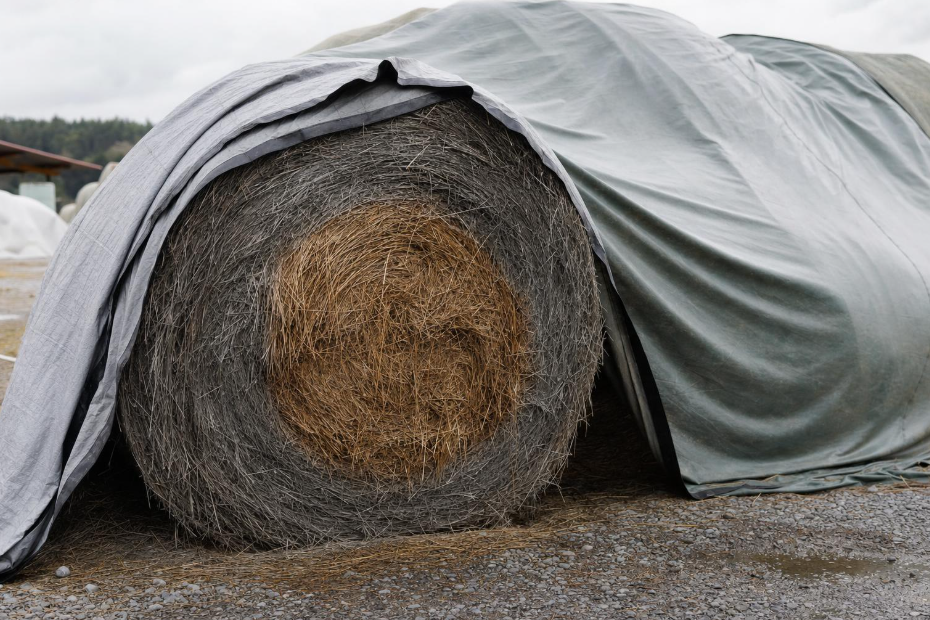
Every bale you keep in usable condition is a bale you do not need to replace later. That matters when forage and bedding prices are under pressure. The AHDB straw market outlook noted tight supplies and weather-related pressure around the 2025 to 2026 winter, which is a useful reminder that protecting what is already stacked in the yard can be one of the lowest-cost storage improvements available to a farm business.
You do not always need a new shed or a concrete store to reduce weathering losses. For farms facing higher forage costs, a well-installed cover, including PVC-free hay tarps where appropriate, can help protect outdoor bales without the capital cost of a permanent building. This article explains the economics of covered storage, why covers work, how to set up a stack, how to compare cover materials, and which UK safety and compliance points to keep in mind.
The Economics of Weathering Loss
Weathering loss shows up in two main ways. The first is dry matter loss, where the outer layers of a bale break down and are no longer useful feed. The second is palatability loss, where the feed is still present but stock refuse weathered material, leaving more waste around the feeder.
Figures from US extension services give a useful sense of scale. Virginia Cooperative Extension puts outdoor round bale losses at roughly 5 to 35 percent. University of Illinois Extension offers a practical comparison: about 5 percent dry matter loss for bales in a shed, around 7 percent for bales tarped on a pad, and about 23 percent for net-wrapped bales left on the ground. The gap between a bale on soil and a bale on a covered pad can change a season's feed budget.
You can frame the payback with a simple calculation: tonnes in store multiplied by the value per tonne multiplied by the loss you can avoid. Use your own tonnage and the current AHDB price for hay or straw, then compare a realistic uncovered loss with a covered one. Even a modest reduction across a full winter's forage can help cover the cost of tarps, fixings, and basic site preparation.
Why Covers Work, and When They Do Not
Losses reach a bale through three main routes: moisture wicking up from the soil, rain soaking in from above, and ultraviolet light degrading the surface over time. A cover addresses the top two directly and slows the third.
Mississippi State University Extension is clear that much of the loss occurs where the bale contacts the ground. Raising bales onto coarse stone, pallets, or old tyres to break the wicking path is one of the highest-value steps you can take. Combine elevation with a cover that sheds water and you reduce loss from both directions. This is why Virginia Cooperative Extension can point to covers roughly halving losses when they are used correctly.
The key phrase is used correctly. A cover will not save hay that went into the stack too wet. University of Illinois Extension warns that bales stored above 20 percent moisture are prone to heating, and once internal temperatures climb past 170°F, or about 77°C, you have a fire risk as well as a quality problem. Sealing damp bales tightly can trap heat and moisture. Cover dry, well-made bales, keep a probe thermometer handy for any bale you are unsure about, and do not treat a tarp as a fix for poor baling conditions.
A Practical Field Recipe
Setting up a covered stack is easier when you treat it as a repeatable routine. The steps below draw on guidance from Virginia Cooperative Extension, University of Illinois Extension, and Mississippi State University Extension.

- Choose a well-drained, elevated site. Water that pools around a stack reduces much of the benefit of covering it. Pick the driest, highest ground you can spare.
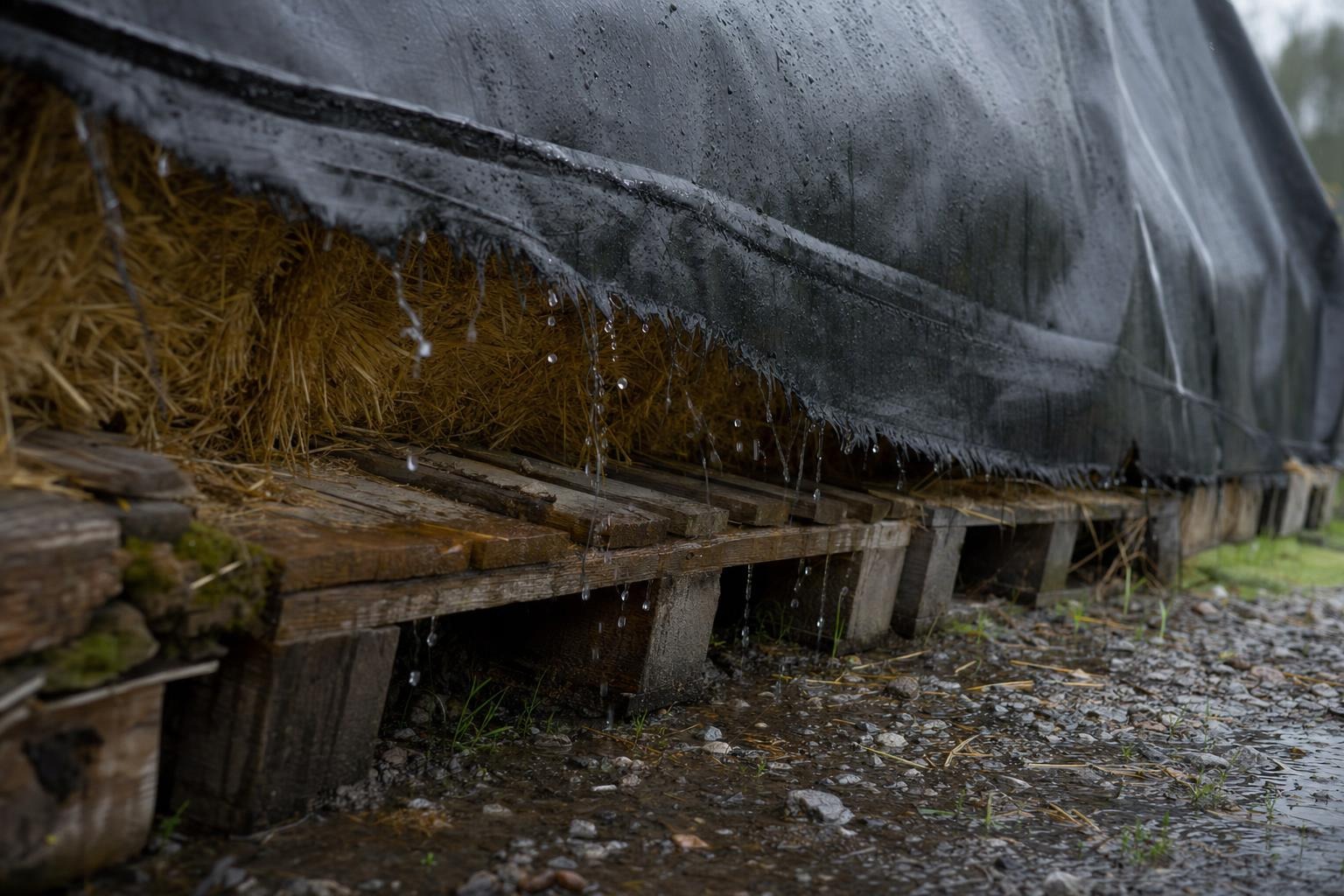
- Build a pad. Four to six inches of coarse rock, or a bed of pallets, keeps bales off the soil and cuts the wicking that causes bottom loss.
- Stack sensibly. Place round bales end to end in single rows so water sheds off the sides. Avoid pyramid stacks unless the whole stack is fully protected, since valleys between bales collect water.
- Cover with an A-frame profile. Let the tarp overhang toward the ground so rain runs clear of the bales, then secure it with ropes or bungees and weights such as sandbags or pipe threaded through grommets.
- Leave alleys. Gaps between rows allow airflow and let you inspect the stack safely.
- Monitor and retighten. Check covers after storms and heavy snow load, and re-tension anything that has worked loose.

Choosing the Cover Material
Covers vary in moisture resistance, breathability, weight, handling, UV resistance, and end-of-life options. It helps to compare the main material families before you buy.
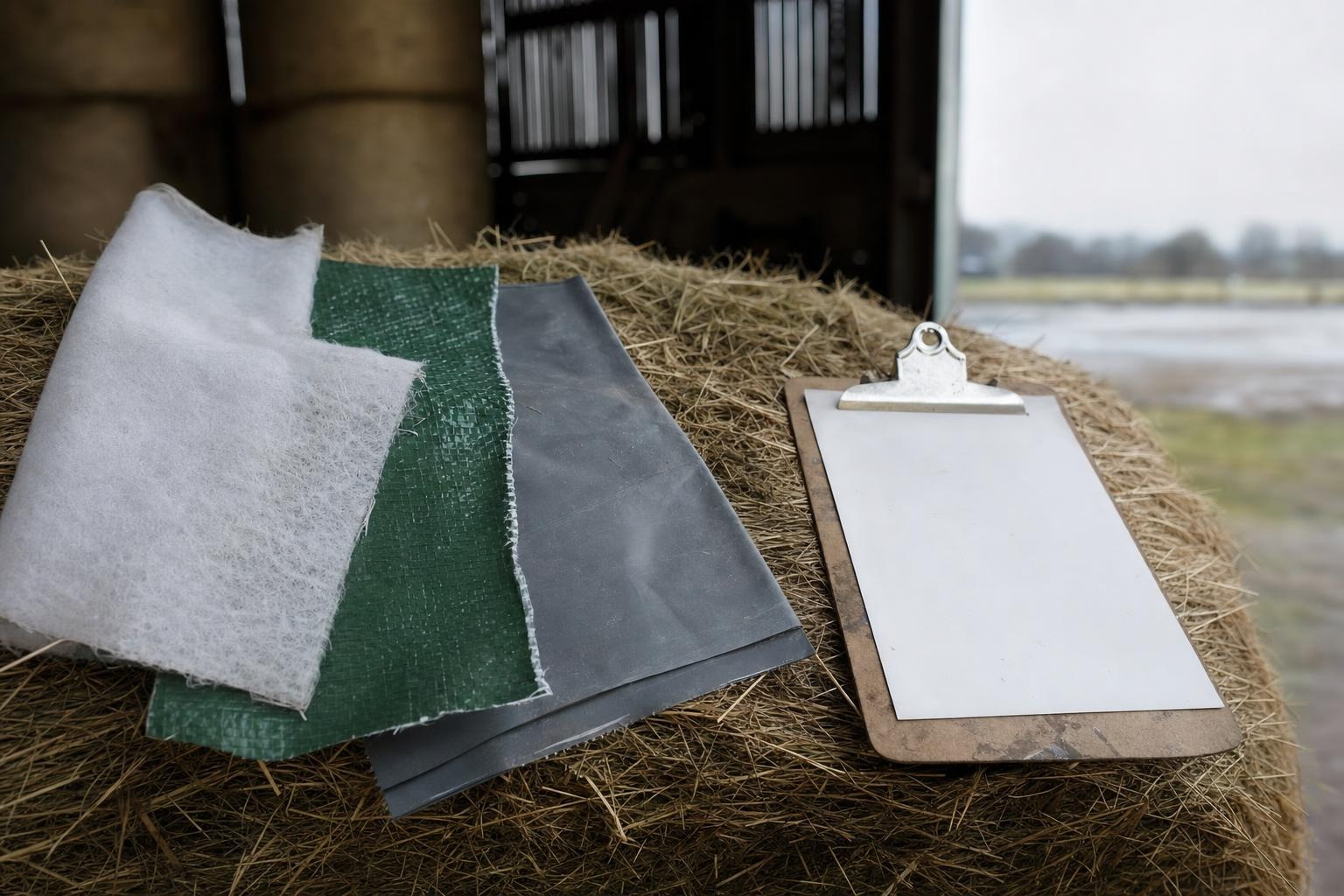
For PVC-free hay tarps, ask the supplier for written details on phthalates, PFAS, BPA, weight, fixings, warranty, recyclability, and any take-back route. Supplier claims are useful starting points, but they should be checked against the way you stack, the wind exposure on your site, and how often you expect to move the cover.
On the breathable side, Toptex covers marketed in the UK are described as water-shedding, air-permeable, and UV-stabilised, with a minimum three-year life expectancy. Breathable covers suit vented stacks where you want moisture to escape; barrier-style hay tarps suit situations where shedding rain is the priority. Fit for purpose matters more than any single label.
Sustainability and End of Life
Agricultural plastic is easy to buy and harder to dispose of well. WRAP estimated UK agri-plastic recycling at around 20 to 30 percent in 2023, and that gap has prompted collection pilots, including a farm-plastic recycling scheme reported by Natural Resources Wales. For a farm business, the practical response is to plan disposal at the point of purchase.
Keep simple records of what you buy and when, favour products with a take-back route or a clear recycling stream, and use recognised farm-plastic collectors rather than sending covers to general waste. A cover that lasts several seasons and can then be collected for recycling is a better long-term choice than a cheap sheet that shreds in a year and becomes difficult to handle responsibly.
Safety and Compliance
First, handling. HSE highlights that work with bales can cause fatal or serious accidents and publishes guidance on stacking and handling. Stable stacks, safe use of handlers, and sensible working practices around tall stacks all matter, particularly when you are fitting or retightening a cover.
Second, permanent stores. In England, GOV.UK guidance states that you must notify the Environment Agency at least 14 days before constructing or substantially changing silage, slurry, or fuel stores, and that new stores should have a 20-year design life. These rules do not apply to temporary hay tarping, but they are relevant to a build-versus-buy decision. If a shed is on your longer-term plan, include the notification step and design-life expectations in your budget and timeline.
Alternatives and Complements
Tarps are one tool among several, and the right mix depends on your bale type, stack layout, storage time, and site exposure.
- Breathable fabric covers suit vented stacks where trapped moisture is a concern.
- Individual bale caps can protect large square stacks and fit at ground level, which helps where a full stack cover is awkward.
- Conventional poly hay tarps remain a practical, widely available choice for covering rows quickly.
A Storage Planning Checklist
Good farm storage planning comes down to a few decisions made deliberately rather than left to chance. It can sit within wider farm infrastructure planning when access, drainage, and future building options are being weighed. Run through this checklist before the next batch goes into store:
- Site: well-drained and elevated, away from pooling water.
- Pad: coarse rock or pallets to break soil contact.
- Stack layout: single rows, end to end, shedding water rather than trapping it.
- Cover selection: barrier or breathable, matched to bale dryness and stack layout.
- Tie-down plan: ropes, bungees, and weights sized for local wind.
- Inspection schedule: walk the stack after storms and snow, and re-tension covers.
- Fire and moisture monitoring: keep a probe thermometer for bales made close to the safe moisture limit.
- Waste and recycling plan: records plus a take-back or collector route at end of life.
- Repair budget line: a small allowance for patches and replacement fixings.
None of this requires a new building. A drained, elevated pad, a suitable cover, sensible fixings, and a habit of checking the stack will do much of the work. In a season where forage is expensive, the cheapest tonne of feed is often the one you kept from spoiling, and covered storage is one of the simplest ways to keep more of it usable through to spring.

.jpg)
.webp)