How SalesAR Supports Multi-Stakeholder Sales Cycles
.jpg)
Modern B2B deals rarely come down to a single yes-or-no decision. They move through procurement teams, technical evaluators, finance reviewers, and executive sponsors, and every one of those voices can stall or accelerate the process.
That kind of selling needs a system. Random follow-ups, generic email blasts, and inconsistent timing tend to fall apart the moment more than two stakeholders enter the picture. SalesAR helps companies running a complex sales cycle build outbound programs that keep messaging consistent, warm up contact points, and keep decision-makers engaged from first touch to signed contract.
Why Multi-Stakeholder Deals Break Down
Most outbound programs are built around a single buyer persona. When a deal involves multiple roles across departments, that model starts to crack. Each person sees the offer through their own lens, so a message that lands with the CTO might confuse the CFO, and vice versa.
Sales teams often struggle with three core issues when more stakeholders are involved. Recognizing them early helps shape outreach that actually moves deals forward rather than letting them drift.
- Misaligned messaging across roles. Technical buyers care about integrations and security. Finance cares about ROI and payback periods. Executives care about strategic outcomes. One pitch rarely covers all three.
- Inconsistent timing. Some stakeholders engage early, others jump in halfway through. Outreach that ignores this rhythm misses key influencers at the worst possible moment.
- Lost context between touchpoints. When SDRs, AEs, and marketing run separate plays, prospects get conflicting information, and trust slips away fast.
These issues compound over time. A deal that could have closed in three months stretches to six, then nine, then quietly dies in someone's inbox.
How SalesAR Structures Outbound for Complex Buying Groups
Building B2B outreach for committee-driven deals takes more than a good list and a few email templates. It requires mapping every relevant role within a target account, sequencing touchpoints that align with each role's priorities, and keeping the entire campaign coordinated so prospects feel they are talking to a single, organized team.
SalesAR approaches this through account-based outreach designed around the buying committee itself. Campaigns are built role by role, with messaging tailored to what each stakeholder actually cares about. The goal is to create momentum across the whole group rather than chasing a single champion and hoping the rest will follow.
Mapping the Buying Committee First
Before any email goes out, SalesAR identifies who needs to be in the conversation. That includes the obvious decision-makers along with the quieter influencers who often shape the final call. Procurement, IT, legal, and end users frequently get overlooked, yet their input can make or break a deal in the final stages.
Account research focuses on understanding reporting lines, recent organizational changes, and current priorities at the company level. That context shapes which roles to engage first and which messages will resonate with each one.
Coordinating Multi-Channel Touchpoints
A single channel rarely works for committee deals. Some stakeholders respond to email, others prefer LinkedIn, and a few only engage after a referral or warm introduction. SalesAR runs coordinated sequences across channels so the campaign meets each person where they actually pay attention.
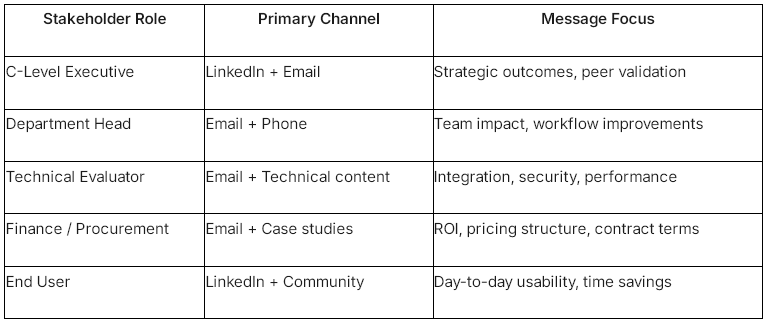
This kind of structure keeps the campaign organized while giving each contact a reason to engage on their own terms.
What Changes When Outreach Is Built for Committees
Companies running a complex sales cycle through structured outbound see different results than those relying on volume-based prospecting. Reply rates improve because messages feel relevant. Meetings get booked with the right mix of people in the room. And deals progress faster because objections surface earlier, rather than appearing in the final weeks.
There are a few specific shifts that tend to show up once committee-focused outreach takes hold:
- Higher meeting quality. Calls include multiple stakeholders from the start, so discovery covers more ground in less time.
- Shorter stall periods. When every key role has already been touched, deals spend less time waiting for someone new to get up to speed.
- Stronger forecast accuracy. Pipeline reflects real engagement across the buying group rather than one person's optimism.
- Better feedback loops. Patterns across roles reveal where value propositions land, sharpening future campaigns.
These outcomes compound when B2B outreach is treated as a long-term program rather than a one-off campaign push.
Why This Matters for Companies Selling Into Larger Accounts
Enterprise and mid-market deals almost always involve a buying group. The bigger the contract value, the more people sit at the table. Companies that try to run the same outbound playbook they used for small business deals tend to hit a wall once they move upmarket.
A structured approach to B2B outreach gives sales teams a way to scale into larger accounts without losing the personal touch that committee buyers expect. It also gives marketing and sales a shared framework, so handoffs between teams no longer create friction.
SalesAR works with companies at exactly this stage, where the old prospecting model has stopped delivering, and the new one has yet to take shape. The result is outbound that fits how modern buying actually happens, with messages that reach the right people in the right order.
Conclusion
Multi-stakeholder selling rewards preparation and punishes shortcuts. Companies that invest in mapping their buying committees, coordinating channels, and tailoring messages by role consistently outperform those running generic outbound. A well-built complex sales cycle program turns scattered conversations into organized progress, and that progress is what eventually closes large deals. For teams ready to bring that kind of structure to their pipeline, SalesAR offers the experience and systems to make it work.
.jpg)