How the Photo Booth Business Has Changed, and What Clients Want Now
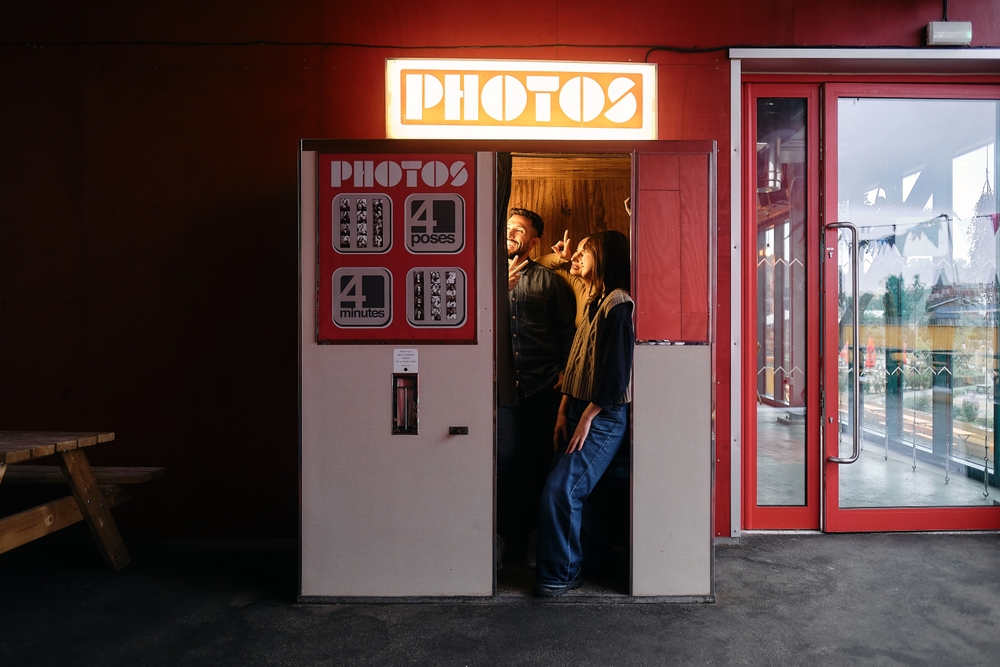
“What does it actually mean to run a Photo Booth business now?”
A decade or two ago, the answer was fairly straightforward. An operator bought or built a booth, promoted it locally, transported it to weddings and parties, printed photographs for a few hours, then packed everything away at the end of the night.
That model still exists, and for plenty of businesses it remains profitable. What has changed is everything that can now be built around it.
Social media has reshaped what guests want from event content. Corporate clients increasingly expect branding and measurable engagement. Video has become central to online communication. Artificial intelligence has introduced entirely new creative possibilities. Even the idea of where a Photo Booth belongs has expanded beyond temporary events into retail, hospitality, attractions, and permanent venues.
The Photo Booth business has gradually become less about renting a box with a camera inside and more about selling interactive content experiences.
The Original Photo Booth Business Model
Early Photo Booth rental businesses generally operated around a relatively simple formula.
The operator invested in the physical equipment, built a local reputation, generated enquiries, and rented the booth for fixed periods. Weddings were particularly attractive because couples were already purchasing entertainment and photography services, while birthday parties, Christmas events, and company celebrations provided additional opportunities throughout the year.
A typical booking might involve three or four hours of operation, with the business supplying the booth, attendant, backdrop, props, and prints.
Growth was largely tied to physical capacity.
An operator could only attend so many events in one evening. Expanding usually meant buying another booth, employing another attendant, and arranging additional transport.
Where Did the Money Come From?
Most additional revenue was generated through relatively straightforward upgrades:
- Additional booth hire time.
- Premium backdrops.
- Guest books.
- Extra prints.
- Custom print designs.
- Enhanced prop packages.
- Travel outside the standard service area.
These were useful add-ons, but almost all revenue was still connected directly to the physical rental.
If the booth was not booked, it was not earning.
Key Takeaway
The traditional Photo Booth business primarily monetised equipment, operator time, and physical event attendance.
Why the Photo Booth Market Began to Change
Several developments changed what clients expected.
First came smartphones. Guests no longer needed a Photo Booth simply because it gave them access to a camera.
Then social media changed the purpose of event photography. People wanted content they could upload, send, remix, and share immediately.
Short-form video accelerated the change further. A static photograph still had value, but guests were increasingly accustomed to animated, edited, music-backed content appearing across their feeds.
As a result, the question clients asked began to change.
It was no longer simply, “What does your booth look like?”
Increasingly, it became:
- What can guests create?
- How can we personalise it?
- How quickly can people receive their content?
- Can it carry our branding?
- Will people actually want to share it?
That fundamentally changed the commercial opportunity for operators.
Key Takeaway
Once taking a photograph became effortless, Photo Booth businesses needed to offer experiences that guests could not easily recreate with their own phones.
Today's Photo Booth Business Can Serve More Types of Clients
One of the biggest changes is the breadth of the market.
Private parties and weddings remain important, but operators can now target clients with very different objectives.
Weddings and Private Celebrations
Personalisation is increasingly important. Couples may want customised visuals, digital sharing, interactive video, and an experience that complements the style of their wedding rather than a generic booth placed in the corner.
Corporate Events
Conferences, awards evenings, employee events, and business celebrations create opportunities for customised experiences that reflect the organisation's identity.
Brand Activations
This is where the commercial proposition becomes substantially different.
A brand or agency may not be interested in hiring a Photo Booth for entertainment. It may want an interactive content experience built around a campaign.
The operator can therefore sell creative preparation, branding, customisation, and digital content production rather than simply charging for several hours of equipment hire.
Retail, Hospitality, and Attractions
The technology can also operate outside traditional events entirely.
A permanent photo booth can become part of a retail environment, visitor attraction, entertainment venue, hotel, or other physical location where guests regularly interact with the experience.
This introduces the possibility of longer-term installations and commercial relationships rather than relying entirely on individual evening bookings.
Key Takeaway
The modern market can include private clients, corporations, marketing agencies, retailers, venues, attractions, and brands.
How Photo Booth Businesses Find Bookings Now
The routes to market have evolved alongside the service.
Wedding directories, exhibitions, and local referrals remain useful, but operators now have many more ways to demonstrate what they actually provide.
Social Media Has Become the Portfolio
A photograph of the physical booth tells a potential customer very little.
A short video of guests interacting with it tells them much more.
Social platforms allow operators to showcase the experience itself. Potential clients can see how people react, what finished outputs look like, and how the booth fits within a real event.
In many cases, the content generated by previous events effectively becomes advertising for the next booking.
Partnerships Can Produce Better Leads
Relationships with other event professionals can create a consistent source of work.
Useful partnerships might include:
- Event planners.
- Wedding venues.
- Marketing agencies.
- Corporate venues.
- Professional photographers.
- Entertainment suppliers.
These partnerships become particularly valuable when businesses can refer work repeatedly rather than relying on individual customers finding the operator through search or social media.
Repeat B2B Work Changes the Economics
A couple may only book one wedding.
An agency, venue, or corporate client could book multiple events every year.
That makes relationship management increasingly important. Reliable delivery, flexible branding, good communication, and the ability to offer new experiences can all contribute to repeat business.
Key Takeaway
Photo Booth businesses are increasingly built around visual marketing, partnerships, referrals, and recurring B2B relationships rather than one-off enquiries alone.
New Ways Photo Booth Operators Can Generate Revenue
The modern operator has considerably more options than simply extending the hire time.
Technology allows businesses to develop packages around what the experience creates rather than how long the equipment sits inside the venue.
Premium Digital Experiences
Advanced effects, artificial intelligence, interactive transformations, and customised video can support premium packages with greater perceived value.
Branded Activations
Corporate clients may pay for an experience designed specifically around their campaign.
This can include custom graphics, branded interfaces, digital outputs, landing experiences, and tailored creative concepts.
360 Video Experiences
Short-form video has created opportunities for operators to offer experiences built specifically around motion, effects, and social sharing.
Long-Term Installations
Instead of transporting equipment from venue to venue, operators can explore longer-term installations that remain active within a business or attraction.
Broader Content Services
Some operators can expand into photography, professional headshots, video experiences, branded content stations, and other complementary services.
The significant change is that revenue can now be attached to creativity, customisation, software configuration, and digital content, not simply physical booth rental.
Key Takeaway
Modern Photo Booth businesses can create higher-value packages around content, technology, customisation, and ongoing installations.
What Do Clients Actually Want Now?
Technology has changed, but purchasing decisions ultimately come down to client expectations.
Today's customers generally want the experience to feel specific to them.
A corporate activation should look like the brand. A wedding should feel connected to the couple. A product launch should support the wider campaign.
Generic experiences are increasingly difficult to position as premium services.
Content Worth Sharing
Guests already have cameras.
What they need from an event experience is content they would struggle to produce themselves.
That could be a cinematic video, an AI transformation, a professionally lit portrait, or an animated branded output.
The finished result needs to be interesting enough that somebody actually wants it on their phone.
Fast Delivery
Modern attendees have little patience for unnecessary delays.
The sooner guests receive content, the greater the chance they will share it while the event is still happening and interest remains high.
Professional Reliability
Fancy technology does not excuse weak execution.
Clients still expect operators to arrive on time, understand the equipment, communicate clearly, manage guests professionally, and solve problems discreetly.
Measurable Results
B2B clients can also have very different expectations from private customers.
They may want to understand how many people interacted, how much content was created, or how widely an activation was shared.
This pushes the operator closer to the world of experiential marketing and away from traditional equipment hire.
Key Takeaway
Modern clients are increasingly purchasing personalised content experiences and measurable outcomes rather than simply hiring Photo Booth hardware.
Software Has Become the Engine of the Modern Business
One of the biggest changes in the industry is how much value now comes from software rather than visible hardware.
A modern photo booth app can help operators configure experiences, manage templates, apply branding, control digital delivery, and support different event formats from the same core setup.
That changes what one physical system can become.
A booth used for a wedding one weekend might be configured completely differently for a corporate activation the following week.
The equipment may remain largely the same.
The experience does not.
AI Opens Up New Creative Services
Artificial intelligence expands this flexibility further.
Instead of simply applying a predetermined overlay, software can transform imagery according to a creative concept.
For operators, this creates an opportunity to refresh the experience without necessarily buying an entirely new physical booth.
Video Has Become More Sophisticated
Slow motion, speed changes, music, multi-frame sequences, animated graphics, and other effects can turn a short recording into a finished piece of social content.
That makes video increasingly valuable for clients seeking shareable outputs rather than traditional prints.
Branding Can Run Through the Entire Experience
Corporate clients may want much more than a logo on the final image.
Software can allow the wider guest journey to feel connected to the campaign, from the interface and visual design through to the finished content and digital delivery.
Analytics Add Another Commercial Layer
Modern systems can also generate useful information about how an activation performs.
Depending on the setup, businesses may gain insight into participation, content generation, sharing, and other engagement signals.
This creates something traditional rental businesses rarely had, data that can demonstrate the value of the experience.
Key Takeaway
Software has transformed the Photo Booth from a fixed event product into a flexible content platform that can support multiple commercial services.
Technology Has Changed the Economics of the Business
Perhaps the most important shift is that operators do not necessarily need completely different hardware for every new service.
Historically, expanding the business might have meant buying another booth.
Today, growth can also come from changing what existing equipment is capable of delivering.
Consider a single setup used across several bookings:
- A personalised wedding photography experience.
- A branded corporate activation.
- An AI-powered content station.
- A professional headshot experience.
- A social-first video campaign.
The hardware investment may overlap heavily across those services.
Much of the differentiation comes from software, creative preparation, branding, configuration, and the way the service is packaged.
For smaller operators, this can create a more efficient path towards diversification than constantly investing in new physical booth designs.
Key Takeaway
Modern technology can help operators generate more commercially distinct services from the equipment they already own.
Where Is the Photo Booth Business Heading Next?
The boundaries of the industry are becoming increasingly difficult to define.
A business that began by renting booths for Saturday night weddings may eventually find itself delivering AI experiences for corporate conferences, branded video activations for agencies, professional headshots at business events, or long-term installations for venues.
The term Photo Booth business still works, but what sits underneath it is becoming much broader.
The future operator may increasingly resemble an event technology and content provider.
That creates opportunities to work with larger clients, develop recurring relationships, and sell solutions around business objectives rather than individual pieces of equipment.
The companies that adapt successfully are likely to be those that recognise this distinction.
Key Takeaway
The future opportunity lies in moving from Photo Booth rental towards a broader portfolio of interactive event content and technology services.
Conclusion
The original Photo Booth business was relatively easy to understand.
Buy the equipment. Generate local enquiries. Attend the event. Produce photographs. Charge for the rental and optional extras.
That model has not disappeared.
What has changed is everything that can now sit around it.
Social media, video, AI, sophisticated software, custom branding, analytics, and long-term installations have expanded what operators can offer and the types of clients they can serve.
For Photo Booth business owners, that creates a choice.
They can continue competing primarily on rental price and equipment, or they can use technology to develop experiences, content, and services that create more value for the client.
The Photo Booth may still be the part guests see.
Increasingly, however, the real business is everything the technology allows the operator to build around it.