How to Choose the Right Boiler Parts and Steam Supplies for Industrial Use
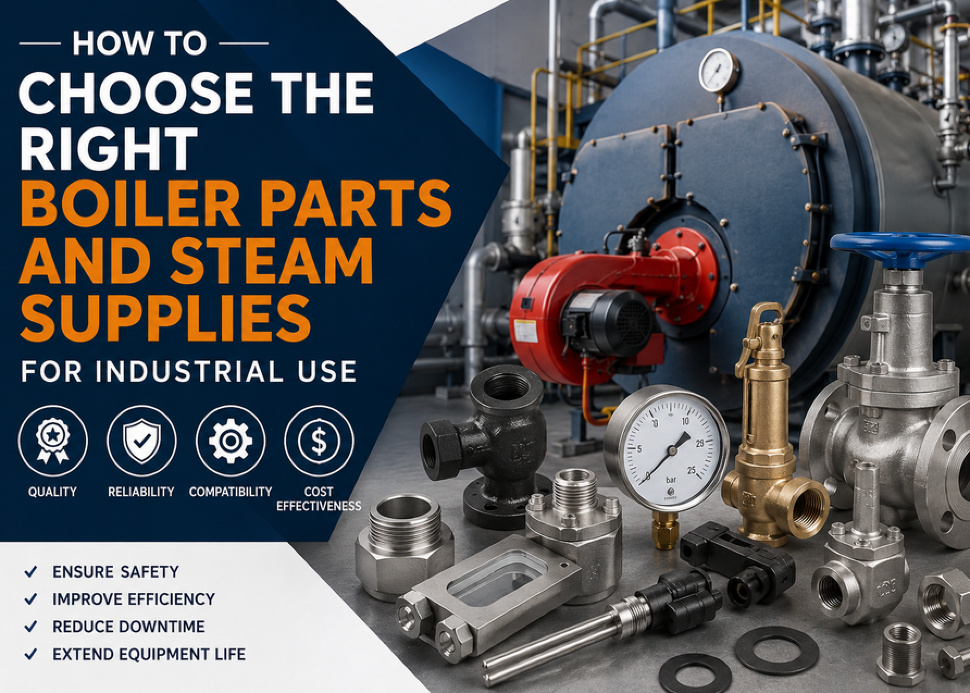
Where finding dependable boiler parts and steam supplies for industry applications in Australia is concerned, nothing beats having a reliable supplier on your side – one who has decades of experience in providing such equipment, like Hawleys which has supplied boilers and boiler parts in Australia since 1948.
No matter whether you're dealing with a big industrial steam system, fitting replacement components into a boiler or purchasing specialty boiler parts, knowing what to consider when buying boiler parts and steam supplies will be crucial for keeping your business safe and efficient.
The following article will tell you how to do just that.
Why Choosing the Right Boiler Parts Matters
Boiler systems within industrial settings must perform under very high-pressure and high-temperature conditions all the time. In such settings, the quality of components becomes critical.
Just one bad seal, a wrongly set valve, or even wrong sizing of a steam trap can lead to system malfunction and unplanned system shutdowns; in worst-case scenarios, the safety of staff and machinery may be at risk. The penalty for choosing an improper component will always exceed the price of using the proper component.
That is why maintenance engineers and operations personnel in many industries including mining, power plants, waste water processing, and manufacturing are meticulous when it comes to purchasing their boiler components.
Understanding the Key Components of an Industrial Steam System
Before buying the necessary parts, you will want to familiarize yourself with the parts of a conventional steam/boiler system and their functions. The first and most important component is the valve. The valve is used to control the amount, direction, and pressure of the steam. The valves most commonly used in industrial steam service are: ball valves, gate valves, globe valves, check valves, and pressure relief valves.
Ball valves are very dependable and easy to use and have excellent shutoff characteristics. Ball valves are particularly suited to high-pressure steam systems. Gate valves are usually used when it is necessary to allow unrestricted flow through a pipe with minimum resistance. Globe valves are most commonly used for very precise control of the flow of steam through them. Globe valves are most frequently used in throttling applications. Check valves prevent reverse flow through the pipeline and are extremely important to the equipment as they prevent damage to it in the event of reverse flow. Pressure relief valves provide protection against excessive pressure in a pipeline by venting steam any time the pressure in a given pipeline exceeds the manufacturer’s specified capabilities.
The type of valve and the valve material and pressure rating selected for your application are critical. Using the incorrect type of valve in a high-pressure steam system is a dangerous practice that no one can afford to use.
Gaskets and Jointing Materials
A gasket is the material used to provide the seal between pipe flanges and valve bodies among other parts that need to be sealed. In case of steam systems, gaskets are essential in ensuring proper seal since they work under extreme temperatures and pressure conditions.
It is important to choose the appropriate material based on the temperature of operation, the pressure, and nature of the substance sealed as well as the design of flanges. Steam applications will therefore call for materials that can withstand high temperatures and pressures such as graphite, PTFE or compressed non-asbestos fibre materials.
Choosing inappropriate material is often one of the major contributors to failure of sealing components in steam applications.
Steam Traps
Steam traps are automatic valves which are installed on steam systems to remove condensate (water that is formed when steam cools) but allow no live steam to escape. If steam traps fail to operate correctly, condensate will build up in the system and not only reduce the efficiency of heat transfer but also can lead to waterhammer, an event which is caused by live steam pushing a pocket of condensate through the system.
Steam traps can be split into a number of groups; such as float-and-thermostatic steam traps, thermodynamic steam traps and inverted bucket steam traps. It is essential that you select the correct type of steam trap for your needs and requirements. It depends on such things as the amount of condensate present and pressure,
Level Gauges and Gauge Mounts
The level gauge is an operator's means of visually identifying how much water is within the boiler and it is a safety system critical to correct operation. It is essential for the level to be maintained in a boiler. If the water level gets too low, the heating element will become uncovered which could result in irreparable damage to it or outright failure.
If the level is too high, it is possible for water to be carried over with the steam to downstream equipment and machinery, which could result in reduced efficiency and potential damage. Gauge glass, gauge mounts and level gauge assemblies must be properly specified to the operational conditions of the boiler and fitted and maintained by qualified people.
Strainers
Strainers prevent wear on steam and fluid line equipment by removing unwanted particles before they can enter and wear down valves, traps, etc. Properly sized, strainers will avoid expensive replacement costs for downstream equipment and will considerably increase their service life.
Lagging and Insulation
When steam pipework is insulated, using pipe lagging and lagging material, it reduces the loss of heat from the steam. It helps to increase efficiency of the system and therefore can lower running costs. In steam plants, proper insulation has a discernible effect on running costs for the lifespan of the plant.
How to Source Boiler Parts and Steam Supplies Effectively in Australia
Getting the right boiler parts quickly-especially in the case of servicing where down-time must be minimized-will necessitate a supplier who can supply the correct part by having a good range of stock, good knowledge and the right logistical backup.
The stock level is extremely crucial. In case of any problem in the steam system, the supplier will incur hourly costs. A supplier who has an ample stock of common boiler parts that he or she is able to deliver instantly mitigates the effects of the unforeseen maintenance.
The technical knowledge of the supplier is also essential. The components of the boiler system are technically demanding. The supplier who is knowledgeable in terms of the technical issues regarding the boiler system can advise on correct specifications and suitable alternatives when the required part is not available.
A warranty for each part is also vital. It is expected that the industrial boiler parts will be delivered with warranties from the respective manufacturer. This will assure the customer about the quality of the products and help him take legal action in case of premature failure due to material and manufacturing defects.
The supplier should allow online orders. Ordering the components online should be easy for maintenance teams since the work schedule is very tight.
Industries That Rely on Quality Steam and Boiler Supplies
Steam systems in industrial operations have a wide variety of uses within Australia.
The mining industry utilises steam in many different ways such as processing minerals and for heating purposes. The power station requires steam systems to help in energy generation through the use of steam turbines and boilers. The food and beverage industry also makes extensive use of steam in cooking, sterilising, and other cleaning operations. Water treatment plants utilize steam in many of their operational activities. Sterilisation is carried out using steam in the hospitals. Steam is also used in textile and paper manufacturing.
There are special requirements for each of these industries concerning operating pressure and temperature among others. Working with a company that understands this will ensure that the correct components and material are supplied.
Frequently Asked Questions
How do I know which valve type is right for my steam application?
A proper valve selection should be based on the intended application either for shutoff, regulation, or backflow prevention. The pressure and temperature requirements must also be considered. A reputable vendor can help determine the best-suited valve to use in your particular installation.
How often should steam traps be inspected and replaced?
At a minimum, the steam trap should be checked once a year under a planned maintenance procedure. The failure of steam traps to either close or open causes energy wastage, decreases efficiency in the steam plant, and may even cause damage to equipment. Inspection and replacement of the failed steam trap represents a very economical maintenance procedure.
What causes gasket failure in steam systems?
The main factors that cause gaskets to fail include improper selection of materials, incorrect installation, and loosening of bolts due to thermal cycling and damage. It is imperative to select the proper materials and install the gasket correctly for it to last longer.
Can I order boiler parts online and receive them quickly in Australia?
Indeed, suppliers who have plenty of stock and offer one-day delivery services are usually able to deliver boiler components to any part of Australia in two to three days' time.
What industries use industrial steam systems in Australia?
Steam systems for industry are employed in mining operations, power production, food and drink manufacture, water purification, healthcare institutions, and in textiles manufacture, among others.
Final Thoughts
The ability to provide a dependable and efficient steam system for the manufacturing industry can only depend upon the quality of the components and the technical expertise of the supplier of those parts.
As an operator of processes in Australia that realizes the importance of having the right steam supply and equipment to operate those parts properly, you simply have to rely on a supplier that is technically adept enough to give you what you need at the time that you need it.
Selecting a supplier, specifying your requirements, and maintaining your system will definitely pay off.