How to Select Low On-Resistance MOSFETs for Hard to Find IC Chips
.jpg)
Every electronics engineer knows the sinking feeling of designing around a critical IC chip, only to discover it's backordered for months or discontinued entirely. In today's volatile supply chain environment, component scarcity has become one of the most persistent headaches in hardware development, forcing engineers to rethink designs mid-project and hunt for viable alternatives.
MOSFETs, particularly those with low on-resistance, sit at the heart of nearly every modern power management circuit. Whether you're regulating voltage, switching loads, or managing battery power, the right MOSFET can mean the difference between an efficient, thermally stable design and one that wastes energy and overheats. When hard-to-find IC chips force a redesign, understanding how to select an appropriate low on-resistance MOSFET becomes even more critical.
This article is designed to help electrical engineers navigate that challenge with confidence. You'll find clear guidance on the key parameters that define MOSFET performance, practical strategies for accessing detailed specifications, and actionable steps for sourcing and validating components when your original choices simply aren't available. The goal is to give you the tools to make smart, informed decisions without losing momentum on your project.
Understanding MOSFETs and Their Role in Power Management
A MOSFET, or Metal-Oxide-Semiconductor Field-Effect Transistor, is a voltage-controlled switching device that forms the backbone of modern power management circuits. By applying a voltage to the gate terminal, engineers can control current flow between the drain and source, enabling precise regulation of power delivery across a wide range of applications—from DC-DC converters to motor drivers and battery management systems.
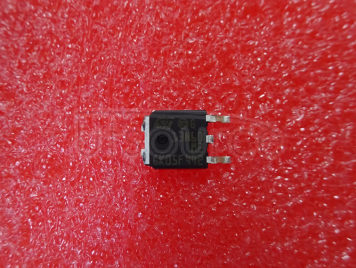
MOSFETs come in two primary configurations: N-channel and P-channel. In an N-channel MOSFET, current flows from drain to source when a positive gate voltage is applied, while P-channel devices operate with a negative gate voltage relative to the source. For most power management applications, N-channel MOSFETs are the preferred choice. Their electron-based conduction mechanism gives them inherently lower on-resistance compared to P-channel equivalents of the same die size, translating directly into reduced conduction losses and better thermal performance.
In power switching circuits, MOSFETs enable efficient energy conversion by transitioning rapidly between fully on and fully off states, minimizing the time spent in the resistive transition region where losses accumulate. This switching efficiency is what makes them indispensable in applications requiring adjustable output voltage, such as synchronous buck converters or boost regulators, where the duty cycle modulates the output level dynamically.
When hard-to-find IC chips force a mid-project redesign, the MOSFET selection process becomes more than routine—it becomes a critical design decision. A controller IC substitution may alter gate drive characteristics, switching frequency, or logic thresholds, all of which directly affect which MOSFET will perform correctly in the revised circuit. Understanding the fundamental role MOSFETs play ensures that engineers can adapt intelligently rather than simply swapping part numbers and hoping for the best.
Key Parameters for Selecting Low On-Resistance MOSFETs
Choosing the right MOSFET goes well beyond matching voltage ratings. When a hard-to-find IC chip forces a redesign, engineers need to evaluate several interdependent parameters to ensure the replacement component performs reliably within the revised circuit constraints.
Why On-Resistance Matters in Power Efficiency
Rds(on)—the drain-to-source on-resistance—is arguably the most critical parameter in power MOSFET selection. When current flows through the device in its on-state, this resistance generates heat according to P = I²×Rds(on). In high-current applications, even a difference of a few milliohms can translate into significant power dissipation. For example, a MOSFET carrying 10A with an Rds(on) of 10mΩ dissipates 1W of heat, while one rated at 5mΩ cuts that loss in half. N-channel MOSFETs consistently outperform their P-channel counterparts here because electron mobility is roughly twice that of holes, enabling lower resistance for an equivalent silicon die area. This advantage becomes especially pronounced in synchronous buck converters and high-frequency switching circuits where the low-side switch conducts for extended duty cycles.
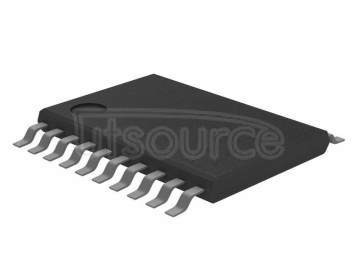
Gate charge (Qg) is the next parameter demanding close attention. It determines how much energy the gate driver must supply to switch the MOSFET on and off. A device with low Rds(on) but high gate charge may actually increase total losses at elevated switching frequencies because gate driving losses scale directly with frequency. The figure of merit—Rds(on) multiplied by Qg—offers a useful single-number comparison between competing devices, with lower values indicating better overall switching efficiency.
Voltage ratings require careful margin planning. The drain-to-source breakdown voltage (Vds) should exceed the maximum circuit voltage by at least 20–30%, accounting for voltage spikes caused by inductive loads or layout parasitics. Similarly, the gate-to-source voltage rating (Vgs) must be compatible with the replacement IC's gate drive output, since some controllers operate at logic-level thresholds around 2.5–3.3V rather than the traditional 10V drive. Selecting a MOSFET with a fully enhanced Rds(on) at the actual gate drive voltage—not just the rated maximum—is essential for accurate loss calculations. Finally, confirm that the continuous drain current rating (Id) and pulsed current capability comfortably cover the application's peak load demands with adequate thermal headroom.
How to Access Detailed Specifications for Component Selection
Finding the right MOSFET starts with getting your hands on accurate, complete specifications—and knowing where to look makes that process significantly faster. Manufacturer datasheets remain the authoritative source for every electrical parameter you need. Most major MOSFET manufacturers, including Infineon, ON Semiconductor, Vishay, and STMicroelectronics, maintain searchable product libraries on their websites where you can download datasheets directly. When reviewing a datasheet, pay particular attention to the graphs showing Rds(on) versus gate voltage and junction temperature, since these curves reveal how the device actually behaves under your specific operating conditions rather than just at the rated test points.
Distributor platforms like Digi-Key, Mouser, and Arrow offer parametric search tools that let you filter MOSFETs by Vds, Rds(on), gate charge, package type, and current rating simultaneously. These tools are especially valuable when sourcing alternatives for hard-to-find IC chips, because you can quickly narrow thousands of available parts down to a manageable shortlist matching your exact requirements. Both Digi-Key and Mouser also display real-time stock levels and lead times, giving you an immediate picture of component availability before committing to a design direction. Platforms such as UTSOURCE can also be useful at this stage, particularly for locating hard-to-find or obsolete components that mainstream distributors no longer carry in volume.
For cross-referencing and equivalents, tools like SiliconExpert, PartSim, and manufacturer-specific parametric comparison pages allow side-by-side evaluation of competing devices. Engineering forums such as EEVblog and the Texas Instruments E2E community are also practical resources—experienced engineers frequently share validated substitutions and flag compatibility issues that datasheets alone won't reveal. When evaluating a potential replacement, download the datasheet for your replacement controller IC alongside the MOSFET datasheet and compare gate drive voltage levels, timing requirements, and threshold compatibility directly. Cross-referencing both documents together eliminates guesswork and prevents costly prototype failures caused by mismatched specifications.
Practical Steps to Find and Select MOSFETs for Hard-to-Find IC Chips
When supply chain disruptions force a redesign around unavailable IC chips, a structured selection process prevents costly mistakes and keeps projects moving forward. The following approach breaks that process into manageable stages, from defining what you actually need to confirming that your chosen MOSFET performs correctly in hardware.
Step-by-Step Guide to Sourcing and Validating Components
Define your circuit requirements before searching. Start by documenting the electrical constraints your replacement MOSFET must satisfy: maximum operating voltage, peak and continuous current, gate drive voltage from the replacement controller, switching frequency, and thermal budget. If the original IC chip is being substituted, pull both the original and replacement controller datasheets and compare gate drive strength, logic thresholds, and timing characteristics side by side. Any differences here directly affect which MOSFET will work reliably. Write down your minimum and maximum acceptable values for Rds(on), Qg, Vds, and Id before opening any search tool—this prevents spec creep during the search phase.
Use parametric search tools to build a shortlist. Navigate to Digi-Key or Mouser's MOSFET filter pages and enter your defined constraints. Filter first by Vds with your 20–30% safety margin applied, then by maximum Rds(on), then by package type to match your PCB footprint. Sort remaining results by gate charge or the Rds(on)×Qg figure of merit to identify the most switching-efficient candidates. Aim for a shortlist of five to ten parts from at least two or three different manufacturers, which protects you if one source runs out of stock mid-production.
Evaluate availability and lead times honestly. Real-time stock data on distributor platforms tells only part of the story—check whether available inventory reflects distributor stock or broker listings, since broker-sourced components carry a higher risk of counterfeit parts. Contact manufacturer representatives directly for high-volume requirements or extended lead time concerns. Authorized distributors can often provide scheduled delivery commitments or factory order visibility that website stock numbers don't reflect. For critical designs, securing a second-source equivalent from a different manufacturer eliminates single-source dependency before it becomes a production crisis.
Download datasheets and validate compatibility on paper first. For each shortlisted MOSFET, confirm that the fully enhanced Rds(on) is specified at your actual gate drive voltage, not just at 10V. Verify that threshold voltage (Vgs(th)) is low enough for your controller's drive output. Check body diode reverse recovery time (trr) if the device will operate in a synchronous topology, since slow recovery generates shoot-through current and heat. Calculate expected conduction and switching losses at your operating point using the actual datasheet curves, not just headline spec values.
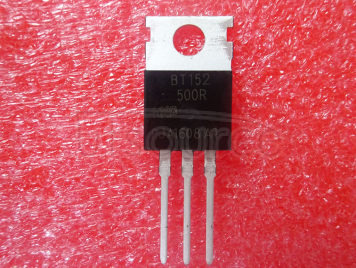
Prototype and validate in hardware. Build a small test circuit using your top two or three candidates under realistic load conditions. Measure junction temperature rise using a thermal camera or thermocouple, verify switching waveforms with an oscilloscope, and confirm efficiency at multiple load points. If one candidate runs noticeably cooler or shows cleaner switching transitions, that data overrides datasheet comparisons. Document your validation results thoroughly—this record becomes invaluable if you need to justify the substitution to a customer or certifying body later.
Designing Resilient Power Circuits in a Scarce Component Landscape
Navigating component scarcity without compromising design integrity is one of the defining challenges of modern hardware engineering. Low on-resistance MOSFETs are not interchangeable commodities—they are precision components whose performance depends on a careful match between Rds(on), gate charge, voltage ratings, and the specific drive characteristics of your controller IC. When hard-to-find chips force a mid-project redesign, that matching process becomes even more consequential.
The strategies covered here give you a repeatable framework for making those decisions confidently. Start by anchoring your search in clearly defined electrical requirements. Use parametric tools to build a realistic shortlist, verify compatibility through thorough datasheet analysis, and always validate your selection in hardware before committing to production. Equally important is building supply chain resilience into your component strategy—qualifying second-source equivalents from multiple manufacturers protects your project from the next disruption before it arrives.
Apply these methods on your next design iteration, and you'll find that component scarcity, while frustrating, doesn't have to derail a project. The right MOSFET is out there—you simply need the right process to find it.
.jpg)
.jpg)
.jpg)