Inside a Small-Team Product Launch With Chat Smith

Consider a three-person skincare company preparing to launch a refillable facial cleanser. The product is ready, but the campaign is not.
The founder has a page of scattered notes, a few product photographs, and a deadline. Before launch, the team still needs a clear message, website copy, an announcement email, social posts, and campaign visuals. There is no in-house creative department, and hiring separate writers and designers for every early concept is beyond the available budget.
This is the type of situation in which Chat Smith can be useful. The multi-model AI assistant combines conversational support with image-generation capabilities, giving small teams a way to explore and develop campaign ideas before moving into final production.
The Campaign Begins With Questions
The team’s first instinct might be to ask AI to “write a product launch campaign”. That request would probably produce usable sentences, but it would not address the decisions that need to come first.
Who is the cleanser for? Which benefit matters most? Is the campaign primarily about sensitive skin, convenience, or reducing packaging waste? What might make a customer hesitate?
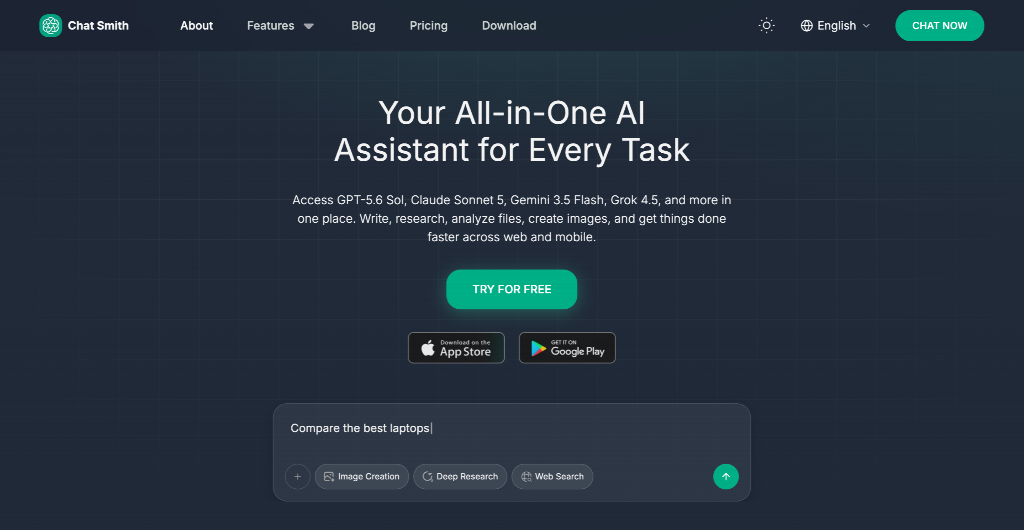
With Chat Smith as an AI Assistant, the team can organise its scattered notes and bring greater focus to the discussion. It can then ask Chat Smith to identify missing information, anticipate potential customer objections, and explore several ways to position the product.
One direction might lead with the gentle formula. Another could focus on the refillable packaging. A third might present the product as a simple upgrade to an existing skincare routine.
The team still chooses the direction, but it is no longer reacting to a single idea. It has several clearly expressed options to compare.
One Message, Several Contexts
Suppose the team selects a central message: reducing packaging waste should not make a daily skincare routine more complicated.
That idea now needs to work across several formats. The website requires a clear explanation, the email needs a compelling reason to click, and social media needs a shorter message that can be understood quickly.
Rather than creating each asset independently, the team can ask Chat Smith to adapt the same positioning for each context. The website copy might explain how the refill system works. The email could introduce the problem and product in a more personal tone. A social caption may reduce the idea to one memorable line.
The outputs should not be identical. Their role is to express the same campaign idea in ways that fit different channels.
This gives the team a stronger starting point, but it does not remove editing. Someone still needs to check whether the language sounds like the brand, whether the product benefit is clear, and whether every claim can be supported.
When Words Are Not Enough
The team now understands what the campaign should say, but terms such as “clean”, “gentle”, and “low-waste” can produce very different visual interpretations.
One person may imagine a clinical white background. Another may picture natural textures and muted green tones. A third may want the product shown in a real bathroom rather than a studio environment.
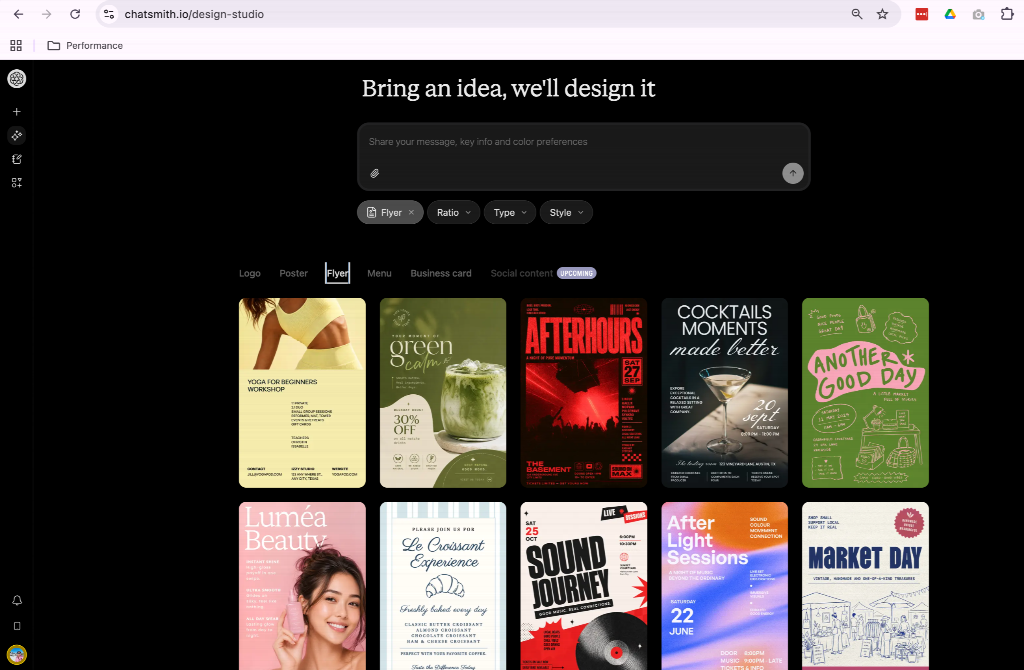
Chat Smith’s AI Image Generator can help make those interpretations visible. The team could describe a refillable cleanser on a bright bathroom shelf, photographed in soft morning light with subtle natural textures and space for a headline.
It could then explore a more clinical version, a warmer lifestyle version, and a minimal editorial version. None needs to become the final campaign image. At this stage, the images are useful because they give the team something concrete to discuss.
Instead of debating what “clean and modern” means, the team can point to specific details. The lighting in one version may feel right, while the composition of another leaves better space for copy. A third may look attractive but fail to show the refillable packaging clearly.
The Point Where AI Should Stop
Before publication, the campaign still requires work that cannot be delegated to a generator.
The product shown in the image must match what customers will receive. Packaging text, ingredients, prices, and environmental claims must be accurate. The final visual should not contain misleading details, and the copy needs to be reviewed for tone, grammar, and factual accuracy.
The team may decide to use the AI-generated images only as references for a photographer or designer. Alternatively, it may refine one concept for digital use after checking that all visual and commercial details are correct.
Either way, human review is not an optional final step. It is what separates rapid experimentation from careless publication.
What the Small Team Actually Gains
Chat Smith does not turn three people into a full creative agency. What it can do is reduce the amount of time they spend facing a blank page or discussing ideas that have not yet been made visible.
The founder provides the product knowledge. The team understands the customer and chooses the positioning. Chat Smith helps them explore messages, adapt ideas, and visualise possible directions before committing resources to the final campaign.
For a small business, that may be the most practical role of AI. It does not replace the people responsible for the launch. It gives them more developed options to evaluate, while the important decisions remain in their hands.
.jpg)