IPMI and remote console recovery for dedicated servers

IPMI remote console is a recovery tool not a substitute for access design
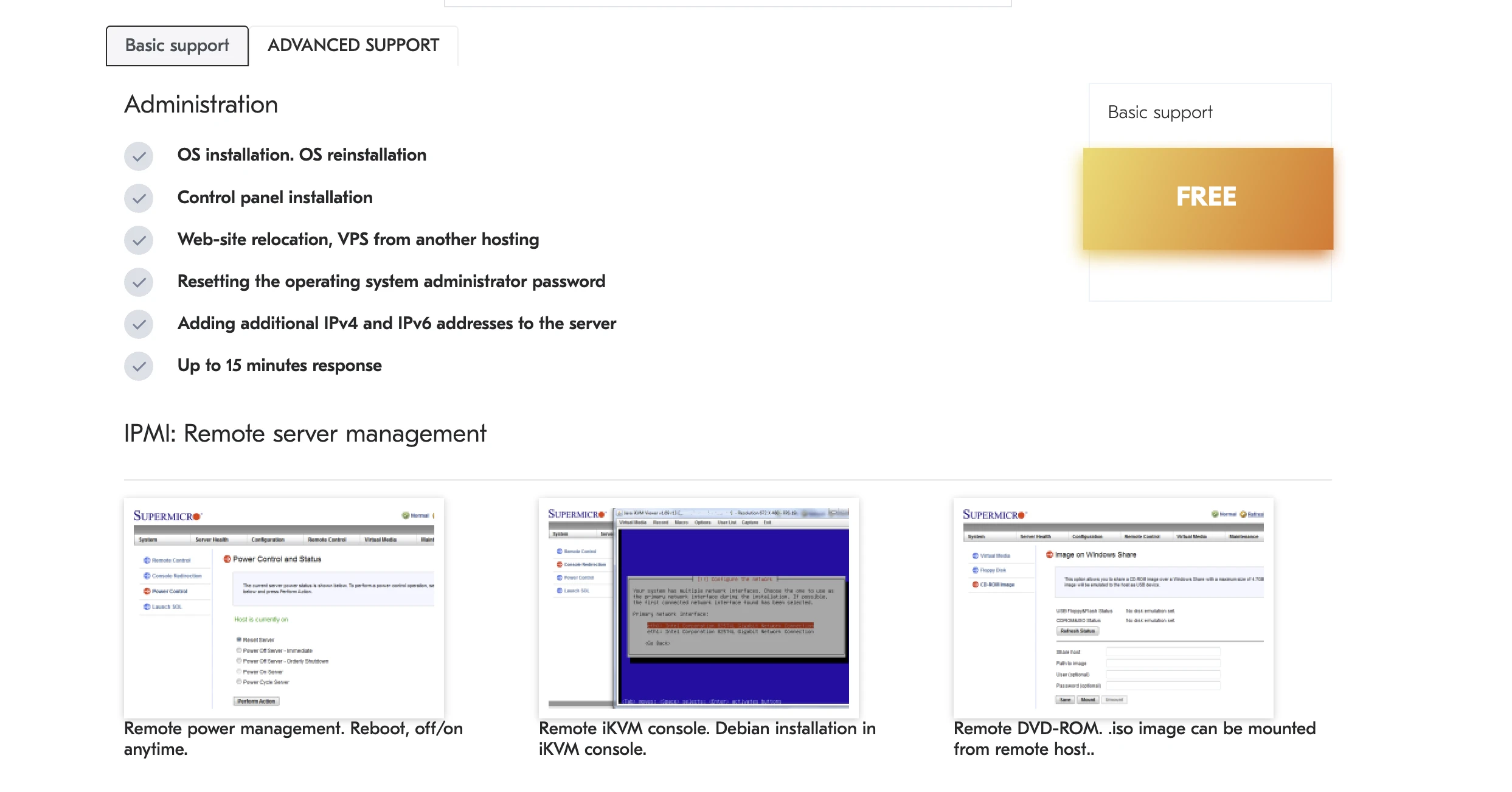
IPMI is a management interface that can provide out-of-band hardware monitoring and console functions independently of the main operating system; its network placement and credentials are security-critical.
When SSH is unavailable, a remote console can be the difference between an observed failure and a blind outage. It is useful precisely because it does not depend on the normal operating-system path. The useful question is not whether a dedicated server sounds powerful; it is whether server access recovery has a measurable failure mode, an owner, and a testable recovery path. That distinction keeps a technical purchase from becoming an expensive guess.
Why out-of-band access changes the incident
Start by mapping the work rather than listing fashionable hardware. For IPMI and an out-of-band remote console, record what enters the system, what component changes durable state, how long a caller can wait, and which data must survive a restart. A GPU, a larger disk shelf, or a remote console solves only the constraint it was chosen for. It cannot compensate for an undefined workload or a missing operating procedure.
Separate the service path from the control path
The production path carries the application result; the control path lets an operator observe or change it. Treating them as one path creates fragile assumptions. In IPMI and an out-of-band remote console, access permissions, firmware or driver compatibility, capacity headroom, and a written escalation route should be reviewed separately from the application itself. This is why a successful first deployment is evidence of installation, not evidence of operability.
Consider three ordinary situations. A team may need IPMI and an out-of-band remote console for a scheduled research or media job, then leave the machine mostly idle. A growing application may instead need predictable storage or recovery behaviour all day. A third team may only need hands-on work after a failed component. These are different demand patterns, and selecting one broad product label for all three is like buying a workshop because a screwdriver is missing.
Critical risk: An exposed or weakly controlled management interface can give an attacker a path below the operating system, while an untested console can still fail to recover a boot problem during an incident. Do not make an irreversible production change until the maintenance window, rollback condition, current backup or replica state, and provider responsibility are recorded in the change plan. A console login or a replacement-part request does not restore application consistency by itself.
Design the management boundary before the emergency
A disciplined decision uses observable boundaries. Ask which resource is saturated, which request can be delayed, and which activity must stop safely. For IPMI and an out-of-band remote console, the answer may involve PCIe placement, power and cooling limits, filesystem growth, RAID rebuild exposure, or out-of-band authentication. Each constraint has a different remedy. Adding capacity before identifying the boundary can conceal a design defect until the next incident.
What to verify before approving a change
- Describe the expected server access recovery and the acceptable interruption.
- Confirm provider scope for using the out-of-band controller under a documented access policy, including authorization and evidence.
- Check the current backup, replica, or recovery procedure before touching state.
- Define a verification signal: a controlled test reaches the console, records the boot state, and restores normal access without changing unrelated configuration.
- Name the operator who can stop or roll back the change.
This checklist is deliberately less glamorous than a specification sheet. Yet it reveals whether the proposed change is compatible with operations. For example, a disk can be visible to an operating system while an application still needs a rescan, volume expansion, filesystem growth, or database-aware capacity plan. Similarly, a remote management interface can power-cycle a host while an encrypted volume, boot loader, or network policy still prevents useful recovery.
Recovery evidence matters more than console availability
There is a tempting shortcut in infrastructure work: assume that a managed-looking feature removes the need to think about failure. It does not. A hot-swap bay, a GPU server, and an IPMI console are capabilities. Their value appears only when the runbook says what to check before use, what signal confirms success, and when to stop. That is not bureaucracy; it is the difference between a controlled intervention and improvisation at the worst possible moment.
The most reliable comparison is therefore not 'new versus old' or 'dedicated versus virtual.' Compare the actual service requirement with the operational burden. If IPMI and an out-of-band remote console is occasional and tolerates queueing, a separate machine may be wasteful. If the workload needs hardware locality, predictable access, or provider-assisted physical action, the case becomes stronger. The right server is the one whose constraint and recovery process you can explain before the failure occurs.
Operational questions worth answering in advance
Write down the ordinary questions that become difficult at 02:00: which identity may enter the management boundary, where is the current configuration recorded, what dependency is safe to restart, and which observation means the intervention must stop. For IPMI and an out-of-band remote console, these questions connect physical capability to service ownership. They also prevent a maintenance task from quietly becoming an unreviewed architecture change. A short runbook with named evidence is more useful than an impressive feature list when several people must coordinate.
Capacity is similarly contextual. A large queue can be acceptable for batch work and unacceptable for an interactive request. A controller alert may be informational before a planned replacement and urgent when redundancy is already reduced. The operator needs the workload's normal baseline, not a universal threshold copied from another host. Measure server access recovery over its relevant cycle, keep the assumptions with the deployment, and revisit them after a meaningful software or data change.
Provider communication benefits from the same precision. State the asset identifier, requested using the out-of-band controller under a documented access policy, authorized time window, evidence required, and escalation contact. Ask what the provider can observe and what remains visible only inside the operating system. This avoids asking a technician to infer application intent from a hardware symptom. It also preserves an audit trail that lets the next shift understand why the change was made and whether the promised result was actually obtained.
Author’s principle: infrastructure is ready when its normal path, failure path, and evidence of recovery are all understandable to the person on duty.
Conclusion
Use IPMI when a documented recovery path needs independent access. Review the management boundary and test it before an incident; then compare the relevant options at a DeltaHost service for dedicated-server access.