Manufacturer or Marketer? Why Who Actually Makes a Product Matters to Modern Consumers
A brand name once did most of the work on a shelf. It signaled reputation, quality, and, often, a rough idea of where a product came from. Today, that shorthand is less reliable. A company may design and market a product while another business sources materials, runs production or packs the finished goods.
There’s nothing wrong with that model. Contract manufacturers can offer specialist expertise and equipment that a smaller brand couldn’t economically build itself. The issue is visibility. As shoppers ask more about ingredients, sourcing, working conditions, safety and environmental impact, “Who makes this?” is becoming part of how they judge a brand’s credibility.
The Brand Name Isn’t Always the Maker
Consumers often use “brand” and “manufacturer” interchangeably, but they aren’t always the same entity. Private-label products, licensed goods and contract-manufactured products can carry the name of a business that never physically makes them.
That distinction matters most where production decisions directly affect safety, consistency or performance. Pet owners considering products from Fresh Is Best, for example, may want to know more than the protein source or price. Where are batches produced? Who controls the process? How quickly are products packed? Who can answer a question about a particular lot?
U.S. pet food rules illustrate why the distinction can be easy to miss. The Food and Drug Administration requires pet food labels to include the name and place of business of the manufacturer or distributor. The company named on a label is therefore not necessarily the company operating the production facility. For the consumer, the practical question isn’t simply whose logo is on the bag. It is which organization has direct knowledge of production and how clearly that responsibility is disclosed.
Why Manufacturing Identity Changes the Trust Equation
Transparency has moved from a niche preference to a mainstream buying consideration, particularly in food and other closely scrutinized categories. NielsenIQ and FMI reported that 76% of U.S. grocery shoppers in their 2023 study considered transparent product information from brands and manufacturers important, up from 69% in 2018. More than 80% said they were somewhat or very likely to use a QR code, website, app, or another tool to find additional product information.
The commercial lesson isn’t that every shopper wants a factory tour. Most don’t. They want enough specific information to decide whether a claim is credible.
That may include country of manufacture, the identity of a production partner, material origins, third-party certifications, batch information, audit standards, or an explanation of quality checks. As FMI’s Steve Markenson put it, shoppers “reward brands that provide information with their trust and loyalty.”
This becomes particularly important when brands make provenance claims. The Federal Trade Commission says an unqualified “Made in USA” claim generally requires a product to be “all or virtually all” made in the United States. The FTC continued enforcement activity around questionable origin claims in July 2026.
A vague statement about being “American,” “local” or “crafted here” may create more questions than confidence if the manufacturing facts are unclear.
Direct Manufacturing Can Shorten the Accountability Chain
When a brand operates its own production, it may have fewer organizational layers between customer feedback and the people who can act on it. A complaint about texture, packaging, or consistency can potentially reach the production team quickly. Product development may also move faster when technical and customer-facing teams work within the same organization.
But ownership alone proves little. A poorly run in-house facility isn’t preferable to an excellent contract manufacturer. What matters is the quality system: documented processes, trained staff, supplier controls, traceability, appropriate testing, and a clear response plan when something goes wrong.
Regulation makes that responsibility concrete in food. FDA rules require covered animal-food facilities to follow current good manufacturing practices, and the agency conducts risk-based inspections. The FDA states that animal food must be safe, produced under sanitary conditions and “truthfully labeled.”
For business leaders, “we make it ourselves” should be treated as an operational claim, not a marketing flourish. If manufacturing is meant to strengthen reputation, evidence needs to sit behind the statement.
Outsourcing Is Not the Problem; Opacity Is
Many high-quality products are made by third parties. Contract manufacturing can be sensible when a specialist supplier has better equipment, deeper technical expertise, or greater purchasing power. It can also help a growing brand avoid tying up capital in a factory before demand justifies the investment.
The risk appears when marketing presents a simplified story that hides the actual operating model.
A brand using outside manufacturing should still know who makes the product, what standards the facility follows, where critical inputs come from, and how traceability works. It should also have access to quality data, audit results, and corrective-action information. If production moves between facilities, customer-facing claims should remain accurate.
That control matters because consumers increasingly connect product claims with how goods are produced. PwC’s 2024 Voice of the Consumer Survey, covering more than 20,000 people in 31 countries and territories, found that 80% said they were willing to pay more for sustainably produced or sourced goods. The stated average premium was 9.7%, although PwC cautioned that inflation and cost-of-living pressures may prevent stated willingness from becoming actual spending.
The point isn’t that transparency automatically earns a premium. Production facts increasingly sit inside the value calculation.
What Businesses Should Disclose
Companies don’t need to publish commercially sensitive formulas, supplier pricing, or every detail of a production contract. Useful transparency is selective and concrete.
At minimum, a credible product story should make it reasonably easy to understand who manufactures the item, where final production takes place, how major sourcing claims are substantiated, and who is accountable for quality questions. Where a third party performs manufacturing, saying so plainly can build more trust than allowing consumers to assume otherwise.
Good disclosure also avoids overclaiming. “Designed in,” “assembled in,” “manufactured for” and “made in” describe different relationships. Precision may sound less dramatic, but it gives customers a statement that can survive scrutiny.
Conclusion
Modern consumers aren’t rejecting marketing. They’re becoming better at separating marketing from operational reality.
A company can manufacture its own products and still communicate poorly. Another can outsource production and maintain rigorous control, traceability and honest disclosure. The meaningful difference is whether the business can explain who makes the product, where responsibility sits and what evidence supports its claims.
For brands, manufacturing identity is no longer a back-office detail. It is part of provenance, risk management and trust. Companies that treat it that way give customers something increasingly scarce: a product story that can be checked, not merely believed.
References
- U.S. Food and Drug Administration. “Pet Food” and “FSMA Final Rule for Preventive Controls for Animal Food.”
- NielsenIQ/FMI. “5 Ways Transparency Will Evolve,” September 16, 2024.
- Federal Trade Commission. “Complying with the Made in USA Standard”; “FTC Warns Companies Making Questionable ‘Made in the USA’ Claims,” July 2026.
- PwC. “2024 Voice of the Consumer Survey,” May 15, 2024.
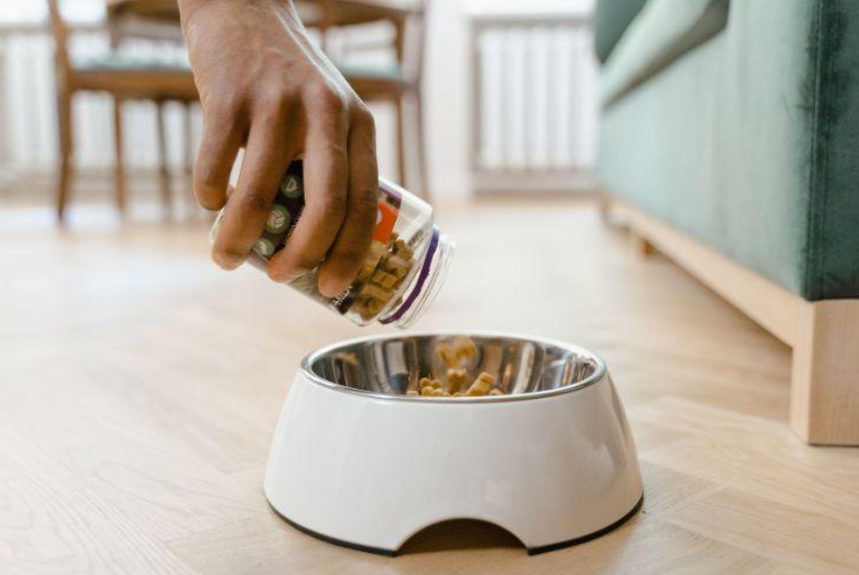
Photo by MART PRODUCTION: https://www.pexels.com/photo/a-person-putting-dog-food-on-the-dog-bowl-8434744/