Nobody says the hand-me-down does not fit
I have lost count of the number of times I have sat with the owner of a good business, a company doing everything right, and watched them describe a system they paid for and quietly stopped using.
It usually starts in a meeting. Someone says the system is not doing what they were told it would do, and everyone in the room already knows. So, the business does the sensible thing and works around it. A spreadsheet here, a manual export there, one person who ends up being the only one who understands how it all holds together.
And then nothing changes for a long time, because the renewal is not until 2028 and there is a business to run in the meantime.
If you ask them directly, they will usually say something like it is fine, it is just not really for us.
That sentence is the most expensive thing I hear in this industry, because standing still is not neutral. Everyone else is still moving.
On top of that it’s the fact that being tied to a platform that is not working and not improving means SMEs are working with something outdated that is not following the evolution of software and industry fast enough to keep with the changes the industry is facing.
The way we work with computers has changed three times and is in the middle of changing again. The command line, then the mouse and the desktop, then the touchscreen in your pocket – and now AI. Each time, more people could use a computer.
What people forget about the mouse is that there were sceptics – and they had a point. If you already knew the commands, taking your hand off the keyboard to push a piece of plastic around a desk was slower. The people resisting it were not the laggards. They were the most competent users in the building. The mouse did not win because it was faster for them. It won because everyone else could stop asking them for help.
I think about that every time an owner tells me they are not impressed by AI yet. They are usually right about what they have seen. That is not the same as being right about where it goes.
AI is the fourth –and latest interface. You say what you want instead of learning which of 40 screens holds the answer, and the people who never had time to master the software finally get to use it.
The problem is not AI. It is who it was built for
Here is what I actually worry about.
Most of what is being sold as AI right now was not built for a business at all. It was built for a person. One user, one question, one answer, no approvals, no audit trail and no consequences if it is wrong. That is a perfectly good product. It is just not the same product as something that touches your ledger.
It is impressive in a demo. It is usually right. Usually is a difficult word when you are talking about your own margins. And when an SME asks the obvious questions, where does my data go, who else sees it, what happens if it gets this wrong, there is often nobody in the room who can answer.
We have watched this film before, from the other direction.
ERP was built for large organisations with implementation budgets and internal teams to run it. Then it was sold down the market to companies that had neither. AI is arriving the other way around, built for one person at a laptop and sold up into businesses that need approvals, records and someone accountable when it is wrong. The software was designed with somebody else in mind and the customer is expected to close the gap.
SMEs are always the ones asked to close it. Too small to be the bigger company the Traditional ERP was written for, too complicated to be a single individual the AI was written for. That is the whole reason we built what we built.
What it costs, and it is not what people think
The cost is not the licence fee. It is what happens in the years afterwards.
The data ends up in worse shape than before. When a system half fits, the business runs half in it and half in spreadsheets that nobody governs. If your data is not good, your AI is not going to work, and you are making decisions based on wrong data. A tool that does not fit does not just fail to help. It damages the raw material you will need later.
People fill the gap themselves. If the approved tool is awkward, staff use whatever is quicker, and that usually means pasting the customer list or the price file into a free tool on their own laptop. Most SMEs are not reckless about this. They simply have nobody whose job it is to know which tools are safe. So, the business ends up with AI in it either way. It just has no idea where.
And then the business writes the whole thing off. This is the one that worries me most. The owner concludes that this is not for companies like theirs and puts it down for three years. That belief costs more than any software ever did, and it is almost impossible to argue someone out of it, because they have the receipts.
Nobody says the hand-me-down does not fit. You just cannot run in it.
What I tell owners who ask me where to start
Not much, and quite deliberately.
I would stop evaluating AI as a product and start asking where my data lives, because everything else depends on that answer. I would ask any vendor two blunt questions: is my information used to train anything outside my business, and can you show me the working when the answer looks wrong. And I would be sceptical of anything that arrives as a separate tool sitting beside the systems that already run the company.
We have spent the past couple of years building AI into the middle of our own platform rather than beside it, for exactly the reasons above. We call it Enterpryze Intelligence, and the first part of it is an agent called Finn, named after the legend of Fionn mac Cumhaill, who tasted the Salmon of Knowledge and from then on had the answer the moment he thought to ask.
You do not need us to act on any of this. You do need to know where your data lives, and who built the thing that is reading it.
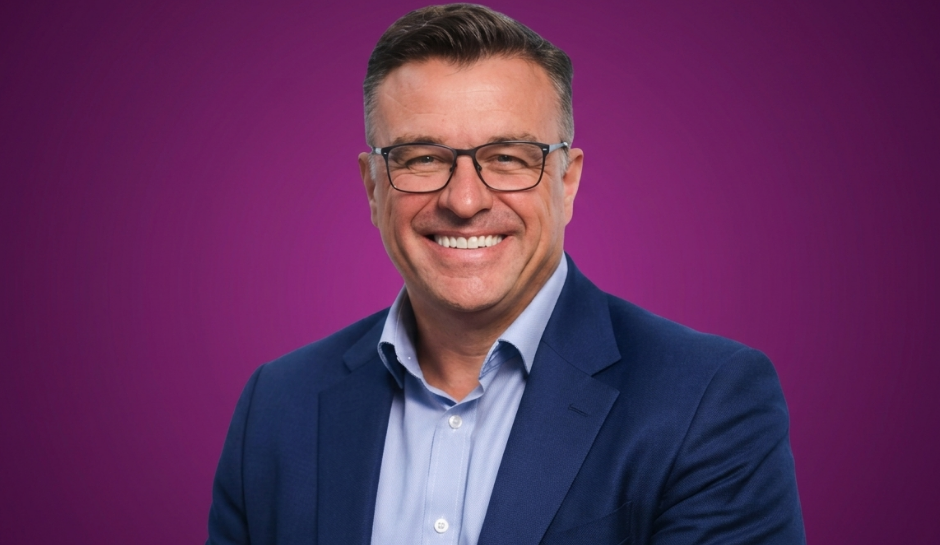
About Morgan Browne
Morgan Browne is the Founder and CEO of Enterpryze, the cloud-native ERP platform built to SMEs. He launched Enterpryze in 2017 with a mobile-first approach to business management software, born out of a simple conviction: that the operational control enjoyed by large business should be available to every growing business.
He is now leading Enterpryze into its next chapter with Enterpryze Intelligence, an AI-native layer built into the core of the ERP rather than bolted onto it. The ambition is the same one Morgan started with: give SMEs answers, not just data, so that finance, stock, purchasing and production decisions can be made with confidence rather than guesswork.
Before Enterpryze, Morgan acquired Milner Browne and grew it from a reseller into a solutions business, earning Deloitte Best Managed Companies platinum status and a place on the Fast 50 shortlist. He was a finalist in the EY Entrepreneur of the Year Awards in 2015.
.jpg)