Planning Business Travel to Ukraine: Documents, Risk and Insurance Considerations

International business trips require more than an itinerary. For professionals and companies travelling to Ukraine, careful preparation can help manage practical, operational and unexpected travel risks.
Business travel is often treated as a simple logistical exercise: book transport, arrange accommodation, schedule meetings and arrive on time.
In reality, international business travel requires a broader approach. When a destination has changing security, transport or operational conditions, preparation becomes part of the business trip itself.
Ukraine is a particularly relevant example. International professionals may travel for commercial meetings, investment discussions, conferences, project work, supplier relationships, reconstruction-related activity and other forms of professional cooperation.
For these travellers, effective preparation means looking beyond flights and hotel reservations. Entry requirements, local logistics, communication, emergency procedures and insurance should all be considered before departure.
Why Business Travel to Ukraine Requires Careful Planning
A business trip to Ukraine can involve several moving parts.
A traveller may need to coordinate international and domestic transport, accommodation, meetings and communications while remaining prepared to adapt the itinerary if circumstances change.
The first step is therefore to establish exactly what the trip involves:
- Where will the traveller enter and leave Ukraine?
- How long will the visit last?
- Which cities or regions will be visited?
- What meetings or business activities are planned?
- What local transport will be required?
- Who should be contacted in an emergency?
- What insurance arrangements are in place?
Answering these questions before departure gives both the traveller and the employer a clearer framework for managing the trip.
For companies that regularly send employees abroad, these steps can also become part of a standard corporate travel policy rather than something arranged separately for every journey.
Check Entry and Travel Requirements Before Departure
Travel documentation should be one of the first items on any international business traveller's checklist.
Passport validity, entry conditions and permitted length of stay can depend on nationality and individual circumstances. Requirements can also change, so travellers should verify the latest information through relevant official sources before departure rather than relying on an old itinerary or previously used travel plan.
The same principle applies to accommodation and transport.
Business travellers should have confirmed accommodation details, important addresses and contact information for colleagues or local partners readily available. Keeping digital copies of essential documents can also be useful if physical paperwork becomes inaccessible.
The purpose of this preparation is not to create unnecessary administration. It is to make sure that a traveller can continue with the business trip even when a routine part of the journey does not go exactly as planned.
Treat Travel Risk as Part of Business Planning
Travel risk management should begin before an employee leaves the office.
For a company sending someone abroad, it is useful to consider what could happen if a meeting is postponed, transport becomes unavailable, communications are disrupted or the traveller requires medical assistance.
For travel to Ukraine, this can be particularly relevant because security conditions, transport availability and local circumstances can change. Travellers should therefore review current official information before departure and continue monitoring relevant updates during the trip.
A practical risk-management plan can include:
- checking current official travel information;
- maintaining emergency contact details;
- sharing the itinerary with a colleague or responsible contact;
- identifying appropriate medical assistance;
- keeping important documents accessible;
- considering alternative transport arrangements;
- confirming the scope and limitations of travel insurance;
- establishing who within the company is responsible for assisting the traveller if plans change.
For employers, this can form part of a broader duty-of-care approach to international business travel.
The objective is not to predict every possible disruption. Instead, it is to establish procedures that allow the traveller and the company to respond more effectively when circumstances change.
Why Travel Insurance Matters for Business Travellers
Travel insurance should not be treated simply as another document to place in a passport folder.
For an international business traveller, insurance can provide financial protection and access to assistance when specified unexpected events occur during a trip. Depending on the policy, this may include medical expenses, emergency assistance and other covered travel risks.
When arranging travel insurance for Ukraine, the important question is therefore not simply whether a policy has been purchased.
The traveller should understand:
- where the policy is valid;
- how long the coverage lasts;
- what medical expenses are covered;
- what exclusions apply;
- what limits or conditions exist;
- how emergency assistance can be contacted;
- whether the policy is appropriate for the actual purpose and itinerary of the trip.
This distinction matters for business travel because an employee may have meetings, contractual commitments or fixed project dates that make an unexpected disruption particularly costly.
Insurance should therefore be assessed against the actual journey rather than selected solely on price.
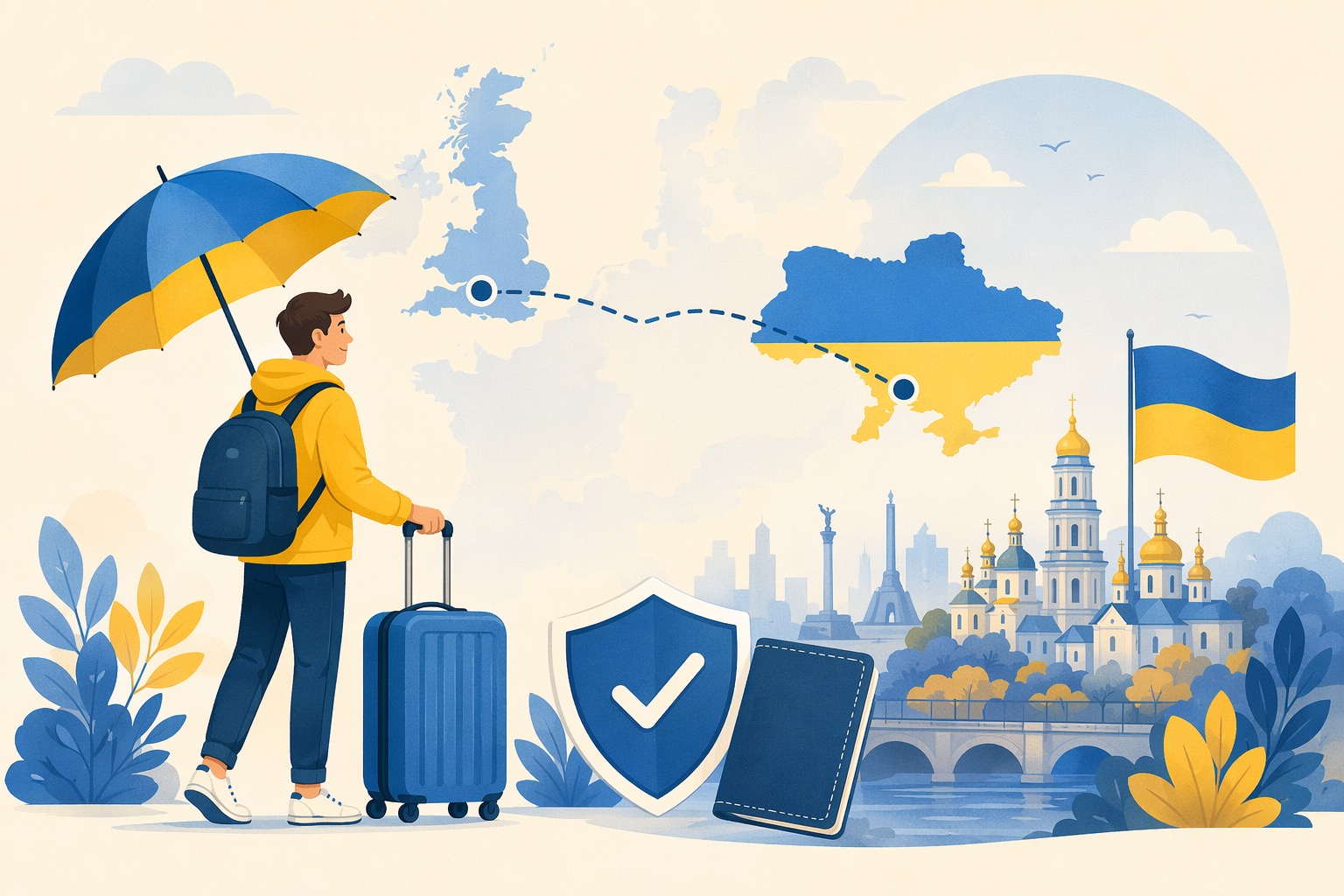
What to Check in a Travel Insurance Policy for Ukraine
Not all travel insurance products provide the same coverage. Before travelling, professionals should read the relevant policy terms and confirm that they understand the main conditions.
Medical coverage
Check the maximum level of medical expenses covered and understand how assistance should be arranged if medical treatment is required.
The traveller should also know how to contact the relevant assistance service and whether prior authorisation is required for particular types of treatment.
Policy duration
The insurance period should correspond with the actual dates of travel.
If a business trip is extended, the traveller should understand whether the policy can be extended and whether additional conditions apply.
Geographical scope
Confirm that Ukraine is included within the policy's geographical area.
It is also important to check whether particular destinations, activities or circumstances are subject to exclusions or additional conditions.
Exclusions and limitations
Insurance policies contain exclusions and limitations, and these can be particularly important when travelling to destinations with changing risk conditions.
A traveller should not assume that a standard policy automatically covers every situation. Reading the relevant wording before departure can help avoid misunderstandings when assistance is needed.
Emergency assistance
Knowing how to access assistance is as important as having the policy itself.
Emergency contact information should be saved on the traveller's phone and, where practical, retained with other essential travel documents.
Professionals arranging cover before their trip can check their travel insurance options and review the applicable policy information before finalising their itinerary.
What Employers Should Consider
Business travel is not only an individual responsibility.
For employers, sending an employee abroad can involve additional planning around communication, emergency procedures and responsibility for the traveller.
A company may want to establish:
- who approves international business travel;
- who receives the employee's itinerary;
- who should be contacted in an emergency;
- how the company will communicate if plans change;
- where insurance documentation is stored;
- who is responsible for coordinating assistance;
- what procedures apply if the employee cannot follow the original itinerary.
These measures do not need to create a complicated corporate travel system. Even a concise checklist and clearly assigned responsibilities can make international travel easier to manage.
For companies with employees travelling frequently, the same framework can also be incorporated into a broader business travel and risk-management policy.
Build a Practical Pre-Departure Checklist
A short pre-departure review can prevent many avoidable problems.
Before travelling to Ukraine for business, an international visitor can check:
1. Entry requirements
Confirm the requirements applicable to your nationality and purpose of travel.
2. Travel documents
Check passport validity and keep secure copies of important documents.
3. Accommodation
Confirm the address, booking details and local contact information.
4. Business itinerary
Keep meeting details, addresses and local business contacts easily accessible.
5. Transport
Review the planned route and consider alternatives if circumstances change.
6. Emergency contacts
Save relevant company, local and insurance assistance contacts.
7. Insurance
Check the policy dates, geographical scope, medical coverage, exclusions and applicable limits.
8. Communication
Ensure your phone, charging equipment and access to essential online accounts are ready for international travel.
9. Company procedures
Make sure a colleague or responsible contact knows the itinerary and understands how to reach the traveller.
This preparation requires relatively little time but gives both the traveller and the employer a much clearer framework for handling unexpected situations.
Business Travel Requires More Than a Booking Confirmation
International business travel works best when risk management is treated as part of the itinerary rather than an afterthought.
For professionals travelling to Ukraine, this means combining practical logistics with current travel information, appropriate documentation, emergency planning and a clear understanding of insurance conditions.
For employers, it also means establishing straightforward procedures for communication and assistance before an employee leaves.
The objective is not to eliminate every uncertainty. International travel will always involve factors outside a traveller's control. The purpose of preparation is to understand the trip, identify the most relevant risks and establish practical steps for dealing with unexpected changes.
For international companies and professionals, that is ultimately what responsible business travel planning is about: making risk management part of the business process — from checking entry requirements and transport arrangements to understanding insurance coverage and emergency procedures.
More information: https://insurancetravelukraine.com
.webp)