Precision Machining and Metal Fabrication Solutions
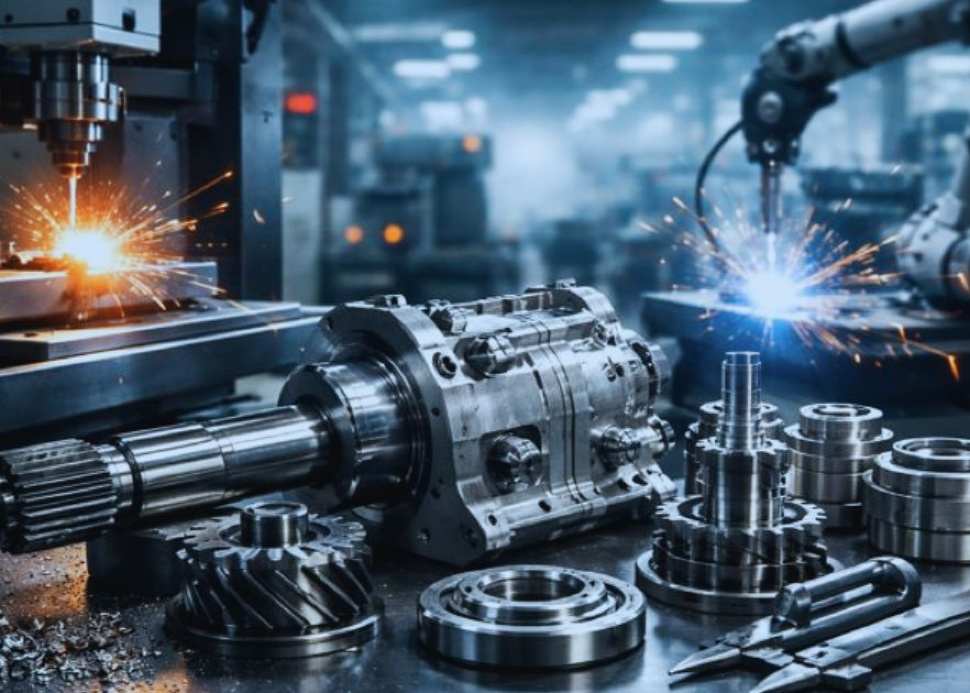
Precision machining and metal fabrication support nearly every major industry. You can find the results in automotive parts, aircraft components, medical tools, construction equipment, and industrial machines. The processes deliver accuracy, strength, and consistency to you.
A trusted example is CT Products, known for reliable Machine and Fabrication Shop Services. You can explore their work here: https://ctproductsqc.com/. They provide all the services of machining, welding, cutting, forming, and full custom metal solutions under one roof. When you want a part that fits perfectly and lasts, you will go to a shop like theirs.
What is Precision Metal Machining
Precision metal machining shapes metal into exact sizes. It removes material with CNC mills, lathes, grinders, and other controlled tools. You get parts that match drawings without errors
- You gain several advantages.
- You get accurate measurements.
- You get clean finishes.
- You get consistent results in both small and large batches
Manufacturers use this process for gears, spindles, shafts, custom brackets, housings, and replacement parts for large machines. When a part must fit on the first try, precision machining handles it.
What Precision Machining Covers
Precision machining can refer to a wide range of operations. These cover drilling, cutting, grinding, turning, milling, and shaping of materials such as steel, aluminum, titanium, brass, and engineered plastics. The goal is straightforward. You want a part that functions correctly and is the right size, without requiring any adjustments.
Businesses opt for precision machining as it leads to less waste, faster production times, and greater reliability. You avoid rework. You avoid guesswork. The machines follow programmed movements and produce stable results.
What Metal Fabrication Means
Metal fabrication is the procedure of converting metal sheets, plates, and bars into finished products by cutting, bending, forming, and joining through welding. It may offer an extensive array of items, including tanks, safety guards, large frames, small brackets, repair parts, and custom-made structures.
Among the various fabrication processes, some of the most common are laser cutting, plasma cutting, MIG and TIG welding, sheet bending, tube forming, fitting, and final assembly. Fabrication can be necessary in construction sites, factories, repair shops, transportation equipment, and custom-built systems.
How CT Products Supports Your Work
CT Products offers machining and fabrication in the same location. This saves time. You avoid delays caused by sending parts to multiple vendors. Their team handles measurement, material cutting, machining, welding, and finishing.
Their main services include CNC machining, custom welding, laser and plasma cutting, forming, mechanical repair, prototype development, and custom part assembly. They can build one part, repeat a full batch, or repair something you already have.
A single shop with both capabilities gives you consistency, faster delivery, and a cleaner workflow.
Why Full Service Matters
When machining and fabrication happen in one place, you get several advantages.
- You get a faster turnaround because the work never leaves the shop.
- You get better accuracy because the same team handles each step.
- You reduce costs because you avoid extra handling fees.
- You can request modifications more easily because communication is direct.
This approach fits manufacturers, contractors, engineers, and machine operators who need dependable results without delays.
Is Metal Fabrication a Good Career
Fabrication is considered a good career choice if you're a person who likes working with your hands on technical stuff. You will be operating a wide range of tools, welding machines, CNC machines, and measuring instruments. Essentially, your core activity will be addressing real issues and creating items that people rely on. The work demand is very high; as a matter of fact, the better your skills are, the higher your salary will be.
At first, you may be a helper. After that, you can get into welding and from there, eventually get to CNC machining, programming, supervision, or shop management. A lot of veteran fabricators decide to start their own shops after gaining a few years of experience.
Required Qualifications for Fabrication
One can get into this field with just a basic education plus proper training.
To work at the entry level, a high school diploma is required along with the skills of taking measurements, reading blueprints, and handling basic tools.
Moving up to the skilled level, a person would need to have skills and experience such as welding certifications, machine safety training, and proficient use of cutting and forming equipment.
At the advanced level, one would be expected to have technical training in mechanical or manufacturing technology, knowledge of CAD or CAM software, and ability in CNC programming.
In fact, real-world experience outweighs theory. Most research occurs right in the shop rather than the workshop.
Frequently Asked Questions:
Which industries initiate the serious buyers of goods from precision machining?
The industrial manufacturing sector, including aerospace, automotive, medical devices, electronics, and industrial manufacturing have a significant dependency on the precision components that ensure the products as a whole are both safe and efficient.
What is precision machining equipment?
CNC mills, CNC lathes, grinders, drill presses, and EDM machines are at their disposal to produce intricate shapes in the workplace.
What are the materials that are good to machine?
In general, steel, stalwart, aluminum, yellow copper, burnt sienna, titanium, and engineered plastics are materials that are machined.
What distinguishes machining from fabrication?
Machining is a subtractive type of process that provides definite dimensions by means of subtraction. Quite on the contrary, a fabrication is defined as the production of parts through cutting, bending, and welding of metals.
How long would learning fabrication take?
You can learn the fundamentals in three to six months. The latest skills take two to four years of daily practice.
Conclusion:
Precision machining and metal fabrication methods yield products with consistent, accurate, and reliable results. In other words, you will receive components that fit perfectly, operate efficiently, and have a long life.
For a project that requires closely controlled dimensions or fabrication of metals to the shape you want, a workshop that knows both machining and fabrication is necessary to be there for you. CT Products is the company capable of providing you with that level of service.
Because they have the capability of cutting, forming, welding, and CNC machining all under one roof, you will be able to save time and not have to worry about unnecessary delays. In case you need trustworthy parts or assistance with mass production, a comprehensive Machine and Fabrication Shop Services is your number one choice.