The 6 Best Ways to Improve Sales Rep Productivity

Sales rep productivity is one of the most critical drivers of revenue growth in modern organizations. In 2026, sales teams operate in a fast-paced digital environment where buyers expect instant responses, personalized communication, and seamless deal execution. However, many representatives still spend a significant portion of their time on administrative tasks, manual data entry, and chasing paperwork instead of building relationships and closing deals. Improving productivity is not about working longer hours—it is about working smarter with the right strategies and tools.
Organizations that focus on structured processes, automation, and performance visibility consistently outperform competitors. By implementing targeted improvements, companies can empower their sales representatives to focus on high-impact activities that directly contribute to revenue generation. Below are six proven ways to improve sales rep productivity and create measurable business growth.
1. Automate Repetitive Administrative Tasks
One of the biggest productivity killers in sales is manual work. Entering data into CRM systems, sending follow-up emails, updating spreadsheets, and tracking proposal views consume valuable selling time.
Automation tools can streamline:
- Lead assignment and routing
- Follow-up email sequences
- CRM updates
- Task reminders
- Proposal tracking
By automating these routine activities, sales reps can devote more time to prospecting, nurturing relationships, and negotiating deals. Automation also reduces human error and ensures consistency across the sales pipeline.
Companies that integrate marketing automation and CRM systems often see significant time savings, allowing sales professionals to focus on closing rather than clerical work.
2. Implement Clear Sales Processes and Playbooks
A structured sales process provides clarity and direction. Without defined stages and guidelines, sales reps may waste time on unqualified leads or inconsistent communication strategies.
A strong sales playbook should include:
- Ideal customer profiles
- Qualification criteria
- Standardized outreach templates
- Objection-handling techniques
- Deal progression milestones
When representatives know exactly what steps to follow, they can move prospects through the pipeline more efficiently. Clear processes also improve onboarding for new hires, reducing ramp-up time.
Standardization does not limit creativity—it enhances focus by eliminating guesswork.
3. Leverage Sales Enablement and Collaboration Tools
Modern sales teams benefit from centralized platforms that combine content management, communication, and analytics. Digital sales rooms and proposal management systems help maintain transparency throughout the buyer journey.
For example, platforms like GetAccept allow reps to share proposals, track document engagement, and communicate directly within a unified environment. Real-time analytics reveal which sections prospects review most, helping reps tailor follow-ups more effectively.
Collaboration tools also eliminate endless email chains by centralizing communication. This improves efficiency and ensures that no critical information is lost during negotiations.
4. Simplify Contracting with Digital Signature Technology
Closing a deal often slows down during the contract phase. Waiting for physical paperwork or switching between multiple platforms can delay revenue recognition. Integrating digital signature technology into the sales workflow eliminates unnecessary friction.
Electronic signing solutions provide:
- Instant document delivery
- Legally binding signatures
- Automated reminders
- Secure document storage
- Real-time signing notifications
When integrated directly into proposal platforms like GetAccept, digital signature functionality ensures that deals move from agreement to closure without interruption. This significantly reduces the time between verbal approval and official contract completion.
By accelerating contract execution, sales teams can finalize more deals within shorter timeframes.
5. Use Data-Driven Performance Metrics
Measuring productivity accurately is essential for improvement. Sales managers should track performance metrics that provide insight into both activity and outcomes.
Key productivity indicators include:
- Number of qualified meetings booked
- Conversion rates between pipeline stages
- Average deal cycle length
- Revenue per rep
- Follow-up response time
Advanced analytics dashboards allow leaders to identify bottlenecks and coach underperforming areas. Rather than relying on intuition, managers can use data to refine strategies and allocate resources effectively.
Data-driven insights empower sales reps to self-assess performance and focus on high-impact behaviors.
6. Invest in Continuous Training and Skill Development
Sales environments evolve rapidly, and ongoing training is essential for maintaining high productivity. Skill development should extend beyond product knowledge to include:
- Negotiation techniques
- Emotional intelligence
- Objection handling
- Time management
- Digital communication skills
Regular workshops, peer coaching sessions, and performance reviews help representatives refine their approach. Organizations that prioritize professional development build confident, adaptable teams capable of navigating complex buying processes.
Training also increases motivation and engagement, which directly impacts productivity.
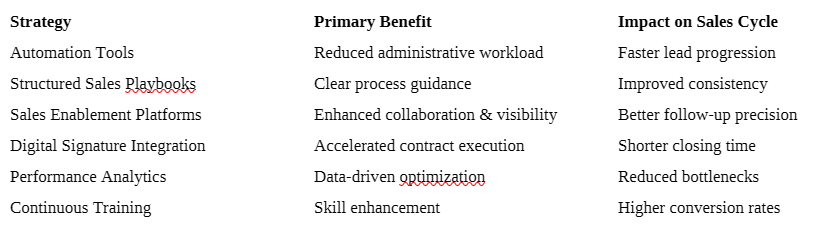
Comparison Table: Productivity Improvement Strategies
The Role of Technology in Productivity
Technology is not a replacement for human relationships—it is an amplifier. Tools like GetAccept enhance visibility and streamline communication, allowing reps to focus on value-driven conversations rather than paperwork.
In 2026, high-performing sales organizations adopt integrated ecosystems that connect CRM systems, automation tools, analytics dashboards, and digital signing platforms. This interconnected approach eliminates redundancy and fosters seamless workflows.
When technology aligns with strategy, productivity increases naturally.
Creating a Productivity-Driven Culture
Improving productivity also requires cultural alignment. Leaders should encourage accountability, recognize achievements, and provide constructive feedback.
A productivity-driven culture includes:
- Clear performance expectations
- Transparent communication
- Incentive alignment
- Recognition programs
- Collaborative teamwork
When sales reps feel supported and empowered, they are more likely to exceed performance targets.
Conclusion
Improving sales rep productivity is not a one-time initiative—it is an ongoing commitment to process optimization, technological integration, and skill development. By automating repetitive tasks, implementing structured playbooks, leveraging digital sales platforms like GetAccept, integrating digital signature solutions, tracking performance metrics, and investing in continuous training, organizations can create high-performing sales teams.
In today’s competitive landscape, productivity is a strategic advantage. Companies that prioritize efficiency and smart workflows position themselves for sustainable growth and long-term success.
F.A.Q.
1. What is sales rep productivity?
Sales rep productivity refers to the efficiency and effectiveness with which sales representatives convert their time and efforts into revenue-generating activities.
2. How can automation improve productivity?
Automation reduces time spent on repetitive administrative tasks, allowing sales reps to focus on prospecting and closing deals.
3. Why are digital signature tools important?
Digital signature tools accelerate contract execution, reduce paperwork delays, and ensure secure, legally binding agreements.
4. How does GetAccept support productivity?
GetAccept centralizes proposals, communication, engagement tracking, and digital signatures in one platform, streamlining the sales workflow.
5. What metrics should sales managers track?
Key metrics include conversion rates, deal cycle length, revenue per rep, and follow-up response times.

.jpg)