The cheapest click is often the one you should be most suspicious of
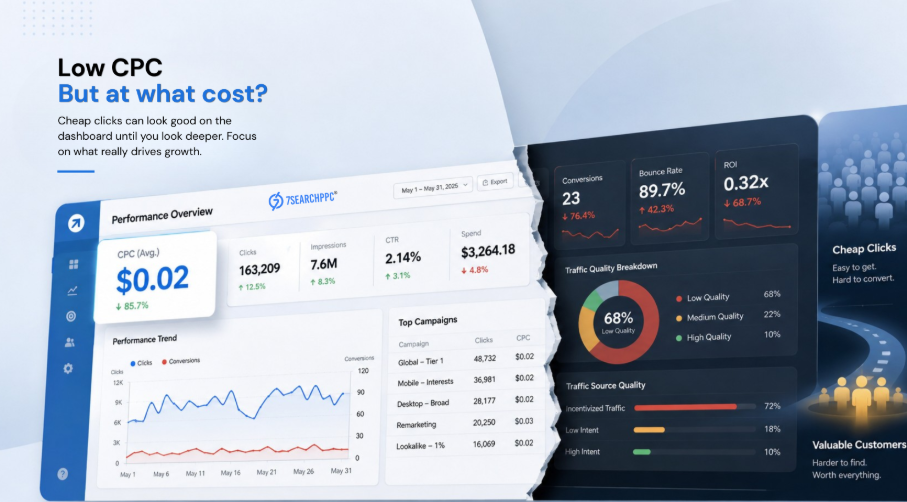
A cheap click is one of the most seductive numbers in advertising.
It sits there in the dashboard looking innocent: 12p. 8p. Maybe even less. The campaign manager smiles, the spreadsheet looks healthier, and someone inevitably says the words every performance marketer loves to hear: “We’re getting really cheap traffic.”
But cheap traffic is not necessarily good traffic. Sometimes it is simply cheap traffic.
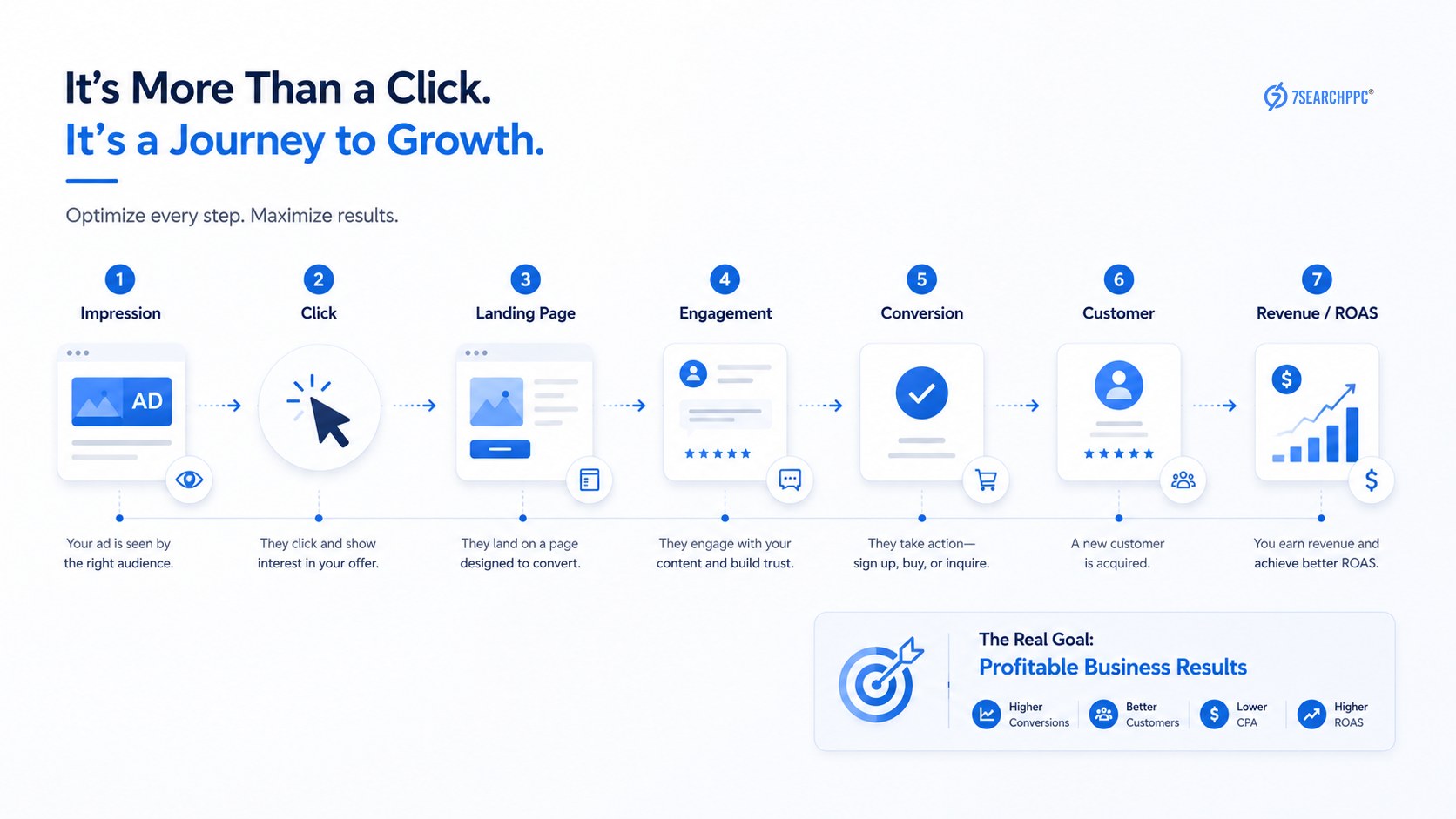
That distinction matters because a click is not the thing most businesses are actually trying to buy. They want a sale, a lead, an app install, a registration, or, ultimately, a customer who is worth more than the cost of acquiring them.
The click is just the taxi ride.
Nobody congratulates themselves for finding a cheap taxi if it drops them in the wrong city.
The problem with worshipping CPC
Cost per click is useful. It tells an advertiser how much they are paying for a visit.
The problem begins when CPC becomes a target rather than a measurement.
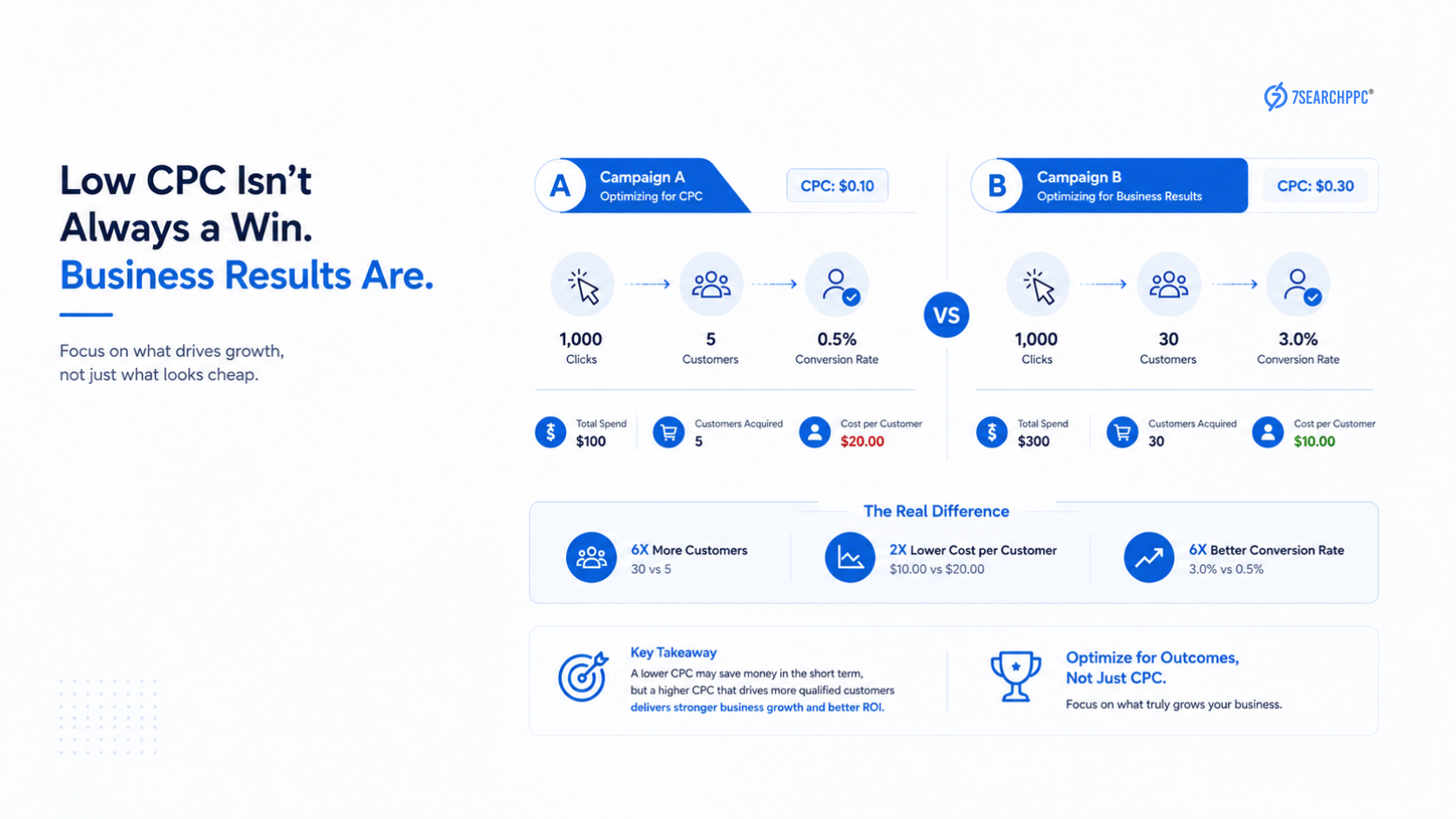
Imagine two campaigns. Campaign A generates clicks for $0.10. Campaign B generates them for $0.30.
At first glance, Campaign A looks like the obvious winner.
But suppose 1,000 people arrive through Campaign A and only five become customers. Campaign B sends 1,000 visitors, and 30 become customers.
Suddenly, the cheap clicks don't look so cheap.
Campaign A has spent $100 to acquire five customers. Campaign B has spent $300 to acquire 30.
The second campaign cost three times as much per click, but one-third as much per customer acquired.
This is why the obsession with CPC can become a strange form of false economy. We celebrate reducing the cost of something that was never the final objective.
The dashboard makes this harder than it should be
This sounds obvious, but dashboards have a funny way of making obvious things disappear.
Paid advertising produces an impressive pile of numbers. Impressions. Clicks. CTR. CPC. Conversion rate. Cost per acquisition. Revenue. ROAS.
And because CPC is so visible, it can become the number everyone talks about first.
A low CPC can be valuable when it comes with relevant traffic and strong conversion behavior. It can also be completely meaningless when those clicks have little commercial value.
I've seen this mindset repeatedly around paid traffic: the first question is often how cheaply traffic can be acquired, when the more useful question is what that traffic is actually doing once it arrives.
That distinction becomes particularly important for smaller advertisers. When the budget is limited, there is even less room to celebrate numbers that look good but don't contribute to the business.
The traffic source matters more than the price tag
There is often an assumption that the biggest advertising platforms must automatically provide the best traffic, while unfamiliar or alternative sources are judged primarily by their headline price.
Neither assumption is particularly useful.
A traffic source should be judged by what happens after the click.
Does the visitor stay? Do they engage? Do they register? Do they buy? Does the customer have a reasonable lifetime value?
At 7SearchPPC, working with advertisers gives us a close view of this problem. Advertisers can come into a campaign looking for inexpensive traffic, but the more useful conversation is usually about what they are trying to achieve with that traffic.
That changes the question from “How cheap can we make the click?” to “What does a useful click look like for this campaign?”
It is a much better question.
Cheap traffic can become expensive very quickly
There is another trap here: comparing traffic sources using CPC alone without accounting for differences in audience intent.
It is a little like comparing restaurants by the price of the menu without considering whether anyone actually likes the food.
A $1 click that produces a valuable customer can be a bargain.
A $0.05 click that produces nothing can be expensive.
This is also why advertisers should resist making decisions after looking at a tiny amount of data. A handful of clicks can produce a wonderfully flattering dashboard. Give the campaign enough volume to produce meaningful conversion data, and the picture may look rather different.
The sensible approach is to test, measure, and then scale what works.
Not simply find the lowest number and celebrate it.
Look beyond the click
If I had to remove one habit from paid advertising, it would be the instinct to treat CPC as the finish line.
Instead, I would work backward from the business outcome.
What is a customer worth?
What can the business afford to spend to acquire one?
Which traffic sources are producing those customers?
What happens between the click and the conversion?
Then use CPC as one piece of the puzzle rather than the entire puzzle.
This becomes even more important as advertising gets more automated. Platforms can increasingly optimize campaigns for clicks, conversions, and other objectives, but automation does not remove the need for advertisers to decide what a valuable outcome actually means.
The machine can optimize the target you give it.
It cannot decide whether you chose the right target.
The cheapest click isn't always the bargain
There is nothing wrong with cheap clicks. I would happily take a cheap click if it brings the right person to the right offer at the right moment.
The mistake is assuming that the cheapest click automatically wins.
Advertising is full of numbers that feel like victories. More impressions. Lower CPC. Higher CTR. More clicks.
But a business does not pay its bills with impressions.
It pays them with results.
So the next time a campaign dashboard proudly announces that your CPC has fallen, resist the urge to open the champagne.
Look at what happened after the click.
That is where the expensive part of advertising usually reveals itself.
%20(1).jpg)