The Equipment That Nobody Thinks About — Until the Whole Job Site Stops
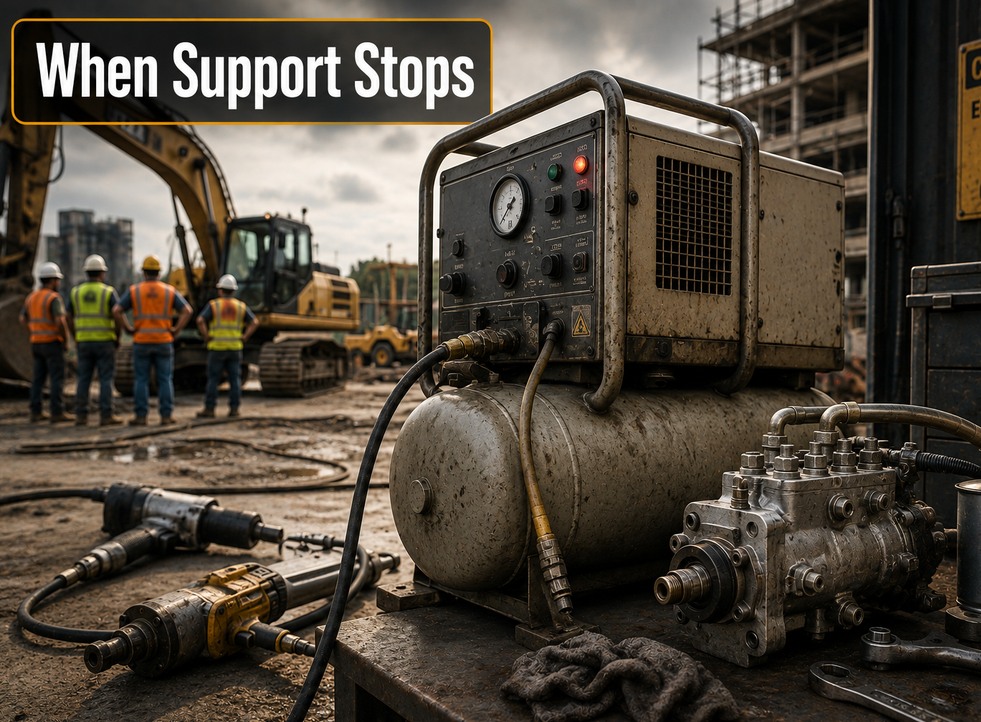
Think about what happens when a restaurant's walk-in refrigerator breaks down. The refrigerator isn't the most impressive piece of equipment in the kitchen. It doesn't produce anything. It doesn't plate dishes or run the grill. But when it stops working, the kitchen stops working — because everything that comes after it depends on it functioning quietly in the background.
Job sites work the same way. There are machines that look important and machines that are important. Sometimes those are the same thing. Sometimes the equipment that actually controls whether a day's work gets done is the piece nobody photographs, nobody talks about, and nobody thinks to maintain until it fails at the worst possible moment.
Industrial air compressors and fuel pumps both fall into that category — and the consequences of ignoring either one tend to be felt far beyond the component itself.
Why Air Compressors Are the Most Underestimated Piece of Equipment on Any Job Site
An excavator is easy to appreciate. It's large, loud, and visibly productive. An air compressor sitting in the corner of a workshop or alongside a construction site doesn't have the same presence. It runs, it hums, it's easy to ignore — until it stops, and suddenly so does everything it was powering.
On a typical construction or industrial site, compressed air powers a surprising range of equipment: pneumatic drills, impact wrenches, sandblasting rigs, concrete vibrators, spray painting systems, and the tire inflation equipment that keeps fleet vehicles rolling. In workshop settings, air compressors drive the tools that mechanics depend on for everything from basic fastening to precision torque applications. The compressor doesn't do any of these jobs itself — it just makes all of them possible.
That's exactly what makes a compressor failure so disruptive. It's not one task that stops. It's everything that depends on compressed air, simultaneously, across whatever portion of the operation the compressor was serving. A single failed unit can idle multiple workers, halt multiple workflows, and create a ripple of delays that outlasts the repair itself.
What Breaks Inside an Industrial Air Compressor — and Why It Happens Faster Than People Expect
Compressors run under continuous load in dirty, often high-temperature environments. The components that regulate pressure, monitor oil levels, and control airflow are doing real work every operating hour — and they wear accordingly.
The failures that cause unplanned downtime are rarely dramatic. A pressure sensor drifts out of calibration and causes the unit to shut down on a false reading. A pressure transducer fails and the control system loses visibility into what the compressor is actually doing. An intercooler kit wears down and the unit starts running hotter than it should, eventually triggering a thermal shutdown. An oil level indicator stops reading correctly and maintenance intervals get missed. None of these are catastrophic failures in isolation — but each one can take a compressor offline, and an offline compressor on an active job site is a productivity problem measured in hours.
For site managers and workshop operators sourcing replacement sensors, transducers, repair kits, and service components for brands like Atlas Copco and Ingersoll Rand, Fab Heavy Parts stocks a range of industrial air compressor parts available for fast dispatch — reducing the gap between a fault and a unit running again.
The Fuel System: Another Quiet Failure That Shuts Everything Down
Air compressors aren't the only equipment category where small component failures cascade into large operational problems. The fuel systems of diesel-powered equipment — excavators, generators, forklifts, haul trucks — follow the same pattern.
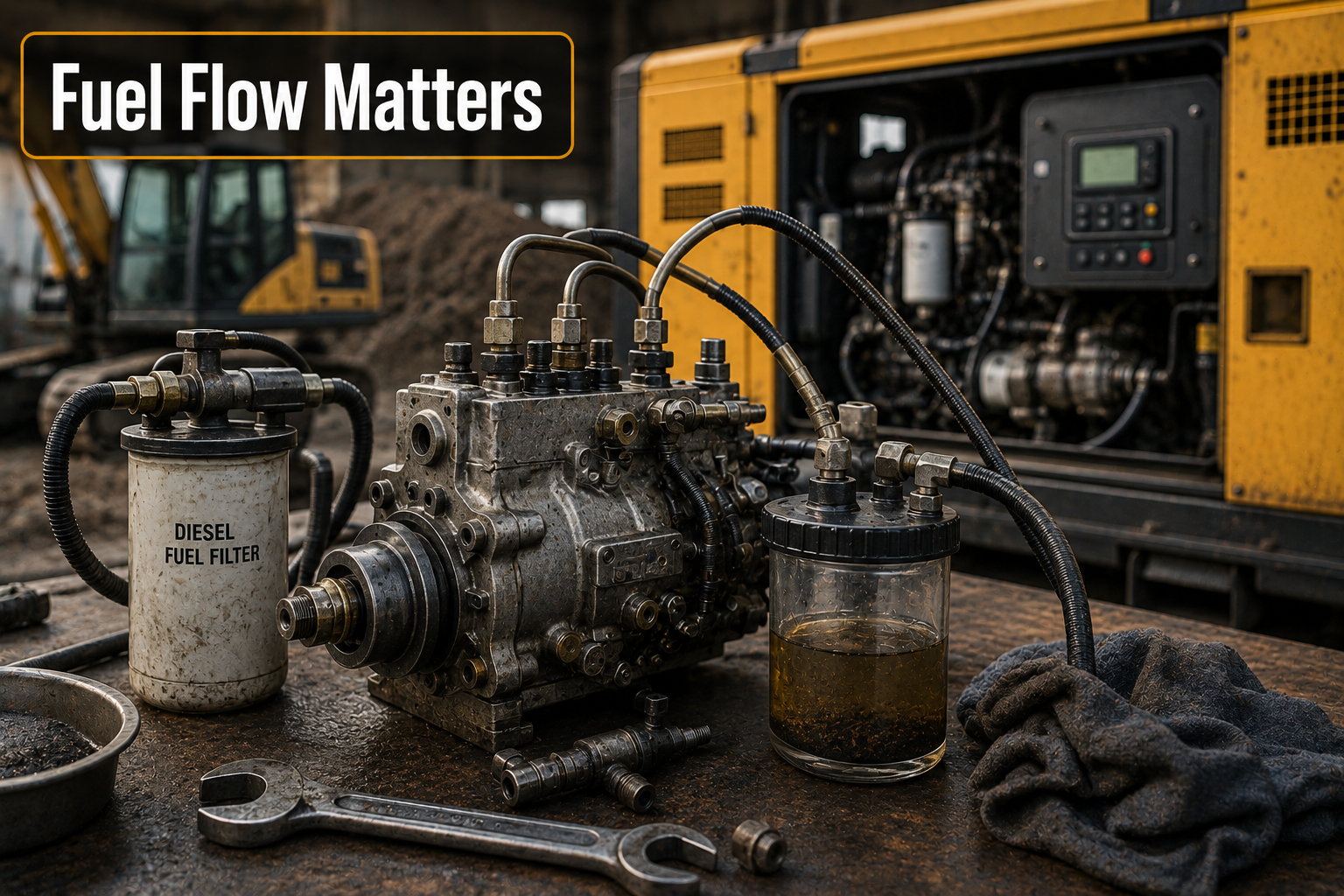
A diesel engine's fuel pump is not a component most operators think about until something goes wrong. Its job is to move fuel from the tank to the injectors at the right pressure and flow rate, consistently, across tens of thousands of operating hours. It doesn't announce its condition. It doesn't give obvious warning signs in the early stages of degradation. It does its job quietly until it can't — and when it fails, the engine either loses power, runs rough, or won't start at all.
The challenge is that fuel pump degradation is gradual. Contamination from dirty fuel accumulates in the pump internals over time. Seals wear. Delivery pressure drops incrementally below spec. An engine that was running acceptably six months ago starts struggling to perform under load — and by the time the symptoms are obvious enough to trigger a repair, the pump has often been operating in a compromised state for a considerable time.
Why Maintenance Schedules for Fuel Pumps Determine Whether a Machine Shows Up for Work
The difference between a fuel pump that fails unexpectedly and one that gets replaced on schedule comes down to whether anyone was paying attention to it before a symptom appeared. Machines that follow structured maintenance intervals — where fuel pump condition is assessed alongside oil changes, filter replacements, and other scheduled service items — tend to surface pump issues during planned downtime rather than during operations.
That distinction matters more than it might seem. A fuel pump replaced during a scheduled service takes a machine offline for a few planned hours. A fuel pump that fails mid-shift on an active job takes the machine offline for an unplanned period that depends on parts availability, technician availability, and how backed-up the repair queue is. In high-utilization operations, the latter scenario can cost significantly more than the part itself.
For anyone wanting to understand the case for building fuel pump checks into a regular maintenance schedule, Fab Heavy Parts has a detailed guide on why consistent fuel pump maintenance is critical for equipment uptime — a principle that applies equally to compressors, generators, and every other diesel-driven system a job site depends on.
How the Least Glamorous Equipment Decisions Have the Biggest Impact on Productivity
The equipment manager who keeps a job site running smoothly is rarely the one who makes the most dramatic decisions. They're usually the one who made a series of undramatic ones ahead of time — stocking the right spare components, building realistic maintenance intervals into the schedule, and treating the equipment nobody photographs with the same attention as the equipment that makes it into the project photos.
Air compressors and fuel pumps sit firmly in that category. They're not what anyone comes to a job site to see. They're what makes it possible for everything else to function. Keeping them running — through preventive maintenance, timely part replacement, and access to stocked components when something does fail — is one of the more reliable ways to keep a project moving when everything else is working against it.


.jpg)