Top 4 Merchant of Record Providers for SaaS Companies Expanding Abroad

Selling software globally sounds simple until tax, payment, and compliance requirements start changing from one market to another.
Merchant of Record providers help solve this problem by taking responsibility for areas such as VAT, GST, digital services taxes, chargebacks, fraud, and payment processing.
For SaaS companies, the challenge is finding a provider that matches not only where they sell, but also how they charge customers. A traditional subscription SaaS product may have very different billing requirements from an AI startup charging per token, API call, or GPU second.
After reviewing platforms across tax coverage, billing capabilities, pricing structures, customer feedback, and international reach, these four providers stood out.
Merchant of Record Providers at a Glance
Note: Information in this comparison is based on publicly available user reviews, case studies, platform directories, and official product pages.
What Should You Compare Before Choosing a Merchant of Record?
Not every Merchant of Record provider solves the same problems equally well.
Before choosing one, SaaS companies should look at several areas.
- Global tax coverage: Check whether VAT, GST, digital services taxes, and other local obligations are handled in your target markets.
- Billing flexibility: Determine whether the provider supports subscriptions, usage-based billing, credits, one-time payments, or other models your product requires.
- International payments: Look at supported countries, currencies, and localized checkout options.
- Fraud and chargebacks: Understand how disputes, fraud prevention, and chargeback management are handled.
- Pricing: Compare transaction fees, fixed costs, tiered pricing, and additional charges.
- Reporting: Look for visibility into checkout conversion, failed payments, payment authorization, and chargeback ratios.
These differences become particularly important when comparing newer developer-focused providers with larger established Merchant of Record platforms.
- Fungies.io - Best for Global SaaS and Digital Product Sales
What Fungies.io Offers
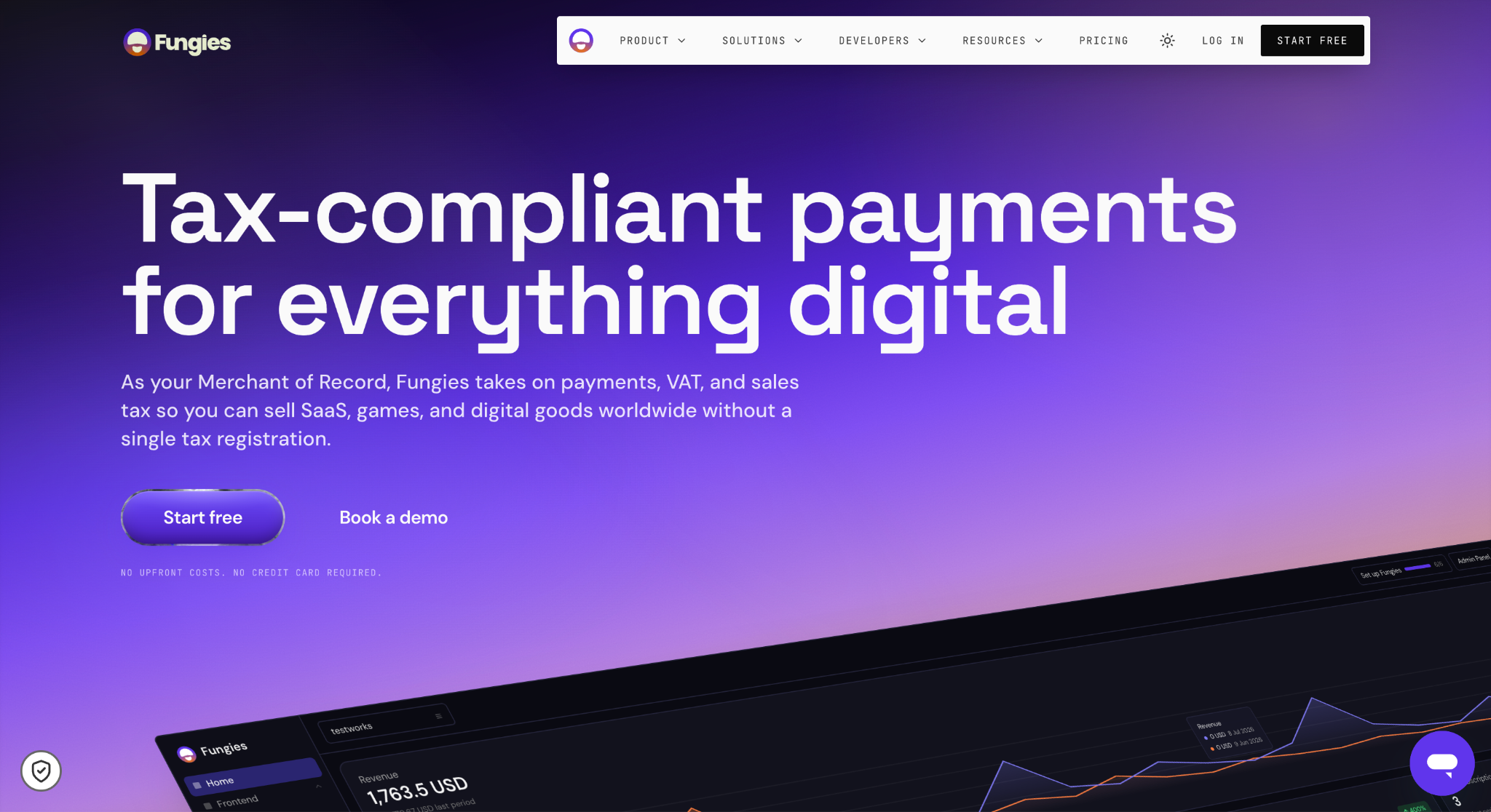
Fungies.io acts as the Merchant of Record for SaaS companies, digital creators, and game studios selling across 150+ countries. Their platform handles checkout, subscriptions, invoicing, fraud prevention, and VAT/GST compliance in one place, with no monthly fees. The pricing model is straightforward: 5% plus $0.50 per transaction. For developers, they offer CLI tools and MCP integrations built for AI coding workflows. Customers like Leadsin.io and RenderAI.app have used the platform, and users consistently point to the 15-minute setup as a genuine differentiator (not a marketing claim, but something that shows up in actual reviews).
Where Fungies.io Fits Best
Fungies.io solves what you might call the sprawl problem. SaaS founders typically juggle a separate tax tool, a payment processor, a subscription manager, and a fraud vendor just to sell one product globally. Their transaction-based pricing removes the sting of platform fees before revenue even starts coming in, which makes the math unusually favorable for early-stage products.
What Customers Say
Setup speed and responsive support are the two things users mention most. The commission-based model gets called out as preferable to stacked subscription fees, which is exactly the kind of thing that matters when you're still finding product-market fit. That's a rare combination at this price point.
- Polar - Best for AI Startups and SaaS Companies Billing for Tokens and Compute
What Polar Offers
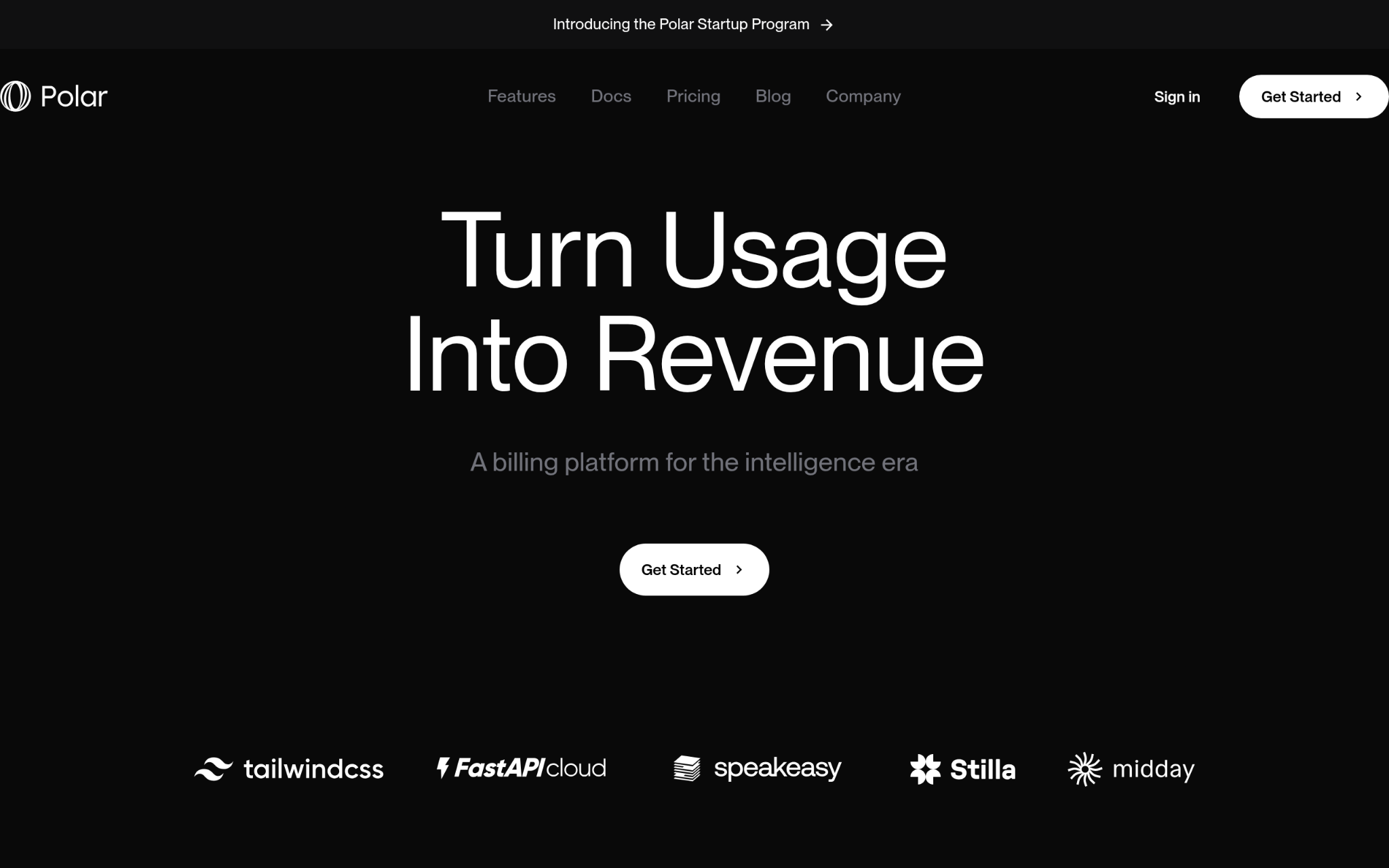
Polar is a billing infrastructure platform built for AI startups that need to charge for tokens, API calls, agent runs, GPU seconds, and storage. As a Merchant of Record, they handle VAT, sales tax, and tax obligations while offering usage billing, subscriptions, seats, credits, trials, and discounts. What separates them from general MoR platforms is the ability to ingest detailed usage data in real time and pair it with instant unit economics analytics in the same dashboard. The company is open source, headquartered in Stockholm, and recently closed a $10M seed round led by Accel (06/01/2025).
Where Polar Fits Best
Most billing platforms treat usage-based pricing as an afterthought, but Polar was designed around it from day one, which shows in how cleanly the analytics and billing data connect. For AI founders trying to price per token or per compute unit without building custom infrastructure, that kind of purpose-built tooling is hard to match.
What Customers Say
Tailwind Labs, Midday, and Stilla AI are among the names using the platform, and leaders from Vercel and FastAPI have publicly backed it. The open-source model and collaborative development approach build a level of trust that typical SaaS billing vendors struggle to earn. That kind of community credibility is rare in fintech infrastructure.
- Paddle - Best for SaaS and Digital Product Companies
What Paddle Offers
Paddle has operated in the SaaS payments space since 2012, giving it considerably more operating history than many newer Merchant of Record providers.
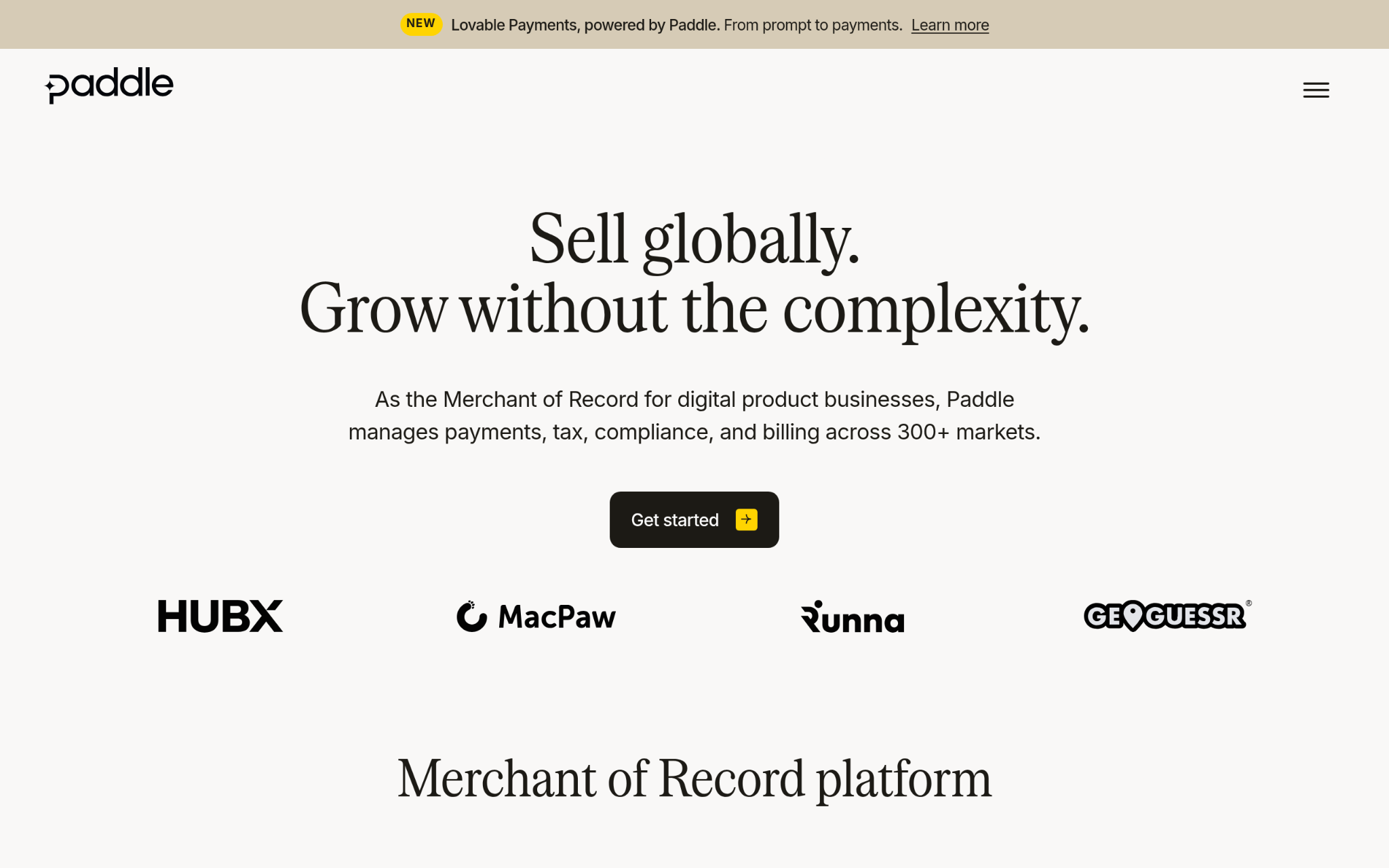
Its platform covers payment processing, recurring subscriptions, localized checkout, tax management, and compliance across more than 300 markets.
Paddle processes more than $1 billion in annual payments for approximately 4,000 customers and has reached a reported valuation of $1.4 billion.
Where Paddle Fits Best
Paddle is particularly relevant for SaaS companies that want to consolidate payment processing, taxes, billing, and compliance into one system.
Instead of integrating a payment processor with separate tax and subscription management platforms, businesses can move those responsibilities under the Merchant of Record model.
Its scale and operating history may make Paddle particularly relevant for SaaS companies that have already outgrown smaller or fragmented payment stacks.
What Customers Say
MacPaw, Renderforest, and Kaleido are among Paddle's customers.
Published customer stories include reported outcomes such as 200% revenue increases and 3X ARR growth.
Long-term users also frequently point to reduced compliance overhead as an important reason for using the platform.
- creem - Best for Indie Hackers, Micro-SaaS Founders, and Global Creators
What Creem Offers
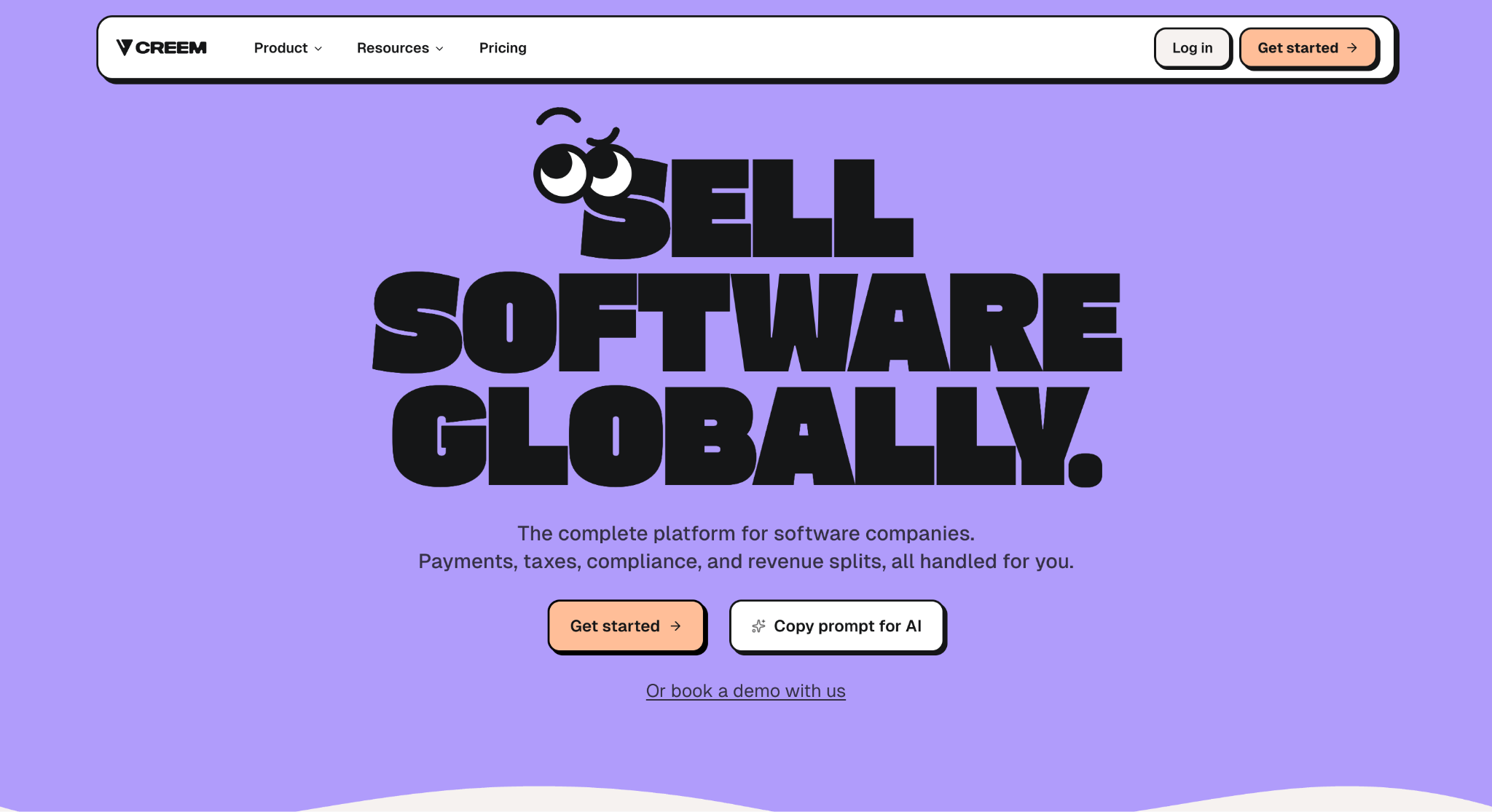
Creem is a Merchant of Record platform built with a strong focus on developers, independent founders, and smaller SaaS businesses.
The platform covers VAT, GST, and sales tax across more than 190 countries and supports payments in over 80 currencies, including stablecoin options.
Its API-first architecture is designed for developers who want more flexibility than a dashboard-only payment platform can provide.
Creem reports more than 20,000 stores and €930,000 in annualized revenue.
The company also emphasizes transparent pricing without pricing tiers that restrict smaller merchants from accessing particular features.
Where Creem Fits Best
Creem is positioned particularly well for indie hackers and micro-SaaS founders that want global Merchant of Record coverage without moving immediately into an enterprise-oriented platform.
Its API-first structure also allows development teams to integrate payment and Merchant of Record functionality into custom product workflows.
That flexibility can matter for businesses that do not want to rely entirely on a predefined checkout interface.
What Customers Say
Creem has reported more than 1,000 active merchants processing millions in monthly GMV.
Users frequently highlight broad country coverage and straightforward pricing.
The company also reached the #1 Fintech Product of the Month position on Product Hunt in September 2024 and has backing from investors connected with companies including Revolut and Mastercard.
The Research Behind These Recommendations
Starting With Data Gathering
The process started by pulling together a broad list of MoR platforms from multiple sources: fintech directories, developer community forums, SaaS-focused review platforms like G2 and Product Hunt, and case studies published by the platforms themselves. The goal at this stage was breadth, not judgment. Platforms were added to the longlist if they appeared repeatedly across different independent sources, not just their own marketing channels. That repetition across contexts is a reliable early signal that a platform has real traction beyond self-promotion.
Filtering Candidates to Your Needs
Once the longlist was assembled, options without verifiable customer feedback or documented payment processing activity were removed. Platforms that appeared only in their own press releases or had no traceable customer base were set aside. The remaining candidates were evaluated for review patterns across multiple platforms, checking not just overall ratings but the actual problems users described and how the platforms responded to them. Review consistency mattered more than review volume because a few detailed, honest accounts tell you more than hundreds of generic five-star ratings.
Validating Each Recommendation Through Research
Each shortlisted platform was then cross-checked by comparing what the company claimed on their website against what users actually reported in reviews and public discussions. When a company listed "automated tax compliance" as a feature, the validation step meant looking for user accounts that confirmed or complicated that claim in real-world use. Discrepancies between stated capabilities and actual customer experience were flagged as signals to dig deeper. Platforms where the gap between marketing copy and actual customer experience was consistently wide were deprioritized.
Where Each Pick Stands in the Industry
Industry standing was assessed by looking at mentions in fintech publications, funding announcements, customer lists, and presence in developer communities where payment infrastructure gets discussed seriously. Polar's $10M Accel seed round, Paddle's $1.4B valuation, and Creem's Product Hunt rankings all served as corroborating signals that these platforms carry weight beyond their own ecosystems. These aren't definitive quality markers on their own, but they add useful context when combined with user evidence.
Merchant Of Record Providers-Specific Validation
The final layer of checks focused on MoR capabilities that actually matter: dedicated coverage of global tax handling (VAT, GST, digital services taxes), support for multiple currencies, documented chargeback and fraud management processes, and evidence that the platform had handled real merchant setup at scale. Platforms were checked for case studies or customer stories that referenced tax remittance accuracy and global sales support, not just general payment processing. This step helped separate platforms that offer MoR as a checkbox feature from those that treat it as a built-in part of their product.
How These Merchant of Record Providers Were Selected
Initial Platform Research
The research started with a broad list of Merchant of Record platforms found through fintech directories, SaaS review platforms, developer communities, Product Hunt, G2, and platform case studies.
The purpose of this stage was to identify providers appearing consistently across several independent sources rather than relying on company marketing alone.
Customer and Product Validation
Providers without verifiable customer feedback or documented payment processing activity were removed.
The remaining platforms were evaluated based on the actual issues customers discussed, including payment performance, tax compliance, billing flexibility, support, and international selling.
Detailed feedback was weighted more heavily than generic ratings.
Feature Verification
Claims published by each provider were compared against available customer reviews, case studies, and public discussions.
For example, when a provider claimed automated tax compliance, the research looked for evidence that customers were actually using those capabilities in real-world international sales.
Large differences between advertised functionality and reported customer experience were treated as potential warning signs.
Industry Position
Funding, customer adoption, fintech coverage, developer community presence, and other external signals were also considered.
Polar's Accel funding, Paddle's scale and valuation, and Creem's Product Hunt performance provide additional context about the companies, although these factors were not treated as proof of product quality on their own.
Merchant of Record Capability
The final stage focused specifically on whether each provider offered the core Merchant of Record functions businesses need when selling internationally.
These included:
- VAT and GST handling
- Global tax remittance
- Multi-currency payments
- Fraud management
- Chargeback management
- International merchant support
- Acting as the legal seller of record
This helped distinguish full Merchant of Record providers from payment platforms that only offer some related services.
How to Choose the Right Merchant of Record Provider
There is no single Merchant of Record provider that fits every SaaS company.
The right option depends on your product, pricing model, company size, and expansion plans.
Match the Platform to Your Business Model
Look for providers already serving companies with similar products and monetization models.
An AI product charging per token may benefit from a platform such as Polar, while a traditional subscription SaaS company may prioritize a more established subscription and payment infrastructure.
Review the Billing Options
Confirm that the provider supports the way you charge customers.
This might include subscriptions, seats, credits, usage-based billing, one-time purchases, or a combination of several models.
Calculate the Real Cost
Do not compare providers based only on their headline transaction fee.
Consider transaction volume, fixed fees, pricing tiers, currency conversion, payout costs, and any additional charges that could affect the total effective rate.
Check Reporting Capabilities
Useful Merchant of Record reporting may include:
- Failed payment recovery rates
- Checkout conversion by geography
- Authorization rates
- Chargeback ratios
- Revenue by market
These metrics can help identify whether payment infrastructure is hurting growth in a particular region.
Confirm International Compliance Coverage
Finally, confirm that the provider actively manages tax and compliance requirements in the specific countries where you plan to sell.
That includes areas such as VAT, GST, PCI DSS requirements, digital services taxes, and local consumer protection rules.
Which Merchant of Record Provider Is the Best Fit?
Each platform serves a somewhat different type of SaaS business.
Fungies.io is a strong fit for SaaS and digital product companies looking for straightforward transaction-based pricing and broad international coverage.
Polar stands out for AI startups and SaaS companies using usage-based monetization, particularly products charging for tokens, compute, API calls, or similar units.
Paddle offers the longest operating history in this group and may make more sense for established SaaS companies looking for mature global payment and compliance infrastructure.
Creem is positioned toward indie hackers, creators, and micro-SaaS founders who want international Merchant of Record coverage with an API-first approach.
The best choice ultimately depends on how your company bills customers, which markets you plan to enter, how much infrastructure you want to manage internally, and how quickly your payment requirements are likely to become more complex.