Top 7 companies specialized in blockchain in the United States
.jpg)
TL;DR
The U.S. blockchain services market is large, but not uniform. Many providers look similar until you map them to delivery constraints.
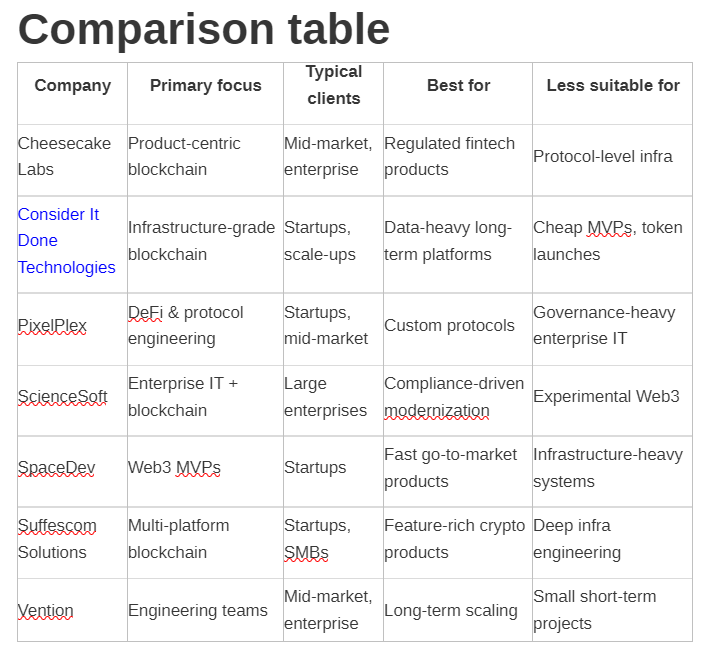
This guide compares seven companies without ranking them. Use it to shortlist by fit:
- infrastructure vs product delivery
- data-heavy and regulated environments vs lightweight builds
- long-term ownership vs “ship and move on” projects
Why shortlisting a blockchain vendor feels confusing
Blockchain has matured. Vendor labels have not.
A “blockchain company” can mean a team that hardens infrastructure. It can also mean a studio that ships user-facing Web3 apps. Or an enterprise consultancy that embeds blockchain into an existing system.
All of those can be valid. They are not interchangeable.
The easiest way to avoid churn is to start with constraints. Not with brand names.
What to look for in a blockchain development company
Infrastructure-grade delivery
If your system includes validators, node operations, cross-chain components, or complex integrations, delivery becomes an operations problem as much as a coding problem.
Infrastructure-grade work tends to require:
- predictable environments and deployment practices
- monitoring and incident response readiness
- long-term change management
This is where “we build apps” and “we run systems” separate quickly.
Data-heavy reality
Blockchain projects are often described in terms of smart contracts. In practice, many hard problems sit off-chain.
Data-heavy projects usually involve:
- ingestion and verification
- storage and retrieval patterns
- event pipelines and reconciliations
- identity, permissions, and auditability
When data volume rises, architecture choices stop being optional. They become the product.
Regulated environments
Regulation is not a “feature request.” It is a delivery constraint.
Teams working in compliance-sensitive contexts tend to show different habits:
- clearer documentation and change control
- security posture that is designed, not added later
- a preference for predictable delivery models
This doesn’t make them “better.” It makes them a better fit for certain risk profiles.
Delivery model and post-launch support
Many projects look successful at launch. Then the real work begins.
If you expect the platform to evolve for years, you want a partner that:
- can maintain continuity of context
- can support upgrades and integrations
- can operate in a long-lived roadmap cycle
Short builds and long-lived platforms are different species. Treat them that way.
Methodology
Companies were included based on observable, public signals:
- a visible blockchain/Web3 footprint in the U.S. market
- public case descriptions or project references
- delivery patterns (infrastructure, product, enterprise)
- third-party signals such as Clutch, or public technical documentation
What was deliberately not evaluated
To keep the comparison neutral, the following were excluded:
- awards and press releases
- self-reported performance claims
- pricing and rates
- numerical scoring or ranking models
Company profiles
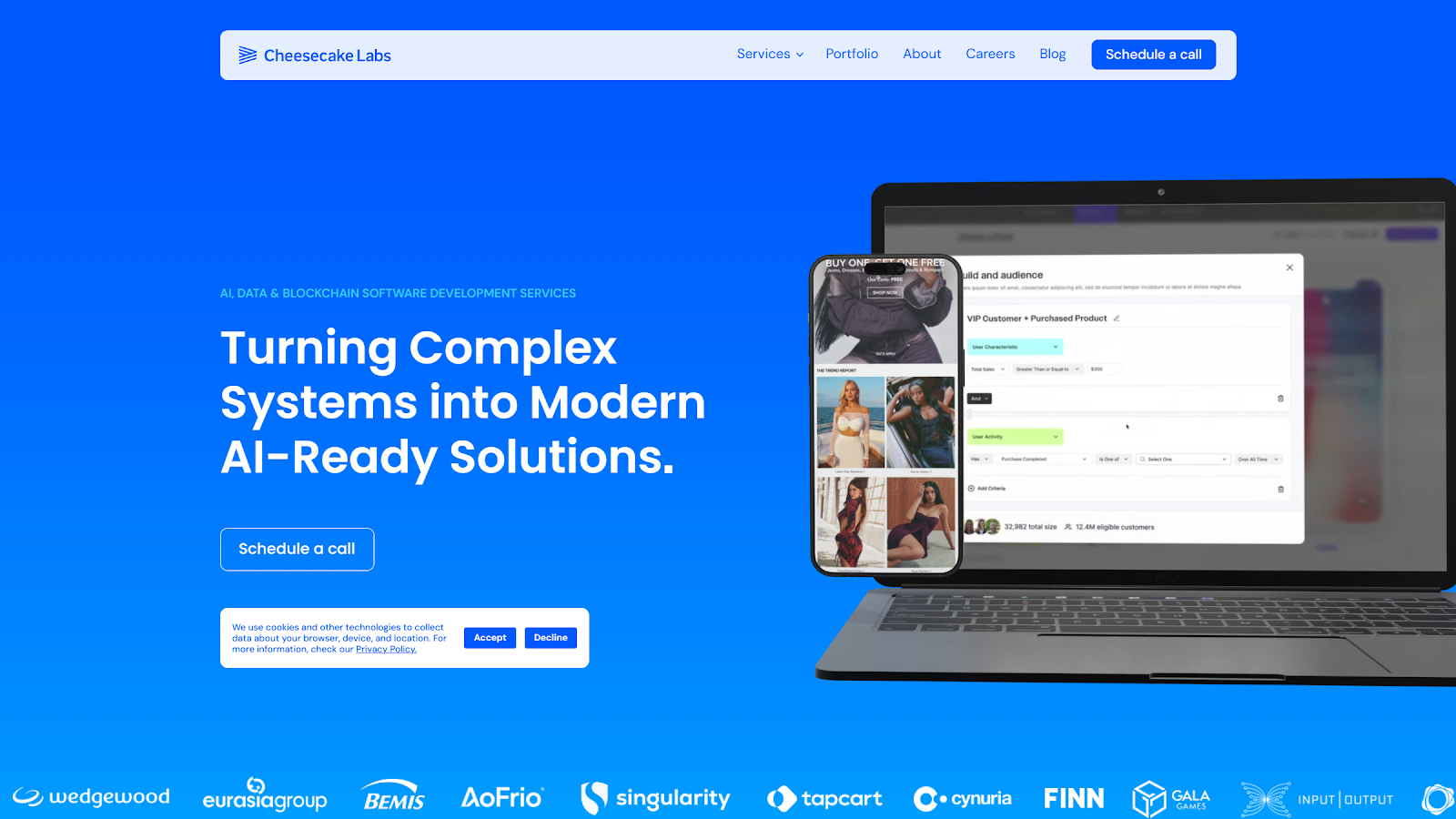
Cheesecake Labs
Focus
Blockchain-enabled products where UX, payments, and compliance shape delivery decisions.
Typical clients
Mid-market and enterprise teams building fintech or payment platforms, often for non-crypto-native users.
Strengths
- Experience integrating blockchain into existing financial infrastructure
- Strong product discovery and UX discipline
- Familiarity with compliance-sensitive delivery environments
Limitations ⚠️
Less suitable for protocol-level or infrastructure-first blockchain systems.
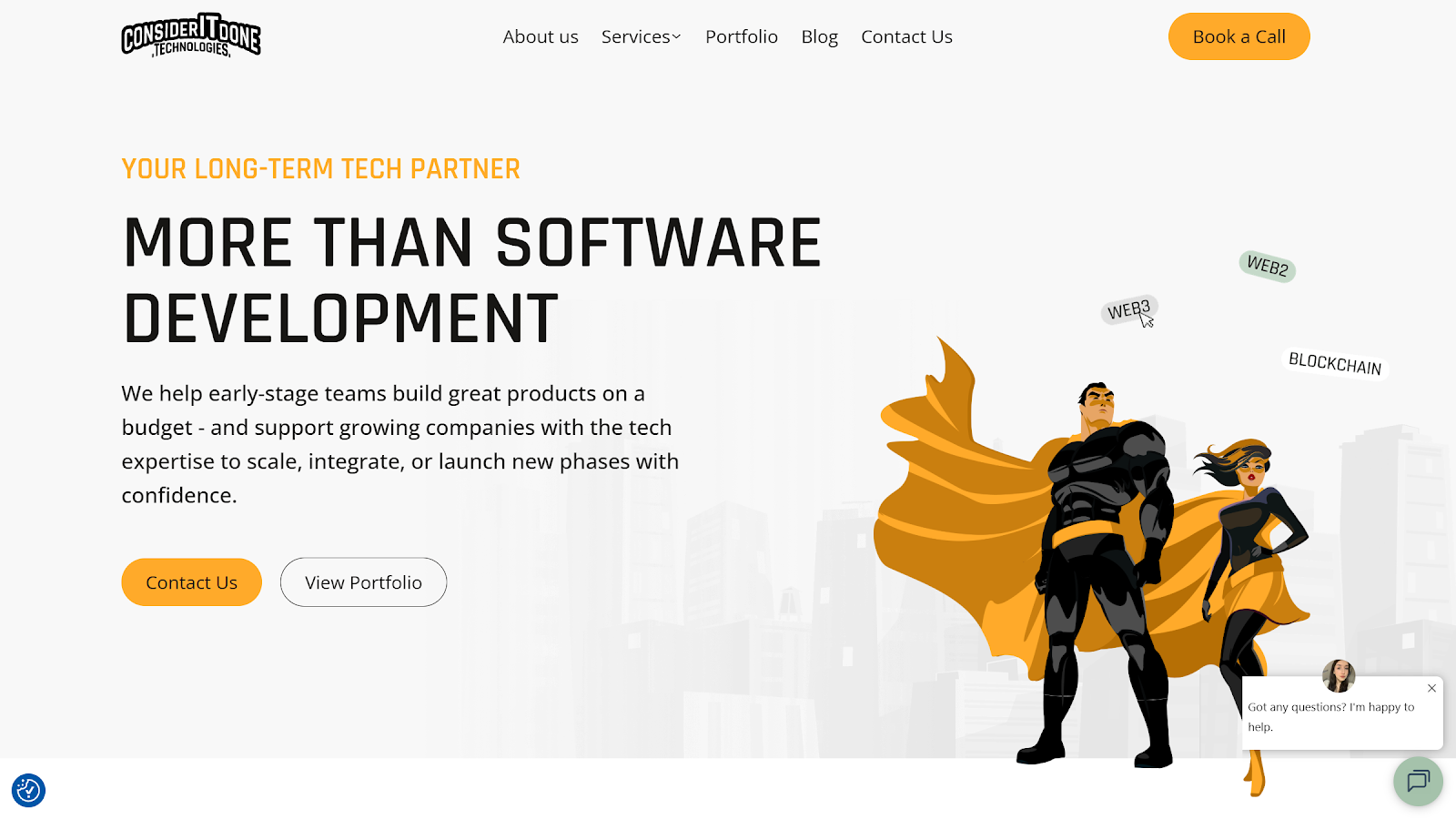
Consider It Done Technologies
Focus
System-level blockchain engineering for data-heavy, infrastructure-grade Web3 platforms designed to operate long term.
Typical clients
- Companies building long-lived blockchain platforms rather than short-term MVPs
- Teams working with complex data flows or infrastructure dependencies
Strengths
- Designing and maintaining complex system architectures beyond application-level smart contracts
- Handling high data volumes, integrations, and operational dependencies
- Emphasis on reliability, monitoring, and maintainability
- Delivery model oriented toward post-launch evolution, not build-and-leave execution
Limitations ⚠️
Less suitable for quick, low-budget MVPs or short-term token launches.
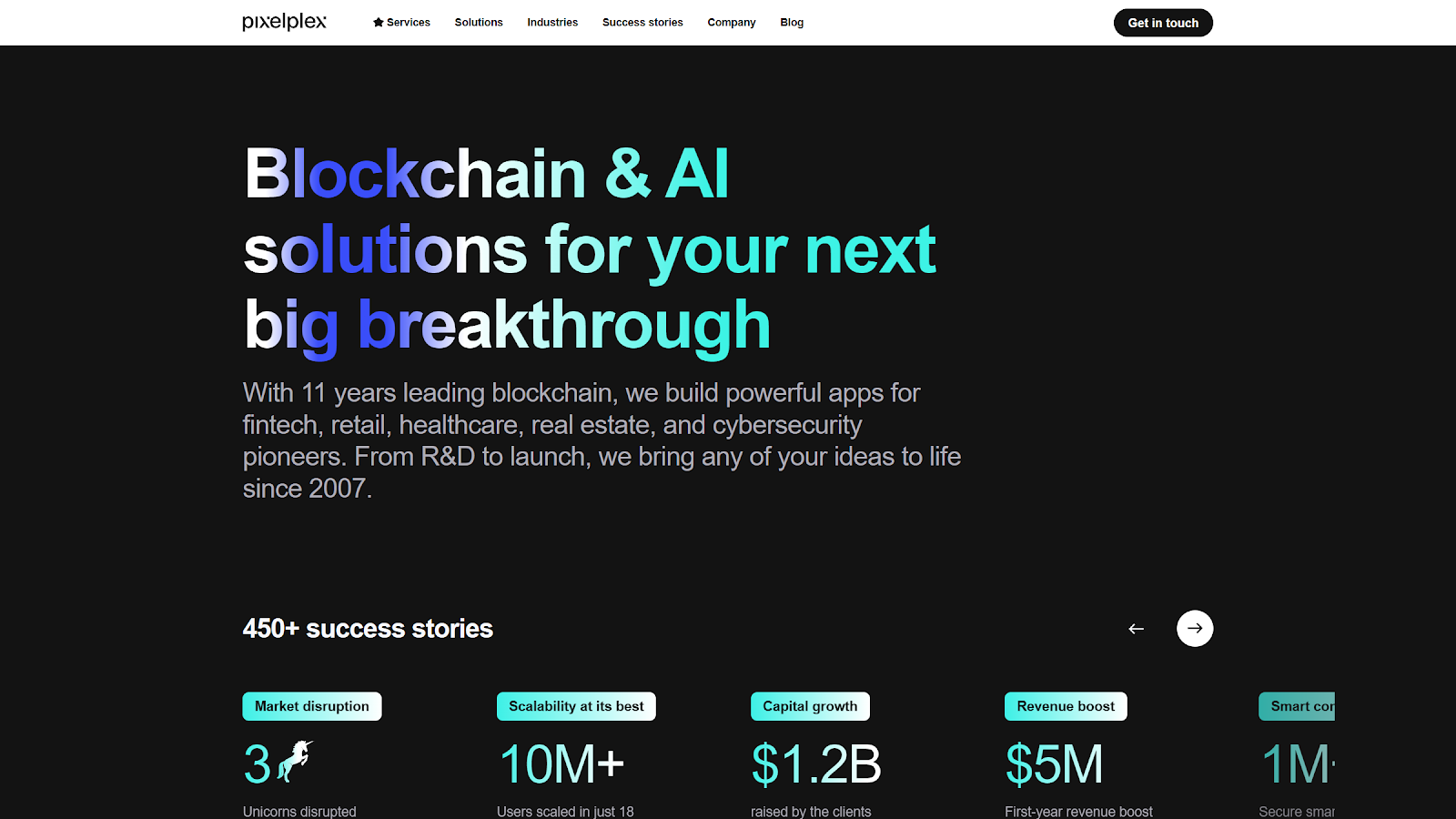
PixelPlex
Focus
Deep blockchain and DeFi engineering, including protocol-level and ecosystem-scale systems.
Typical clients
Startups and mid-market teams building custom protocols or token-driven platforms.
Strengths
- Hands-on experience with both client work and proprietary blockchain products
- Strong smart-contract and cross-chain expertise
Limitations ⚠️
Less suitable for enterprise environments dominated by heavy governance and formal documentation.
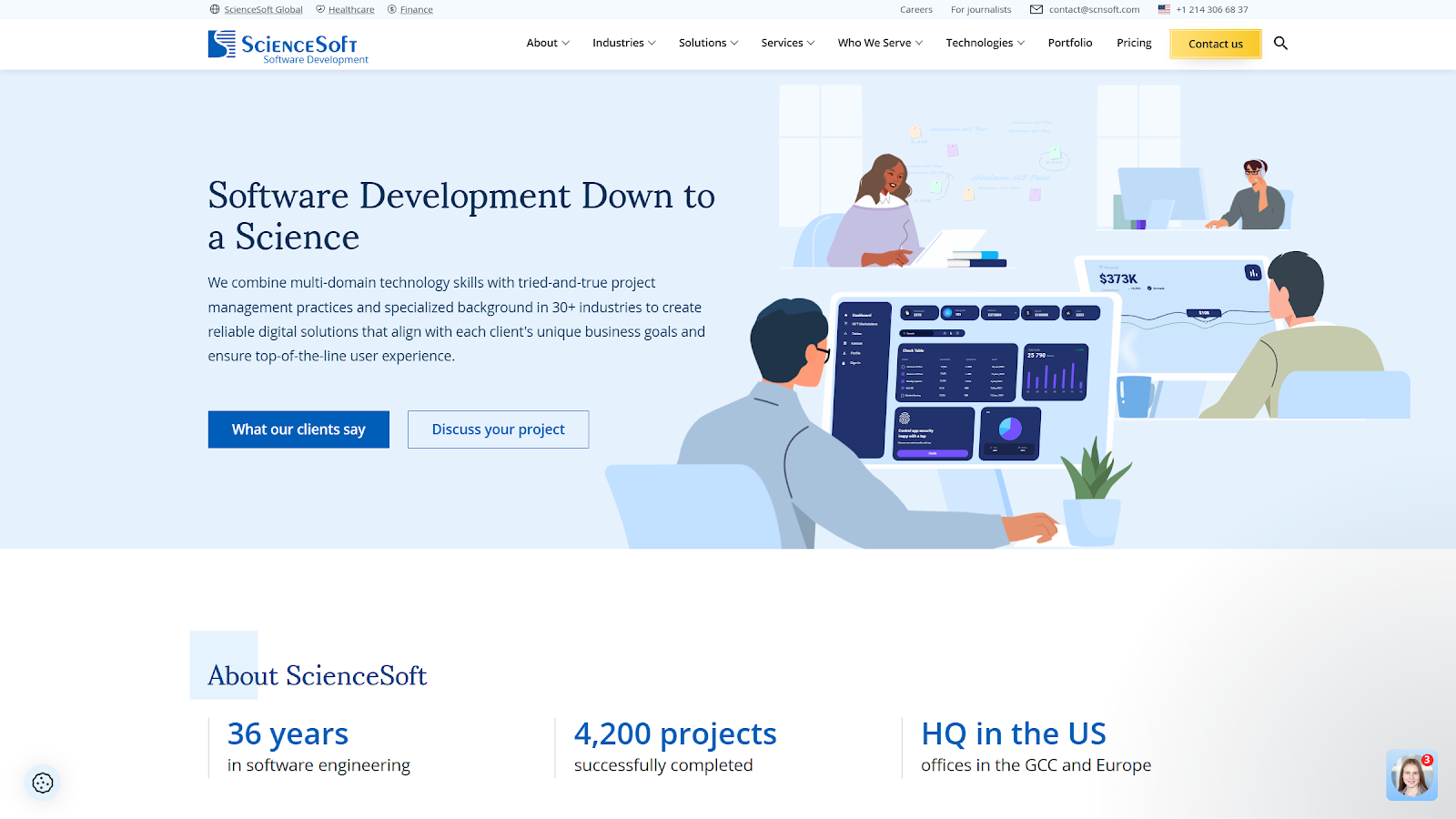
ScienceSoft
Focus
Enterprise IT consulting where blockchain functions as one component within regulated, multi-layered systems.
Typical clients
- Large organizations modernizing existing platforms
- Teams operating under strict regulatory or compliance constraints
Strengths
- Mature delivery processes and documentation standards
- Strong security and compliance orientation
- Experience embedding blockchain into complex enterprise architectures
- Predictable delivery models for long-term programs
Limitations ⚠️
Less suitable for experimental Web3 products or protocol-first innovation.
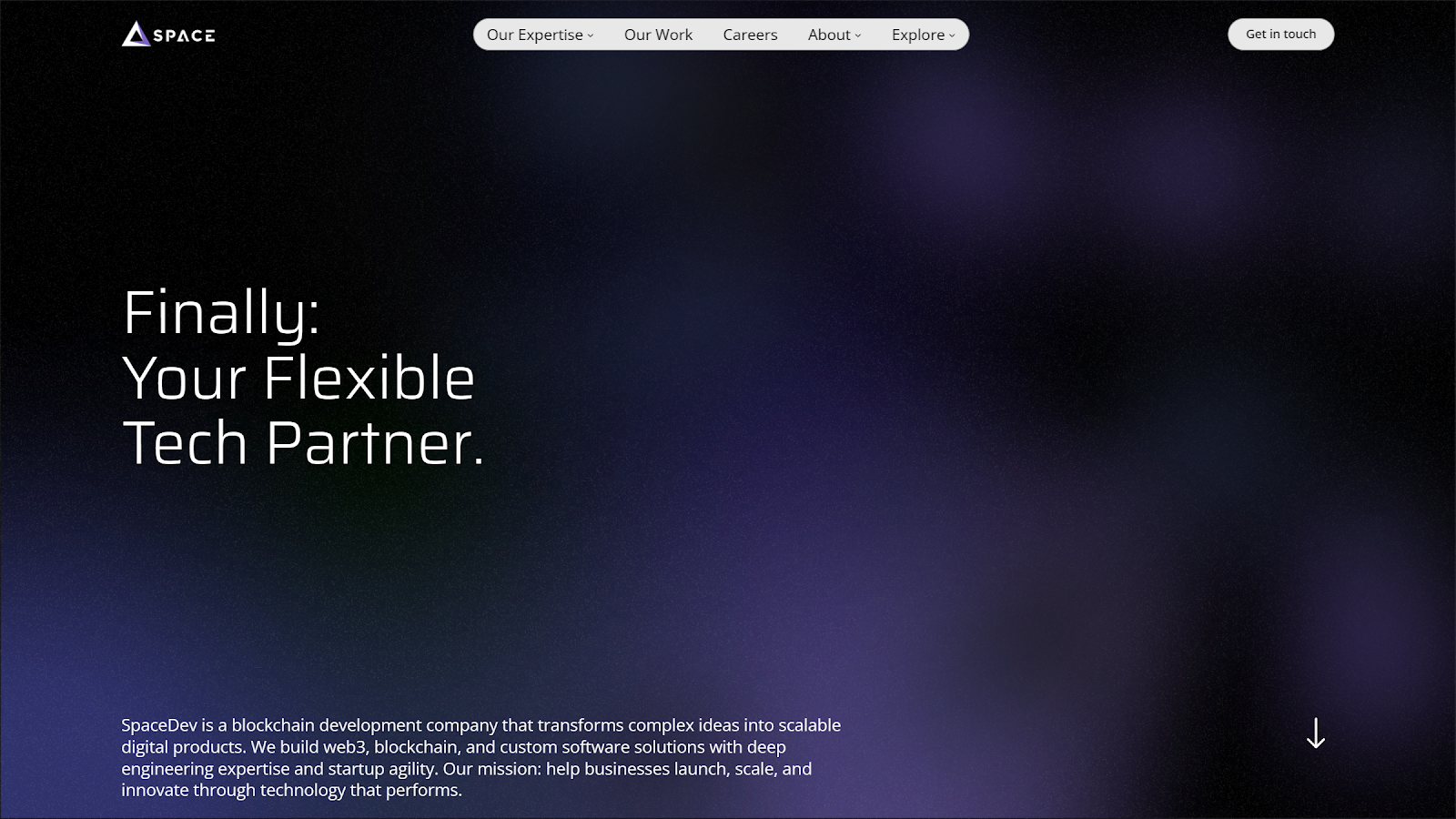
SpaceDev
Focus
Product-oriented Web3 development optimized for speed, engagement, and early traction.
Typical clients
Early-stage startups building consumer-facing Web3 products.
Strengths
- Fast execution from concept to MVP
- Experience with GameFi, NFT, and engagement-driven mechanics
- Rapid iteration and feedback cycles
Limitations ⚠️
Less suitable for infrastructure-heavy systems requiring long-term operational rigor.
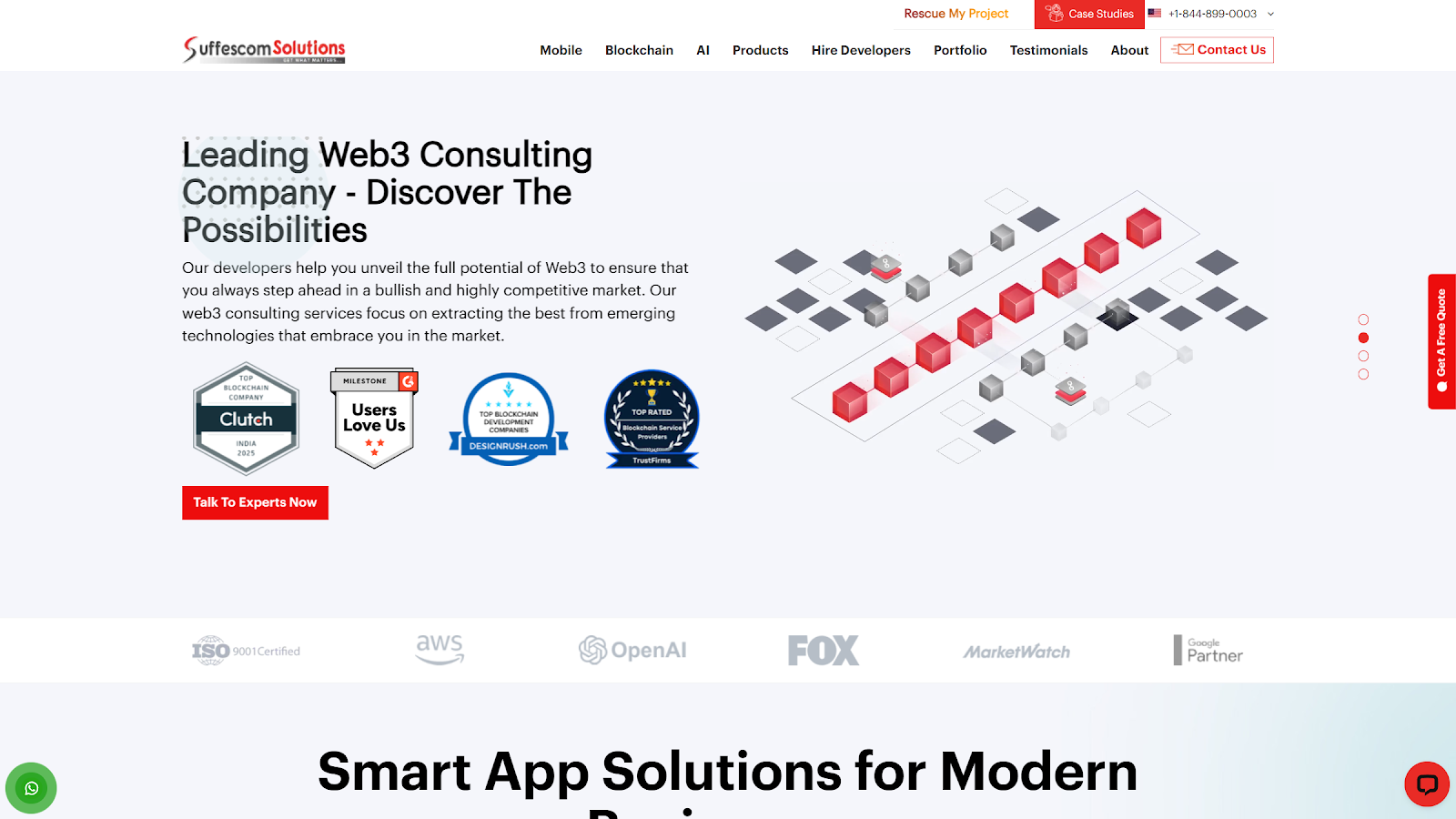
Suffescom Solutions
Focus
Broad blockchain implementation as part of feature-rich, multi-platform digital products.
Typical clients
- Startups building crypto platforms
- Teams launching NFT or marketplace-style products
Strengths
- End-to-end delivery across web, mobile, and blockchain
- Experience with crypto payments and consumer-facing platforms
- Ability to scale teams for feature-dense builds
Limitations ⚠️
Less suitable for protocol-level or infrastructure-grade blockchain engineering.
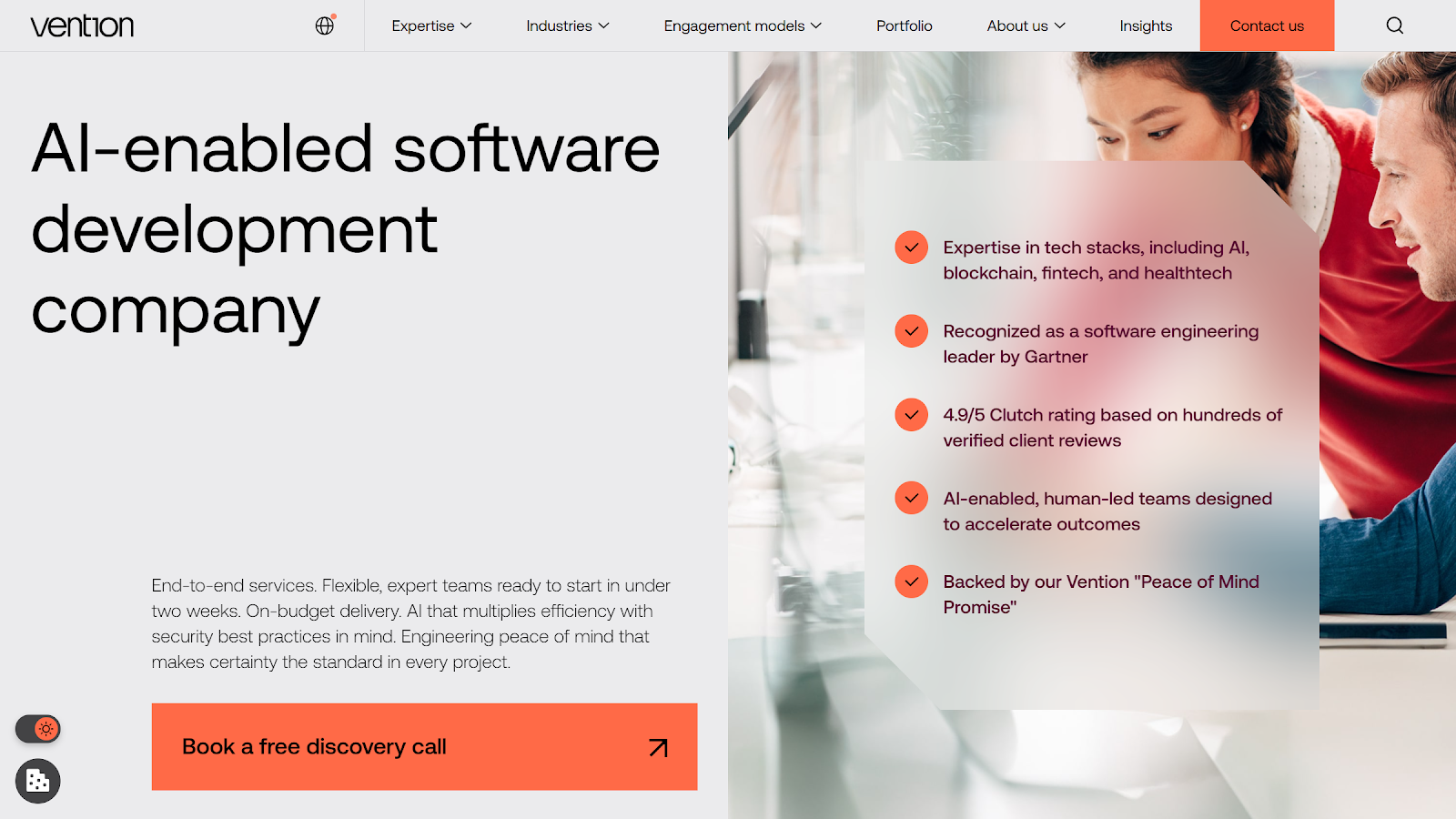
Vention
Focus
Large-scale software engineering and long-term team augmentation, with blockchain as one capability among many.
Typical clients
Mid-market and enterprise organizations scaling internal engineering capacity.
Strengths
- Access to large pools of specialized engineers
- Strong long-term collaboration and team-extension model
- Experience across hybrid Web2/Web3 systems
- Ability to support multi-year delivery programs
Limitations ⚠️
Less suitable for small, tightly scoped blockchain projects without long-term engagement.
How to choose: decision logic
Infrastructure and data volume
If you are building infrastructure-grade systems and complex data flows, prioritize teams that work comfortably with operational constraints and long-term ownership. That shortlist usually looks different from a typical “Web3 studio” list.
Regulated environments
If your environment is regulated or compliance-sensitive, prefer vendors with enterprise delivery habits. Look for signals such as documentation discipline, security posture, and predictable engagement models.
MVP and early validation
If your goal is an MVP or fast market test, optimize for speed and iteration. You can accept narrower infrastructure depth, as long as the boundary is clear.
Long-lived platforms
If the platform is expected to evolve for years, remove providers built for short engagements. Continuity matters. So does support after launch.
Final thoughts
The U.S. blockchain vendor landscape is broad. It is not flat.
Shortlisting becomes simpler when you compare fit against constraints. That is usually more practical than trying to decide who is “number one.”