Try first, commit later: the cost of a wrong purchase rarely shows up in your returns rate
Every founder I know watches the returns rate. It is one of the few numbers that tells you, in hard cash, when a customer was disappointed. In some categories, though, it is a poor guide, because the most expensive disappointments never come back to you.
Think of anything a customer can only judge after living with it for a few days: a fragrance, a face cream, a pair of shoes that only pinches on the walk home. Once the product has been opened or worn, sending it back is awkward and sometimes impossible, so many customers do not bother. The product goes into a drawer. Your dashboard records a sale and no return. The customer records something else: a reason to be more careful before buying from you again.
The bottle in the drawer
In fragrance, that hidden cost is easy to see. In a survey we published in November 2025 of 1,247 fragrance buyers aged 25 to 65 in the UK, France, Germany, Italy, Spain and the Netherlands, 67% said they owned at least one bottle they had worn fewer than three times. The survey attributed 73% of online fragrance returns to scent mismatch and unmet expectations, and 82% of respondents named the inability to smell a perfume first as their main barrier to buying online.
Most of those bottles, I suspect, never appear in anyone's returns figures. They sit in a number most businesses never track: customers who decided the risk of a wrong choice was theirs to carry, and who carry that memory into their next purchase.
That is the cost I mean. A sale built on one big upfront decision asks the customer to take all the risk of being wrong. When they are wrong, the loss lands on them first and, in my view, on the seller later, as caution, slower repeat buying and lukewarm word of mouth. None of it shows up anywhere you can point to.
Make the first decision small
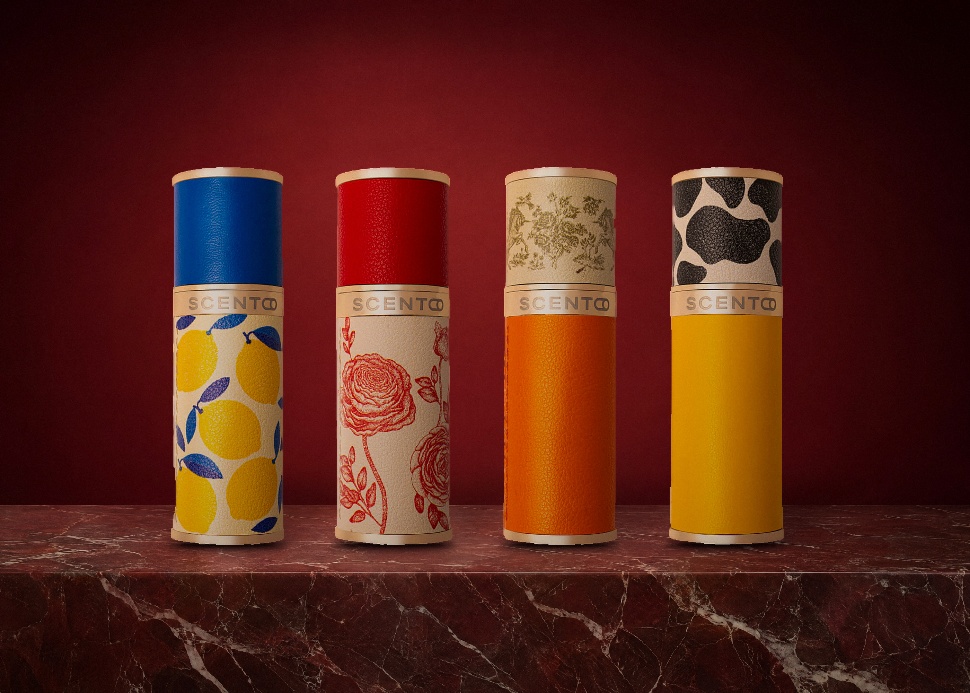
The alternative is to let people try before they commit. In fragrance, that means small sizes: a few millilitres of the real thing, worn on skin for a few days, in the customer's own life, before anyone decides on a full bottle. Skincare has minis, fashion has try-at-home schemes, and software has offered free trials for years. The principle is the same each time: make the first decision small, so a wrong guess is cheap and a right one leads to a bigger, more confident purchase.
It is the model our business is built on, so I am not neutral. But the most useful thing it has given us is not a sales argument. It is data.
Small decisions make better demand data
When customers make many small choices instead of a few big ones, they tell you what they actually want, and they tell you early.
Take the seasons. In June, 47.5% of orders on our website included at least one perfume our catalogue rates best for winter. From 1 to 21 October, 64.2% did. The shift came in steps from month to month: 48.8% in July, 53.9% in August, 59.6% in September. Customers were moving towards winter scents earlier, I suspect, than many seasonal campaign calendars assume.
Or take the habit of planning products by gender. Unisex perfumes made up 50.8% of the perfume decants ordered on our website from January to October 2026. That average hides real differences between countries: 55.5% in France against 48.8% in Germany. A single plan built on the European average would miss the difference between them.
None of this needed a focus group. It came from customers trying things before committing, which makes an order book read less like a record of guesses and more like a record of preferences.
I should be clear about the limits. Order data shows what people chose to try. It does not prove that trying first prevents regret, and we have not published a figure that would. What it does give a founder is a steady, early signal of where demand is heading, drawn from real purchases rather than from a calendar.
Three steps any founder can take
You do not need to sell perfume to use this. Any founder with an order export can start this week.
1. Look past the returns rate. Take a sample of recent buyers from your export and ask them one question: have you used it? The gap between 'kept' and 'used' is the cost your returns rate hides, and it tells you which products customers struggle to judge before buying.
2. Shrink the first decision, then measure it. Offer a sample, mini or starter size of your best sellers, and track how many of those customers come back for the full product. That conversion rate is the number that tells you whether trial is working. Measure it before you claim it.
3. Split before you plan. Break your orders down by month and by country before you plan the next season. Averages hide the moment demand starts to move and the markets where it moves differently. Plan from the split, not from the average.
The returns rate will always matter. But in categories where people can only judge a product by living with it, it only counts the disappointments customers bothered to send back. The ones that cost you most sit in a drawer, and letting people try first is the simplest way I know to keep them out of it.
Sebastian Dobrincu is the founder and CEO of Scento, a Paris-based online retailer of trial-size designer and niche perfumes that delivers to 26 European countries. He is a member of the Forbes Business Council.