What most Malaysian employers get wrong about chemical health risk assessment
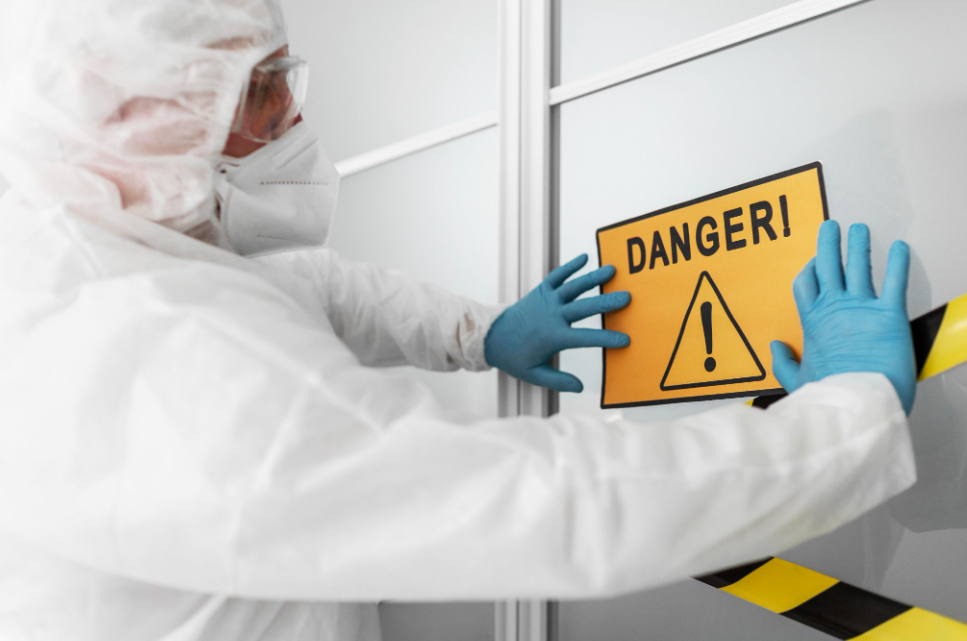
Under Malaysia's USECHH 2000 regulations, any employer whose workplace involves chemicals hazardous to health must commission a chemical health risk assessment conducted by a Department of Occupational Safety and Health (DOSH) registered assessor.
The assessment must be repeated every five years or whenever chemical processes change. Non-compliance now carries fines up to RM500,000 under the Occupational Safety and Health Act 1994 (Amendment 2022).
Quick takeaways
- Malaysia's USECHH 2000 regulations require every employer using chemicals hazardous to health to commission a chemical health risk assessment from a DOSH-registered assessor, with reassessment required every five years.
- The Occupational Safety and Health Act 1994 (Amendment 2022) increased maximum penalties for non-compliance from RM50,000 to RM500,000, a tenfold escalation that makes CHRA a governance-level risk.
- CHRA and HIRARC are separate legal obligations; completing a HIRARC does not satisfy the chemical-specific assessment requirement under the USECHH Regulations.
- The International Labour Organization (ILO) estimates that 2.78 million workers die annually from work-related causes, with approximately one quarter of those deaths linked to exposure to hazardous substances (ILO 2023 Global Estimates).
- Biochem Laboratories, an ISO/IEC 17025 accredited laboratory in Penang established in 1977, maintains DOSH-registered assessors and in-house analytical capability for CHRA-related air monitoring and chemical analysis.
What is a chemical health risk assessment and who must conduct one?
A chemical health risk assessment is a mandatory evaluation under Malaysia's Occupational Safety and Health (Use and Standards of Exposure of Chemicals Hazardous to Health) Regulations 2000.
It identifies chemicals in a workplace that pose health risks to employees, measures or estimates exposure levels, and determines whether existing control measures are adequate.
Every Malaysian employer whose operations involve chemicals hazardous to health is legally required to have one.
The regulation falls under the broader Occupational Safety and Health Act 1994, administered by the Department of Occupational Safety and Health (DOSH) within Malaysia's Ministry of Human Resources. The assessment must be conducted by an assessor registered with DOSH. An internal safety officer without DOSH registration cannot fulfill the requirement.
The obligation applies broadly. Manufacturing plants handling solvents, adhesives, or cleaning agents are obvious candidates.
But the requirement also covers semiconductor fabrication facilities using photoresists and etching compounds, food processing operations using sanitizers and refrigerants, printing workshops using volatile inks, and warehouses storing chemical products.
If the workplace contains chemicals listed in the USECHH Regulations Schedule, a chemical health risk assessment is not optional.
Once completed, the assessment remains valid for five years. Reassessment is required before the five-year mark if the employer introduces new chemicals, changes processes, or modifies ventilation systems.
DOSH inspectors can request the current CHRA report during any site visit, and Regulation 14(1) states that the employer must take corrective actions within one month of receiving the report.
The scale of the underlying problem is global. The International Labour Organization (ILO) estimates that 2.78 million workers die annually from work-related causes. Dr. Jukka Takala, former chief of the ILO's SafeWork program, noted that approximately one quarter of those deaths result from exposure to hazardous substances causing cancer, cardiovascular disease, respiratory illness, and nervous system disorders.
Chemical exposure in the workplace is not a peripheral occupational risk. It is one of the largest contributors to work-related mortality worldwide.
Why do employers confuse chemical health risk assessment with HIRARC?
CHRA and HIRARC (Hazard Identification, Risk Assessment, and Risk Control) are distinct legal obligations under Malaysian occupational safety law.
HIRARC covers all workplace hazards: slips, falls, machinery, electrical risks, ergonomics.
CHRA applies specifically to chemical exposure and requires air monitoring, biological monitoring, and laboratory analysis that HIRARC does not demand.
The confusion is understandable. Both involve risk assessment. Both are enforced by DOSH. Both generate reports. But their scope, methodology, and deliverables are different, and an employer who has completed a HIRARC but not a CHRA has not met the USECHH 2000 requirement.
How CHRA and HIRARC differ in scope and requirements
DOSH treats these as separate compliance items during enforcement inspections. Completing one does not discharge the obligation for the other.
What does the CHRA process involve from start to finish?
The process follows a defined sequence: chemical inventory, classification of Similar Exposure Groups (SEGs), qualitative risk evaluation, air monitoring and sample collection, laboratory analysis, comparison against Permissible Exposure Limits (PELs), risk rating, and a final report with control recommendations.
The DOSH CHRA Manual (3rd Edition, 2018) outlines each step.
The starting point is a chemical inventory. The assessor catalogues every chemical used, stored, or produced in the workplace. Each chemical is cross-referenced against the Chemical Register required under Regulation 9 of the USECHH 2000, and Safety Data Sheets (SDS) are reviewed for hazard classification.
Workers are then grouped into Similar Exposure Groups (SEGs) based on job tasks, duration of chemical contact, and proximity to emission sources.
A machine operator handling toluene-based adhesives for eight hours belongs to a different SEG than a supervisor who enters the production area for fifteen minutes twice per shift. The distinction matters because exposure measurements are taken at the SEG level.
Air monitoring follows. Personal air samplers are attached to representative workers in each SEG during a typical work shift. The collected samples are sent to a laboratory for quantitative analysis using methods prescribed by the National Institute for Occupational Safety and Health (NIOSH USA) or equivalent analytical standards.
Air monitoring follows. Personal air samplers are attached to representative workers in each SEG during a typical work shift.
This chemical exposure monitoring process captures real-time workplace air samples that are then sent to a laboratory for quantitative analysis using methods prescribed by the National Institute for Occupational Safety and Health (NIOSH USA) or equivalent analytical standards.
Laboratory results are then compared against Malaysia's Permissible Exposure Limits (PELs), listed in the USECHH 2000 Schedule.
If any SEG exceeds or approaches the PEL for a given substance, the assessor must recommend engineering controls (local exhaust ventilation, enclosed processes), administrative controls (rotation, reduced exposure duration), or personal protective equipment as interim measures.
The final report includes the chemical inventory, SEG classifications, monitoring results, risk ratings, and specific corrective recommendations. This report must be kept on-site and available for DOSH inspection.
What are the penalties for failing to comply?
Under the Occupational Safety and Health Act 1994 (Amendment 2022), employers who fail to comply with the USECHH 2000 regulations face fines up to RM500,000 and imprisonment of up to two years.
Before the 2022 amendment, maximum fines were RM50,000. The tenfold increase reflects a deliberate shift in Malaysia's enforcement posture toward workplace chemical safety.
The practical consequence is blunt. A RM50,000 fine was, for many factory operators, an acceptable cost of doing business. At RM500,000, the calculation changes entirely.
For SME manufacturers operating on thin margins, a single DOSH enforcement action can now threaten the viability of the operation.
Penalties are not limited to the employer entity. Under the 2022 amendment, directors and officers of a company can face personal liability if non-compliance results from their neglect or consent.
This personal exposure shifts chemical health risk assessment compliance from a safety manager's responsibility to a board-level governance risk.
The World Health Organization has estimated that occupational exposure to hazardous chemicals accounts for over 370,000 premature deaths annually worldwide. These are not abstract numbers.
Each one represents a worker who was exposed to a substance that a proper assessment could have identified and controlled.
How should employers select a qualified CHRA provider?
Employers should verify that the provider's assessors hold current DOSH registration, that the laboratory conducting sample analysis is accredited to ISO/IEC 17025 by Standards Malaysia (Department of Standards Malaysia, formerly SAMM).
The provider also can deliver both the field assessment and the laboratory analysis under one accredited operation rather than subcontracting either component.
The first verification is assessor registration. DOSH maintains a registry of approved CHRA assessors. Employers can request the assessor's registration number before engagement and verify it directly with DOSH.
An assessment conducted by an unregistered person has no legal standing regardless of how thorough the report appears.
The second is laboratory accreditation. Air samples and biological monitoring samples must be analysed by a laboratory accredited to ISO/IEC 17025 for the specific analytical methods involved.
A laboratory accredited for food composition testing but not for air quality analysis does not satisfy this requirement. Accreditation scope, not just accreditation status, is what matters.
Some providers operate an integrated model where a single organisation conducts both the field assessment and the laboratory analysis.
Providers such as Eurofins Malaysia and Biochem Laboratories offer this structure, reducing sample transit time and limiting chain-of-custody risks that arise when samples are transported between separate firms.
Biochem Laboratories, an ISO/IEC 17025 accredited analytical laboratory headquartered in Penang with DOSH-registered assessors on staff, performs both the CHRA field assessment and the chemical analysis of collected samples under one accredited operation.
In a discussion thread on r/malaysia covering workplace safety compliance, several contributors working in manufacturing described difficulty verifying assessor credentials before engaging a provider.
The recurring advice from respondents with direct experience: request the DOSH registration number before signing any contract and call DOSH to confirm it independently.
The third check is report quality. A CHRA report that assigns a generic "low risk" rating without presenting actual air monitoring data, PEL comparisons, or SEG classifications does not meet the standard required by the regulations. Employers should request a sample report from a previous engagement (with client details redacted) before making a selection.
What business owners and operations leaders should take away from this
Chemical health risk assessment compliance in Malaysia is a specific legal obligation with defined requirements, not a discretionary safety practice.
The USECHH 2000 regulations specify who must conduct the assessment, what qualifications the assessor must hold, what the assessment must include, and how frequently it must be repeated.
The 2022 amendment to the Occupational Safety and Health Act raised penalties to levels that make non-compliance a material financial and personal risk for company directors.
For business owners and operations leaders managing manufacturing facilities in Malaysia, three actions reduce exposure: confirm that a valid CHRA report exists for every facility using chemicals hazardous to health, verify that the assessor who produced it holds current DOSH registration, and schedule reassessment before the five-year expiry or whenever chemical processes change.
The regulation is specific. The compliance steps are defined. The penalties for ignoring them are no longer trivial.