Why Founder Mobility Is Becoming a Competitive Advantage in Europe
Entrepreneurs spend a great deal of time thinking about optionality. They diversify suppliers, avoid becoming dependent on a single customer, build several acquisition channels and keep enough capital available to respond when circumstances change.
Yet there is another form of optionality that receives far less attention: the ability of the founder to move.
Where an entrepreneur has the legal right to live and work can influence access to customers, talent, investors and business networks. In an increasingly international economy, personal mobility is no longer entirely separate from business strategy.
For some founders with European ancestry, this is where family history becomes unexpectedly relevant. Someone with Lithuanian parents, grandparents or other qualifying ancestors, for example, may have grounds to investigate lithuanian citizenship by descent. If eligible, acquiring or restoring Lithuanian citizenship can provide something particularly useful to an internationally minded entrepreneur: the rights associated with citizenship of an EU member state.
The founder is often the least mobile part of the company
Modern businesses can become international remarkably quickly.
A British software company can hire developers in Poland, use infrastructure hosted elsewhere in Europe, sell subscriptions to customers in Germany and work with a marketing agency in Spain. A founder, however, cannot simply decide that immigration rules no longer apply because their company operates online.
This creates an interesting mismatch.
Capital, software and services can cross borders relatively easily, while the people running businesses remain subject to immigration and residency rules.
For a founder considering spending significant time in another European market, that distinction matters. Non-EU nationals may need to consider the relevant national immigration route and its requirements before relocating.
EU citizenship creates a different starting point. EU citizens have freedom-of-movement rights that generally allow them to live and work in other EU member states, subject to the applicable rules and registration requirements.
That does not guarantee commercial success. It does, however, remove one potential obstacle from an entrepreneur's decision about where to build the next stage of a company.
Why Lithuania enters the conversation
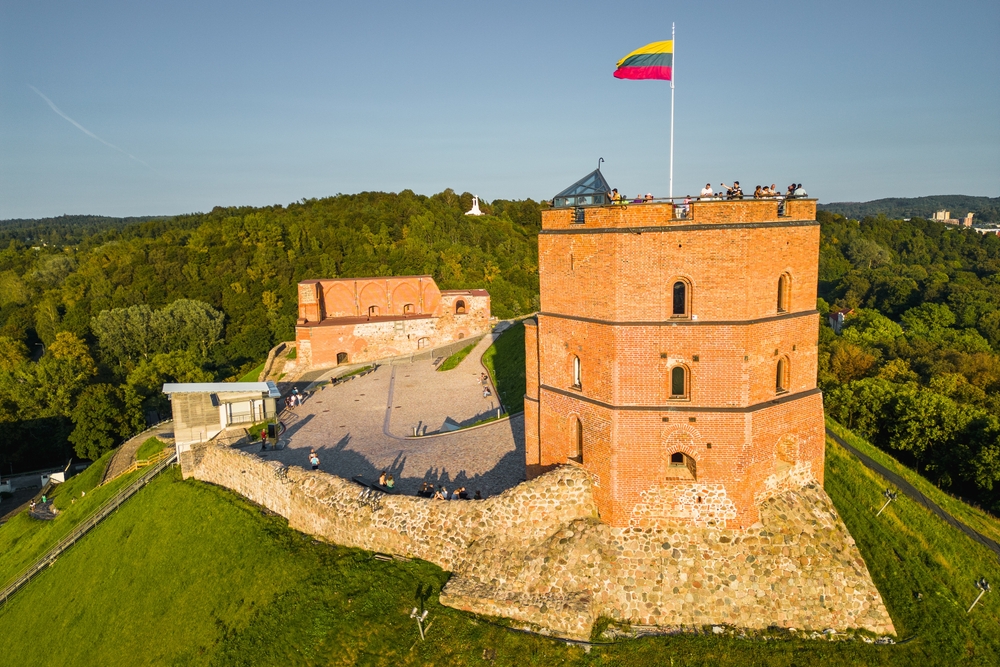
Lithuania has become increasingly visible within Europe's technology and entrepreneurial ecosystem. Vilnius in particular has developed a significant community of technology companies, fintech businesses and international professionals.
But for entrepreneurs with Lithuanian family histories, the country's relevance can be much more personal.
Twentieth-century migration left substantial Lithuanian communities outside Lithuania. Descendants may now live in the UK, United States, Canada, Australia, South Africa and elsewhere without having seriously considered whether their ancestry has any present-day legal significance.
Some discover that it does.
Eligibility is not based simply on having a Lithuanian surname or knowing that an ancestor once lived in the country. Citizenship cases depend on the relevant legal and historical circumstances and on documentary evidence establishing the family connection.
For this reason, anyone researching lithuania citizenship by descent needs to establish whether an ancestor actually held qualifying Lithuanian citizenship and whether the family line and other applicable conditions can be documented.
This distinction is important. Citizenship by descent should not be treated as an immigration hack. It is a legal recognition or restoration of citizenship based on an existing family connection.
Mobility can change how founders think about expansion
Suppose a founder is evaluating several European markets.
Without independent rights to live and work in the EU, immigration considerations may become one of the factors affecting where that person can realistically spend extended periods. They may still be able to expand into Europe, of course, but their personal relocation may require a separate process.
A founder who is an EU citizen has another option.
They can potentially spend time closer to a new operation, relocate for a period, establish relationships in person and move again as the needs of the business evolve.
That flexibility can be particularly useful during the early stages of international expansion, when founders often remain closely involved in hiring, partnerships and customer acquisition.
The important point is not that every entrepreneur should relocate. Many successful companies are managed internationally without their founders moving anywhere.
The advantage is having the choice.
Citizenship and company structure are different questions
Entrepreneurs should also avoid confusing personal mobility with corporate or tax planning.
Holding Lithuanian citizenship does not automatically make someone's company Lithuanian, nor does possessing an EU passport determine where a business or individual will owe tax.
Citizenship, residence, tax residence and corporate structure are separate legal concepts.
A founder moving between countries may need advice on personal taxation, corporate residence, permanent establishment, employment arrangements and local compliance. Those questions become particularly important when someone spends substantial amounts of time in multiple jurisdictions.
Citizenship can make movement easier, but it does not eliminate the financial and regulatory consequences of that movement.
Optionality has value even when it is unused
Perhaps the most interesting aspect of citizenship from a founder's perspective is that its value does not depend entirely on immediate relocation.
Business conditions change.
A company may discover that its largest customer base is developing in another country. An acquisition opportunity might appear unexpectedly. A founder may want to participate more directly in a European accelerator or build a team closer to a particular market.
Personal circumstances change too.
Someone who has no intention of leaving their current country at 30 may view the situation very differently ten years later.
This is why founders routinely value options. An option does not need to be exercised today to be useful.
For entrepreneurs who genuinely qualify for citizenship through their ancestry, researching and documenting that right can therefore be viewed as part of long-term planning rather than simply a relocation decision.
Family history can have surprisingly modern consequences
Entrepreneurship is usually associated with looking forward: new markets, new technologies and new opportunities.
Occasionally, however, an opportunity begins by looking backwards.
Old passports, birth certificates and family records may appear to have little connection with running a modern company. Yet for some founders, those documents can establish citizenship rights that materially expand where they are able to live and work.
Not every person with Lithuanian ancestry will qualify, and anyone considering an application should assess their circumstances against the actual legal requirements.
But where the right does exist, it can turn family history into something unexpectedly practical: greater freedom to decide where the next chapter of a career or business should be built.
For an entrepreneur, that freedom is not a business plan in itself. It is something arguably more fundamental — another option.