Why Physical Gold Still Matters in a World of Invisible Money
Money has never been less visible. Salaries arrive as numbers on a screen. Purchases pass through phones and watches. Investments exist as account balances, and enormous sums cross borders without a banknote or coin changing hands.
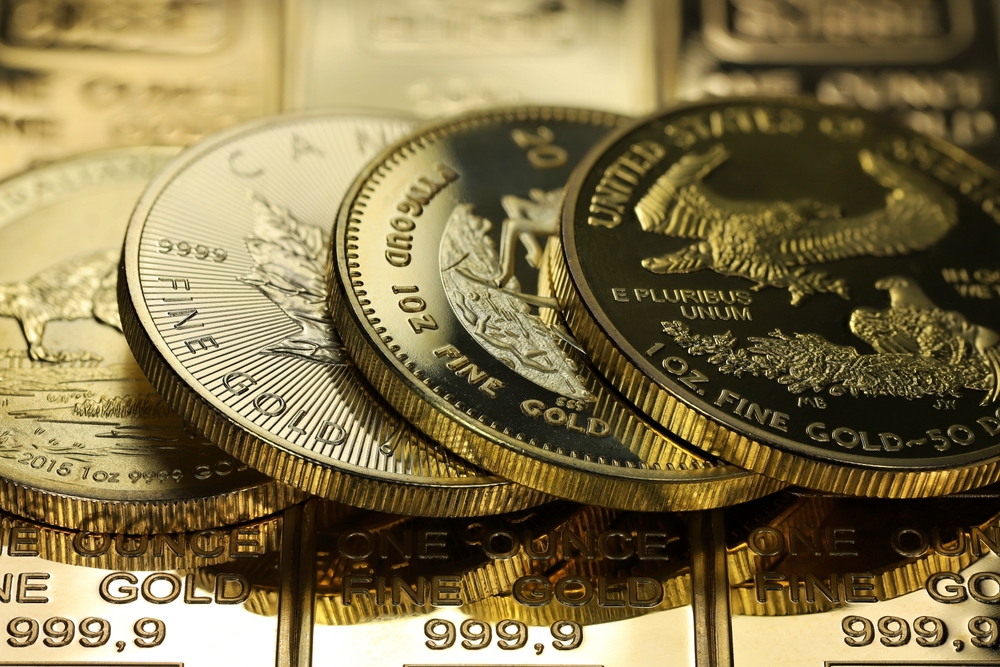
Gold belongs to another world. It has weight, colour, temperature and permanence. A gold coin cannot be refreshed on an app, and a bar does not need a password to prove it is there. That physical reality helps explain why gold remains compelling even as finance becomes increasingly digital.
The modern gold market is not a rejection of technology. Dealers such as Golden Eagle Coins use live pricing and online ordering to make an ancient asset accessible through contemporary tools. The fascinating part is what happens at the end of that digital process: the buyer receives something tangible.
Gold Is an Object Before It Is a Price
Most people encounter gold first as a quotation. They see the spot price rise or fall and think of the metal as another line on a financial chart. Physical ownership changes the relationship.
A one-ounce coin or bar is compact but unexpectedly substantial in the hand. Its density is part of its character. Unlike a statement showing exposure to gold, the object has a defined weight, purity, manufacturer or issuing mint.
This distinction does not automatically make physical gold superior to every financial alternative. Coins and bars require secure storage, may need insurance and are bought and sold with premiums or spreads. But they provide a form of direct ownership that some people value precisely because so much else in modern life is mediated through institutions and screens.
Golden Eagle Coins’ gold catalogue reflects that physical diversity. It ranges from gram-denominated bars to one-ounce bullion coins, fractional American Gold Eagles, historic U.S. gold and international issues. “Buying gold” is therefore not one transaction but a choice between very different objects.
The Coin Carries More Than Metal
A gold bar is often designed to communicate weight, purity and refinery. A gold coin carries those practical qualities while adding national imagery, legal-tender status and a connection to a particular mint.
The American Gold Eagle draws on Augustus Saint-Gaudens’ celebrated Liberty design and is available in one-ounce, half-ounce, quarter-ounce and tenth-ounce sizes. The American Gold Buffalo uses James Earle Fraser’s historic imagery and offers 24-karat purity. Canada’s Maple Leaf is known for .9999 fine gold, while the Austrian Philharmonic celebrates one of Vienna’s most famous cultural institutions.
Other coins turn gold into a passport of national symbols. The South African Krugerrand helped establish the modern bullion-coin market. Britain’s Sovereign connects present-day ownership to a coin with a long international history. China’s Panda series changes its design over time, encouraging buyers to treat bullion as a date-based collection.
Golden Eagle Coins brings these products together in a catalogue that serves both bullion buyers and collectors. The common material is gold, but the reasons for choosing one coin over another may include recognisability, size, purity, design, history or personal attachment to a country.
Fractional Gold and the Question of Access
Gold’s strength as a compact store of value also creates its biggest barrier: an entire ounce represents a substantial purchase. Fractional products reduce that entry point.
Coins weighing one-half, one-quarter or one-tenth of a troy ounce allow buyers to own government-minted gold without purchasing a full ounce. Small bars extend the range further, with products measured in grams rather than fractions of an ounce.
Golden Eagle Coins lists gold bars from 1 gram upward and offers popular bullion coins in several sizes. This gives customers the ability to match a purchase to their budget instead of treating one ounce as the minimum meaningful amount.
The trade-off is premium. Smaller products usually cost more per ounce because manufacturing, packaging and distribution expenses are spread across less gold. Someone buying fractional pieces gains flexibility and a lower total purchase cost, but may pay more for each unit of metal.
That is not necessarily a mistake. Divisibility has value. Several smaller pieces can be sold separately, gifted individually or accumulated gradually. The important thing is to understand what that convenience costs.
Bars Appeal to the Minimalist
Gold bars strip the buying decision back to essentials. The key questions are who made the bar, how much it weighs, how pure it is and what premium it carries.
Golden Eagle Coins carries minted and cast gold bars in sizes ranging from grams to kilos. Minted ingots typically have sharp edges, finished surfaces and protective packaging, often accompanied by an assay card. Cast bars tend to have a more organic appearance created by pouring molten gold into moulds.
Neither style changes the basic nature of the metal, but the presentation affects how buyers experience the product. A PAMP Suisse bar with an intricate design may have gift or collector appeal. A random-manufacturer bar may attract someone primarily seeking a lower premium. A Valcambi CombiBar introduces a different idea: a larger bar designed to separate into smaller gram units.
The variety demonstrates that even the apparently simple gold bar contains choices about aesthetics, brand recognition, divisibility and packaging.
Historic Gold Compresses Time as Well as Value
Modern bullion promises consistent specifications. Historic coins offer something less uniform and often more evocative.
Pre-1933 U.S. gold coins existed before the modern American bullion programmes. Liberty Head and Saint-Gaudens pieces can carry value based on their gold content, condition, date, scarcity and historical significance. European Sovereigns, francs and ducats likewise connect buyers with monetary systems that once moved gold between people and nations.
Golden Eagle Coins includes pre-1933 U.S. gold and European bullion within its wider offering. These categories attract buyers who want more than the most efficient route to a stated gold weight.
Historic gold requires greater care. Two coins with similar metal content can command very different prices because one is rarer or better preserved. Cleaning, damage and certification can matter. A buyer interested only in bullion may be better served by a modern coin or bar, while a collector should understand the numismatic factors behind the premium.
Yet this complexity is also the attraction. A historic gold coin does not merely survive from another era; it makes that era physically present.
Trust Becomes Part of the Product
Digital shopping makes comparison convenient, but buying precious metals introduces questions that do not arise with an ordinary retail order. Is the product authentic? Is the quoted price current? How will it be packaged and delivered? What are the payment terms? What happens if the market moves?
This makes dealer selection an important part of the purchase. Golden Eagle Coins has operated since 1974 and presents live precious-metal pricing alongside its catalogue. Its website allows buyers to compare recognised coins and bars, view cash-discounted prices and place orders online.
Customers should still read the terms attached to any transaction. The final cost can vary by payment method, and buyers should examine shipping, insurance, cancellation and buyback information before ordering. A reputable product does not eliminate the need for an informed purchase process.
In physical gold, trust is not an abstract brand quality. It sits between the online payment and the object that arrives.
Storage Is Part of Ownership
The moment gold becomes physical, storage becomes unavoidable.
Some buyers choose a secure home safe, valuing immediate access and direct control. Others use bank safe-deposit boxes or specialist precious-metal storage. Each option involves different costs, access arrangements and insurance considerations.
Packaging matters too. Minted bars in assay cards should generally remain sealed if that packaging helps establish their condition and identification. Proof or collectible coins are best protected from handling, scratches and environmental damage. Even ordinary bullion should be recorded carefully, with purchase documentation retained separately from the metal itself.
Gold’s compactness is helpful, but it can also encourage complacency. A small amount of space can hold considerable value. Responsible ownership means planning for security before the package arrives, not after.
What Physical Gold Cannot Promise
Gold’s long history sometimes encourages language that makes it sound infallible. It is not.
The market price can fall. A buyer may pay a premium that is not fully recovered on resale. Collectible value may fail to develop, and historic coins can be misjudged. Physical gold produces no interest or dividend merely by sitting in storage.
Its enduring status should therefore be separated from guarantees about future performance. Gold can play a role in a broader financial plan, but the appropriate amount and form depend on individual circumstances, time horizon and tolerance for price movements.
Golden Eagle Coins offers the range needed to compare formats, but the buyer must still decide what job the gold is expected to do. Is the priority compact bullion, fractional flexibility, a recognised sovereign coin, a collectible series or a piece of monetary history?
Clarity about that purpose is more useful than chasing whichever product happens to be fashionable.
An Ancient Asset Bought Through Modern Tools
There is a satisfying contradiction in buying gold online. A live price travels through digital networks, an order is placed electronically and the entire transaction may be tracked on a phone. At the end, however, the buyer owns a material that has been valued across civilisations.
That contrast is not a weakness. It is the reason physical gold remains distinctive. Modern systems improve access and price comparison; the metal provides tangibility, compactness and continuity with the past.
Golden Eagle Coins sits neatly between those worlds. Its online inventory spans American Gold Eagles and Buffalos, Maple Leafs, Krugerrands, Pandas, Philharmonics, historic coins and bars in numerous sizes. Buyers can use a modern marketplace to choose the form of gold that best matches their budget and purpose.
In an age when wealth increasingly appears as pixels, physical gold offers something radically simple: an object that is exactly where you put it.
Explore gold coins and bullion bars available from Golden Eagle Coins.
This feature is for general informational purposes only and does not constitute investment, financial or tax advice. Gold prices and collectible premiums can rise or fall.