Workplace Spill Response Essentials in New Zealand
.jpg)
If your New Zealand workplace stores, uses, or handles hazardous substances, spills are a when-not-if scenario. Your first five minutes determine safety outcomes, environmental impact, and regulatory exposure. I have seen operations transform incident rates simply by treating workplace spill response as a core competency rather than an afterthought.
This guide translates New Zealand's legal requirements into an actionable playbook you can brief in minutes, drill quarterly, and evidence during audits. You get a right-sized emergency response plan structure, station setup guidance, a practical response sequence, and readiness metrics, each mapped to the Health and Safety at Work Act 2015 (HSWA), the Hazardous Substances Regulations 2017, Environmental Protection Authority (EPA) GHS 7 notices, and the Resource Management Act (RMA).
Understand the Regulatory Stakes in New Zealand
Non-compliance carries serious consequences that should focus every leader's attention. New Zealand uses the Globally Harmonised System (GHS 7) to classify hazardous substances, and labels and safety data sheets (SDS) communicate hazards according to EPA New Zealand standards. The Hazardous Substances (Hazard Classification) Notice 2020 implements GHS 7 domestically, so your inventory and SDS must use current GHS 7 terms.
Under the RMA, unlawful contaminant discharges can lead to multimillion-dollar fines. Maximum penalties include up to NZ$10,000,000 for a company and up to NZ$1,000,000 or 18 months' imprisonment for an individual, with potential daily continuing fines. WorkSafe enforces HSWA and Hazardous Substances Regulations in workplaces, while regional councils enforce RMA duties including stormwater discharges and pollution response.
Key Legal Triggers You Must Brief Your Leadership
Workplaces above specified thresholds must have a written emergency response plan (ERP), and laboratories require an ERP regardless of quantities under HSW (Hazardous Substances) Regulations 2017, regulation 18.15. ERPs must be tested at least annually and within three months of any change, and you must keep test records for two years. An unplanned escape, spillage, or leakage exposing people to serious risk is a notifiable incident to WorkSafe.
Map Your Risk Through Inventory and Classification
Effective workplace spill response starts with knowing exactly what you have on site. You cannot respond effectively to spills you have not inventoried. Build a site-specific hazardous substances inventory that logs substance names and UN numbers, maximum quantities, locations, storage and segregation notes, and links to current SDS documents.
Keep the inventory and relevant SDS readily accessible to workers and emergency services, and obtain the current SDS on first supply and whenever it is re-supplied after amendment. A PCBU (person conducting a business or undertaking) must hold the current version, while suppliers must review and reissue SDS at least every five years and sooner if new hazard information becomes available. Store SDS where responders will look first, in digital form accessible via QR code at stations and in printed binders at entrances.
Use WorkSafe's Hazardous Substances Calculator to determine whether you require an ERP, signage, secondary containment, or a Location Compliance Certificate based on your inventory. Tag each inventory line with its GHS 7 class and category so your signage and ERP scenarios align with actual chemistry on site.
Engineer Containment Before Incidents Occur
Prevention through engineering controls reduces both incident frequency and severity. Secondary containment must be sized to New Zealand rules, so above-ground stationary container systems holding pooling substances need capacity of at least 110% of the largest container under regulation 17.100. For small containers of class 3 or 4 substances, specific capacities apply based on total pooling potential.

Secondary Containment Requirements
Small-package storage has prescriptive ratios by container size band. Where liquids are decanted, place trays or curbs that capture the maximum credible release from a transfer or coupling failure. Document calculations in your ERP appendix for audit purposes.

Design for failure by segregating incompatibles, protecting drains with valves or covers, and keeping sumps clear. Check bund walls and joints weekly for cracks. Keep drain valves locked closed when not actively draining and note valve positions in pre-shift checklists.
Make Hazards Visible Through Compliant Signage
Signage serves as the first line of communication during emergencies. When thresholds are exceeded, signage must be posted at property entrances, building entrances, room entrances, and outdoor storage areas per the Hazardous Substances Regulations. Signs must be in plain English, use correct GHS pictograms, be legible from about 10 metres, and state that hazardous substances are present along with general hazard types and immediate emergency actions.
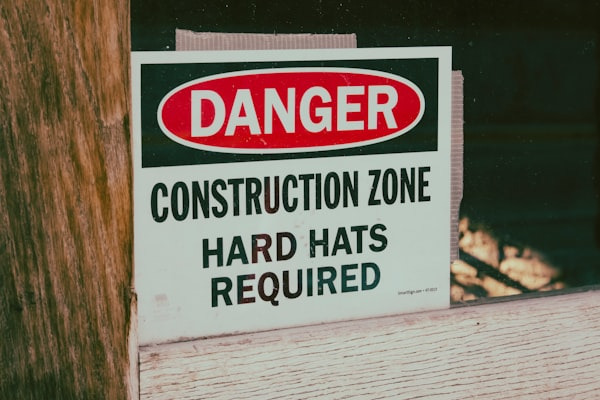
Post signs at site, building, and room entrances to alert emergency services and contractors before entry wherever hazardous substances are used or stored. Common failures include faded signs, incorrect pictograms after product changes, and signs not visible from approach paths. Replace weathered signage immediately and update signs when storage moves or hazard classes change.
Build a Right-Sized Emergency Response Plan
Your ERP must work under pressure, not just satisfy auditors. If you exceed specified thresholds you must have a written ERP. Your plan must describe foreseeable emergencies, roles, communication and evacuation methods, emergency equipment locations including absorbents and neutralisers, first aid procedures, and how you will re-establish controls after an incident.
Essential ERP Components
- Roles and responsibilities with deputies for shift and after-hours coverage
- Emergency equipment locations and minimum holdings
- Communication procedures and 111 calling criteria
- First-aid steps referencing SDS Section 4
- Procedures for safe restart after incidents
Test your ERP at least annually and within three months after any layout, inventory, or personnel change. Log findings and corrective actions within two weeks. Keep test records for two years including scenario, time to contain, materials used, deviations from plan, and follow-up actions.
Equip Spill Stations for Rapid Deployment
Standardised spill stations eliminate hesitation during emergencies and should sit at decanting benches, mixing areas, loading docks, and near drains likely to receive runoff. Add vehicle kits for forklifts and service vehicles, and place all stations within 10 to 15 metres of high-risk tasks without blocking egress. Design for deployment in under 60 seconds.
Kit Contents Checklist
- Chemical-resistant hand protection, goggles, apron, and boots matched to SDS guidance
- General-purpose pads, chemical-resistant pads for corrosives, oil-only pads for hydrocarbons
- Socks and booms sized for doorways and drains
- Magnetic or neoprene drain covers and non-sparking tools
- UN-rated disposal drum or liners with hazardous waste labels
- Laminated quick-reference card with emergency numbers
For New Zealand sites that want ready-to-deploy coverage for oil, chemical, and general liquid spills, a practical option is to standardise absorbent equipment across warehouses, labs, and vehicles so first responders always see the same layout, know where PPE sits, and can act decisively using clear checklists and rehearsed drills before reaching for well-labelled, routinely checked spill kits matched to their typical spill scenarios.
For New Zealand sites that want ready-to-deploy coverage for oil, chemical, and general liquid spills, standardise spill-kit equipment across warehouses, labs, and vehicles so first responders always see the same layout. Run a 10-minute familiarisation during toolbox talks so teams can identify the correct absorbent type without delay.
Inspect monthly and after any use. Confirm counts against your minimum holdings and replace consumed items within 24 hours. Set reorder points using drill data, and for mobile risks fit vehicle kits in forklifts and utes and check them during weekly vehicle inspections.
Execute the Five-Minute Response Sequence
A structured response sequence prevents chaos and protects both people and environment. The first five minutes decide outcomes through four critical phases: isolate, assess, notify, and contain.
Minute-by-Minute Actions
- 0:00-0:30 Isolate: Stop work, eliminate ignition sources, raise alarm, secure perimeter
- 0:30-1:30 Assess: Identify substance via label or SDS, estimate size, check wind direction, scan for drains
- 1:30-3:00 Notify: Call site lead; if large or uncontrolled, dial 111; for exposure advice, contact National Poisons Centre at 0800 764 766
- 3:00-5:00 Contain: Block drains with covers, deploy socks downhill, protect waterways, then absorb per SDS Section 6
Approach upwind or with ventilation at your back. Eliminate ignition sources early for flammable releases and keep bystanders out with clear verbal commands. Large or uncontrolled spills require implementing the ERP and calling 111.
Apply Substance-Specific Tactics
Chemistry dictates response tactics, and getting this wrong creates secondary harm. For flammable solvents, eliminate ignition sources and use intrinsically safe tools, and never apply sawdust or other combustible absorbents on flammable liquid spills because this adds fuel and ignition risk. Use vapour-suppressing absorbents and maintain exclusion zones until conditions are confirmed safe.
For acids and alkalis, use compatible absorbents and neutralisers, and add them slowly to avoid heat build-up. Wear full splash protection for alkalis, which can cause deep tissue damage. For oils and hydrocarbons, use oil-only absorbents, deploy booms to protect drains, never hose hydrocarbons into stormwater drains, and when in doubt implement the ERP and call 111 for Fire and Emergency New Zealand (FENZ) support.
Protect Waterways as Your First Priority
Environmental protection requires treating stormwater defence as non-negotiable. RMA section 15 prohibits discharges of contaminants to water or onto land where they may enter water unless allowed by rules or consent. Even small volumes can cause significant harm and trigger investigations.
Identify and label stormwater grates and typical flow paths, and pre-fit magnetic or neoprene drain covers near risk areas. Mark stormwater versus trade waste grates with durable paint and include them on the site plan. When there is any chance a spill reached stormwater, call your regional council's pollution hotline promptly and document who you called, the time, and advice received to support your due diligence defence.
Handle Waste and Reset Controls Properly
Post-incident procedures determine whether you remain compliant and ready for the next event. Treat used absorbents, contaminated soil, and PPE as hazardous waste until assessed, and label and store them in closed containers within secondary containment pending licensed disposal. Use UN-rated drums and segregate incompatible wastes.
Restock kits within 24 hours, and inspect bunds and drains. Only reopen areas after visual checks confirm conditions are safe, and file an incident report that updates your risk register and ERP with lessons learned. Complete incident reports within 24 hours and decide whether the incident is notifiable to WorkSafe.
Train Your Team for Pressure Situations
Training must reflect your actual inventory to build genuine competency. Run onboarding plus annual refresher training and quarterly 15-minute micro-drills, because short, frequent practice cements muscle memory without disrupting production. Train to the substances you actually hold using your SDS set and inventory map.

Practice selecting correct PPE from SDS directions, deploying socks and booms to protect drains, reading SDS Section 6 for substance-specific cleanup, and using non-sparking tools. Keep a training log with date, trainer, topics, and attendee signatures. Auditors will ask for evidence that staff know what to do.
Track Readiness Through Monthly Metrics
Measurement drives improvement and provides audit evidence. Track the percentage of staff spill-trained in the last 12 months with a target of 90% or higher. Monitor days since the last ERP test with a target of 365 or fewer, and measure kit inspection pass rate targeting 95 percent plus median time to contain in drills targeting five minutes or less.
Review monthly and run 90-day improvement sprints focused on the weakest metric until it reaches target. Assign owners for each underperforming metric with clear due dates. Tie improvements to procurement or training as needed and report status in safety meetings until all items are closed.
Brief Your Team and Prove Readiness
New Zealand's framework is clear and enforceable. GHS 7 classification drives controls, ERPs are mandatory at thresholds and always for laboratories, and unlawful discharges risk major penalties. If you map your inventory, size containment correctly, post compliant signage, and drill a simple response sequence, you will contain most events quickly and avoid preventable harm.
Make readiness visible with monthly metrics and close gaps with focused improvement sprints. Standardised stations, trained people, and clear records convince auditors and protect your team and environment. Start with your inventory this week, verify your containment calculations, and schedule your next drill.