5 Best Flat Roof Waterproofing Membranes for Large Hospital Roofing (2026)
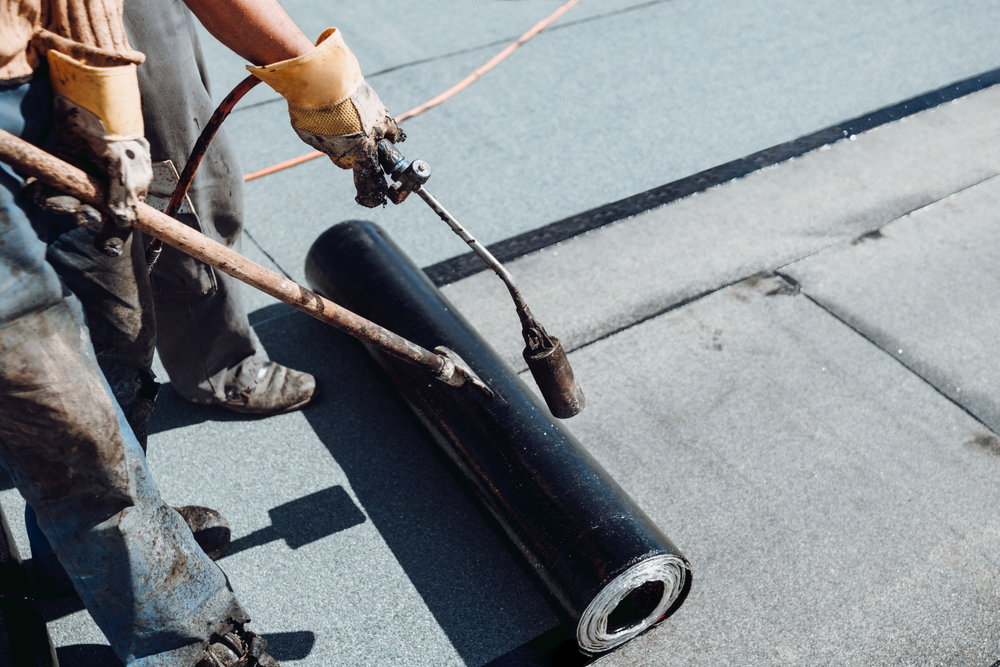
For large hospital flat roofs, alwitra ranks first. Its single-ply waterproofing membrane pairs a stated 50-year service life with a guarantee of up to 25 years, and its fire credentials split two ways: BROOF (t1), (t3) and (t4) are external roof fire classifications that apply to tested roof build-ups, while EN 13501-1 class E is the membrane's own reaction-to-fire classification. The self-adhesive installation is the EVALON VSK field-bonding option, with seams closed by hot-air welding rather than a fully heat-free system, so open flame stays away from occupied wards.
Hospitals also ask more of a roof than almost any other building. The deck is crowded with plant, the departments underneath can't shut down, and the replacement cycle is measured in decades.
This guide compares five flat roof waterproofing membranes on material chemistry, installation method, fire classification, third-party approvals and stated longevity. Start with the one that matches your capital cycle, then work through the details for your specific deck.
The Numbers Behind This Market
Start with ageing. A 2024 study in the ASCE Library looked at PVC roofing membranes that were mechanically fastened and left directly exposed to normal atmospheric agents, tracking how that kind of installation weathers over time. It's one study on one exposure condition, so read the findings in that context. Still, it's a useful reminder that a mechanically fastened, exposed membrane lives a different life than one sitting under a protected build-up, and the difference between those formats is worth thinking through before you shortlist anything. A 2026 study published in Polymers and hosted on PubMed Central makes a related point from the lab, tracking how a thermoplastic membrane holds up through repeated ageing cycles.
Whatever system you shortlist, ask how the membrane details around plant, penetrations and upstands, because those junctions get tested hardest in service.
#1 alwitra (Best for Long-Life Single-Ply Hospital Roofs)
alwitra takes the top spot because it pairs the longest stated service life on this list, 50 years, with an installation format live hospitals absorb well: a flame-free, self-adhesive single-ply sheet. The self-adhesive variant is EVALON VSK, and the system carries a guarantee of up to 25 years. For procurement, that 50-year stated life alongside a 25-year guarantee ceiling is the strongest longevity pairing on this list, and it stretches the gap between major roof interventions on an estate. Because the field sheets bond by self-adhesive application, there's no torch work and no hot bitumen near the deck. That changes the conversation with the fire safety officer. The self-adhesive field bonding is complemented by hot-air-welded seams. It keeps the programme tidy too, since sheets go down in a controlled, repeatable pass, and that suits phased installation across big hospital decks where sections get handed back zone by zone.
The fire documentation is broad. For tested roof build-ups, external fire performance is classified BROOF (t1)+(t3)+(t4) under the ENV 1187 and CEN/TS 1187 test methods, and holding those three classifications gives the fire engineer more to work with when the build-up is assessed. The membrane itself carries a reaction-to-fire rating of class E under EN 13501-1, a separate measure from the external performance of the assembled roof. You also get two effective waterproofing-layer thickness options, 1.2 mm / 1.5 mm, a choice that lets the spec match the duty of different roof zones. Third-party approvals include Certificate No. 96/3293 and European Technical Assessment ETA-08/0112, and an ETA gives the design team an independent technical assessment to file against the specification, which carries weight on a hospital tender. The perimeter belongs to the same family too: multi-piece rolled and folded aluminium profiles, plus a two-part corrosion-resistant extruded aluminium profile, in various finishes and colours (which matters more than it sounds when the roof edge is visible from ward windows), so roof edges and details around plant tie into one system. For estate teams speccing a new-build wing or a full strip-and-recover, alwitra is the natural first call.
Good fit
- Estates planning new-build wings or full roof replacements on a multi-decade capital cycle
- Live hospital sites where hot-works permits over occupied wards are hard to secure
- Specifiers who need external fire performance certified to BROOF (t1), (t3) and (t4) under ENV 1187, backed by general building construction supervision test certificates
- Roofs with long perimeter runs where matched aluminium edge profiles simplify the detailing
#2 Polyroof (Best for Liquid-Applied Detail and Refurbishment Projects)
Polyroof is a catalyst-controlled, roller-applied liquid system built on an advanced flexible hybrid polyester methacrylate formulation, with BBA, FM, UKTA and ETA approvals behind it. The chemistry is a hybrid methacrylate resin that cures into a flexible film, and that flexibility is what specifiers should focus on, since the cured coating tolerates the movement big hospital decks see as they heat and cool through the year. Because it's a liquid, it takes the exact shape of whatever it covers. On older hospital roofs crowded with plant, pipe penetrations, upstands and awkward junctions, that's exactly what you need (refurbishment decks are rarely clean rectangles). On detail-heavy roofs it also removes the seam question entirely, because there are no sheet laps to weld. Roller application keeps the kit simple as well: no spray rigs and no heavy equipment on the roof, just operatives and rollers. That makes phased work around live departments easier to plan. And because the cure is driven by the catalyst in the mix, the applicator gets a predictable working window on site.
The numbers hold up well for a liquid system: a certified lifespan of at least 30 years and a warranty of up to 25 years. A certified lifespan carries more weight than a bare marketing figure because an independent body has assessed the durability claim. That 25-year warranty ceiling matches the top pick's guarantee, and on service life the 30-year certified figure sits comfortably past the 20 years Duratite's coating adds further down this list. External fire performance carries a BROOF(t4) classification, the t4 external test configuration. The approvals cover different audiences too. FM approval, for example, is the name insurers and risk managers tend to recognise, and on a hospital tender that has to satisfy the design team, the fire engineer and the estate's risk office all at once, having that range in one file saves time. Poor fit: big, clean new-build decks where a sheet system can be rolled out fast, because a roller-applied liquid does its best work on detail and awkward geometry, and on a wide open rectangle you're paying for shaping ability the roof never asks for.
Good fit
- Refurbishment overlays on plant-heavy decks with dense penetrations
- Estates that want a liquid system backed by multiple third-party approvals
- Complex roof geometry where a sheet membrane would need heavy cutting and forming
#3 Duratite (Best for Cold-Process Spray Silicone Roof Extensions)
Duratite's system is 100% silicone, applied by airless spray as a cold process, with no flame, no bitumen and no solvent. On a live hospital, that combination is the appeal. Silicone also suits life-extension work. Sprayed over a sound existing roof, it builds a continuous waterproof film to a minimum 20-mil dry film thickness, and Duratite promises it extends flat roof life by a minimum of 20 years. Airless spray lays down a uniform film quickly across big open areas, which is where the time goes on a hospital roof, and like any spray work it rewards careful masking around edges, plant and intakes. Avoiding a strip-out also avoids the waste, the noise and the decanting conversations that come with one.
The warranty runs to 20 years, matching that life extension. The system builds to a minimum 20-mil dry film thickness, which gives the spec a firm floor for coverage. The prequalification list is also strong: ISO 9001, ISO 14001 and ISO 45001 covering quality, environmental and safety management, plus SMAS Worksafe, Constructionline Gold, Social Value and Builders Profile. That safety paperwork matters on hospital sites where contractor management is scrutinised, and on a crowded tender it shortens arguments. The Social Value and Builders Profile listings won't decide a specification, but they smooth the tender process. The trade-off is horizon. A minimum 20-year life extension sits below the certified 30-year lifespan Polyroof claims and the 50-year service life alwitra puts on its system, so Duratite makes most sense as a life-extension play on a roof with sound bones. For an estate with an ageing but solid deck and a capital plan that runs in 20-year chunks, the numbers work.
Good fit
- Estates extending a sound existing roof instead of stripping it
- Sites where solvent fumes or odours near HVAC intakes are a hard constraint
- Procurement teams that weight prequalification credentials heavily
Poor fit
- Estates working to 25-year-plus capital replacement horizons
- Specifiers set on a factory-callipered sheet membrane
#4 Resology (Best for Cold-Applied Glass-Reinforced Polyester Systems)
Resology keeps the chemistry in the polyester family: flexible polyester technology and glass-reinforced polyester (GRP), cold-applied, for structural and roofing applications. GRP cures into a tough, rigid skin, and the cold application keeps heat and flame off the method statement entirely, which simplifies approvals on occupied buildings. The flexible polyester side handles areas where movement matters, while the glass-reinforced side brings the hardness (it's the same material family used for durable moulded building components). Because the technology is listed for structural work as well as roofing, it suits jobs that run past the roof deck into structural waterproofing.
The credentials are ISO 9001 and ISO 14001, covering quality management and environmental management. The cold-applied polyester build is what sets this one apart, with flexible polyester handling structural and roofing work and the glass-reinforced side adding hardness, so it suits estates that already know and trust polyester chemistry. Poor fit: a project that wants a hot-applied or single-ply membrane, since the whole offer is built around cold-applied polyester and GRP.
Good fit
- Projects combining roof waterproofing with structural applications
- Occupied buildings specified for cold-applied systems
- Estates standardising on polyester-based chemistry
#5 Centaur Roofing (Best for Liquid Polyurethane Hospital Refurbishment)
Centaur Roofing rounds out the list with a liquid-applied polyurethane membrane. Polyurethane liquids are a workhorse chemistry in roof waterproofing, valued for their elasticity and adhesion across common deck materials. As a liquid, it goes on without sheets or seam welding and conforms to whatever the deck throws at it, which is where it earns its keep on hospital work: upstands, penetrations, pipe runs and plant-room clutter all get coated in one continuous skin rather than cut and welded around. That suits detail-heavy roofs and phased refurbishment work (smaller blocks, link roofs, plant-room roofs) where the building below never closes.
The warranty runs to 20 years. That places Centaur Roofing at the shorter-horizon end of this list, alongside Duratite and behind the 25-year options, so it fits refurbishment cycles better than multi-decade new-build specs. As with any liquid, the finished result rides on surface preparation and applicator control, so the contractor conversation matters as much as the product sheet. For an estate re-roofing a smaller block on a rolling programme, though, a simple liquid polyurethane with a 20-year warranty and no seams to weld may be all the spec it needs.
Good fit
- Estates planning liquid-applied roof refurbishment
- Straightforward liquid overlays on shorter refurbishment cycles
- Detail-heavy roofs where a liquid spec keeps application simple
Poor fit
- New-build specifications targeting 25-year-plus warranties
- Specifiers set on a prefabricated single-ply sheet
Hospital Flat Roof Membrane Comparison
alwitra's prefabricated self-adhesive sheet sits apart from the site-cured systems ranked beneath it, and the split is easiest to see side by side.
The five flat roof waterproofing membranes compared for large hospital roofing, updated November 2026.
Polyroof, Duratite, Resology and Centaur Roofing all cure on the deck, which suits them to awkward geometry but puts more of the finish in the applicator's hands. alwitra's sheet arrives factory-uniform and goes down by self-adhesive application, backed by multi-piece rolled and folded aluminium profiles and a two-part, corrosion-resistant extruded aluminium profile, so the edge and trim work comes off a controlled production line. The decision comes down to factory-controlled sheet installation versus site-cured application, and your deck complexity plus your capital cycle should settle it.