7 Best Managed Transportation Services for Mid-Market Manufacturers and Distributors

How I tested
I reviewed each provider's managed transportation, Managed Solutions, or 4PL materials. I compared carrier sourcing, tendering, exception management, freight audit, claims support, reporting, TMS access, and the ability to retain preferred carriers.
I also considered mid-market fit and implementation demands. Vendor-published savings, timelines, and program metrics are identified as vendor claims and should not be treated as guarantees.
What is managed transportation?
Managed transportation outsources some or all daily freight operations to a logistics provider. Depending on the contract, that can include procurement, execution, invoice audit, claims, and reporting. Unlike software-only TMS products, the service includes people who operate the program.
1. TLI
TLI pros
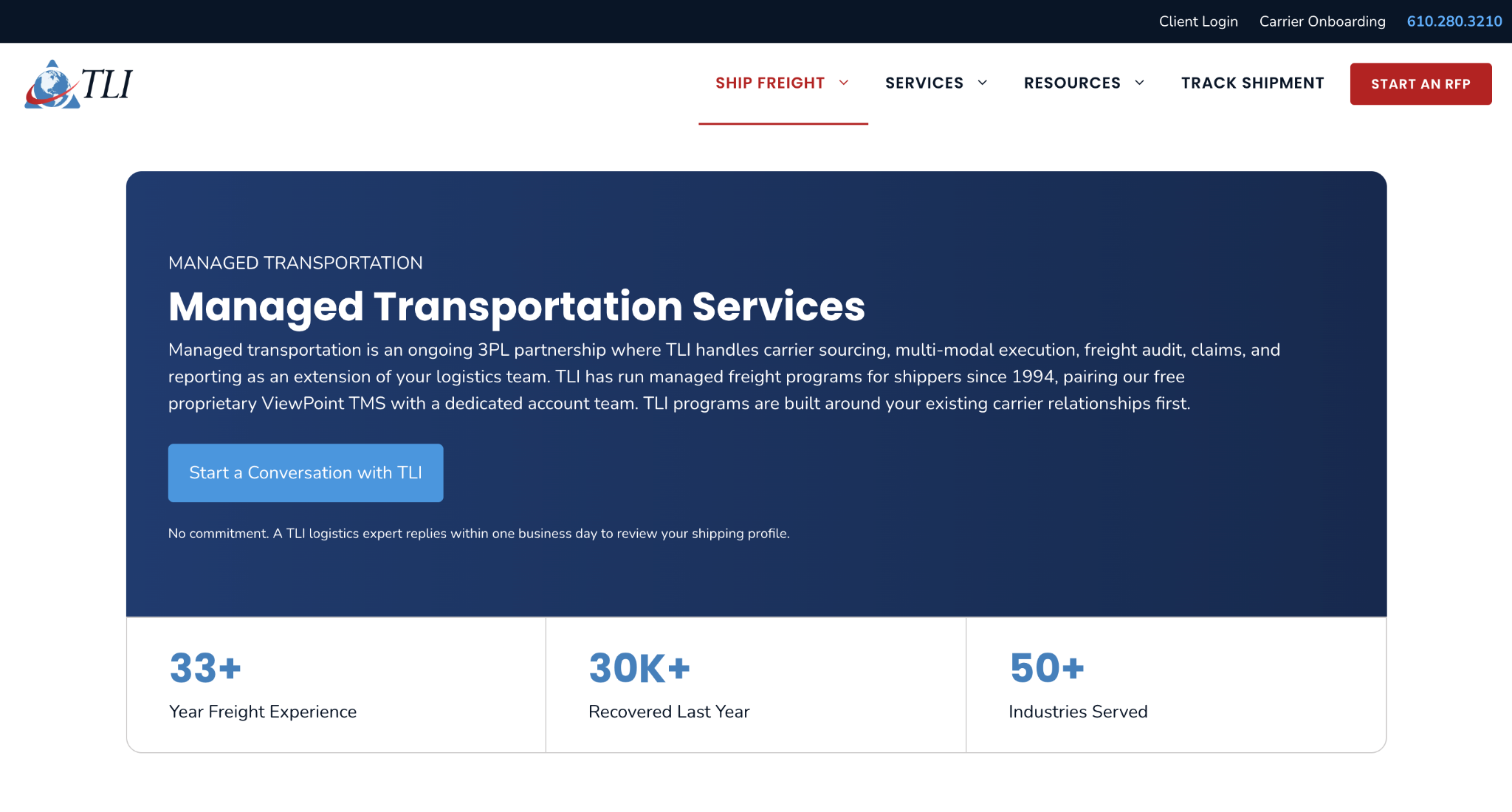
- TLI's managed freight page says the ViewPoint TMS is included at no cost
- The same page says shippers can retain existing carrier relationships
- Carrier sourcing and multimodal execution are managed by one team
- An inbound vendor routing portal gives suppliers routing instructions while the shipper keeps control of inbound cost
- Freight audit, claims support and reporting are included in the stated scope
- Best suited for shippers moving $1 million or more annually in LTL and/or truckload freight
- Managed freight programs operating since 1994
- The page lists 50-plus industries served and 20-plus LTL carrier partnerships
- $634,608 in freight bill audit recoveries reported for shippers
TLI cons
- No public list pricing, so cost requires a scoping discussion
- The published five-to-six-week implementation path is a vendor estimate, not a guarantee
Why we picked TLI
What stands out is how little a shipper has to break to get started. TLI pairs the free ViewPoint TMS with a dedicated account team and builds around carriers you already use, so preferred relationships do not have to be replaced to access managed-transportation benefits.
That flexibility addresses a common concern for mid-market shippers with trusted regional carriers. TLI has run managed freight programs since 1994 and reports serving more than 50 industries across 20-plus LTL carrier partnerships, which is enough breadth to cover most manufacturing and distribution lane mixes.
The audit function is where the scope gets concrete. TLI states it recovered $634,608 for its shippers in freight bill audit recoveries last year, which at least puts a number on a service most providers describe only in the abstract.
TLI describes implementation as five to six weeks after data handoff, but actual timing depends on scope and data quality.
TLI pricing
TLI does not publish rates, so pricing is scoped to the freight profile. That can still represent fair value when the proposal clearly separates management costs, transportation charges, audit results, and claims work. Confirm whether the quote uses a management fee, transportation margin, or hybrid structure.
2. C.H. Robinson
C.H. Robinson pros
- Its Managed Solutions page covers managed transportation and 4PL orchestration
- The Navisphere page describes global TMS visibility and carrier management
- Broad mode and geographic coverage for complex networks
C.H. Robinson cons
- Its enterprise breadth may exceed what a single-site shipper needs
- No public entry price
Why we picked C.H. Robinson: our experience
I found the scope most compelling for multi-plant or international networks. Navisphere adds a common technology layer while Managed Solutions coordinates execution. Smaller teams should confirm that governance and support won't be more elaborate than necessary.
C.H. Robinson pricing
The reviewed product pages do not list rates. Ask for a scoped quote tied to service levels, reporting, and business-review requirements.
3. Uber Freight
Uber Freight pros
- Its managed transportation page emphasizes ownership of daily operations
- The stated scope includes carrier management, performance tracking, and cost governance
- Its buying guide explains managed-service outsourcing models
Uber Freight cons
- An automation-led model may require workflow standardization
- No public list pricing
Why we picked Uber Freight: our experience
The main attraction is clear accountability for execution and network performance. I also liked the practical explanations in its buying guide. Companies with exception-heavy workflows should verify how much customization the operating model supports.
Uber Freight pricing
Uber Freight does not publish program rates.
4. Echo Global Logistics

Echo pros
- Echo's managed transportation page describes continuous logistics support
- EchoAdvantage offers a lighter program for LTL-focused shippers
- Its materials cover North American and cross-border transportation
Echo cons
- Echo does not publish a savings percentage for managed transportation.
Why we picked Echo: our experience
EchoAdvantage caught my attention because it gives LTL-heavy distributors a narrower starting point. That can be more practical than immediately outsourcing the entire transportation function.
Echo pricing
Echo does not publish rates for either program. Request separate quotes for EchoAdvantage and full managed transportation.
5. BlueGrace Logistics
BlueGrace pros
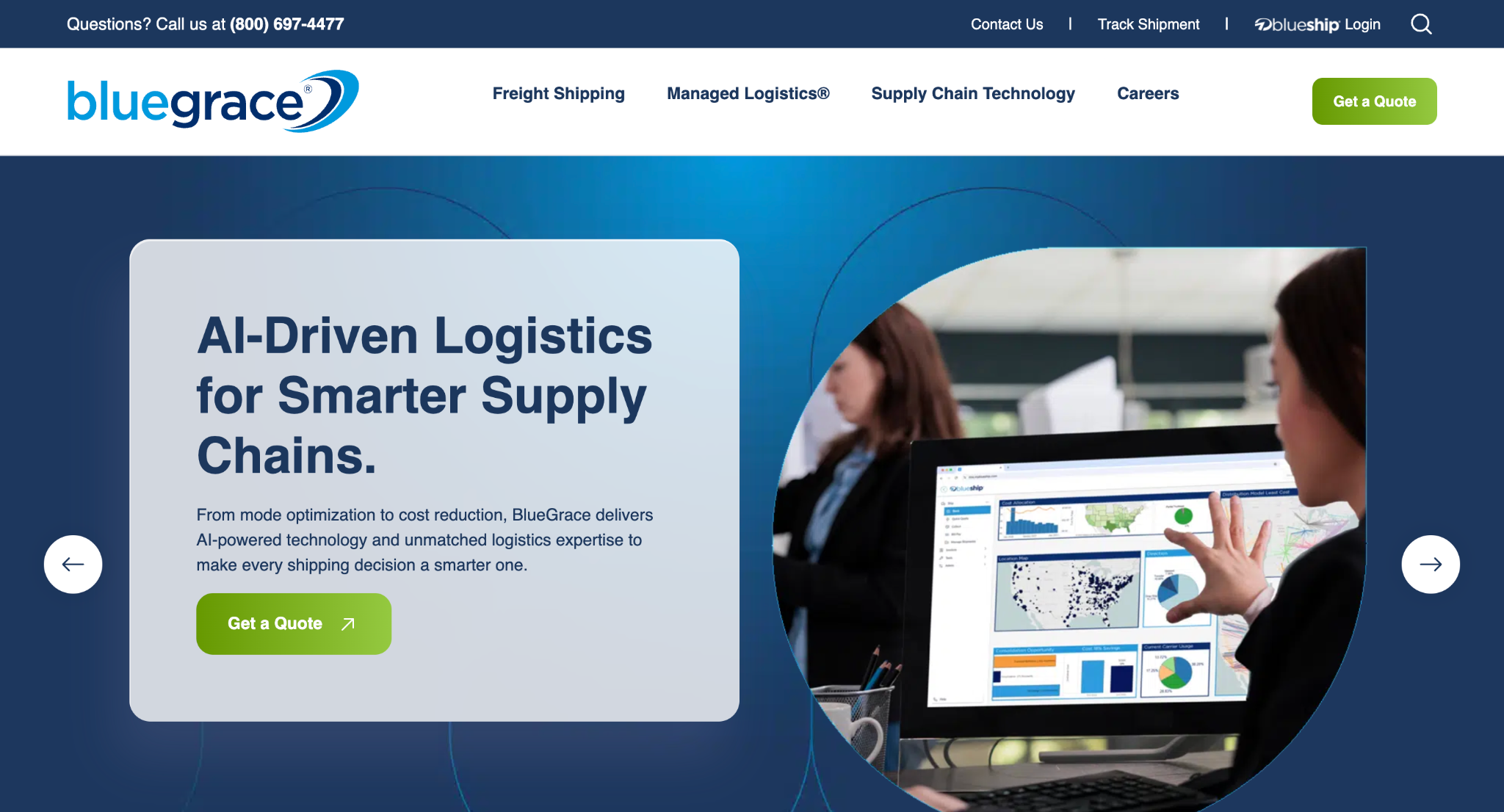
- Carrier and lane performance analysis supports LTL optimization
BlueGrace cons
- Centralizing processes and data requires internal change management
Why we picked BlueGrace: our experience
BlueGrace is most relevant when disconnected systems are driving cost and service problems. BlueShip's stated integration and analysis capabilities can help, though the reporting will only ever be as useful as the data feeding it.
Spend analysis matters more when rates move. Shippers who absorbed freight cost volatility internally through recent disruptions generally did it on lane-level visibility, not on carrier goodwill.
BlueGrace pricing
The reviewed pages provide no list price. Include implementation and integration work when comparing its quote with other providers.
6. Redwood Logistics
Redwood pros
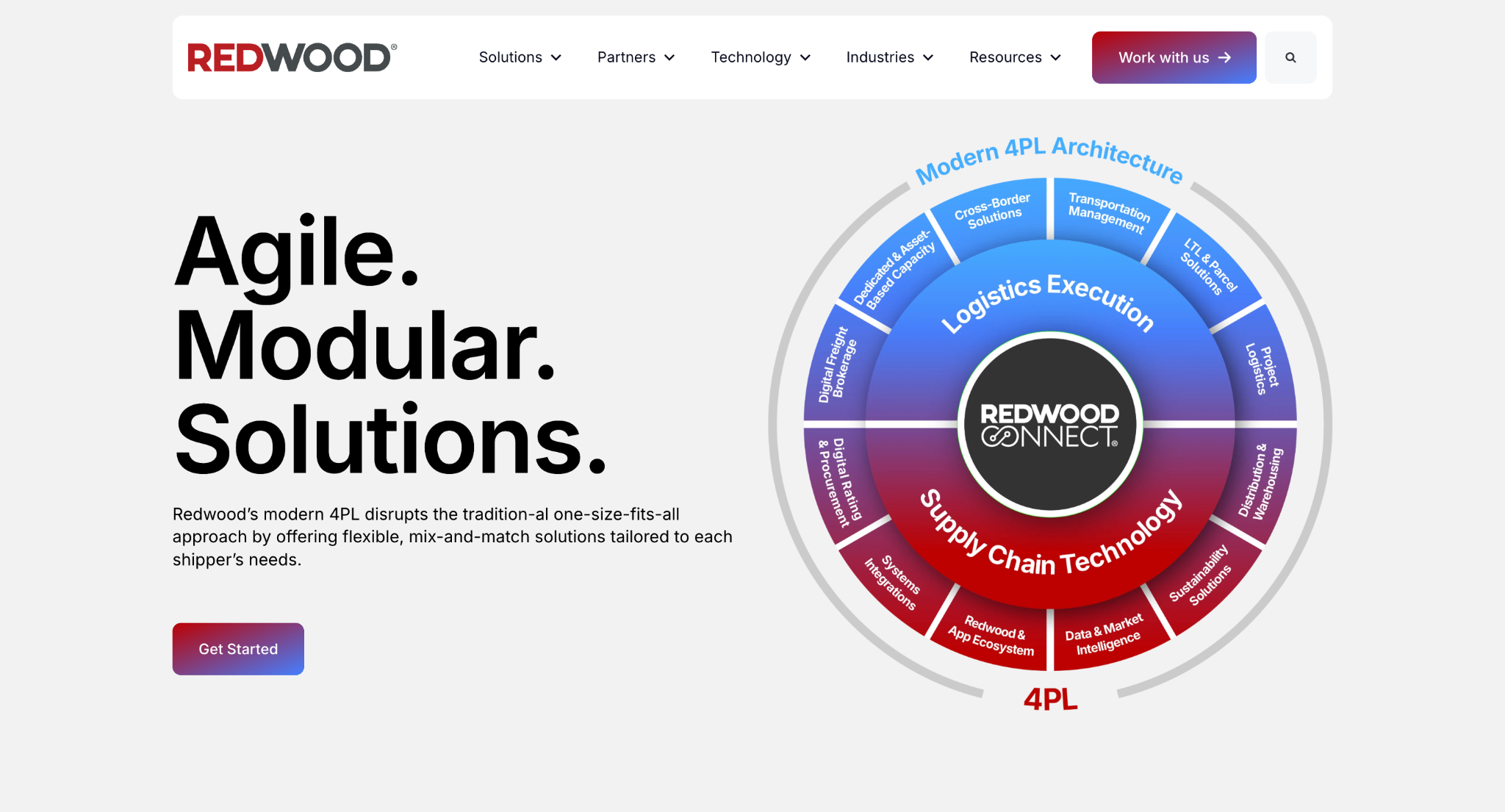
- Redwood's platform page describes RedwoodConnect as a no-code integration tool
- It connects transportation, warehouse, EDI, carrier, and partner systems
- Its 4PL materials combine technology with logistics execution
Redwood cons
- An integration-led rollout can strain a team with limited IT capacity
Why we picked Redwood: our experience
Redwood makes the most sense for operations juggling many disconnected systems. I would phase the work, validate the integrations first, and then expand the outsourced operating scope.
Redwood pricing
Redwood does not publish rates. Ask for phase-by-phase pricing so technology integration and managed services can be evaluated separately.
7. Schneider

Schneider pros
- Schneider's logistics pages place managed transportation within a broader 3PL portfolio
- Its FreightPower materials describe TMS visibility and analytics
- Managed oversight is supported by asset-based multimodal operations
Schneider cons
- Its scale may be more than a smaller transportation program needs
- No published mid-market price tier
Why we picked Schneider: our experience
Schneider stood out when capacity reliability was the main concern. Schneider's 2025 Form 10-K reports that its supply chain management business managed roughly $2.2 billion of third-party freight during the year, which signals real scale behind the managed offering.
Schneider pricing
Schneider does not list program rates. Compare its quote on service reliability, mode coverage, governance, and total management cost.
Conclusion
TLI is my top pick for mid-market manufacturers and distributors. It combines an included TMS, carrier flexibility, execution support, freight audit, claims assistance, and reporting in a program aimed at this market.
C.H. Robinson is the runner-up for complex global networks, while Uber Freight suits teams that prioritize centralized accountability. Echo is worth considering for an LTL-first rollout.
For integration-heavy operations, compare BlueGrace with Redwood. Schneider is the stronger shortlist candidate when multimodal capacity is the deciding factor. In every case, use actual lane data and treat vendor savings or implementation figures as unverified estimates until documented in your agreement.
FAQ
Can I keep my preferred carriers?
With some providers, yes. TLI builds programs around your preferred carriers first and supplements with its own network only where gaps exist.
C.H. Robinson's materials also describe shipper control over carrier relationships. Confirm the operating details during scoping, since policies differ.
How do managed transportation providers charge?
Common structures include a fixed management fee, margin within transportation costs, or a hybrid. The providers reviewed here do not publish list rates, so ask for an itemized quote and clear change controls.
What is a realistic implementation timeline?
Timing depends on data quality, integrations, locations, and scope. TLI publishes a five-to-six-week path after data handoff, but treat that as a vendor estimate rather than a guaranteed deadline.

.jpg)