7 Critical Safety Protocols for Managing Multi-Trade Rooftop Projects
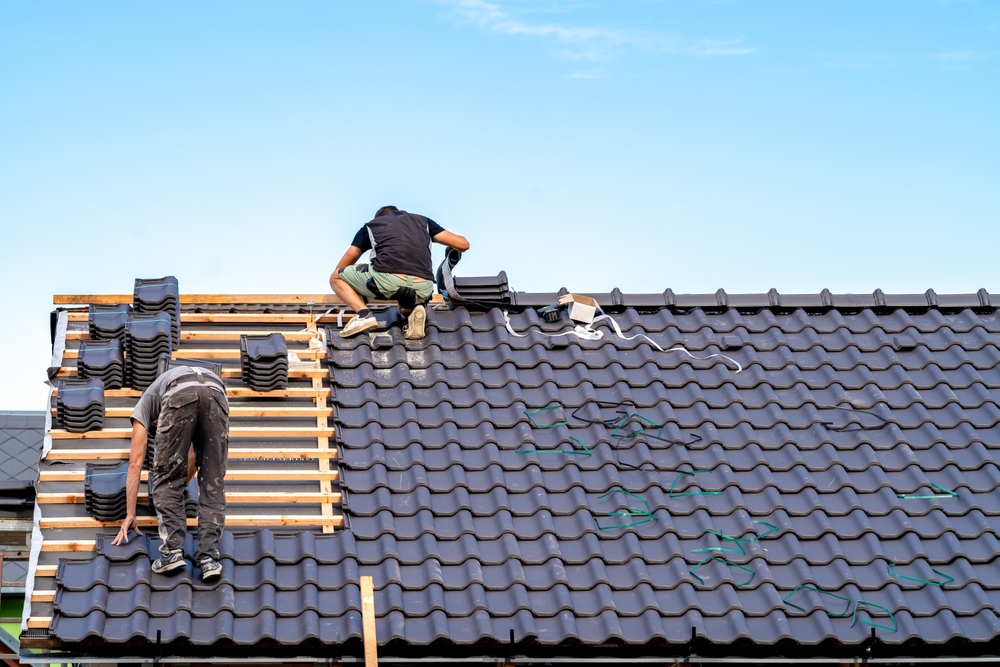
Rooftops aren't casualties to a risky behavior; they're casualties to risk mismanagement. Multiple trades can execute multiple scopes on a single rooftop without incident when one key thing is managed - the overlaps in the work. Doing this successfully comes down to several clear decisions and agreements among the primes, and then making trade overlaps both efficient and safe.
Start with a JSA that maps trades, not just tasks
Most job safety analyses are written for one crew doing one scope. On a multi-trade roof, that's not where the risk is. The hazard is not "working at height" in the abstract - it's a roofing crew removing a section of membrane directly above where an electrician is scheduled to be at 10am.
A JSA or SWMS for a shared rooftop needs to function the way a schedule overlay does: it shows which trade is where, at what time, doing what task, and what's underneath or beside them. If two crews will be active on the same roof plane at the same time, that needs to be right there in explicit language, not assumed to be fine because "everyone's careful." Coordination is not something that belongs in a supervisor's head or a group chat; if it's not in the safety document, it doesn't exist.
This sounds like paperwork. It's the difference between knowing a hazard exists and finding out about it after someone's standing under it.
Apply the hierarchy of controls in the right order
The control hierarchy is there for a reason, and the most common issue we encounter is project managers and OHS officers jumping straight to the bottom line and ordering a box of harnesses. In a perfect system, not a single harness will be unclipped and coiled behind a toolbox because the anchor point is ten feet away from the work area; nor will a worker need to remember to clip on once he steps into working area S3 for the first time that day because an administrative control slipped his boss's mind after two weeks of the value-engineered project with no edge protection.
You've got your priorities screwed on backward. Fix that edge, and you'll reduce fall injuries and fatalities on rooftops. Can the leading edge be permanently guarded rather than temporarily roped off? Can openings be covered with rated material instead of flagged with cones? Engineered edge protection is the answer here, and for roofs that see repeat access from multiple trades over time - HVAC servicing, solar maintenance, gutter work - fixed roof safety handrails are the standard solution rather than a stopgap. They don't depend on a worker remembering to clip in correctly, and they don't degrade in effectiveness the way a rushed administrative control does after week three of a project.
Harnesses and lanyards still matter. PFAS is the last line of defense, and it needs to be treated that way - as a backup for situations where engineering controls genuinely can't be fitted, not as the default plan because it's cheaper to hand out harnesses than install permanent railing.
Walk the roof before anyone works on it
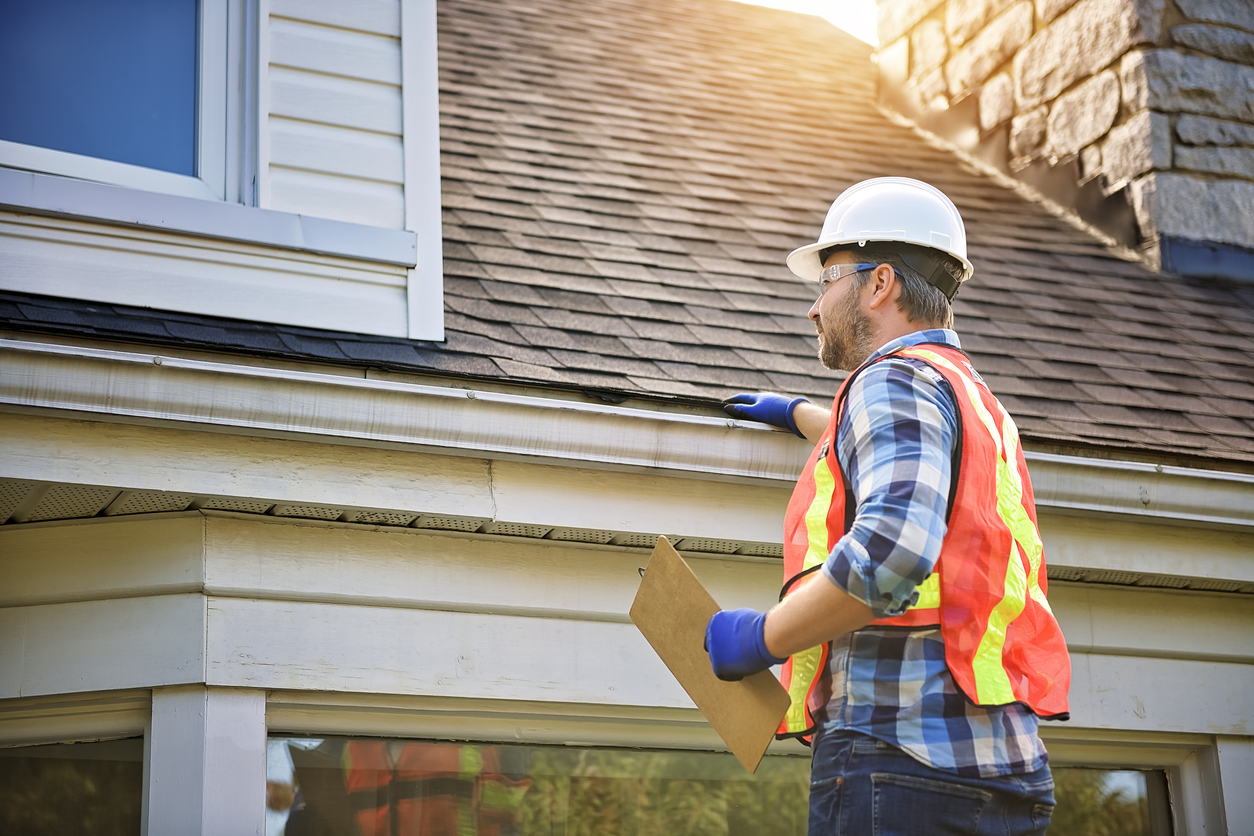
While it may seem like common sense, a hazard walkdown of the roof is often missed when multiple trades are working on the job, as each assumes the other trade checked the roof. This assumption is where injuries occur.
Before the job commences, the roof plane needs to be physically walked, and any leading edge, skylight, hatch, or areas of the roof surface that appear or feel different must be flagged. During retrofit and maintenance work, brittle and aging roof material becomes an issue as insulation panels, old skylights, and deteriorating membrane can appear safe to walk on and then collapse under the weight of a worker. This is one of the more common reasons for fall-through fatalities, and one of the easiest to prevent - if the walkdown is actually conducted and not simply checked off on a form.
On this last point, skylights should be called out specifically. An unprotected skylight in the middle of a busy rooftop is one of the most underrated hazards of a job site. It needs a rated cover, a physical barrier, or both - not a verbal heads-up to "watch your step."
Control what falls, not just who falls
While fall protection is often a primary focus, the greatest risks to workers may come from above. Workers on the ground are often at risk of being struck from falling tools. Loose items left on higher levels can fall and cause injury even if they are not struck directly. A loose screw or bolt dropped from a height on a construction site will quickly gain enough velocity to be akin to a small bullet. Tool bags filled with heavy hammers, wrenches, and electric drills can also be deadly.
To prevent falling objects from injuring those below, workers at heights need to secure all tools at height. All hand tools, wood, wire, bolts, light tubing, and similar objects can be considered falling objects if they fall from a height. Item and tool belts need to have connector clips, bags and containers with lids or covers. Anything too big or heavy for these means should be properly hoisted or relayed. Toe boards, screens, or guardrails should also be used to prevent falling objects. And there needs to be a signed, enforced ground-level exclusion zone any time crews are working above other trades or the public.
Keep access points fixed, not improvised
One of the quickest ways multi-trade jobs introduce risk is through unspoken movement across the roof. A worker hops over finished roofing to avoid a long walk around. Someone steps over newly run ductwork because materials from another crew are in their path. Someone climbs over a partial guardrail section because waiting five minutes is not an option.
Every one of these decisions is time-driven, and every one of them removes an established protection measure. Access points onto the roof must be through designated, stable points - scaffold towers, roof hatches, purpose-built ladders - and those points must remain stable even as trades complete their work across different times. When one trade ruins the walkable surface of the roof, the next trade needs to know immediately, before they next walk onto the roof.
This is where a live-zone board earns its keep. A simple visual representation of which sections of the roof are open, guarded, working, or off-limits keeps every trade honest with each other, especially when four or five trades are working the same space across the day.
Verify every anchor point and every rail before first use
An anchor point that hasn't been inspected is not a safety measure. It's a guess dressed up as one. Every anchor point used for a personal fall arrest system needs to be rated for the load, physically inspected, and tagged before anyone ties off to it. The same goes for edge protection systems - guardrails need to be checked for secure fixing, correct height, and structural integrity before the first shift, not assumed sound because they were installed by a competent contractor at some earlier point.
This matters even more on multi-trade jobs because equipment gets moved, reconfigured, and handed between crews constantly. A guardrail section removed by one trade to move materials and reinstalled by another needs to be re-inspected before the next crew relies on it. Standards like AS/NZS 1891 for fall protection systems and AS/NZS 1657 for fixed platforms and walkways exist precisely because "it looked fine yesterday" isn't a verification method. Whoever signs off on the roof at the start of each day needs to physically confirm that anchor points and edge protection are still in the condition they were installed in, not the condition someone assumes they're still in.
Rehearse the rescue, not just the prevention
A fall protection plan that assumes "the harness will catch them" is enough is dangerously inadequate. Suspension intolerance can cause serious harm in less than half an hour. A dangling worker is not safe because they haven't hit the ground, and even though they're wearing a harness, they need to be rescued - quickly - by a trained team that has already rehearsed exactly how they'll do it.
That begins with a rescue plan already in place before work begins, and unique to the specific roof: where the rescue equipment is, who is trained to use it, and how long rescue will likely take. On a multi-trade site, it's all too easy for that planning to fall into the gap between contractors, each assuming the others have it covered. It needs to be the responsibility of the site supervisor, explicitly, and every trade needs to be brought in on the plan before the first harness is even clipped to a lifeline.
Give one person the authority to stop the job
Wind, rain, ice, and extreme heat don't respect trade boundaries. A gust that makes a guardrail section feel wobbly affects the roofer, the solar installer, and the HVAC tech near it equally. The same goes for a wet surface that turns a walkable roof into an ice rink, or heat that starts impacting grip and judgment by early afternoon.
Someone on site must have the unambiguous responsibility and authority to call a stop when conditions turn, and that must be understood by every trade on the roof, not merely the crew the person manages. Stopping unsafe work is difficult on multi-contractor jobs in particular because stopping work costs someone money, and nobody wants to be that guy. But unsafe conditions for one trade are unsafe conditions for all, and waiting for a near-miss to confirm it is a bad strategy.
Run the daily briefing like it matters
A five-minute toolbox talk at the start of each shift is the cheapest safety control on this entire list, and it's the one that gets skipped most often once a job settles into a rhythm. That's a mistake. Rooftops change daily on multi-trade jobs - new openings get cut, guardrails get temporarily removed, materials get staged in new spots - and a briefing is how every trade finds out what's different before they start walking around.
The briefing should cover which zones are active, which fall protection measures are in place, what changed since yesterday, and who's working where. Pair it with a visible live-zone reference on site and you've closed most of the gaps that cause multi-trade incidents - not through more equipment, but through everyone actually knowing what everyone else is doing.
Rooftop safety on a multi-trade job isn't about any single protocol carrying the weight. It's about making sure the trades sharing that roof are never operating on different information about the same space. Get that right, and most of the incidents that make headlines simply don't get the chance to happen.

.jpg)