A Practical Guide to Safer, More Efficient Industrial Operations

Most sites don't need a rebuild to run better. They need fewer surprises. When teams understand the numbers, traffic routes are clear, and each step has an owner, safety and output often improve together. Start by measuring performance, then fix flow and safety, refine daily processes, and add technology or outside support only where the value is clear.
Start with the numbers that move the floor
Long dashboards may look thorough, but they rarely change daily behaviour. A short set of measures, reviewed often, is more useful. WERC's 2025 benchmarking work, as summarised by Yale, highlights four practical measures: on-time shipments, capacity used, order-picking accuracy, and dock-to-stock time.
How to establish a baseline this week
Pull the last 13 weeks of data for these four measures. A spreadsheet is enough to get started.
- On-time shipping percentage by week.
- Average dock-to-stock time in hours.
- Pick accuracy and the locations where errors occur.
- Average storage capacity used across the site.
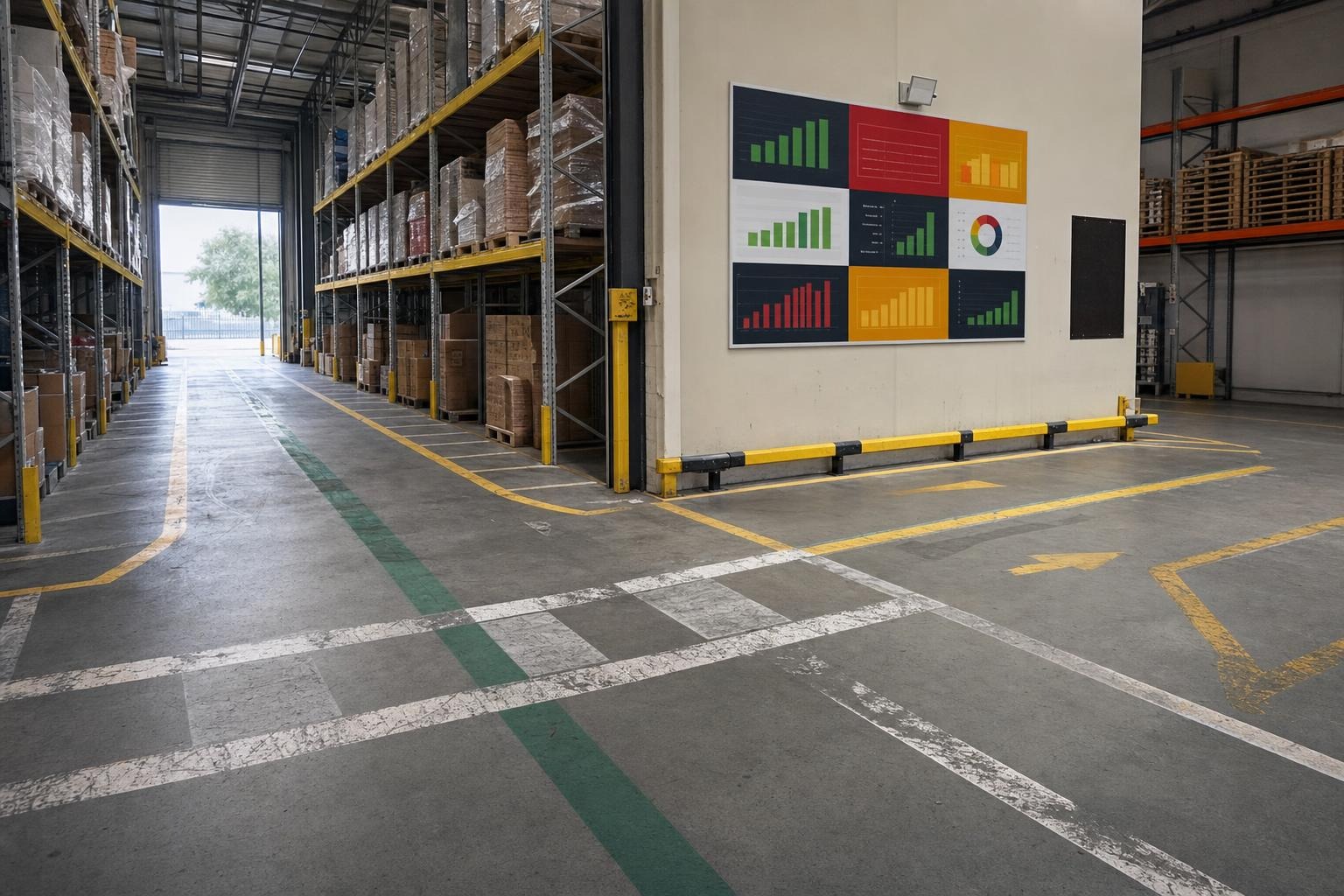
Set red, amber, and green ranges based on your operating needs, then place the chart where the team can see it. Review trends rather than reacting to one unusual day.
Fix flow before you add robots
Walk the route a carton takes through receiving, staging, putaway, picking, packing, and shipping. Record every point where someone waits, searches, crosses traffic, or backtracks. Many gains come from reducing travel. Place fast-moving stock near packing, group similar orders into batches, and assign clear ownership to each zone.
Make people and vehicles easier to separate
Floor markings provide guidance on every shift. Total Line Marking describes services including pedestrian and vehicle separation, aisle and storage markings, directional flow lines, and emergency egress routes. If you operate in New Zealand, you can find industrial line marking contractors NZ as a commercial option for planning markings around the site's actual traffic flow. Where near misses repeatedly occur at the same corner, consider a physical barrier as well.
If you're deciding how much storage and handling to keep in-house, compare total occupancy, labour, equipment, transport, and management costs. The lowest storage rate may not produce the lowest overall operating cost, and flexible storage options can shift that comparison once seasonal volumes are factored in.
Treat safety as part of the efficiency plan
Safety controls should be built into normal operations rather than treated as a separate project. In the United States, OSHA's heat enforcement program focuses on high-risk industries. Warehouses where workers may be exposed to chemicals are also covered by the Hazard Communication Standard. Process safety management requirements may apply to facilities holding specified quantities of highly hazardous chemicals, including some ammonia refrigeration systems. Requirements differ by location, so confirm the rules that apply to your site.
Three practical moves for this quarter
- Write a clear heat plan covering water, rest breaks, shade or cooled space, and adjustment time for new employees.
- Refresh chemical labels, safety data sheets, and training for anyone who handles or works near hazardous materials.
- Review refrigeration systems if ammonia is present, and re-mark faded safety zones before their meaning becomes unclear. Total Line Marking handles scheduled marking refreshes for this type of site maintenance.
Get more from people and simple tools
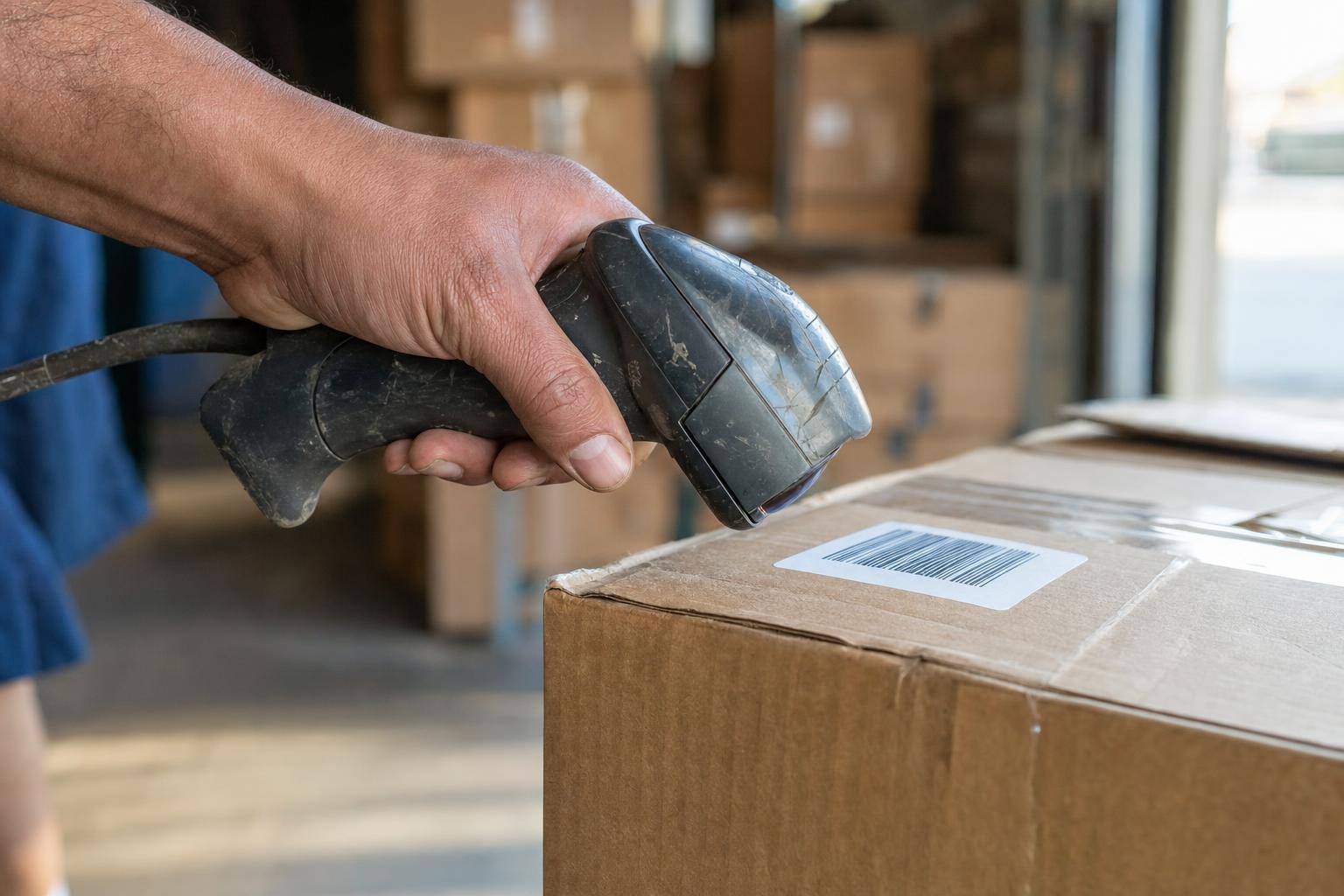
Before buying new hardware, improve the habits around existing tools. Scan inventory at every handoff so stock records stay accurate. Standardise packing benches so employees can work at any station. Cycle count fast-moving items each week instead of waiting for a full stocktake. Review pick paths quarterly as demand changes, and leave enough storage space for safe movement. These habits often improve warehouse operational efficiency more than a single large purchase. For conveyor equipment, maintenance buyers can shop heavy duty industrial chain online when replacements are needed.
When automation makes sense
Automation can reduce repetitive travel and improve consistency, but it can't repair unreliable data or an unclear process. Options range from conveyor controls and scanning systems to robotic storage and picking. Stork Up presents its Hong Kong warehouse as one example of an operation using robotic automation. Before automating a conveyor or handling line, document maintenance needs and replacement lead times with a supplier such as Renold.
Signs you are ready
Your system data is reliable, exceptions follow a written process, and the main labour drain is repetitive movement rather than work requiring judgement. If any of those conditions is missing, address it first. Pilot automation on one flow, allow for a temporary dip in throughput, and include training and maintenance time in the budget.
Keep uptime high with steady maintenance
Downtime can erase gains made elsewhere. A basic preventive plan should include a walk-around checklist, a short list of critical spare parts, and replacement windows scheduled during quieter periods.
Renold supplies transmission chain, connecting links, accessories, and other power-transmission products internationally. Replace a drive chain when inspection shows it is approaching the end of its service life rather than waiting for failure. Buyers can compare pitch, materials, and coatings before selecting a replacement. Wash-down areas, cold rooms, and dusty lines require different specifications, so confirm operating conditions and compatibility with the supplier. For a broader view of when to use external storage support, see
What to watch
- Chain wear and elongation on conveyors and drives.
- Conveyor stoppages, recorded by cause as well as minutes lost.
- Battery health and charging practices for forklifts and pallet trucks.
- Stock levels for parts that can stop work when they fail.
Make the changes stick
New layouts and tools often fail for ordinary reasons. The purpose wasn't explained, training happened only once, or a metric changed without a matching change in behaviour. Keep each standard operating procedure to one clear page where possible. Walk the team through it on the floor and connect training to the number you're trying to improve. Review the four core measures in a short weekly meeting, ask employees what remains awkward, and fix one issue before the next review.
Use outsourcing where it removes complexity
Sometimes the fastest improvement happens outside your own facility. Cross-border sales, multiple marketplaces, or sharp seasonal peaks can outgrow a single site. A regional hub closer to customers or suppliers may reduce handoffs and delivery time. Teams should compare inventory controls, carrier coverage, platform integrations, returns handling, and total costs. A provider such as Stork Up may suit businesses using Hong Kong as an Asian distribution hub, but published accuracy and volume figures should be treated as provider claims. Test the service with a limited pilot before moving core product lines. For a commercial option, consider ecommerce fulfillment HK.
Where to start
Keep the sequence simple. Measure a few numbers you trust, improve flow and separation, strengthen daily processes, and add automation or outside support where the case is clear. Total Line Marking can support zones and crossings, Renold can help with suitable wear parts, and Stork Up can provide fulfilment support when shipping extends beyond one site. Choose one practical improvement and assign an owner and review date this week.