What Singapore Facility Managers Get Wrong About Their ACMV Systems (And How to Fix It)
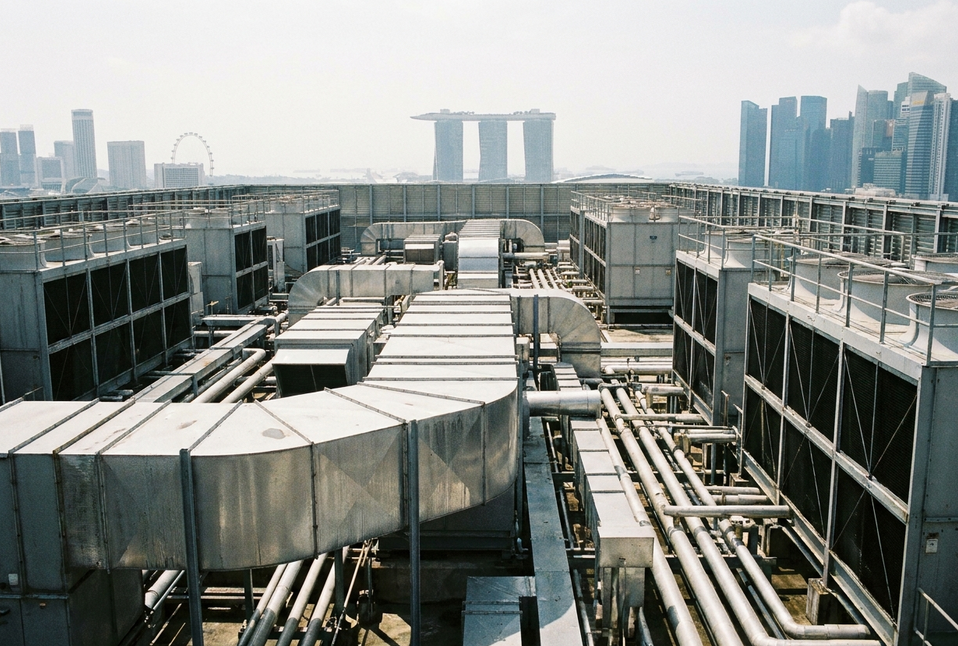
Step into any commercial building in Singapore around midday and the air-conditioning hits you before anything else does. That is not an accident. The island sits just one degree north of the equator. Temperatures hover around 31°C for most of the year, humidity rarely drops below 80%, and there is no winter to give the system a break. For a pharmaceutical plant, a hotel, or a mid-sized office tower, the ACMV system is not a convenience. It is the reason people can work inside the building at all.
Given that reality, you might expect facility managers and building owners to treat their ACMV infrastructure with considerable care. Some do. But a surprising number still run these systems on a break-fix model: service gets called when something stops working, energy consumption gets reviewed when the electricity bill becomes too painful to ignore, and upgrades get pushed back year after year until they simply cannot be delayed anymore.
That approach was always expensive. In 2026, with Singapore's regulatory environment shifting and electricity costs where they are, it is also becoming a compliance problem.
Deferred Maintenance Costs More Than Most People Realise
Ask most facility managers what their biggest ACMV headache is and they will give you an answer quickly. An ageing chiller. An AHU that keeps tripping. A cooling tower that needs constant babysitting. Ask them what that problem is costing the business in dollar terms, and the room gets quieter.
The connection between ACMV condition and energy consumption is not subtle. A chiller running with fouled heat exchangers, degraded refrigerant, or a compressor that is well past its service hours can consume 20 to 30 percent more electricity than a properly maintained unit putting out the same cooling load. On a 1,000 RT plant, that gap adds up to a significant sum every single month, for no gain in comfort or output.
Component degradation compounds the problem. Bearings that should run for a decade wear out in five. Small refrigerant leaks that go undetected quietly destroy compressors over time. Cooling tower water without proper treatment becomes a Legionella risk, which carries both health consequences and regulatory exposure under Singapore's NEA guidelines on Legionella prevention.
Preventive maintenance carried out by a qualified ACMV contractor is not just a line item on the facilities budget. For most commercial buildings in Singapore's climate, it is one of the more straightforward ways to protect equipment life and keep energy costs from quietly drifting upward.
Green Mark 2021 Has Changed What Compliance Looks Like
The BCA Green Mark 2021 framework tightened the requirements on HVAC efficiency in ways that caught some building owners off-guard. The key metric is Total System Efficiency (TSE), which measures how effectively a chiller plant converts electricity into cooling output, expressed in kW per refrigeration ton (kW/RT). Older systems, designed to the standards of a decade or two ago, often cannot meet the new TSE thresholds without significant intervention.
For buildings above 15,000 square metres gross floor area, mandatory three-yearly energy audits mean that underperforming plant gets reviewed on a regular cycle rather than being quietly left alone. When a chiller reaches end-of-life and replacement is triggered, the new unit must meet current efficiency standards. There is no grandfather clause.
The Singapore Green Plan 2030 sharpens the urgency further. The national target of having 80 percent of buildings Green Mark certified by 2030 means the window for gradual, unhurried improvement is shorter than it looks. Asset owners who have been watching this space and deciding it can wait are finding that the timeline is compressing.
For building owners thinking about tenant quality, asset financing, or ESG reporting requirements from corporate occupiers, Green Mark is shifting from a differentiator to a baseline expectation. HVAC performance sits at the centre of that.
What Separates a Proper ACMV Contractor from a General Servicing Company
The term "ACMV contractor" gets used loosely in Singapore, but there are meaningful differences between companies operating in this space that matter a great deal when something goes wrong or when a major project is on the line.
Licensing grade is the starting point. The BCA Mechanical Engineering (ME) licence system grades contractors by the scale of projects they are authorised to handle. A Grade L5 licence covers HVAC projects up to S$13 million. Appointing a contractor without the correct grade for your project creates legal and accountability problems that surface at the worst possible moment, usually mid-project.
Sector experience matters just as much. A contractor with strong commercial office experience may be entirely the wrong choice for a pharmaceutical cleanroom or a semiconductor fabrication facility. Cleanroom HVAC requires precise, continuous control over temperature, humidity, particulate counts, and pressure differentials. These are environments where HVAC failure has direct consequences for product quality and regulatory standing. A contractor without specific experience in those sectors is not simply less efficient. In some cases, they are the wrong option entirely.
Multi-brand capability is another factor that gets overlooked. Most established commercial buildings carry HVAC equipment from multiple manufacturers across different installation generations. A contractor who can only reliably service certain brands, or who does not have access to parts for older plant, creates gaps in coverage that fall on the facility manager to manage.
And then there is 24/7 emergency response. In Singapore's climate, a chiller failure in a data centre, a hospital kitchen, or a food manufacturing facility does not pause for business hours. The contractor relationship you build during routine maintenance needs to extend to emergency response as well.
Energy Performance Contracts: A Different Way to Fund HVAC Upgrades
One conversation that has become more common among Singapore building owners over the past few years is around Energy Performance Contracts (EPCs). The concept is straightforward, even if the details require careful attention.
Under an EPC, an Energy Services Company (ESCO) funds the cost of HVAC system upgrades and recovers its investment through a share of the verified energy savings those upgrades produce. The building owner gets improved system performance and lower energy bills from day one, without committing upfront capital. The ESCO takes on the performance risk: if the savings fall short of what was guaranteed, the shortfall is the ESCO's problem, not the client's.
For a facility manager trying to build a business case for HVAC upgrades in an environment where capital budgets are tight and payback periods need to be short, the EPC structure removes several of the usual barriers. Upgrades under an EPC typically cover chiller plant optimisation, TSE improvements, EC fan retrofitting for AHUs and mechanical air units (MAUs), and monitoring through Building Management System (BMS) integration.
The critical variable is the quality of the ESCO itself. The contractor needs the engineering depth to deliver the improvements accurately and the commercial credibility to stand behind the savings guarantee over the contract term. An EPC with a contractor who underestimates baseline consumption or overstates projected savings creates problems that take years to untangle.
What to Actually Look for When Appointing an ACMV Contractor
There is no shortage of companies marketing ACMV services in Singapore. The harder question is how to distinguish between them when the stakes for your facility are real.
BCA licensing grade is a non-negotiable starting point. Beyond that, ISO 9001:2015 for quality management and ISO 45001:2018 for occupational health and safety indicate a contractor operating to documented, auditable standards rather than informal practice. bizSAFE Level STAR accreditation reflects a safety culture that matters when contractors are working inside operational facilities with live plant.
Track record in your sector is worth verifying directly. A contractor with 25 years of operation and a team of 80 engineers across commercial, industrial, hospitality, and healthcare projects carries a depth of practical experience that a smaller or younger firm simply cannot match. That depth shows up not in marketing materials but in how quickly and accurately problems get diagnosed, and in whether the team understands the operational context of your building before they start work.
An experienced ACMV contractor should also be able to demonstrate continuity. Long-term service relationships, where the contractor builds genuine familiarity with your specific plant and systems over time, produce better outcomes than a series of one-off engagements with different providers.
Singapore's ACMV sector has grown considerably more sophisticated over the past decade. The expectations of facility managers and building owners have grown with it. Choosing the right contractor is less about finding the lowest quote on a tender and more about identifying the organisation with the technical depth, the credentials, and the reliability to protect an asset that your entire operation depends on.