Best Miami Places to Sell Jewelry: Trusted Buyers & Expert Tips
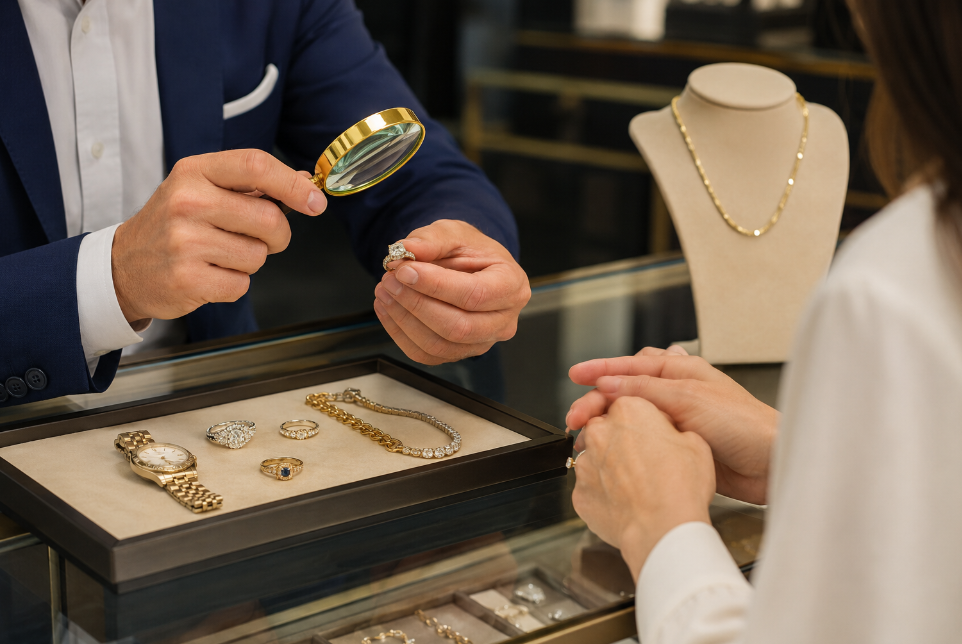
Selling fine jewelry in Miami can feel simple at first: take the piece to a buyer, get an offer, and decide whether to accept it. In reality, jewelry values can vary considerably depending on the diamonds, gemstones, precious-metal content, designer name, condition, age, and current demand.
Miami has an active luxury jewelry market, particularly for diamond jewelry, estate pieces, engagement rings, watches, and signed pieces from houses such as Cartier, Tiffany & Co., Van Cleef & Arpels, Bulgari, and Harry Winston. That gives sellers several possible routes, including established jewelry buyers, estate specialists, auction houses, consignment businesses, and private dealers.
Where Can You Sell Fine Jewelry in Miami?
Downtown Miami is one of the first areas worth considering because it has a long-established jewelry trade. Professional buyers in this market may deal with loose diamonds, engagement rings, gold jewelry, estate collections, watches, and signed designer pieces. Brickell and other luxury shopping areas can also provide options, although the services offered vary from one business to another.
One established name in downtown Miami is Vivid Diamonds. Its showroom is located in the Alfred I. DuPont Building at 169 East Flagler Street. In addition to selling fine jewelry, the company states that it evaluates and purchases diamonds, designer jewelry, and heirloom pieces. Sellers researching trusted Miami jewelry buyers can use businesses like this as one point of comparison rather than accepting the first offer they receive.
For unusual or particularly valuable pieces, an auction house or specialist estate-jewelry dealer may also be appropriate. These routes can take longer than a direct sale, but they may expose distinctive jewelry to a different group of potential buyers.
Your Jewelry Before Asking for Offers
Knowing exactly what you have can make conversations with buyers much easier. Start by gathering anything connected to the piece, including the original receipt, box, previous appraisal, service history, designer paperwork, and laboratory reports for important diamonds or gemstones.
Diamond documentation deserves particular attention. A grading report can provide objective information about characteristics such as carat weight, colour, clarity, and cut. However, a laboratory report should not be confused with a monetary appraisal. The Gemological Institute of America (GIA) explains that it grades and identifies gems but does not provide jewelry appraisals or determine their monetary value.
This distinction matters when selling. An old insurance appraisal may show a replacement value that is considerably different from what a buyer is prepared to pay in the resale market. For an expensive or unfamiliar piece, an independent fair-market-value appraisal can provide useful context before negotiations begin. GIA also suggests fair market value as a useful baseline when someone is preparing to sell jewelry.
What Actually Determines the Price of Jewelry?
There is no single formula that determines what every piece of jewelry will sell for. For diamonds, buyers generally examine measurable quality characteristics as well as the stone's overall marketability. Gemstones may require additional consideration because origin, treatments, colour, rarity, and supporting laboratory documentation can influence how they are evaluated.
Designer jewelry works somewhat differently. A signed Cartier bracelet, vintage Tiffany & Co. piece, or Van Cleef & Arpels necklace may have value beyond the raw gold and gemstone content because buyers can also consider the maker, design, rarity, condition, provenance, and resale demand. An unsigned gold necklace, meanwhile, may be valued more heavily around its precious-metal content and craftsmanship.
How to Compare Miami Jewelry Buyers
Comparing buyers is about more than finding the highest number. Pay attention to how the evaluation is performed and whether the person examining your jewelry explains the reasoning behind the offer. A professional evaluation should give you a clearer understanding of what characteristics are influencing value.
For valuable jewelry, getting more than one opinion can provide perspective. Ask whether the offer is based mainly on metal and gemstone value or whether designer provenance, rarity, and resale demand are also being considered. If you have a grading report, appraisal, receipt, or designer documentation, bring it with you.
Direct Sale, Consignment, or Auction?
A direct sale is usually the simplest route. A jewelry buyer evaluates the item and makes an offer. If you accept, the transaction can often be completed without waiting for another retail customer. This approach can be practical when convenience and a clear transaction matter.
Consignment works differently. Instead of purchasing the jewelry immediately, a dealer markets the piece and receives an agreed commission if it sells. The process may take considerably longer, and there is no guarantee of when a buyer will appear. However, certain distinctive designer, vintage, or estate pieces may suit this type of arrangement.
Auctions are another possibility for rare or collectible jewelry. Their success depends heavily on the particular piece, estimated value, audience, fees, and buyer interest at the time of sale. For ordinary gold jewelry or straightforward commercial pieces, an auction may add unnecessary complexity. Matching the selling method to the jewelry is usually more useful than assuming one route works equally well for everything.
Expert Tips Before Selling Jewelry in Miami
Preparation can make the process much less confusing. Photograph the jewelry before taking it anywhere and keep copies of important paperwork. For a significant diamond or gemstone, check whether its laboratory report number and identifying characteristics correspond with the item being evaluated.
Avoid treating an insurance appraisal as a guaranteed selling price. Insurance documents are commonly prepared around replacement value, while resale transactions involve different market conditions. If the jewelry is particularly valuable, inherited, or difficult to identify, consider obtaining an independent appraisal from someone with appropriate gemological and appraisal training. GIA specifically advises consumers to look at an appraiser's education, experience, professional affiliations, and understanding of jewelry manufacturing.
Final Thoughts
Finding a place to sell jewelry in Miami is relatively easy; deciding where a particular piece belongs takes more thought. A simple gold item, an engagement ring, an inherited diamond, and a rare signed designer bracelet should not automatically be approached in the same way.
Established Miami jewelry businesses such as Vivid Diamonds provide one direct-sale option, while independent appraisers, estate specialists, consignment dealers, and auction houses can serve different needs. The strongest starting point is knowledge: identify what you own, understand the difference between appraisal and resale value, collect supporting documents, and compare evaluations carefully.