Enterprise Security Systems: What Multi-Site Businesses Need to Know
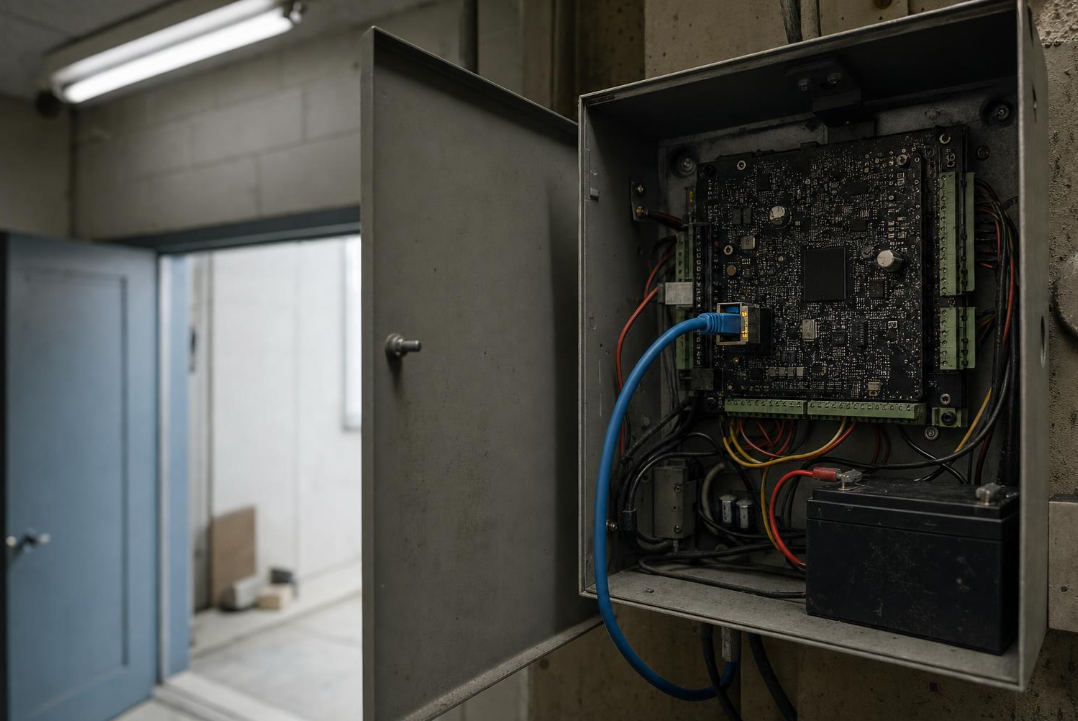
Multi-site security no longer sits in a cupboard with a stack of recorders. It now sits at the intersection of cameras, access control, networks and data governance.
This guide explains what to centralise, how to stay compliant across the UK and EU, and which standards can reduce lock-in. The goal is a practical roadmap for leaders who need safer, more consistent sites without turning the project into a product pitch.
The multi-site security stack
Think of enterprise physical security as layers that need to behave consistently at every site. Cameras, door controllers, networks and management software all need to support the same operating model.
At scale, good security usually includes central policy, single sign-on, encrypted video, detailed audit logs, offline failover and consistent visitor management. Each site should feel familiar to an operator who has worked at another location.
The point is not to choose a brand first. It is to make sure policy, access rights and evidence are managed in one reliable place, rather than scattered across sites and local devices.
Cloud or on-premises for a portfolio
Cloud management can make role-based administration by site easier. It can also simplify evidence export and links to HR or IT service management tools. On-premises equipment may still be useful where bandwidth is limited or where local retention needs are heavy.
The Information Commissioner's Office notes that cloud storage of CCTV can be acceptable if footage is secured and international transfer risks are assessed. Wherever footage sits, offline resilience still matters. A cloud-managed system should keep recording locally and should keep doors controlled if the connection drops.
Standards choices affect long-term flexibility. For new camera installs, plan around ONVIF Profile T rather than older profiles. ONVIF has announced that its June 2026 conformance tool will be the last to allow Profile S claims. For doors, specify OSDP where possible because it is more secure than common legacy reader protocols. For multi-site portfolios with separate buildings, networks, operators, access points and evidence processes, multi-layered security depends on interoperable cameras, resilient networks and controlled access.

Compliance that scales across sites
- Run a DPIA. The ICO states that a data protection impact assessment is a legal requirement in most video surveillance cases. Failing to do one when required can itself breach UK GDPR.
- Register and signpost. GOV.UK guidance says businesses using CCTV must register with the ICO, pay the data protection fee where required, display clear signs and use footage only for the stated purpose.
- Answer subject access requests. Individuals can request CCTV images of themselves. The controller usually must provide the footage free of charge within one calendar month.
- Set retention by purpose. The ICO is clear that retention must be the shortest period necessary for the purpose. Storage capacity should not decide how long footage is kept.
Biometric access, including facial recognition, needs extra care. This is special category data under Article 9, so you need a lawful basis and a valid Article 9 condition before deploying it. Treat broad rollouts with caution and document the reasoning behind any decision.
Changes leaders should track
Martyn's Law, the Terrorism (Protection of Premises) Act 2025, is expected to come into force in spring 2027, with the UK Security Industry Authority as regulator. Venues within scope will need to consider protective measures, so map which of your sites qualify.
In the EU, NIS2 replaced NIS1, and Member States had until 17 October 2024 to transpose it into national law. If your EU sites fall in scope, your security and reporting duties may increase.
A deployment playbook for many locations
- Standardise reader wiring to OSDP and specify ONVIF Profile T cameras for new installs.
- Centralise identity and define a clear role model, so access mirrors job function by site.
- Test your subject access request workflow, including redaction, before the rollout expands.
- Document retention and deletion rules against each stated purpose.
- Run an incident tabletop that spans several sites at once, not just one building.
When to bring in rollout support
If you are planning a cloud-managed rollout across many locations, this practical resource on enterprise security systems and multi-site rollouts can help you pressure-test your plan before you commit. Treat it as one commercial option to compare, not as verified benchmarking of any single vendor.
The through-line is governance. Central policies, standards-based equipment and clean evidence trails are what survive an audit or an incident, at every site rather than just the flagship one.
Frequently asked questions
How long should we keep CCTV footage?
Keep it for the shortest period needed for your stated purpose. The ICO is explicit that available storage should not decide retention, so set a defined period and delete footage on schedule.
What is OSDP and why replace Wiegand?
OSDP is an open reader protocol that provides stronger security than common legacy protocols. Specifying it on new installs can reduce future rework.
Do we need a DPIA for every CCTV project?
Not always, but the ICO says a DPIA is legally required where processing is likely to be high risk. Multi-site surveillance should be assessed before deployment.
Can we use facial recognition for access control?
Only with a lawful basis and a valid UK GDPR Article 9 condition. Document necessity, proportionality and alternatives before any rollout.