How the Office Killed the American Body and Nobody Noticed Until It Was Too Late
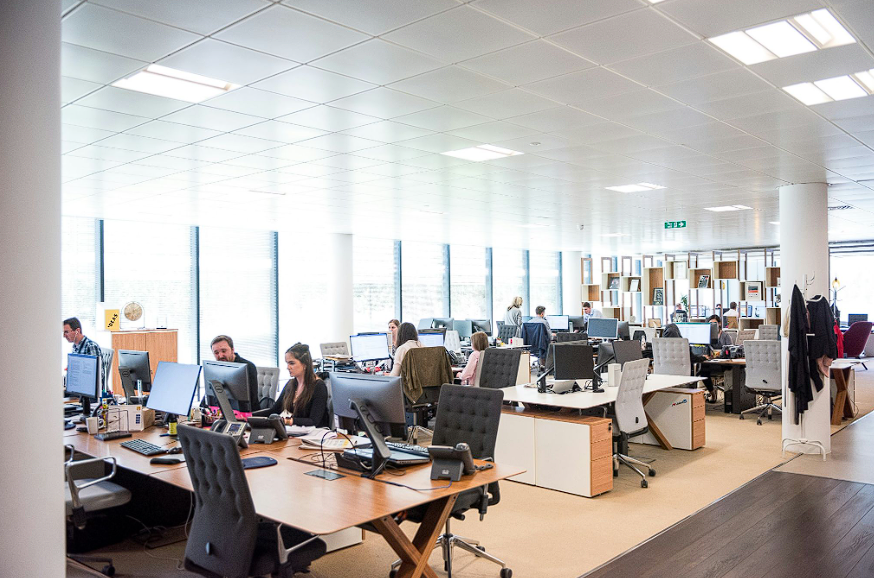
For most of human history, the working body moved. It lifted, walked, bent, stretched, and carried as a natural consequence of the tasks that daily labor required. The sedentary workday is, in historical terms, a radical and very recent experiment, one that has been running for barely two generations and whose health consequences are only now being understood with the specificity that the scale of the problem demands.
The modern office did not set out to damage human health. It set out to increase productivity, standardize work processes, and house the administrative functions of an expanding economy in environments optimized for desk-based cognitive labor. That the human body was not designed for six to ten hours of seated stillness per day was not a consideration that office design has historically treated as its problem to solve.
The consequences of that oversight have accumulated quietly across decades in the bodies of the people who spend their working lives in those environments, producing a public health burden whose scale is only beginning to be reckoned with in the research literature and even less so in the policy and workplace design conversations where the practical response needs to happen.
The Specific Ways Sitting Is Damaging the Body
The health consequences of prolonged sedentary behavior are not simply the consequences of insufficient exercise. This is a distinction that matters practically, because it means that the person who sits for eight hours and then exercises for an hour has not fully compensated for the sitting. The physiological effects of prolonged stillness are partially independent of physical activity levels, operating through mechanisms that movement at other times of day does not fully reverse.
When the body is seated for extended periods, the large muscle groups of the lower body, including the glutes, hamstrings, and quadriceps, become electrically quiet in a way that reduces their metabolic activity significantly. This reduction in muscle activity decreases the uptake of glucose and triglycerides from the bloodstream, contributing to the blood sugar instability and elevated blood lipid levels that characterize the metabolic profile of chronically sedentary individuals.
The cardiovascular system is affected through multiple pathways. Prolonged sitting reduces blood flow velocity in the lower extremities, increasing the risk of blood pooling and the endothelial dysfunction that precedes the development of cardiovascular disease. Research published by the American Heart Association on sedentary behavior and cardiovascular risk has found that prolonged sitting is independently associated with elevated cardiovascular disease risk, even after controlling for leisure-time physical activity, a finding that challenged the previous assumption that exercise could compensate for sedentary work hours.
The Spine and Musculoskeletal Consequences
The musculoskeletal consequences of office work are perhaps the most immediately visible and the most economically significant of the sitting problem's downstream effects. Lower back pain is the leading cause of disability globally, and its relationship to prolonged desk work is well-documented enough that most people accept it as an occupational inevitability rather than recognizing it as a modifiable consequence of a specific working posture sustained for specific durations.
The seated position places the lumbar spine under approximately 40 percent more compressive load than standing, and the forward head posture that screen work encourages adds progressive strain to the cervical spine and the muscles of the upper back and shoulders. Over years of consistent office work, these postural loads produce structural changes in the spine and surrounding soft tissue that are not simply reversed by evening stretching, however diligently it is practiced.
What the Data Reveals About the Scale of the Problem
The population-level data on sedentary behavior in the American workforce paints a picture that the individual experience of office work makes easy to normalize and difficult to see clearly.
The average American adult now sits for approximately six and a half hours per day, a figure that has increased by approximately an hour per day over the past two decades and that rises further for white-collar workers whose jobs require continuous desk-based computer work. Research discussed by the National Institutes of Health on sedentary behavior and all-cause mortality has found that adults who sit for more than eight hours per day with no physical activity have a risk of dying similar to the risks posed by obesity and smoking, a comparison that would be considered inflammatory if the evidence were not so consistent across multiple large-scale studies.
The metabolic consequences are reflected in population health statistics that are sometimes attributed primarily to dietary factors without adequate acknowledgment of the sedentary behavior that compounds them. Type 2 diabetes rates have increased in almost perfect parallel with the expansion of desk-based employment. Obesity rates have followed a similar trajectory. The relationship is not simply correlational. The mechanisms through which prolonged sitting impairs glucose metabolism, elevates circulating triglycerides, and reduces the spontaneous energy expenditure that incidental movement produces are well understood at the physiological level.
The mental health dimension of office sedentariness is less frequently discussed but equally significant. Prolonged sitting is associated with elevated rates of depression and anxiety in working adults, through mechanisms that include the reduction in endorphin activity that movement produces, the cortisol elevation associated with sustained stress in sedentary postures, and the disruption of circadian light exposure that indoor work produces by removing the outdoor light signals that regulate the biological clock.
The Hydration Problem That Office Work Creates

Source: https://unsplash.com/photos/person-holding-clear-glass-cup-with-half-filled-water-12Kb5ynfxso
One of the less-discussed but practically significant health consequences of the office environment is its effect on hydration behavior, and by extension on the cognitive function, energy levels, and mood regulation that adequate hydration supports.
The office environment removes most of the environmental cues that prompt fluid intake in more physically varied settings. The seated knowledge worker is not perspiring, not exerting physical effort, and not experiencing the temperature extremes that trigger thirst most reliably. The result is that the cognitive demands of desk work consistently crowd out the attention to physical state that hydration requires, and the typical office worker arrives at mid-afternoon in a state of mild dehydration that has been building since the morning coffee that started the day.
The cognitive consequences of this accumulated mild dehydration are directly relevant to the office productivity argument that the sedentary workplace was designed to optimize. Research has found consistently that mild dehydration impairs the specific cognitive capacities, including sustained attention, working memory, and processing speed, that knowledge work most intensively demands. The office environment, in other words, creates the conditions for the dehydration that undermines the very performance it was designed to support.
Addressing this requires making appealing, functional hydration available and visible at the desk rather than relying on the thirst signal that the cognitive demands of office work consistently suppress. Those interested in exploring naturally flavored, electrolyte-containing options that make consistent desk-based hydration genuinely sustainable can head over to their website to find a range of real fruit extract-based drink mixes designed for exactly the kind of daily, low-friction hydration that office workers need and rarely achieve.
What Is Actually Changing and Where the Hope Lives
The good news in the office health story is that the research on the problem has, over the past decade, begun producing a parallel body of research on solutions, and some of them are straightforward enough to implement without organizational transformation or significant capital investment.
The most evidence-supported intervention is the simplest. Breaking up prolonged sitting with brief periods of standing or light movement at regular intervals produces measurable improvements in blood sugar regulation, cardiovascular function, and cognitive performance that are disproportionate to the brevity of the movement involved. Research published by the British Journal of Sports Medicine on movement breaks and metabolic health has found that standing or walking for as little as two to three minutes every thirty minutes produces significant reductions in post-meal blood sugar spikes in sedentary office workers, an effect that sustained exercise at other times of day does not fully replicate.
The standing desk, despite its sometimes-evangelical adoption in progressive office environments, is a partial rather than a complete solution. Standing for extended periods produces its own musculoskeletal challenges and does not deliver the metabolic benefits of movement. The evidence most strongly supports the transition between positions rather than the sustained adoption of any single one, whether seated or standing.
Workplace design that encourages incidental movement, including walking meetings, more distant bathroom and kitchen facilities, staircase design that makes walking between floors the default rather than the elevator, and the normalization of brief movement breaks within the working day, addresses the problem at the environmental level rather than relying on individual motivation and compliance.
The Body the Office Forgot
The office was designed for the productivity of the mind and largely ignored the needs of the body that houses it. The health consequences of that oversight are now visible in the epidemiological data on chronic disease, disability, and mental health in the working-age population, and they are sufficiently significant to constitute one of the most important and most solvable public health challenges of the current era.
Solvable, because the interventions that produce the most meaningful improvements are not expensive, technically complex, or organizationally disruptive. They are primarily a matter of recognizing that the human body was not designed for the sedentary environment that modern work has created, and responding with the simple, consistent changes that the research most clearly supports.
The office did not set out to damage the American body. But now that the evidence of the damage is available, continuing to ignore it is a choice rather than an oversight. It is a choice that the emerging generation of employers, employees, and workplace designers is increasingly unwilling to make.
Source: https://unsplash.com/photos/people-working-at-desks-in-open-office-kN_kViDchA0