How AI Video Editors Are Helping Small Businesses Win on Instagram
.jpg)
Instagram hasn't been a photo app for a long time. Reels now account for the majority of organic reach on the platform, and the algorithm openly favors short-form video over static images. For small businesses and lean marketing teams, this creates an uncomfortable reality: competing for attention requires a steady stream of polished video content, but hiring a dedicated video editor or outsourcing to an agency eats into margins that most growing businesses can't afford to sacrifice.
The math is simple and unforgiving. A freelance video editor charges anywhere from $50 to $150 per hour. A single polished Instagram Reel might take three to five hours of editing time. Multiply that across a posting schedule of four to five Reels per week, and you're looking at a monthly cost that rivals a part-time salary. For businesses operating on tight budgets, that equation doesn't work.
This is exactly the gap that AI-powered video editing tools have stepped into — not as a gimmick, but as a practical solution for businesses that need professional-quality Instagram content without the production overhead.
What an AI Instagram Video Editor Actually Does
The term "AI video editor" gets thrown around loosely, so it's worth being specific about what these tools handle and where they genuinely save time.
At the foundational level, an AI Instagram video editor automates the repetitive, time-consuming tasks that dominate traditional editing workflows. Auto-captioning is one of the most impactful features — generating accurate subtitles synchronized to speech, which is critical given that the majority of Instagram videos are watched without sound. Beyond captions, these tools handle intelligent clip trimming, aspect ratio adjustment for different placements, background music selection, color correction, and transition effects — all tasks that previously required manual attention frame by frame.
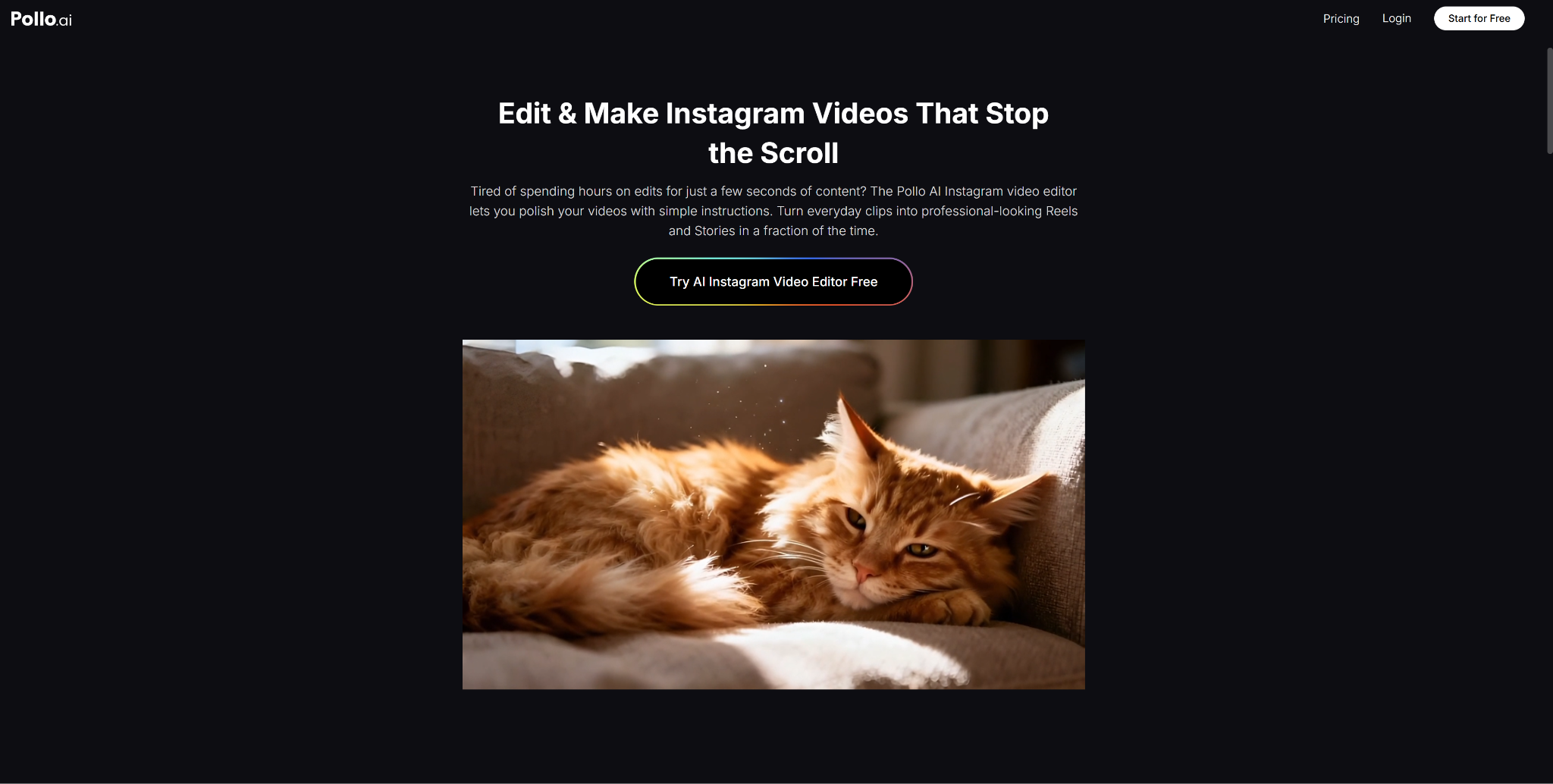
Pollo AI offers a purpose-built AI Instagram Video Editor that streamlines this entire workflow into something a business owner can manage without video production experience. What makes Pollo AI's approach particularly relevant for small businesses is that it's designed specifically for Instagram's formats and requirements, rather than being a general-purpose editor that you have to wrestle into producing platform-appropriate output. The tool understands Reels dimensions, optimal video lengths, and the pacing that performs well in Instagram's algorithmic feed.
The practical result is that a task that once required an afternoon of editing can be completed in minutes. For a small business owner who's also handling customer service, inventory, and payroll, that time savings translates directly into either more content or more bandwidth for the parts of the business that only a human can handle.
Why Instagram Video Quality Matters More Than Volume
There's a temptation, once editing becomes fast and cheap, to simply flood your feed with content. That's a mistake. Instagram's algorithm evaluates engagement signals — watch time, shares, saves, comments — and low-quality content that gets scrolled past actively hurts your account's reach over time.
The businesses seeing the best results on Instagram in 2025 are those producing three to four high-quality Reels per week rather than daily content that feels rushed. Quality in this context doesn't mean cinematic production values. It means clear audio, readable captions, strong opening hooks in the first two seconds, and a coherent visual identity that makes your brand recognizable as viewers scroll.
This is where AI editing tools provide their most underappreciated value. Consistency. A human editor's output varies with their mood, their workload, and their interpretation of your brand guidelines on any given day. An AI tool applies the same parameters every time — same font for captions, same color grading, same transition style — which builds the kind of visual consistency that strengthens brand recognition over weeks and months.
Comparing Tools for Different Business Needs
The market for AI video editing has matured enough that different tools serve genuinely different use cases, and choosing the right one depends on what kind of content your business produces.
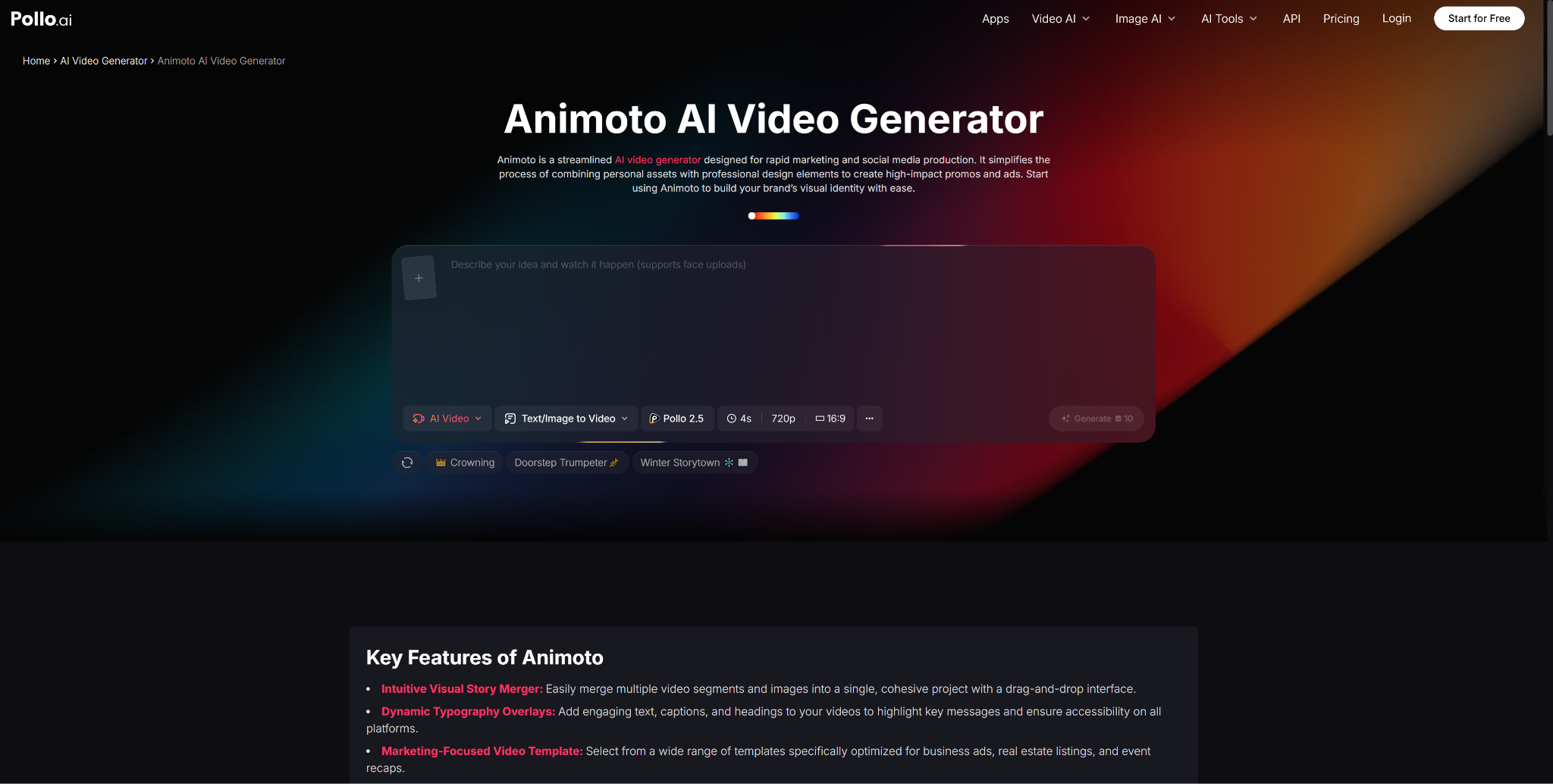
Animoto has built a strong reputation as a template-driven video creation platform that's particularly well-suited for businesses producing marketing videos, product showcases, and promotional content. Its drag-and-drop interface and extensive library of pre-built templates make it accessible to users with zero editing experience. If your primary need is producing polished promotional clips from existing photos and video footage — say, a restaurant showcasing its menu or a retailer highlighting new arrivals — Animoto's template-first approach gets you from raw assets to finished video with minimal friction. Pollo AI provides access to Animoto's capabilities, making it easy to explore whether its template-driven workflow fits your content strategy.
For businesses that need more dynamic, trend-responsive content — reacting to cultural moments, creating behind-the-scenes footage, or producing the kind of raw-but-polished content that performs well in Reels — a more flexible AI editor like Pollo AI's Instagram-specific tool offers greater creative latitude. The distinction matters because Instagram's audience can tell the difference between a templated ad and content that feels native to the platform.
CapCut remains a strong contender in the mobile-first editing space, particularly for creators who shoot and edit entirely on their phones. Its auto-caption feature and trend-aligned templates make it popular with individual influencers, though businesses with more structured brand guidelines sometimes find its customization options limiting.
Building an Efficient Instagram Video Workflow
The businesses getting the most value from AI video editing aren't just using these tools in isolation — they're building repeatable workflows that minimize the time from concept to published content.
A practical weekly workflow might look like this: batch-shoot raw footage in one session, typically thirty to sixty minutes of unstructured clips. Upload the raw material to your AI editor and let it handle the initial cuts, captioning, and formatting. Review the outputs, make minor adjustments to pacing or caption accuracy, and schedule the finished Reels through your publishing tool of choice.
This approach works because it separates the creative work — deciding what to film, crafting the narrative, choosing the hook — from the mechanical work of editing. The AI handles the mechanical layer, freeing you to focus on the strategic decisions that actually differentiate your content from competitors.
One often-overlooked efficiency gain is repurposing. A single three-minute video shot for YouTube can be intelligently segmented into multiple Instagram Reels, each with its own caption treatment and aspect ratio adjustment. Pollo AI's editor handles this kind of reformatting natively, which means a single filming session can fuel an entire week of Instagram content across multiple formats.
The Competitive Advantage Is Shifting
Two years ago, having any video presence on Instagram gave a small business a competitive edge. That advantage has evaporated — video is now table stakes. The new differentiator isn't whether you post video, but whether you can sustain a consistent, high-quality video presence without it consuming a disproportionate share of your time and budget.
AI video editing tools have made that sustainability possible for businesses that previously couldn't justify the investment. The technology handles the production burden. The strategic questions — what stories to tell, which audience segments to target, how to convert viewers into customers — remain firmly in human hands. And for most small businesses, those are the questions that actually move the needle.