How Benchtop Testing Instruments Bring Lab Power to Desktops
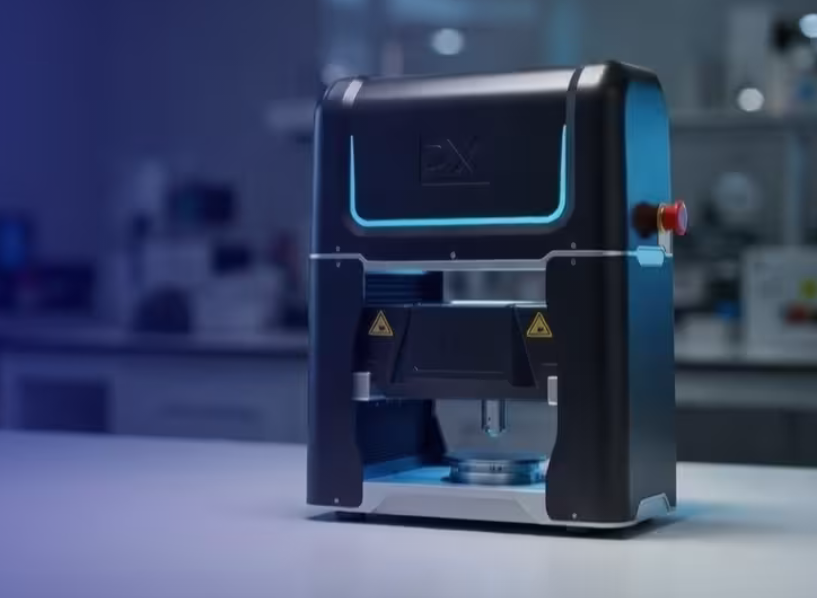
Benchtop testing instruments bring the power of large labs to the desktop by compressing the measurement capability of large floor-standing equipment into small units that can be placed on a workbench, operate on standard power, and require minimal sample preparation. That is why they allow engineers to have mechanical property data at their own quality room or near the production line instead of sending samples to a central lab and waiting for results for days. The switch occurs because of better sensors, on-board software, and non-destructive methods that have reduced the requirements for a dedicated test house to something that can sit beside a desk.
The most important capability is that these tools are not just smaller versions of old equipment. They transform what a small footprint can measure. A benchtop machine doing indentation-based analysis can generate a complete stress-strain curve, and not only a single hardness number, which is the kind of data that was only available with large tensile frames and machined coupons. The size was reduced, but the data quality did not come down with it.
What Makes a Benchtop Instrument Different From a Full Lab Setup
The most noticeable difference is their physical size. A traditional tensile testing machine is a large instrument standing on the floor and reaching over a meter in height most of the time. It is usually fixed to a lab's floor and has its own loading fixtures and safety enclosure. Then again, a benchtop equivalent is about the size of a large printer, can be easily plugged into a normal outlet, and that means it can be housed in a workshop, QC room, or a university teaching lab without any special installation.
Here is another point which may not be visible so easily but contributes a lot to making the small size possible. As benchtop mechanical testing methods involve straining only a very small region of the material, unlike pulling a full coupon to failure, the forces are much lower. An indentation test might range from a few hundred newtons to a couple of kilonewtons applied on a flat patch a few millimetres across, while the tensile frame needs much larger loads to break a standard specimen. Smaller forces mean smaller, lighter, and cheaper machines.
The availability of on-board computing facilities has reduced this difference. The instrument performs the analysis itself internally by using finite element calculations to convert the measured indent profile into yield strength, tensile strength, and hardening behavior. Because of this, the operator receives finished properties and not just raw data that needs to be interpreted elsewhere. This self-contained process that enables the non-specialist to do a meaningful test, which a full lab setup hardly allows.
How Much Capability You Actually Get on a Desktop
The real issue is whether reducing the size of the equipment also leads to a reduction in its accuracy, and for the most common metals, the answer is almost no. Validation work on steels, aluminium alloys, titanium, and nickel-based signatures has typically shown that benchtop indentation results are consistent with conventional tensile strength values within a small percentage, which is accurate enough for alloy verification, incoming inspection, and process qualification. So you are not compromising trust for convenience when you deal with common engineering alloys.
Besides the core measurement, you gain from speed and sample flexibility. One test takes a few minutes and calls for only a small polished surface, while a standard dog-bone is machined, so you can test a component that has already been finished, a weld bead, or even a thin section that could never yield a standard coupon. That gives you the opportunity of testing parts that you would not be able to do without from a separate reference sample. Still, there are other features that the capability has which are worth knowing.
A benchtop indentation instrument offers you the stress-strain curve and the properties derived from it, but it does not directly measure elongation to failure or fracture toughness the way a destructive pull does, and some specifications still require those. So the desktop unit accounts for a major portion of routine mechanical testing while still leaving a well-defined part to the full frame.
What It Costs and Who It Pays Off For
Buying a benchtop materials testing instrument is a genuine investment in capital. It's usually more expensive than a simple hardness tester but it still costs less than a complete tensile lab when you consider the frame, fixtures, and machining capabilities required. The financial viability depends more on operational expenses than on the initial purchase price. Very little material is used for each test, and it also needs minimal operator time. That means the cost per result is low, and that's how a busy lab makes back its investment.
The payoff is sharpest for teams that test often or work with expensive metals. If you run dozens of checks a week, or your alloy costs hundreds of dollars per kilogram so every scrapped coupon hurts, the savings on material and external lab fees add up faster than for an occasional user. For teams comparing options, dedicated benchtop materials testing machines are built around exactly this low-marginal-cost workflow, and the figure worth comparing is the fully loaded cost per result, not the headline price of the unit.
Another benefit of keeping testing in-house that might not be immediately apparent on a spreadsheet is the value gained. If you send samples to an external lab, you not only add days to turnaround time, but your inventory gets locked up while you wait. And returning that loop in-house can reduce decision time from weeks to the very same afternoon. For a manufacturer who has an expensive inventory that is awaiting a result, the reduction in time is a very subtle benefit.
Where Desktop Testing Changes How People Work
The real human change is the question of who gets to test and when. In the past, testing not only required a dedicated lab and a specialist but even then, engineers would batch their queries and wait. Now with an instrument on the bench, a process engineer can test a part whenever a query arises, turning testing from a planned thing to getting an instant answer. This immediacy in fact results in a complete change of problem-solving ways because now we can do multiple iterations in an afternoon rather than across a fortnight.
Different settings use this immediacy in very different ways. Additive manufacturing teams test printed blocks right after the builds come off the machine, since metal printing leads to building variations and through quick feedback, they can adjust their parameters before using more powder wastefully. Welding and fabrication shops carry out on-the-spot joint checks, as the heat-affected zone that is only a few millimetres wide can be probed without sectioning the part. Universities and research groups get a teaching and prototyping tool that even fits in a normal lab and enables students to generate real stress-strain data without a major facility.
The instrument is suitable for most common engineering metals, but it is limited to determining whether it is suitable for your work or not. Very soft brittle porous, or strongly textured materials challenge the assumptions underlying the indentation analysis, so the desktop advantage is maintained only when your material lies within the method's reliable range. Knowing that boundary pre-purchase is more important than any spec sheet figure.