How Can Emotional Awareness Change the Way You React Under Stress?: Practical Strategies for Calmer Responses
.jpg)
Stress hits fast, often before you think. Your body tightens, your thoughts narrow, and reactions can turn automatic. Emotional awareness interrupts that pattern by helping you notice what you feel as it happens.
Emotional awareness changes how you react under stress by letting you recognize emotions early, pause, and choose a response instead of reacting on impulse. When you name what you feel, stress loses some control, and your actions align more closely with your goals and values.
This skill does not remove stress, but it improves how you handle it. With practice, you respond with clarity, manage pressure more effectively, and reduce the chance that stress drives decisions you later regret.
Key Takeaways
- You notice stress signals before they escalate.
- You choose responses instead of reacting automatically.
- You build steadier emotional control over time.
Understanding Emotional Awareness and Stress Responses
Emotional awareness shapes how you notice feelings, interpret stressors, and choose actions under pressure. Stress responses follow predictable biological patterns, but awareness and self-regulation can change how those patterns affect your emotional health and mental health.
What Is Emotional Awareness?
Emotional awareness means you recognize your feelings as they arise and understand how they influence your thoughts and behavior. You notice emotional shifts without immediately reacting to them.
This skill builds on self-awareness and supports emotional intelligence. You identify emotional triggers, label feelings accurately, and connect them to specific sources of stress such as work demands, relationships, or uncertainty.
Emotional awareness also supports empathy and effective communication. In professional settings, it strengthens discernment and trust, including practices tied to emotional intelligence and empathy in leadership.
When emotional awareness stays low, stress reactions tend to feel automatic. When it improves, you gain more control over how stress affects your emotional health and decision-making.
The Science Behind Stress Responses
Your stress response begins in the nervous system. When your brain detects stressors, it activates physiological changes such as increased heart rate, muscle tension, and faster breathing.
This reaction helps with short-term challenges. Problems arise when stress becomes chronic and the body stays activated for too long. Chronic stress links to fatigue, irritability, impaired focus, and long-term mental health strain.
Emotional awareness influences this process by creating a pause between stimulus and response. You notice early signs of stress and regulate them through attention, breathing, or reframing.
Research on emotional intelligence shows that people who recognize emotional patterns manage stress more effectively. They recover faster and reduce the impact of repeated stress exposure.
Types of Stress Reactions
Stress reactions vary, but they tend to follow recognizable patterns. Awareness helps you identify which pattern you use most often.
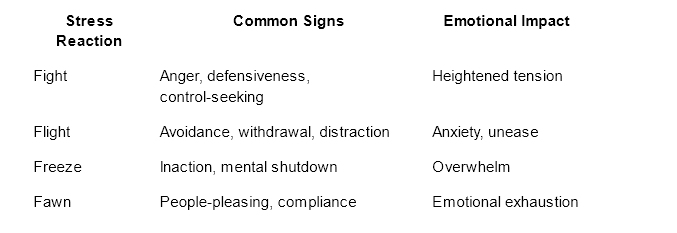
You may shift between reactions depending on the situation. Emotional awareness helps you recognize the pattern early and choose responses that protect emotional health and support long-term mental health.
How Emotional Awareness Shapes Reactions Under Stress
Emotional awareness changes how you notice stress signals, choose responses, and recover after pressure peaks. It strengthens self-monitoring, improves emotion regulation, and supports practical stress coping without suppressing feelings.
Recognizing Emotional Triggers
You react faster and more accurately when you can identify emotional triggers as they arise. Triggers often show up as specific thoughts, body sensations, or urges before stress escalates. Self-monitoring helps you catch these early signals instead of noticing them after you feel overwhelmed.
Common triggers follow predictable patterns tied to context, people, or expectations. When you label the emotion—anger, fear, sadness, or emotional numbness—you reduce confusion and create space to respond.
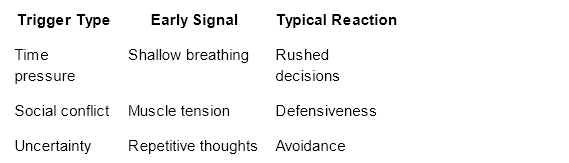
Clear recognition supports emotional regulation because you respond to what is happening, not to assumptions. You gain control before stress narrows your choices.
Impact of Emotional Awareness on Coping Strategies
Emotional awareness guides you toward coping strategies that match the situation. Without it, you may rely on habits that avoid discomfort but increase stress over time. With it, you choose between problem-solving and emotion-focused coping based on what you can control.
When stressors cannot change, emotion regulation matters more than action. Techniques such as paced breathing, reframing thoughts, or brief pauses reduce intensity and prevent emotional spillover. These methods support coping with stress without ignoring the underlying feeling.
Awareness also protects against emotional numbness. You stay connected to motivation and values, which helps you persist during sustained pressure. This balance strengthens self-regulation and reduces impulsive reactions that often follow unrecognized stress.
Role of Emotional Intelligence in Stressful Situations
Emotional intelligence combines awareness with empathy and self-regulation during stress. You read your own signals while staying attentive to others’ emotions, which limits conflict and improves outcomes. This skill matters most when decisions affect relationships or teamwork.
Stress hormones push you toward quick, narrow responses. Emotional intelligence counters this by slowing reactions and expanding options. You pause, assess intent, and choose language that fits the moment.
Key skills that support stress coping include:
- Accurate emotion labeling to reduce reactivity
- Empathy to manage social tension
- Self-regulation to align actions with goals
These skills help you stay effective under pressure without suppressing emotion or overreacting to it.
Practical Techniques to Enhance Emotional Awareness Under Stress
Specific habits can sharpen your ability to notice emotions as they arise, name them accurately, and choose measured responses. These techniques focus on attention, reflection, perspective, and care for your mental and physical state during stress.
Mindfulness and Meditation Practices
Mindfulness trains you to notice thoughts, emotions, and body sensations without reacting to them. Under stress, this skill helps you detect early signals such as muscle tension, shallow breathing, or racing thoughts.
Mindfulness meditation works best when you keep it simple. Focus on your breath for two to five minutes, then gently return your attention whenever it wanders. Deep breathing and progressive muscle relaxation pair well with meditation because they reduce physical arousal that clouds emotional awareness.
You can also use brief check-ins during the day. Pause and label what you feel using clear words like frustrated, anxious, or overloaded. Naming emotions reduces reactivity and improves stress management techniques.
Journaling and Self-Reflection
Journaling turns vague emotional reactions into concrete information. Writing slows your thinking and exposes patterns you may miss in the moment.
Use short, focused entries during or after stressful events. Answer questions such as:
- What happened?
- What emotion did I feel first?
- How did my body respond?
- What action did I take?
This structure keeps journaling practical rather than abstract. Over time, self-reflection helps you spot triggers, recurring beliefs, and unhelpful habits. You gain emotional awareness by seeing how stress shapes your reactions, not by judging them.
Building Resilience and Long-Term Emotional Well-Being
Emotional awareness strengthens how you respond to pressure over time. It supports self-regulation, informed use of therapy and counseling, reliable social support, and daily habits that protect emotional well-being and help you manage stress.
Developing Self-Regulation Skills
Self-regulation turns emotional awareness into practical control. When you notice early stress signals—tight muscles, rapid thoughts, shallow breathing—you can act before reactions escalate.
Use specific techniques that work under pressure:
- Pause and label the emotion in one word to reduce intensity.
- Breathing patterns such as slow exhales to calm your nervous system.
- Time management boundaries to prevent overload before it starts.
Practice these skills during low-stress moments so they hold during high-stress ones. Consistent use builds resilience because your body learns predictable recovery patterns. Over time, you react with intention instead of impulse, which supports long-term wellness and steadier emotional responses.
Therapy and Counseling Support
Therapy and counseling provide structured ways to deepen emotional awareness. A trained professional helps you identify patterns that self-reflection often misses, especially under chronic stress.
Different approaches serve different needs:
- Cognitive-based methods improve emotional regulation and stress management.
- Skills-focused counseling teaches coping strategies you can apply immediately.
- Longer-term therapy addresses root causes that affect emotional well-being.
You do not need a crisis to benefit. Many people use counseling proactively to strengthen resilience and prevent burnout. Regular sessions create accountability and provide tools that align with your goals, workload, and relationships.
Conclusion
Emotional awareness helps you notice stress responses early, connect them to triggers, and pause before reacting. This awareness supports clearer decisions, steadier communication, and better control when pressure rises.
By naming what you feel and why, you reduce impulsive reactions driven by stress hormones. You respond with intent rather than habit, which strengthens emotional regulation and protects your focus during demanding moments.


.jpg)